Kirjojen hintavertailu. Mukana 12 595 353 kirjaa ja 12 kauppaa.

Kirjailija

Roberto M. Dainotto

Kirjat ja teokset yhdessä paikassa: 3 kirjaa, julkaisuja vuosilta 2007-2018, suosituimpien joukossa Europe (in Theory). Vertaile teosten hintoja ja tarkista saatavuus suomalaisista kirjakaupoista.

3 kirjaa

Kirjojen julkaisuhaarukka 2007-2018.

Mafia, The

Mafia, The

Roberto M. Dainotto

Reaktion Books
2018
nidottu
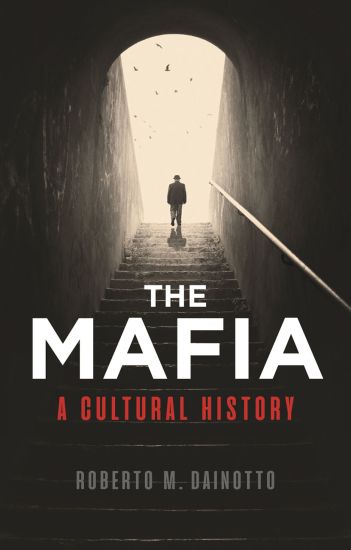
What makes Tony Soprano so likeable? Why would we rather leave the cannoli and take the gun? Do we truly want Scarface’s Tony Montana to succeed? Is Michael Corleone a misunderstood hero or a despicable villain? In The Mafia: A Cultural History, now available in paperback, Roberto M. Dainotto traces the complex and fascinating development of the mafia: its rural beginnings in Western Sicily; its growth into what has been aptly described as a global multinational of crime; and its parallel evolution in music, print and on the big screen. The book probes the tension between the real mafia – its brutal and often violent reality – and how we imagine it to be: a mythical assembly of codes of honour, family values and chivalric masochism. Rather than dismissing such mafia stereotypes as untrue, Dainotto sets out to understand what needs and desires, material and psychic longings, are satisfied by our mafia fantasies. Exploring the rich array of films, books, television, music and even video games portraying and inspired by the mafia, this book offers not only a social, economic and political history of the mafia but a new way of understanding our enduring fascination with what lurks behind the sinister omertà of the family business.
Europe (in Theory)

Europe (in Theory)

Roberto M. Dainotto

Duke University Press
2007
sidottu
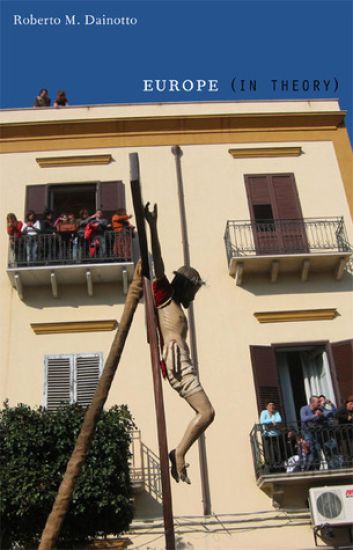
Europe (in Theory) is an innovative analysis of eighteenth- and nineteenth-century ideas about Europe that continue to inform thinking about culture, politics, and identity today. Drawing on insights from subaltern and postcolonial studies, Roberto M. Dainotto deconstructs imperialism not from the so-called periphery but from within Europe itself. He proposes a genealogy of Eurocentrism that accounts for the way modern theories of Europe have marginalized the continent’s own southern region, portraying countries including Greece, Italy, Spain, and Portugal as irrational, corrupt, and clan-based in comparison to the rational, civic-minded nations of northern Europe. Dainotto argues that beginning with Montesquieu’s The Spirit of Laws (1748), Europe not only defined itself against an “Oriental” other but also against elements within its own borders: its South. He locates the roots of Eurocentrism in this disavowal; internalizing the other made it possible to understand and explain Europe without reference to anything beyond its boundaries.Dainotto synthesizes a vast array of literary, philosophical, and historical works by authors from different parts of Europe. He scrutinizes theories that came to dominate thinking about the continent, including Montesquieu’s invention of Europe’s north-south divide, Hegel’s “two Europes,” and Madame de Staël’s idea of opposing European literatures: a modern one from the North, and a pre-modern one from the South. At the same time, Dainotto brings to light counter-narratives written from Europe’s margins, such as the Spanish Jesuit Juan Andrés’s suggestion that the origins of modern European culture were eastern rather than northern and the Italian Orientalist Michele Amari’s assertion that the South was the cradle of a social democracy brought to Europe via Islam.
Europe (in Theory)

Europe (in Theory)

Roberto M. Dainotto

Duke University Press
2007
pokkari
Europe (in Theory) is an innovative analysis of eighteenth- and nineteenth-century ideas about Europe that continue to inform thinking about culture, politics, and identity today. Drawing on insights from subaltern and postcolonial studies, Roberto M. Dainotto deconstructs imperialism not from the so-called periphery but from within Europe itself. He proposes a genealogy of Eurocentrism that accounts for the way modern theories of Europe have marginalized the continent’s own southern region, portraying countries including Greece, Italy, Spain, and Portugal as irrational, corrupt, and clan-based in comparison to the rational, civic-minded nations of northern Europe. Dainotto argues that beginning with Montesquieu’s The Spirit of Laws (1748), Europe not only defined itself against an “Oriental” other but also against elements within its own borders: its South. He locates the roots of Eurocentrism in this disavowal; internalizing the other made it possible to understand and explain Europe without reference to anything beyond its boundaries.Dainotto synthesizes a vast array of literary, philosophical, and historical works by authors from different parts of Europe. He scrutinizes theories that came to dominate thinking about the continent, including Montesquieu’s invention of Europe’s north-south divide, Hegel’s “two Europes,” and Madame de Staël’s idea of opposing European literatures: a modern one from the North, and a pre-modern one from the South. At the same time, Dainotto brings to light counter-narratives written from Europe’s margins, such as the Spanish Jesuit Juan Andrés’s suggestion that the origins of modern European culture were eastern rather than northern and the Italian Orientalist Michele Amari’s assertion that the South was the cradle of a social democracy brought to Europe via Islam.