Kirjojen hintavertailu. Mukana 12 387 516 kirjaa ja 12 kauppaa.
Kirjailija
Robin D. G. Kelley
Kirjat ja teokset yhdessä paikassa: 41 kirjaa, julkaisuja vuosilta 1998-2026, suosituimpien joukossa America at War with Itself. Vertaile teosten hintoja ja tarkista saatavuus suomalaisista kirjakaupoista.
Mukana myös kirjoitusasut: Robin D.G. Kelley, Robin D G Kelley
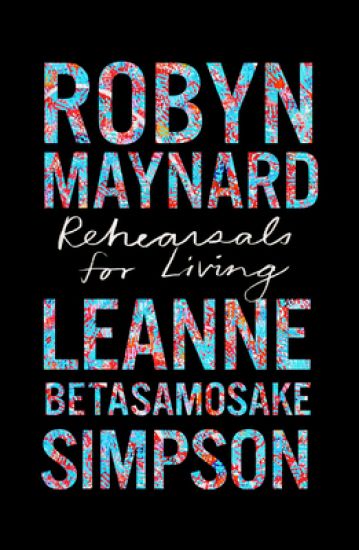
Amid the overlapping crises of a pandemic, ecological disaster, and global capitalism, two leading Black and Indigenous feminist theorists ask one another: what do liberated lands, minds, and bodies look like? These letters are part debate, part dialogue, and part lively and detailed familial correspondence between two razor-sharp thinkers, sending notes to each other during a stormy present. Featuring a foreword by Ruth Wilson Gilmore and an afterword by Robin D.G. Kelley.
Amid the overlapping crises of a pandemic, ecological disaster, and global capitalism, two leading Black and Indigenous feminist theorists ask one another: what do liberated lands, minds, and bodies look like? These letters are part debate, part dialogue, and part lively and detailed familial correspondence between two razor-sharp thinkers, sending notes to each other during a stormy present. Featuring a foreword by Ruth Wilson Gilmore and an afterword by Robin D.G. Kelley.
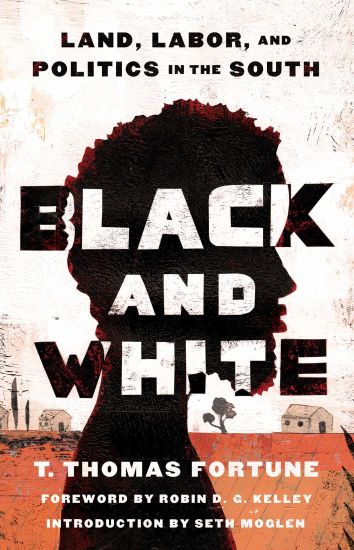
Featuring a new foreword by Robin D. G. Kelley, this updated edition of the classic exploration of the economic inequality that fuels systematic racism, from one of the leading Black public intellectuals of the 19th century, is as timely and radical today as it was when it was first published.“The preeminent Black journalist of his age” (Henry Louis Gates, Jr., author of The Black Church) and an early agitator for civil rights, T. Thomas Fortune astutely and compellingly analyzes the relationship between capitalism and racism in the United States. He reveals that the country’s racial hierarchy has been part of our national fabric since the first European set foot here and is rooted in a much larger system of economic exploitation. He argues that in order for the United States to realize its founding ideals and end racial discrimination, this system must be dismantled, reparations made, and labor fairly remunerated. Fortune’s passionate analysis and radical vision of the United States will force you to rethink what America could have been if his arguments had been heeded in the 1880s and what must be done for us to move forward as a unified nation.
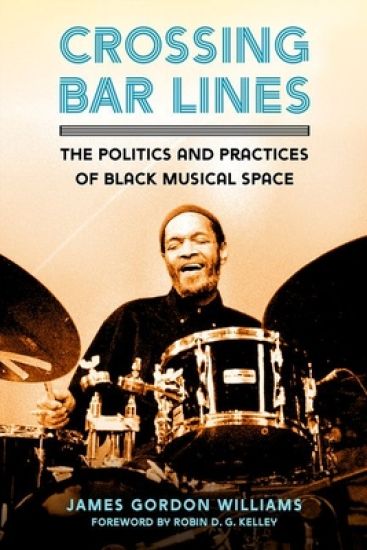
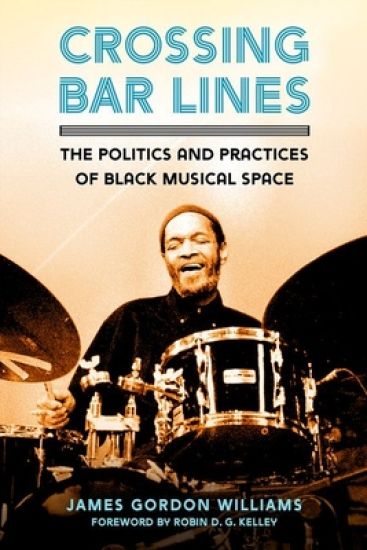
In Crossing Bar Lines: The Politics and Practices of Black Musical Space James Gordon Williams reframes the nature and purpose of jazz improvisation to illuminate the cultural work being done by five creative musicians between 2005 and 2019. The political thought of five African American improvisers-trumpeters Terence Blanchard and Ambrose Akinmusire, drummers Billy Higgins and Terri Lyne Carrington, and pianist Andrew Hill-is documented through insightful, multilayered case studies that make explicit how these musicians articulate their positionality in broader society. Informed by Black feminist thought, these case studies unite around the theory of Black musical space that comes from the lived experiences of African Americans as they improvise through daily life. The central argument builds upon the idea of space-making and the geographic imagination in Black Geographies theory. Williams considers how these musicians interface with contemporary social movements like Black Lives Matter, build alternative institutional models that challenge gender imbalance in improvisation culture, and practice improvisation as joyful affirmation of Black value and mobility. Both Terence Blanchard and Ambrose Akinmusire innovate musical strategies to address systemic violence. Billy Higgins's performance is discussed through the framework of breath to understand his politics of inclusive space. Terri Lyne Carrington confronts patriarchy in jazz culture through her Social Science music project. The work of Andrew Hill is examined through the context of his street theory, revealing his political stance on performance and pedagogy. All readers will be elevated by this innovative and timely book that speaks to issues that continue to shape the lives of African Americans today.
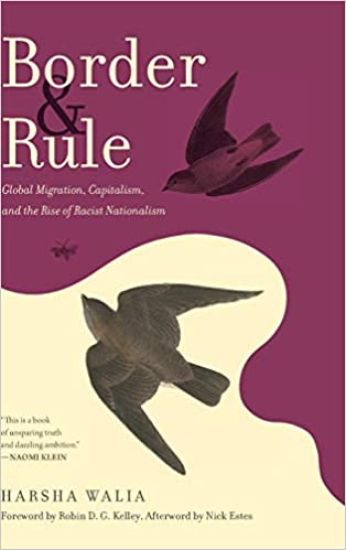
In Border and Rule, one of North America’s foremost thinkers and immigrant rights organizers delivers an unflinching examination of migration as a pillar of global governance and gendered racial class formation. Harsha Walia disrupts easy explanations for the migrant and refugee crises, instead showing them to be the inevitable outcomes of conquest, capitalist globalization, and climate change generating mass dispossession worldwide. Border and Rule explores a number of seemingly disparate global geographies with shared logics of border rule that displace, immobilize, criminalize, exploit, and expel migrants and refugees. With her keen ability to connect the dots, Walia demonstrates how borders divide the international working class and consolidate imperial, capitalist, ruling class, and racist nationalist rule. Ambitious in scope and internationalist in orientation, Border and Rule breaks through American exceptionalist and liberal responses to the migration crisis and cogently maps the lucrative connections between state violence, capitalism, and right-wing nationalism around the world. Illuminating the brutal mechanics of state formation, Walia exposes US border policy as a product of violent territorial expansion, settler-colonialism, enslavement, and gendered racial exclusion. Further, she compellingly details how Fortress Europe and White Australia are using immigration diplomacy and externalized borders to maintain a colonial present, how temporary labor migration in the Arab Gulf states and Canada is central to citizenship regulation and labor control, and far-right nationalism is escalating deadly violence in the US, Israel, India, the Philippines, Brazil, and across Europe, while producing a disaster of statelessness for millions elsewhere.A must-read in these difficult times of war, inequality, climate change, and global health crisis, Border and Rule is a clarion call for revolution. The book includes a foreword from renowned scholar Robin D. G. Kelley and an afterword from acclaimed activist-academic Nick Estes.
In Crossing Bar Lines: The Politics and Practices of Black Musical Space James Gordon Williams reframes the nature and purpose of jazz improvisation to illuminate the cultural work being done by five creative musicians between 2005 and 2019. The political thought of five African American improvisers-trumpeters Terence Blanchard and Ambrose Akinmusire, drummers Billy Higgins and Terri Lyne Carrington, and pianist Andrew Hill-is documented through insightful, multilayered case studies that make explicit how these musicians articulate their positionality in broader society. Informed by Black feminist thought, these case studies unite around the theory of Black musical space that comes from the lived experiences of African Americans as they improvise through daily life. The central argument builds upon the idea of space-making and the geographic imagination in Black Geographies theory. Williams considers how these musicians interface with contemporary social movements like Black Lives Matter, build alternative institutional models that challenge gender imbalance in improvisation culture, and practice improvisation as joyful affirmation of Black value and mobility. Both Terence Blanchard and Ambrose Akinmusire innovate musical strategies to address systemic violence. Billy Higgins's performance is discussed through the framework of breath to understand his politics of inclusive space. Terri Lyne Carrington confronts patriarchy in jazz culture through her Social Science music project. The work of Andrew Hill is examined through the context of his street theory, revealing his political stance on performance and pedagogy. All readers will be elevated by this innovative and timely book that speaks to issues that continue to shape the lives of African Americans today.
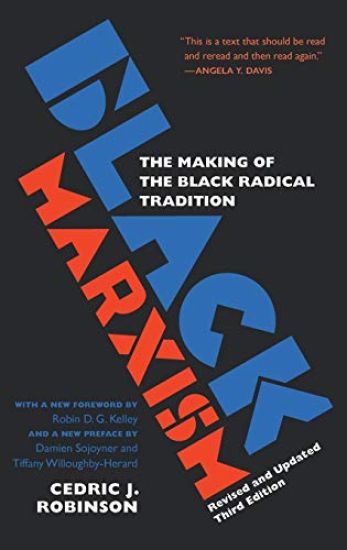
In this ambitious work, first published in 1983, Cedric Robinson demonstrates that efforts to understand Black people's history of resistance solely through the prism of Marxist theory are incomplete and inaccurate. Marxist analyses tend to presuppose European models of history and experience that downplay the significance of Black people and Black communities as agents of change and resistance. Black radicalism, Robinson argues, must be linked to the traditions of Africa and the unique experiences of Blacks on western continents, and any analyses of African American history need to acknowledge this. To illustrate his argument, Robinson traces the emergence of Marxist ideology in Europe, the resistance by Blacks in historically oppressive environments, and the influence of both of these traditions on such important twentieth-century Black radical thinkers as W. E. B. Du Bois, C. L. R. James, and Richard Wright. This revised and updated third edition includes a new preface by Tiffany Willoughby-Herard, and a new foreword by Robin D. G. Kelley.Not for Sale in the UK or Commonwealth
In this ambitious work, first published in 1983, Cedric Robinson demonstrates that efforts to understand Black people's history of resistance solely through the prism of Marxist theory are incomplete and inaccurate. Marxist analyses tend to presuppose European models of history and experience that downplay the significance of Black people and Black communities as agents of change and resistance. Black radicalism, Robinson argues, must be linked to the traditions of Africa and the unique experiences of Blacks on western continents, and any analyses of African American history need to acknowledge this. To illustrate his argument, Robinson traces the emergence of Marxist ideology in Europe, the resistance by Blacks in historically oppressive environments, and the influence of both of these traditions on such important twentieth-century Black radical thinkers as W. E. B. Du Bois, C. L. R. James, and Richard Wright. This revised and updated third edition includes a new preface by Tiffany Willoughby-Herard, and a new foreword by Robin D. G. Kelley.Not for Sale in the UK or Commonwealth
In Border and Rule, one of North America’s foremost thinkers and immigrant rights organizers delivers an unflinching examination of migration as a pillar of global governance and gendered racial class formation. Harsha Walia disrupts easy explanations for the migrant and refugee crises, instead showing them to be the inevitable outcomes of conquest, capitalist globalization, and climate change generating mass dispossession worldwide. Border and Rule explores a number of seemingly disparate global geographies with shared logics of border rule that displace, immobilize, criminalize, exploit, and expel migrants and refugees. With her keen ability to connect the dots, Walia demonstrates how borders divide the international working class and consolidate imperial, capitalist, ruling class, and racist nationalist rule. Ambitious in scope and internationalist in orientation, Border and Rule breaks through American exceptionalist and liberal responses to the migration crisis and cogently maps the lucrative connections between state violence, capitalism, and right-wing nationalism around the world. Illuminating the brutal mechanics of state formation, Walia exposes US border policy as a product of violent territorial expansion, settler-colonialism, enslavement, and gendered racial exclusion. Further, she compellingly details how Fortress Europe and White Australia are using immigration diplomacy and externalized borders to maintain a colonial present, how temporary labor migration in the Arab Gulf states and Canada is central to citizenship regulation and labor control, and how far-right nationalism is escalating deadly violence in the US, Israel, India, the Philippines, Brazil, and across Europe, while producing a disaster of statelessness for millions elsewhere. A must-read in these difficult times of war, inequality, climate change, and global health crisis, Border and Rule is a clarion call for revolution. The book includes a foreword from renowned scholar Robin D. G. Kelley and an afterword from acclaimed activist-academic Nick Estes.
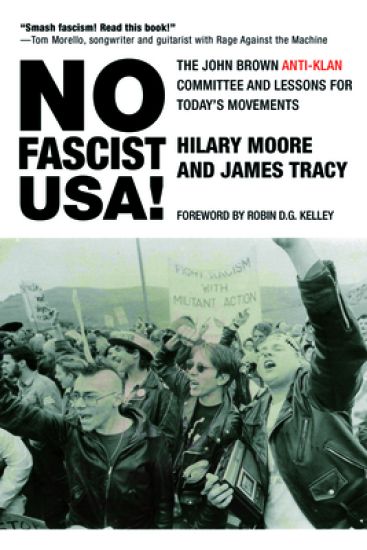
The story of how a national grassroots network fought a resurgence of the KKK and other fascist groups during the Reagan years, laying the groundwork for today’s anti-fascist/anti-racist movements."Smash fascism! Read this book!"—Tom Morello, songwriter and guitarist with Rage Against the Machine"Studying the John Brown Anti-Klan Committee will give readers an understanding of the complexity of deconstructing the weapon of white supremacy from the inside out. Thank you Hilary and James for the precision of this analysis, and the true north of this star."—adrienne maree brown, author of Pleasure Activism and Emergent StrategyIn June 1977, a group of white anti-racist activists received an alarming letter from an inmate at a New York state prison calling for help to fight the Ku Klux Klan's efforts to recruit prison staff and influence the people incarcerated. Their response was to form the first chapter of what would eventually become a powerful, nationwide grassroots network, the John Brown Anti-Klan Committee, dedicated to countering the rise of the KKK and other far-right white nationalist groups.No Fascist USA! tells the story of that network, whose efforts throughout the 1980s—which included exposing white supremacists in public office, confronting neo-Nazis in street protests, supporting movements for self-determination, and engagement with the underground punk scene—laid the groundwork for many anti-racist efforts to emerge since. Featuring original research, interviews with former members, and a trove of graphic materials, their story offers battle-tested lessons for those on the frontlines of social justice work today.Praise for No Fascist USA!:"Hilary Moore and James Tracy have written a magnificent book that not only corrects the record but helps explain the mercurial rise of white supremacist organizations in the 1970s, how the Klan was (temporarily) defeated, and why this period has been largely ignored. No Fascist USA! radically shifts our perspective, challenging the prevailing wisdom that racist terrorism rises in response to economic downturns, white downward mobility, or in a vacuum created by progressive alternatives. I love this book."—Robin D.G. Kelley, from the foreword"No Fascist USA! is not only timely, but also essential in the present period of accelerated white supremacist activity and anti-racist organizing to combat it. In telling the story of the John Brown Anti-Klan Committee, the authors, without romanticizing or condemning, draw important lessons from the fifteen-year history of the group."—Roxanne Dunbar-Ortiz, author of Loaded: A Disarming History of the Second Amendment“With its savvy blend of youth culture and street confrontation, the John Brown Anti-Klan Committee tried to stop Trumpism before Trump. They confronted the rise of white nationalism in prisons, workplaces, and music scenes when precious few paid attention to it . . . Hilary Moore and James Tracy have gifted us with an urgent read.”—Dan Berger, author of Captive Nation: Black Prison Organizing in the Civil Rights Era“James Tracy and Hilary Moore deliver a searing, bold new work that examines another painful and complicated chapter in American race relations. In an eye-opening account, They are able to connect the dots of the John Brown Anti-Klan Committee, a band of contemporary predominantly white activists, and its efforts to expose white supremacist organizations. With a fresh eye and new research, their book uncovers with stunning precision how these groups remain active and exposes some of their unlikely alliances.”—Laurens Grant, filmmaker, The Black Panthers: Vanguard of the Revolution and Freedom Riders“We learned from history. You can too!”—Terry Bisson, author of Fire on the Mountain and former member of the John Brown Anti-Klan Committee"This book is a must-read for anyone wanting to understand the roots of what happened in Charlottesville, and the burgeoning white nationalist membership lists in the U.S. today. We cannot possibly take on the challenges we face without learning from the past. This book is a necessary and long overdue contribution to inform the way forward."—Carla F. Wallace, co-founder, Showing Up for Racial Justice"I've waited thirty years for this book! Our emergency hearts have always driven uprisings to stop white terrorism, but it always takes more than black-bloc tactics in the streets to stop fascists. No Fascist USA! firmly connects today's militant anti-fascist street-fighting movements with important living radical histories to disrupt the cycles that keep the spectre of fascism alive in the modern era. The struggles faced by the John Brown Anti-Klan Committee continue today in our difficult arc towards collective liberation."—scott crow, author of Setting Sights: Histories and Reflections on Community Armed Self-Defense
Winner of the 2017 American Book Award Flores Forbes, a former leader in the Black Panther Party, has been free from prison for twenty-five years. Unfortunately that makes him part of a group of black men without constituency who are all but invisible in society. That is, the ?invisible” group of black men in America who have served their time and not gone back to prison. Today the recidivism rate is around 65%. Almost never mentioned in the media or scholarly attention is the plight of the 35% who don’t go back, especially black men. A few of them are hiding in Ivy League schools’ prison education programs?they don’t want to be known?but most of them are recruited by the one billion dollar industry reentry employee programs that allow the US to profit from their life and labor. Whereas, African Americans consist of only 12% of the population in the US, black males are incarcerated at much higher rates. The chances of these formerly convicted men to succeed after prison?to matriculate as leading members of society?are increasingly slim. The doors are closed to them. Invisible Men is a book that will crack the code on the stigma of incarceration. When Flores Forbes was released from prison, he made a plan to re-invent himself but found it impossible. His involvement in a plan to kill a witness who was testifying against Huey P. Newton, the founder of the Black Panther Party, had led to his incarceration. While in prison he earned a college degree using a Pell Grant, with hope this would get him on the right track and a chance at a normal life. He was released but that’s where his story and most invisible men’s stories begin. This book will weave Flores’ knowledge, wisdom, and experience with incarceration, sentencing reform, judicial inequity, hiding and re-entry into society, and the issue of increasing struggles and inequality for formerly incarcerated men into a collection of poignant essays that finally give invisible men a voice and face in society.
Langston Hughes, one of America's greatest writers, was an innovator of jazz poetry and a leader of the Harlem Renaissance whose poems and plays resonate widely today. Accessible, personal, and inspirational, Hughes' poems portray the African American community in struggle in the context of a turbulent modern United States and a rising black freedom movement. This indispensable volume of letters between Hughes and four leftist confidants sheds vivid light on his life and politics. Letters from Langston begins in 1930 and ends shortly before his death in 1967, providing a window into a unique, self-created world where Hughes lived at ease. This distinctive volume collects the stories of Hughes and his friends in an era of uncertainty and reveals their visions of an idealized world - one without hunger, war, racism, and class oppression.
Langston Hughes, one of America's greatest writers, was an innovator of jazz poetry and a leader of the Harlem Renaissance whose poems and plays resonate widely today. Accessible, personal, and inspirational, Hughes' poems portray the African American community in struggle in the context of a turbulent modern United States and a rising black freedom movement. This indispensable volume of letters between Hughes and four leftist confidants sheds vivid light on his life and politics. Letters from Langston begins in 1930 and ends shortly before his death in 1967, providing a window into a unique, self-created world where Hughes lived at ease. This distinctive volume collects the stories of Hughes and his friends in an era of uncertainty and reveals their visions of an idealized world-one without hunger, war, racism, and class oppression.
In Bedford-Stuyvesant, Brooklyn, pianist Randy Weston and bassist Ahmed Abdul-Malik celebrated with song the revolutions spreading across Africa. In Ghana and South Africa, drummer Guy Warren and vocalist Sathima Bea Benjamin fused local musical forms with the dizzying innovations of modern jazz. These four were among hundreds of musicians in the 1950s and ’60s who forged connections between jazz and Africa that definitively reshaped both their music and the world.Each artist identified in particular ways with Africa’s struggle for liberation and made music dedicated to, or inspired by, demands for independence and self-determination. That music was the wild, boundary-breaking exultation of modern jazz. The result was an abundance of conversation, collaboration, and tension between African and African American musicians during the era of decolonization. This collective biography demonstrates how modern Africa reshaped jazz, how modern jazz helped form a new African identity, and how musical convergences and crossings altered politics and culture on both continents.In a crucial moment when freedom electrified the African diaspora, these black artists sought one another out to create new modes of expression. Documenting individuals and places, from Lagos to Chicago, from New York to Cape Town, Robin Kelley gives us a meditation on modernity: we see innovation not as an imposition from the West but rather as indigenous, multilingual, and messy, the result of innumerable exchanges across a breadth of cultures.
THELONIOUS MONK is the critically acclaimed, gripping saga of an artist's struggle to "make it" without compromising his musical vision. It is a story that, like its subject, reflects the tidal ebbs and flows of American history in the twentieth century. To his fans, he was the ultimate hipster; to his detractors, he was temperamental, eccentric, taciturn, or childlike. His angular melodies and dissonant harmonies shook the jazz world to its foundations, ushering in the birth of "bebop" and establishing Monk as one of America's greatest com-posers. Elegantly written and rich with humor and pathos, "Thelonious Monk "is the definitive work on modern jazz's most original composer.
A leading Asian American artist and activist on the explosive intersection of politics and musicFor more than three decades, Fred Ho has been a radical artist and activist. As a composer and baritone saxophonist, he is famed for creating a new music that fuses Asian and African traditions. The influence of the Black Power and Black Arts movements during his coming of age inspired him to become one of the leading radical Asian American activist–artists. Ho’s passions for art and justice have always been linked-his music seeks to express his politics, and his activism has injected revolution into his art. Wicked Theory, Naked Practice is a groundbreaking collection of Ho’s writings, speeches, and interviews of the past three decades on topics ranging from Mao to Coltrane, from Sun Ra to selling out, and from fighting oppression to battling cancer. His work insists on connections among creative and artistic processes, political theorization, and activist organizing. As Robin D. G. Kelley says in the Foreword, “Ho writes, speaks, and plays in order to persuade and inspire, to expose the crimes of the ruling class, and to challenge the status quo so that we imagine a different future.” Through Wicked Theory, Naked Practice, Ho’s contributions merge political and cultural theory, shedding new light on the radical movements of the 1960s and 1970s and revealing the fascinating story behind a prolific and politically engaged artist across all genres.
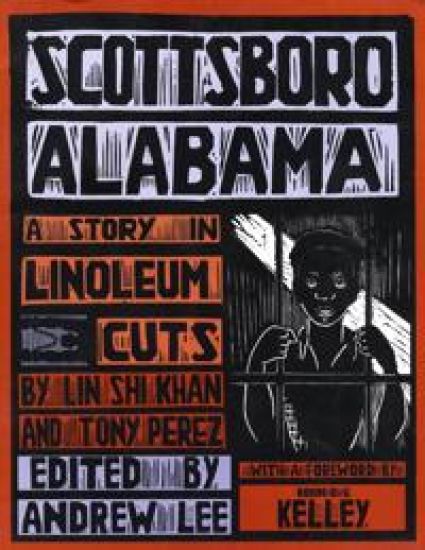
A unique graphic history of one of the most controversial legal decisions of all time—with 118 powerful linoleum prints In 1931, nine black youths were falsely accused of raping two white women on a freight train traveling through northern Alabama. They were arrested and tried in four days, convicted of rape, and eight of them were sentenced to death. The ensuing legal battle spanned six years and involved two landmark decisions by the Supreme Court. One of the most well known and controversial legal decisions of our time, the Scottsboro case ignited the collective emotions of the country, which was still struggling to come to terms with fundamental issues of racial equality. Scottsboro, Alabama, which consists of 118 exceptionally powerful linoleum prints, provides a unique graphic history of one of the most infamous, racially-charged episodes in the annals of the American judicial system, and of the racial and class struggle of the time. Originally printed in Seattle in 1935, this hitherto unknown document, of which no other known copies exist, is presented here for the first time. It includes a foreword by Robin D.G. Kelley and an introduction by Andrew H. Lee. Mr. Lee discovered the book as part of a gift to the Tamiment Library by the family of Joe North, an important figure in the Communist Party-USA, and an editor at the seminal left-wing journal, the New Masses. A true historical find and an excellent tool for teaching the case itself and the period which it so indelibly marked, this book allows us to see the Scottsboro case through a unique and highly provocative lens.
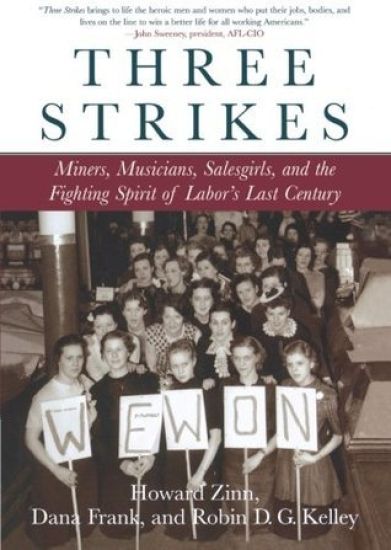
"Howard Zinn recounts the dramatic tale of the great coal mine strike in Colorado that culminated in the Ludlow Massacre. The story pits immigrant workers against the National Guard, Mother Jones against the Rockefellers, and corporate power against union organizing, a story that is all too familiar today." "With Dana Frank we join a sit-in strike in a Detroit Woolworth's during the Great Depression where young women slept on the floor, played games and sang songs together, and enjoyed the attention of an amused and curious public that vilified the "chain-store threat" long before Wal-Mart." "Robin D.G. Kelley's tale of a movie theater musician strike in New York gets at the heart of what defines a worker. Facing the inevitable dominance of sound movies, the musicians failed even to agree on demands, and could not prevent members of other unions from crossing their picket lines. What happens when jobs are lost to new technologies, and how can labor help?"--BOOK JACKET.