Kirjojen hintavertailu. Mukana 12 595 353 kirjaa ja 12 kauppaa.

Kirjailija

Robin Dunbar

Kirjat ja teokset yhdessä paikassa: 22 kirjaa, julkaisuja vuosilta 1998-2024, suosituimpien joukossa Evolution, Denken, Kultur. Vertaile teosten hintoja ja tarkista saatavuus suomalaisista kirjakaupoista.

22 kirjaa

Kirjojen julkaisuhaarukka 1998-2024.

Ikonoklasm : förkastandet av det förflutna

Ikonoklasm : förkastandet av det förflutna

Robin Dunbar; Andreas Winkler; Daniel Reynolds; James Simpson; Malise Ruthven; Michael Freeden; Ingrid Dunér; Marie Kawthar Daouda; Peter Jackson Rova; Joel Halldorf; Natalie Lantz; Per-Arne Bodin; Nathan Shachar; Jesper Huor; Svante Nordin; Adam Cwejman

Bokförlaget Stolpe
2024
sidottu
Ikonoklasm, eller bildstormande, är en del av vår historia: från förstörelsen av religiösa bilder under den tidiga kristendomen till dagens nedrivning av statyer på sydstatsgeneraler och slavhandlare. Bilder, byggnader och föremål som strider mot religiös eller ideologisk övertygelse måste förstöras. De som utför rensningen, ikonoklasterna, är övertygade om att de utför en reningsaktion. Det förflutna välts över ända i en önskan att börja om från början. De olika bidragen till antologin Ikonoklasm: förkastandet av det förflutna visar med all önskvärd tydlighet konsekvenserna. Inte bara ovärderliga kulturskatter utan också människoliv går förlorade när fanatismen får fritt spelrum. Vi ser det när Islamiska staten slår sönder flera tusen år gamla museiföremål, när Maos rödgardister bränner böcker och förföljer oliktänkande under den kinesiska kulturrevolutionen eller när ryska bolsjeviker spränger kyrkor och skändar ikoner. Exemplen på de destruktiva krafternas skadegörelse genom seklen kan mångfaldigas. Att ikonoklasmens stridsrop ljuder så starkt i vår tid visar på dess fortsatta lockelse. Ikonoklasm är en varningsklocka, ett larm för hotet mot det demokratiska samhällets tolerans och öppenhet.
The Social Brain

The Social Brain

Tracey Camilleri; Samantha Rockey; Robin Dunbar

Cornerstone
2024
pokkari
'A remarkable and important book . . . a highly accessible, timely and invaluable guide to anybody working in groups.' Prof Paul Gilbert OBE___________________________________________________How many people does the ideal team contain? How do groups bond, earn trust and forge shared identities? How can leaders build environments adaptable enough to respond to shocks and still enable people to thrive together? How can you feel close to people if your only point of contact is a phone or a computer?In The Social Brain leading experts from the worlds of evolutionary psychology and business management come together to offer a primer on great team working. They explain what size groups work and how to shape them according to the nature of the task at hand. They offer practical hints on how to diffuse tensions and encourage cooperation. And they demonstrate the vital importance of balancing unity and the need for different views and outlooks. By explaining precisely how the 'social brain' works, they show how human groups function and how to create great, high-performing teams._____________________________________'This wonderful book reminds us that businesses are also biological and social . . . It could not be more timely, wise and useful.' Margaret Heffernan, author of Wilful Blindness'Buy it for yourself and your colleagues. Essential reading.' Mark Earls, author of HERD
Om religionernas uppkomst

Om religionernas uppkomst

Robin Dunbar

Fri Tanke
2023
sidottu
Under hela vår historia har religiös tro varit en del av den mänskliga tillvaron – från de förhistoriska människornas grottmålningar till andlighetens fortlevnad i dagens alltmer sekulära samhällen. Faktum är att religion tycks vara nära förbundet med människans evolution.I Om religionernas uppkomst argumenterar evolutionspsykologen Robin Dunbar för att religion varken är en nyck eller en avvikelse i en annars effektiv evolutionär resa. Snarare kan religiositet och andliga upplevelser utgöra en fördel, både för individens hälsa och välstånd och för bräckliga samhällens möjligheter till sammanhållning. Utifrån banbrytande forskning och fältarbete inom arkeologi, historia, neurovetenskap och evolutionspsykologi formulerar Robin Dunbar en nytänkande teori om hur religionerna uppkom – och varför de överlever.
How Religion Evolved

How Religion Evolved

Robin Dunbar

PENGUIN BOOKS LTD
2023
nidottu
A fascinating analysis of the evolution of religion from the internationally renowned evolutionary psychologistWhen did humans develop spiritual thought? What is religion's evolutionary purpose? And in our increasingly secular world, why has it endured?Every society in the history of humanity has lived with religion. In How Religion Evolved, evolutionary psychologist Professor Robin Dunbar tracks its origins back to what he terms the 'mystical stance' - the aspect of human psychology that predisposes us to believe in a transcendent world, and which makes an encounter with the spiritual possible. As he explores world religions and their many derivatives, as well as religions of experience practised by hunter-gatherer societies since time immemorial, Dunbar argues that this instinct is not a peculiar human quirk, an aberration on our otherwise efficient evolutionary journey. Rather, religion confers an advantage: it can benefit our individual health and wellbeing, but, more importantly, it fosters social bonding at large scale, helping hold fractious societies together. Dunbar suggests these dimensions might provide the basis for an overarching theory for why and how humans are religious, and so help unify the myriad strands that currently populate this field.Drawing on path-breaking research, clinical case studies and fieldwork from around the globe, as well as stories of charismatic cult leaders, mysterious sects and lost faiths, How Religion Evolved offers a fascinating and far-reaching analysis of this quintessentially human impulse - to believe.
Friends

Friends

Robin Dunbar

Little, Brown Book Group
2022
pokkari
'Fascinating...In essence, the number and quality of our friendships may have a bigger influence on our happiness, health and mortality risk than anything else in life save for giving up smoking' Guardian, Book of the DayFriends matter to us, and they matter more than we think. The single most surprising fact to emerge out of the medical literature over the last decade or so has been that the number and quality of the friendships we have has a bigger influence on our happiness, health and even mortality risk than anything else except giving up smoking.Robin Dunbar is the world-renowned psychologist and author who famously discovered Dunbar's number: how our capacity for friendship is limited to around 150 people. In Friends, he looks at friendship in the round, at the way different types of friendship and family relationships intersect, or at the complex of psychological and behavioural mechanisms that underpin friendships and make them possible - and just how complicated the business of making and keeping friends actually is.Mixing insights from scientific research with first person experiences and culture, Friends explores and integrates knowledge from disciplines ranging from psychology and anthropology to neuroscience and genetics in a single magical weave that allows us to peer into the incredible complexity of the social world in which we are all so deeply embedded.Working at the coalface of the subject at both research and personal levels, Robin Dunbar has written the definitive book on how and why we are friends.
How Religion Evolved: And Why It Endures

How Religion Evolved: And Why It Endures

Robin Dunbar

Oxford University Press
2022
sidottu
One of the world's foremost scholars of evolution tackles one of its essential mysteries: why we believe. Our species diverged from the great apes six to eight million years ago. Since then, our propensity toward spiritual thinking and ritual emerged. How, when, and why did this occur, and how did the earliest, informal shamanic practices evolve into the world religions familiar to us today? What is the evolutionary purpose of religion, and are some individuals more inclined than others to be religious? In How Religion Evolved, Robin Dunbar explores these and other questions, mining the distinctions between religions of experience--as practiced by the earliest hunter-gatherer societies--and doctrinal religions, from Judaism, Christianity, and Islam to Zoroastrianism, Hinduism, Buddhism, and their many derivatives. Examining religion's origins, social functions, its effects on the brain and body, and its place in the modern era, Dunbar offers a fascinating and far-reaching analysis of the quintessentially human impulse to believe.
Evolution

Evolution

Robin Dunbar

Oxford University Press Inc
2021
sidottu
Evolution is one of the most important processes in life. It not only explains the detailed history of life on earth, but its scope also extends into many aspects of our own contemporary behavior-who we are and how we got to be here, our psychology, our cultures-and greatly impacts modern advancements in medicine and conservation biology. Perhaps its most important claim for science is its ability to provide an overarching framework that integrates the many life sciences into a single unified whole. Yet, evolution-evolutionary biology in particular-has been, and continues to be, regarded with suspicion by many. Understanding how and why evolution works, and what it can tell us, is perhaps the single most important contribution to the public perception of science. This book provides an overview of the basic theory and showcases how widely its consequences reverberate across the life sciences, the social sciences and even the humanities. In this book, Robin Dunbar uses examples drawn from plant life, animals and humans to illustrate these processes. Evolutionary science has important advantages. Most of science deals with the microscopic world that we cannot see and invariably have difficulty understanding, but evolution deals with the macro-world in which we live and move. That invariably makes it much easier for the lay audience to appreciate, understand and enjoy. Evolution: What Everyone Needs to Know® takes a broad approach to evolution, dealing both with the core theory itself and its impact on different aspects of the world we live in, from the iconic debates of the nineteenth century, to viruses and superbugs, to human evolution and behavior.
Evolution

Evolution

Robin Dunbar

Oxford University Press Inc
2020
nidottu
Evolution is one of the most important processes in life. It not only explains the detailed history of life on earth, but its scope also extends into many aspects of our own contemporary behavior-who we are and how we got to be here, our psychology, our cultures-and greatly impacts modern advancements in medicine and conservation biology. Perhaps its most important claim for science is its ability to provide an overarching framework that integrates the many life sciences into a single unified whole. Yet, evolution-evolutionary biology in particular-has been, and continues to be, regarded with suspicion by many. Understanding how and why evolution works, and what it can tell us, is perhaps the single most important contribution to the public perception of science. This book provides an overview of the basic theory and showcases how widely its consequences reverberate across the life sciences, the social sciences and even the humanities. In this book, Robin Dunbar uses examples drawn from plant life, animals and humans to illustrate these processes. Evolutionary science has important advantages. Most of science deals with the microscopic world that we cannot see and invariably have difficulty understanding, but evolution deals with the macro-world in which we live and move. That invariably makes it much easier for the lay audience to appreciate, understand and enjoy. Evolution: What Everyone Needs to Know® takes a broad approach to evolution, dealing both with the core theory itself and its impact on different aspects of the world we live in, from the iconic debates of the nineteenth century, to viruses and superbugs, to human evolution and behavior.
Thinking Big

Thinking Big

Clive Gamble; John Gowlett; Robin Dunbar

Thames Hudson Ltd
2018
nidottu
When and how did the brains of our hominin ancestors become human minds? When and why did our capacity for language or art, music and dance evolve? It is the contention of this pathbreaking and provocative book that it was the need for early humans to live in ever-larger social groups, and to maintain social relations over ever-greater distances – the ability to ‘think big’ – that drove the enlargement of the human brain and the development of the human mind. This ‘social brain hypothesis’, put forward by evolutionary psychologists such as Robin Dunbar, one of the authors of this book, can be tested against archaeological and fossil evidence, as archaeologists Clive Gamble and John Gowlett show in the second part of Thinking Big. Along the way, the three authors touch on subjects as diverse and diverting as the switch from finger-tip grooming to vocal grooming or the crucial importance of making fire for the lengthening of the social day. As this remarkable book shows, it seems we still inhabit social worlds that originated deep in our evolutionary past – by the fireside, in the hunt and on the grasslands of Africa.
Human Evolution: Our Brains and Behavior

Human Evolution: Our Brains and Behavior

Robin Dunbar

Oxford University Press
2016
sidottu
The story of human evolution has fascinated us like no other: we seem to have an insatiable curiosity about who we are and where we have come from. Yet studying the "stones and bones" skirts around what is perhaps the realest, and most relatable, story of human evolution - the social and cognitive changes that gave rise to modern humans. In Human Evolution: Our Brains and Behavior, Robin Dunbar appeals to the human aspects of every reader, as subjects of mating, friendship, and community are discussed from an evolutionary psychology perspective. With a table of contents ranging from prehistoric times to modern days, Human Evolution focuses on an aspect of evolution that has typically been overshadowed by the archaeological record: the biological, neurological, and genetic changes that occurred with each "transition" in the evolutionary narrative. Dunbar's interdisciplinary approach - inspired by his background as both an anthropologist and accomplished psychologist - brings the reader into all aspects of the evolutionary process, which he describes as the "jigsaw puzzle" of evolution that he and the reader will help solve. In doing so, the book carefully maps out each stage of the evolutionary process, from anatomical changes such as bipedalism and increase in brain size, to cognitive and behavioral changes, such as the ability to cook, laugh, and use language to form communities through religion and story-telling. Most importantly and interestingly, Dunbar hypothesizes the order in which these evolutionary changes occurred-conclusions that are reached with the "time budget model" theory that Dunbar himself coined. As definitive as the "stones and bones" are for the hard dates of archaeological evidence, this book explores far more complex psychological questions that require a degree of intellectual speculation: What does it really mean to be human (as opposed to being an ape), and how did we come to be that way?
Evolution, Denken, Kultur

Evolution, Denken, Kultur

Clive Gamble; John Gowlett; Robin Dunbar

Springer-Verlag Berlin and Heidelberg GmbH Co. KG
2015
sidottu
Die Entdeckung der Gemeinsamkeit Dieses bemerkenswerte Buch, das die Evolution und die Archäologie des menschlichen Sozialverhaltens zusammenführt, spannt den Bogen von den sozialen Gruppen der Steinzeit bis zu den modernen digitalen Netzwerken – und zeigt, dass wir heute in sozialen Welten leben, die sich tief in unserer evolutionären Vergangenheit entwickelt haben. Sie werden in diesem Jahr kein wichtigeres Buch lesen. Es könnte uns ein bisschen weiser in unserer Selbsteinschätzung machen. Minerva Ein wunderbares Kompendium von Geschichte, Theorien und faszinierenden Experimenten, das Sie durchweg fesseln wird. BBC Focus In einem Stil geschrieben, der in so bewundernswerter Weise wissenschaftliches Fachvokabular und Soziologenjargon vermeidet, dass man nicht mehr als ein normales menschliches Gehirn braucht, um es zu lesen und zu verstehen … eine sehr wertvolle Zusammenfassung unseres gegenwärtigenWissens über die Evolution des Menschen und den möglichen Ursprung und die Entwicklung [solcher] menschlicher Eigenschaften und Fähigkeiten … Evolution, Denken, Kultur ist wie der Urknall: wahrscheinlich noch nicht die ganze Antwort, aber zweifellos schon die Erklärung einer großen Zahl beobachtbarer Phänomene, und für die Debatte und Weiterentwicklung unserer Vorstellungen über die Ursprünge und die Evolution der menschlichen Kognition wird es auf Jahrzehnte hinaus als führendes Modell dienen. Society of Antiquaries Newsletter Ein dramatischer Schlag gegen den “Steine und Knochen”-Ansatz der Archäologie. New Scientist Zugleich ein Triumph der Zusammenarbeit und eine packende Detektivgeschichte. New Statesman _____ Wann und wie entwickelte sich das Gehirn unserer frühen Vorfahren zu einem menschlichen Gehirn? Wann und wie entstand in der Evolution unsere Fähigkeit, zu sprechen und Kunstwerke zu schaffen, zu musizieren und zu tanzen? Die Größe der sozialen Gruppen, in denen Menschen heute leben – Angehörige, Freunde, Bekannte –, beträgt ungefähr 150 Personen. Diese „Dunbar-Zahl“ liegt etwa dreifach höher als bei Menschenaffen und unseren ältesten Vorfahren. Wie die Autoren dieses bahnbrechenden Buches darlegen, waren die frühen Menschen im Kampf ums Überleben gezwungen, sich zu immer größeren Gruppen zusammenzuschließen und zwischenmenschliche Beziehungen über weite Distanzen aufrechtzuerhalten. Sie mussten „im Großen denken“, und dies wiederum trieb sowohl das Wachstum des menschlichen Gehirns als auch die Entstehung des menschlichen Geistes voran. Aus dem gegenseitigen Kraulen der Menschenaffen erwuchs die für Menschen kennzeichnende sprachliche Zuwendung. Musik und Tanz verstärkten die Bindungen zwischen ihnen. Und die Beherrschung des Feuers verlängerte den Tag für zwischenmenschliche Aktivitäten. Heute beherrschen soziale Netzwerke die Welt. Doch erstaunlicherweise entspricht die Zahl unserer Facebook- oder Twitter-Kontakte im Mittel der Dunbar-Zahl. Offenbar leben wir immer noch in einer sozialen Welt, die ihre Wurzeln tief in unserer Evolutionsvergangenheit hat – am Lagerfeuer, auf der Jagd und in den Graslandschaften Afrikas.
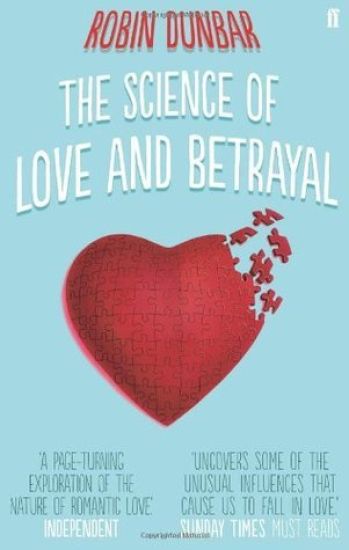
The Science of Love and Betrayal

The Science of Love and Betrayal

Robin Dunbar

Faber Faber
2013
pokkari
Falling in love is one of the strangest things we can do - and one of the things that makes us uniquely human. But what happens to our brains when our eyes meet across a crowded room? Why do we kiss each other, forget our friends, seek a 'good sense of humour' in Lonely Hearts adverts and try (and fail) to be monogamous? How are our romantic relationships different from our relationships with friends, family or even God? Can science help us, or are we better off turning back to the poets?Basing his arguments on new and experimental scientific research, Robin Dunbar explores the psychology and ethology of romantic love and how our evolutionary programming still affects our behaviour. Fascinating and illuminating, witty and accessible, The Science of Love and Betrayal is essential reading for anyone who's ever wondered why we fall in love and what on earth is going on when we do.
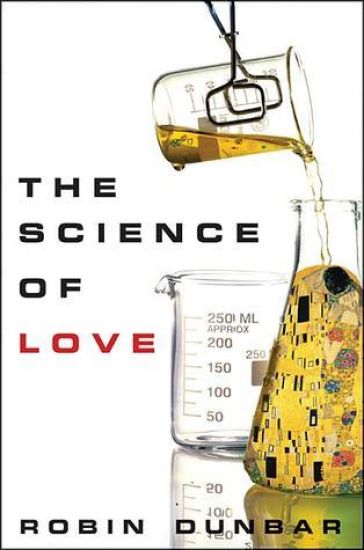
The Science of Love

The Science of Love

Robin Dunbar

Trade Paper Press
2012
sidottu
A scientific exploration of some of humanity's most puzzling questions: What is love? Why do we fall in (and out) of love? And why would we have evolved to feel something so weird, with so many downsides?Whether you live for Valentine's Day or are the type to forget your wedding anniversary, love is, quite simply, part of being human. In The Science of Love, renowned evolutionary anthropologist Robin Dunbar uses the latest science to explore every aspect of human love. Why do we kiss? What evolutionary benefit could there be to feeling like you would die for your mate? If love exists to encourage child-bearing and child-rearing, why do we love until death do us part (and beyond)? Is parental love anything like romantic love? Dunbar explores everything science has discovered about romance, passion, sex, and commitment, answering these questions and more.Draws on the latest scientific research to examine the many aspects of love--passion, commitment, intimacy, hugging, kissing, monogamy, cheating, and more--and explain why we have evolved to behave as we doFilled with fascinating insights into specific human behaviors and experiences, from the European air kiss on both cheeks to the phenomenon of love at first sightWritten by Robin Dunbar, a prominent anthropologist and evolutionary psychologist whose work have been featured in Malcolm Gladwell's The Tipping Point and many other books
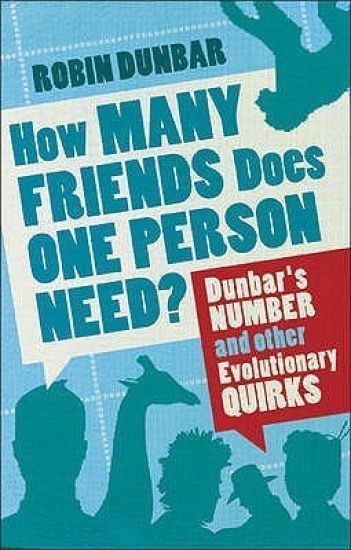
How Many Friends Does One Person Need?
We are the product of our evolutionary history and this history colours our everyday lives - from why we kiss to how religious we are. In How Many Friends Does One Person Need? Robin Dunbar explains how the distant past underpins our current behaviour, through the groundbreaking experiments that have changed the thinking of evolutionary biologists forever. He explains phenomena such as why 'Dunbar's Number' (150) is the maximum number of acquaintances you can have, why all babies are born premature and the science behind lonely hearts columns. Stimulating, provocative and highly enjoyable, this fascinating book is essential for understanding why humans behave as they do - what it is to be human.
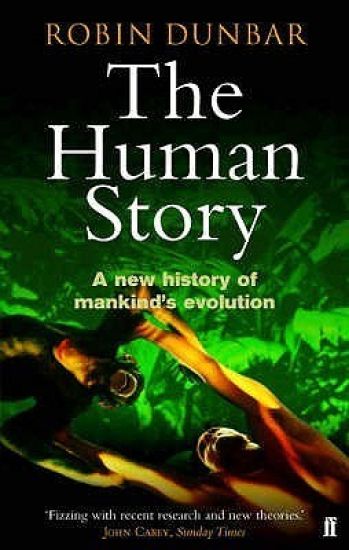
The Human Story

The Human Story

Robin Dunbar

Faber Faber
2005
pokkari
A wonderfully accessible, up-to-the-minute account of human evolution by 'one of the most respected evolutionary psychologists in Britain' (Guardian). Of the dozen or so hominid species once in existence, why are we the only one to have survived? What is it that sets us so firmly apart from all the other creatures with whom we share the planet? How and when did that separation come about?
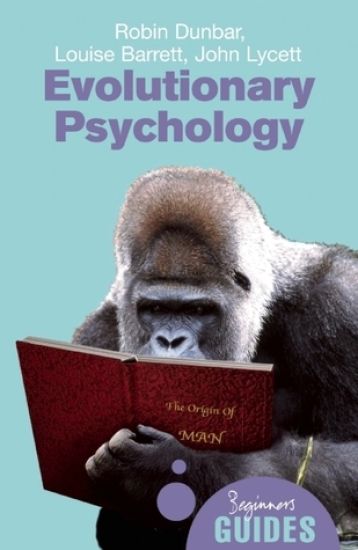
Evolutionary Psychology

Evolutionary Psychology

Robin Dunbar; John Lycett; Louise Barrett

Oneworld Publications
2005
nidottu
Evolutionary Psychology: A Beginner’s Guide is a uniquely accessible yet comprehensive guide to the study of the effects of evolutionary theory on human behaviour. Written specifically for the general reader, and for entry-level students, it covers all the most important elements of this interdisciplinary subject, from the role of evolution in our selection of partner, to the influence of genetics on parenting. The book draws widely on examples, case studies and background facts to convey a substantial amount of information, and is authored by the UK’s leading experts in the field, from the only dedicated research and teaching institute.
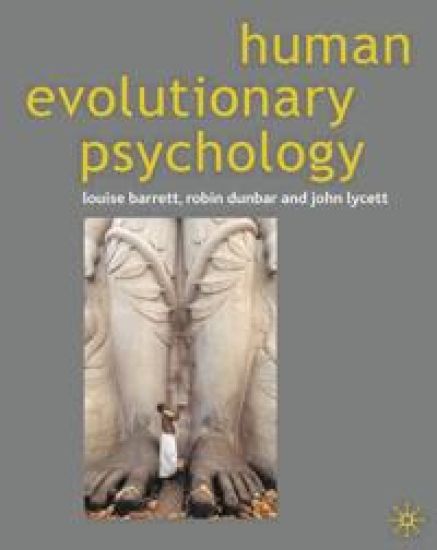
Human Evolutionary Psychology

Human Evolutionary Psychology

Louise Barrett; Robin Dunbar; John Lycett

Princeton University Press
2002
pokkari
Why do people resort to plastic surgery to look young? Why are stepchildren at greatest risk of fatal abuse? Why do we prefer gossip to algebra? Why must Dogon wives live alone in a dark hut for five days a month? Why are young children good at learning language but not sharing? Over the past decade, psychologists and behavioral ecologists have been finding answers to such seemingly unrelated questions by applying an evolutionary perspective to the study of human behavior and psychology. Human Evolutionary Psychology is a comprehensive, balanced, and readable introduction to this burgeoning field. It combines a sophisticated understanding of the basics of evolutionary theory with a solid grasp of empirical case studies. Covering not only such traditional subjects as kin selection and mate choice, this text also examines more complex understandings of marriage practices and inheritance rules and the way in which individual action influences the structure of societies and aspects of cultural evolution. It critically assesses the value of evolutionary explanations to humans in both modern Western society and traditional preindustrial societies. And it fairly presents debates within the field, identifying areas of compatibility among sometimes competing approaches. Combining a broad scope with the more in-depth knowledge and sophisticated understanding needed to approach the primary literature, this text is the ideal introduction to the exciting and rapidly expanding study of human evolutionary psychology.
Human Evolutionary Psychology

Human Evolutionary Psychology

Louise Barrett; Robin Dunbar; John Lycett

Red Globe Press
2001
nidottu
Other people and their behaviour are a subject of endless fascination for us. Our understanding of why we behave in certain ways can be greatly enhanced if we take an evolutionary perspective. Understanding the evolutionary pressures that have shaped human behaviour can give us a new insight into why we prefer a good gossip to a lengthy session of algebra, or why children are so good at learning language and so poor at sharing nicely with others. Human Evolutionary Psychology offers a comprehensive overview of all aspects of human evolutionary behaviour and psychology. Tackling everything from mate choice to marriage patterns, childcare to cultural evolution, Human Evolutionary Psychology critically assesses the value of evolutionary explanations to humans in both modern western society and traditional pre-industrial societies. The combination of broad scope and in-depth analysis makes it the ideal introduction to this exciting and rapidly expanding area of research.
The Evolution of Culture

The Evolution of Culture

Robin Dunbar; Chris Knight

Edinburgh University Press
1999
sidottu
This book explores the ways in which contemporary evolutionary thinking might inform the study of the peculiarly human phenomenon of symbolic culture, including language, ritual, religion, religion and art. It draws together contributions from biologists, linguists, anthropologists and archaeologists in order to establish common ground where collaboration and interaction will be especially productive and challenging in the study of those fundamental aspects of our biology that makes us human. * Multidisciplinary * An evolutionary approach to culture