Kirjojen hintavertailu. Mukana 12 595 353 kirjaa ja 12 kauppaa.

Kirjailija

Robin Fulton Macpherson

Kirjat ja teokset yhdessä paikassa: 3 kirjaa, julkaisuja vuosilta 2013-2023, suosituimpien joukossa Ancient Light. Vertaile teosten hintoja ja tarkista saatavuus suomalaisista kirjakaupoista.

3 kirjaa

Kirjojen julkaisuhaarukka 2013-2023.

Ancient Light

Ancient Light

Robin Fulton Macpherson

Shearsman Books
2023
nidottu
In the 1960s and 1970s Robin Fulton Macpherson was active in Scottish literary life as a poet, reviewer and editor. Since 1973 his home base has been in Norway and in the decades since he has built a solid reputation as a translator of Scandinavian poets, such as Tomas Transtroemer, Kjell Espmark and Harry Martinson from Swedish and Olav H. Hauge from Norwegian. His A Northern Habitat: Collected Poems 1960-2010 (Marick Press, 2013) was described by Carol Rumens in The Guardian as "a major achievement, enriching the habitat of contemporary letters in our own archipelago and beyond." John Glenday, in Northwords Now, referred to the book as "a real treasure of a collection, a weighty, important reminder that Fulton Macpherson is a prominent figure in Scottish poetry... His poetry is enduring as granite. It will weather well", while Peter M. McDonald, in Rain Taxi, felt certain that "A Northern Habitat will stand the test of time. It is arguably the most important book yet from a Scottish poet in this new millennium." Ancient Light is his third Shearsman collection, following 2020's Arrivals of Light. "Many of these [ poems in Arrivals of Light ] consist of just a few lines but they're suffused with a remarkable keenness of eye and, especially, freshness of thought and phrase. The very title ... speaks to a sense of continuing revelation, or more accurately revelations." -Chris Powici, Northwords Now
Arrivals of Light

Arrivals of Light

Robin Fulton Macpherson

Shearsman Books
2020
nidottu
In the 1960s and 1970s Robin Fulton Macpherson was active in Scottish literary life as a poet, reviewer and editor. Since 1973 his home base has been in Norway and, in the decades since, he has built a solid reputation as a translator of Scandinavian poets, such as Tomas Transtroemer, Kjell Espmark and Harry Martinson from Swedish and Olav H. Hauge from Norwegian. His A Northern Habitat: Collected Poems 1960-2010 (Marick Press, 2013) was described by Carol Rumens in The Guardian as "a major achievement, enriching the habitat of contemporary letters in our own archipelago and beyond." John Glenday, in Northwards Now, referred to the book as "a real treasure of a collection, a weighty, important reminder that Fulton Macpherson is a prominent figure in Scottish poetry... His poetry is enduring as granite. It will weather well", while Peter M. McDonald, in Rain Taxi, felt certain that "A Northern Habitat will stand the test of time. It is arguably the most important book yet from a Scottish poet in this new millennium."
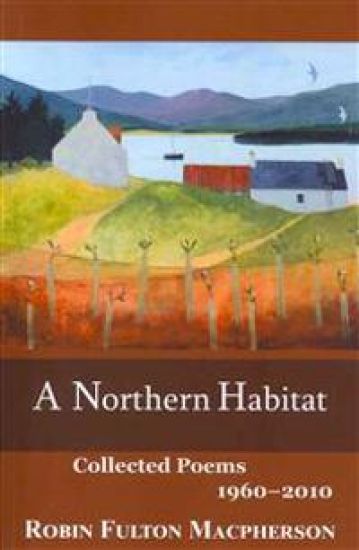
A Northern Habitat

A Northern Habitat

Robin Fulton; Robin Fulton MacPherson

Marick Press
2013
nidottu
In the 1960s and 1970s Robin Fulton Macpherson was active in Scottish literary life as a poet, reviewer and essayist, for many years editing Lines Review. His home base since 1973 has been Norway, and in the decades since then he has built a solid reputation as a translator of Scandinavian poets, such as Tomas Transtr mer, Kjell Espmark and Harry Martinson from Swedish, and Olav H. Hauge from Norwegian. James McGonigal has described his earlier poems as "detached, meditative, lyrical and melancholy, often with a sense of deep psychological disturbance just beyond the edge of his local landscapes." In his later poems, other commentators have noted a dry wit, a capacity for praise, and a quiet voice that says more than it seems to. Among the older generation, Edwin Morgan and Robert Garioch praised his work, as did Norman MacCaig ("what interests me most is his refusal to be content with simple statements") and Iain Crichton Smith ("a mind of great inventiveness"). As McGonigal points out, while "he may have felt side-lined by poetic fashion, the more astute of the younger generation of Scottish poets have not failed to register his presence."