Kirjojen hintavertailu. Mukana 12 522 792 kirjaa ja 12 kauppaa.

Kirjailija

Robin Schuldenfrei

Kirjat ja teokset yhdessä paikassa: 3 kirjaa, julkaisuja vuosilta 2018-2025, suosituimpien joukossa Fashion & Interiors. Vertaile teosten hintoja ja tarkista saatavuus suomalaisista kirjakaupoista.

3 kirjaa

Kirjojen julkaisuhaarukka 2018-2025.

Fashion & Interiors

Fashion & Interiors

Romy Cockx; Robin Schuldenfrei; Lara Steinhäußer

Cannibal/Hannibal Publishers
2025
sidottu
Exploring fashion and interior design through a gender lens, from the Victorian era to contemporary designers like Martin Margiela and Raf Simons Fashion & Interiors. A Gendered Affair explores the relationship between fashion and interiors from a gender perspective. In the second half of the nineteenth century, bourgeois ladies embellished both their bodies and their homes with drapes, fringing and ruches. Male designers such as Henry van de Velde and Josef Hoffmann waged war on that decorative excess and designed women’s clothing and interiors as part of a well-thought-out total work of art. Fashion designers Paul Poiret and Jeanne Lanvin drew inspiration from this approach and used interior design to create a powerful brand for their fashion houses. The impact of clothing also resonated with modernist (interior) architects such as Adolf Loos, Lilly Reich and Le Corbusier. This complex history is reflected in surprising ways in the visual language and creations of contemporary fashion designers such as Ann Demeulemeester, Martin Margiela, and Raf Simons.
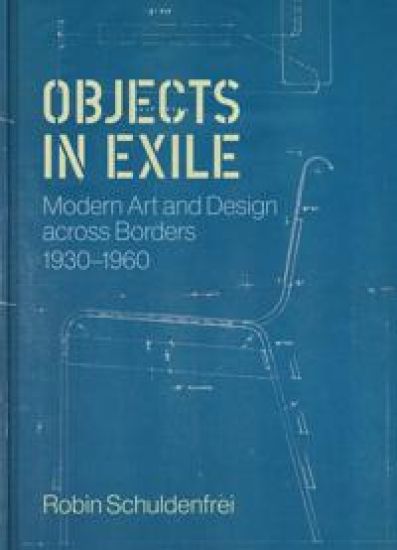
Objects in Exile

Objects in Exile

Robin Schuldenfrei

PRINCETON UNIVERSITY PRESS
2024
sidottu
An essential examination of how emigration and resettlement defined modernismIn the fraught years leading up to World War II, many modern artists and architects emigrated from continental Europe to the United States and Britain. The experience of exile infused their modernist ideas with new urgency and forced them to use certain materials in place of others, modify existing works, and reconsider their approach to design itself. In Objects in Exile, Robin Schuldenfrei reveals how the process of migration was crucial to the development of modernism, charting how modern art and architecture was shaped by the need to constantly face—and transcend—the materiality of things.Taking readers from the prewar era to the 1960s, Schuldenfrei explores the objects these émigrés brought with them, what they left behind, and the new works they completed in exile. She argues that modernism could only coalesce with the abandonment of national borders in a process of emigration and resettlement, and brings to life the vibrant postwar period when avant-garde ideas came together and emerged as mainstream modernism. Examining works by Walter Gropius, László Moholy-Nagy, Lucia Moholy, Herbert Bayer, Anni and Josef Albers, and others, Schuldenfrei demonstrates the social impact of art objects produced in exile.Shedding critical light on how the pressures of dislocation irrevocably altered the course of modernism, Objects in Exile shows how artists and designers, forced into exile by circumstances beyond their control, changed in unexpected ways to meet the needs and contexts of an uncertain world.
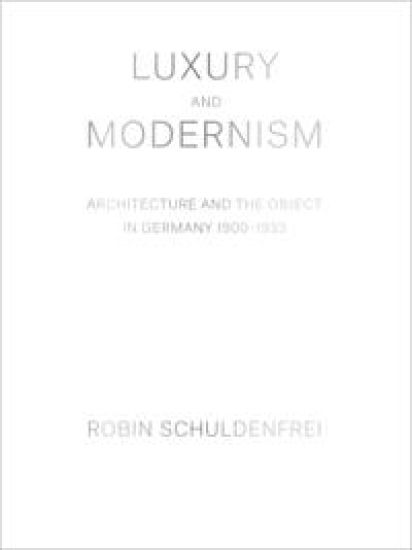
Luxury and Modernism

Luxury and Modernism

Robin Schuldenfrei

PRINCETON UNIVERSITY PRESS
2018
sidottu
While modernism was publicized as a fusion of technology, new materials, and rational aesthetics to improve the lives of ordinary people, it was often out of reach to the very masses it purportedly served. Luxury and Modernism shows how luxury was present in bold, literal forms in modern designs—from lavish materials and costly technologies to deluxe buildings and household objects—and in subtler ways as well, such as social milieus and modes of living. In a period of social unrest and extreme wealth disparity between the common worker and those at the helm of capitalist enterprises generating immense profits, architects envisioned modern designs providing solutions for a more equitable future. Robin Schuldenfrei exposes the disconnect between modernism's utopian discourse and its luxury objects and elite architectural commissions. Despite the movement's egalitarian rhetoric, many modern designs addressed the desires of the privileged individual. Yet as Schuldenfrei demonstrates, luxury was integral not only to how modern buildings and objects were designed, manufactured, and sold, but has contributed to modernism's appeal to this day.This beautifully illustrated book provides a new interpretation of modern architecture and design in Germany during the heyday of the Bauhaus and the Werkbund, tracing modernism's lasting allure to its many manifestations of luxury. Schuldenfrei casts the work of legendary figures such as Peter Behrens, Walter Gropius, and Ludwig Mies van der Rohe in an entirely different light, revealing the complexities and contradictions inherent to modernism's promotion and consumption.