Kirjojen hintavertailu. Mukana 12 142 741 kirjaa ja 12 kauppaa.
Kirjailija
Robin W. Lovin
Kirjat ja teokset yhdessä paikassa: 9 kirjaa, julkaisuja vuosilta 1995-2022, suosituimpien joukossa Reinhold Niebuhr. Vertaile teosten hintoja ja tarkista saatavuus suomalaisista kirjakaupoista.
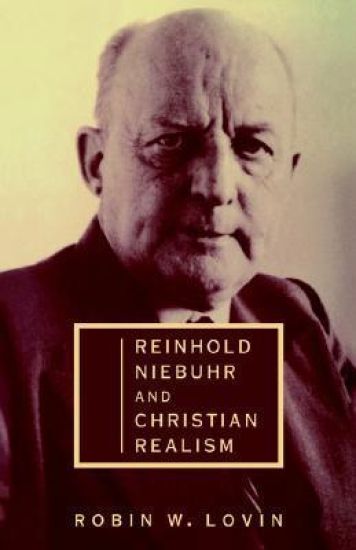
"Abingdon Pillars of Theology" is a series for the college and seminary classroom designed to help students grasp the basic and necessary facts, influence, and significance of major theologians. Written by major scholars, these books will outline the context, methodology, organizing principles, primary contributions, and major writings of people who have shaped theology as we know it today. Reinhold Niebuhr understood the tensions and complexities of the Christian Life. His approach to theology became known as "Christian realism." Through his life and work we can see the importance of paying attention to what is really happening and the witness we can make when we look at events with a wisdom shaped by a biblical understanding of history and human nature.
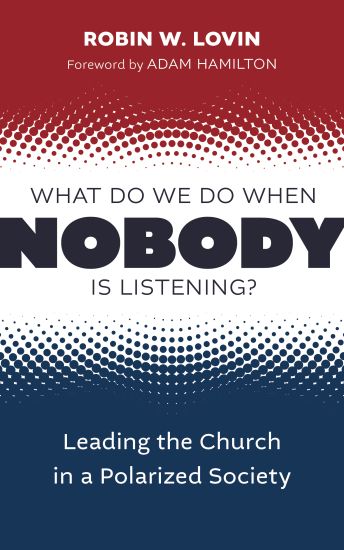
A trusted senior statesman in Christian ethics and ministry addresses the crisis of political polarization threatening the existence of the church. Polarization and political gridlock have been the norm in the United States for decades. As that reality seeps into every aspect of our society, churches find themselves not only affected, but often at the very center of the conflict. Rather than remaining places of inclusive community and generous dialogue, our sanctuaries have too often become ground zero of the culture wars. What can pastors do to restore the church's witness to the unity of all things in God--especially when it feels like members of the congregation would rather position the church's identity firmly on one side of the political spectrum or the other? And how can church leaders maintain peace while speaking the truth on important social issues--without either alienating parishioners who disagree or resorting to inane bothsiderism? Widely respected pastor and ethicist Robin Lovin offers sage counsel in this helpful book, arguing that to resist the trend of polarization in our church we must rediscover how the gospel teaches us to understand ourselves, our neighbors, and the purpose of politics. In part one, Lovin provides an overview of the situation in which we find ourselves, showing how polarization developed over recent decades and how, in both our society and our churches, we have adapted to division as the norm. In part two, he considers how Christians can shape a different response by learning to listen--to the Word of God, to the world, and to those who are not usually heard. With questions for discussion and reflection aligned with the content of each chapter, What Do We Do When Nobody Is Listening? provides an accessible roadmap for navigating out of the morass of polarization into a brighter future of church unity, during election seasons and beyond.
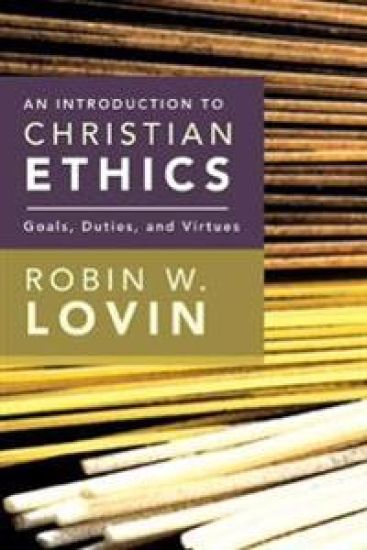
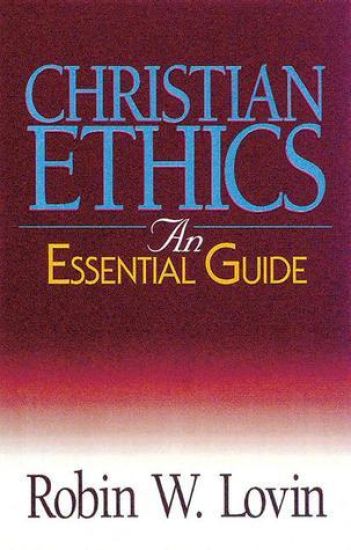
A few years ago, the first distinction that ethicists drew was the line between Christian ethics and philosophical ethics. However, in our global context, Christian ethicists must now, in addition, compare and contrast various ethics. Christian ethics has become increasingly multivocal not only because of a plurality of faiths but also because of a plurality of Christianities. Beginning with five key ideas about God's relationship to humanity and history, Dr. Lovin shows how these work together to shape the Christian stance. In the first three chapters, he then shows how those ideas took shape in relation to other ways of thinking about ethics in the world of early Christianity and identifies four major variations: Synergy, Integrity, Realism, and Liberation. The six remaining chapters cover historical and contemporary developments in the three ways of thinking about moral choices: teleology, deontology, and areteology. Test cases are also included. The purpose of the book is to indicate what is possible in Christian ethics, rather than to prescribe one way that it ought to be done. The aim is not to get readers to choose one among the Christian possibilities and use it exclusively, but use this introduction as a resource to arrive at their own ways of thinking about moral problems in order to act with integrity.
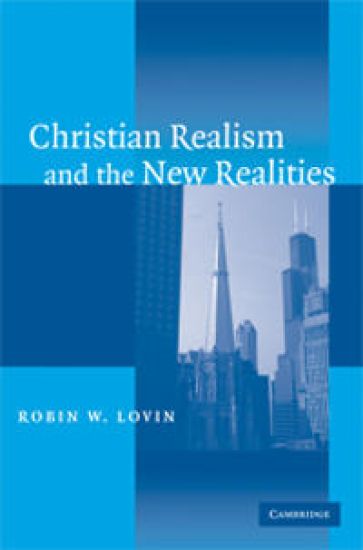
Are religion and public life really separate spheres of human activity? Should they be? In this book, Robin W. Lovin criticizes contemporary political and theological views that separate religion from public life as though these areas were systematically opposed and makes the case for a more integrated understanding of modern society. Such an understanding can be underpinned by 'Christian realism', which encourages responsible engagement with social and political problems from a distinctive perspective. Drawing on the work of Rawls, Galston, Niebuhr, and Bonhoeffer, Lovin argues that the responsibilities of everyday life are a form of politics. Political commitment is no longer confined to the sphere of law and government, and a global ethics arises from the decisions of individuals. This book will foster a better understanding of contemporary political thought among theologians and will introduce readers primarily interested in political thought to relevant developments in recent theology.
Are religion and public life really separate spheres of human activity? Should they be? In this book, Robin W. Lovin criticizes contemporary political and theological views that separate religion from public life as though these areas were systematically opposed and makes the case for a more integrated understanding of modern society. Such an understanding can be underpinned by 'Christian realism', which encourages responsible engagement with social and political problems from a distinctive perspective. Drawing on the work of Rawls, Galston, Niebuhr, and Bonhoeffer, Lovin argues that the responsibilities of everyday life are a form of politics. Political commitment is no longer confined to the sphere of law and government, and a global ethics arises from the decisions of individuals. This book will foster a better understanding of contemporary political thought among theologians and will introduce readers primarily interested in political thought to relevant developments in recent theology.
In this excellent outline of Christian ethics, Robin W. Lovin achieves a balance between the questions and issues which form the core of the study of ethics and the life situations from which those questions arise. Eschewing a sectarian approach which dismisses other understandings of the moral life, Lovin nonetheless lays claim to a specifically Christian understanding of ethics. He begins with basic Christian convictions about the reality of God and human redemption and weaves these convictions into the fabric of moral concerns that are widely shared in contemporary society. He takes note of the problems that arise when Christians try to act on or enforce their convictions in a pluralistic society and recognizes the variety of theological and moral beliefs that are held within the Christian community, as well as in the wider society.
This is a new assessment of the work of the twentieth century’s best-known public theologian. Reinhold Niebuhr’s ability to make sense of international politics, racial tension, labour unrest, and cultural transformations gained him a wide audience, but his responsiveness to changing times was grounded in a remarkably consistent theology. Today, Christian realism remains an important way to understand politics and society in theological terms, but the enduring themes of Niebuhr’s work must also be related to new generations of thinkers in theology, politics, law, and philosophy. Robin W. Lovin traces its key themes so as to identify the political, moral, and theological realisms on which Niebuhr’s persuasive and subtle depiction of human nature rests. In that context, a complex, dialectical, Niebuhrian approach still appears as a vital and lively alternative to the oversimplified accounts of politics and justice that have dominated recent decades.