Kirjojen hintavertailu. Mukana 12 492 317 kirjaa ja 12 kauppaa.

Kirjailija

Robin Waterfield

Kirjat ja teokset yhdessä paikassa: 35 kirjaa, julkaisuja vuosilta 2002-2026, suosituimpien joukossa Rene Guenon and Teh Future of the West. Vertaile teosten hintoja ja tarkista saatavuus suomalaisista kirjakaupoista.

35 kirjaa

Kirjojen julkaisuhaarukka 2002-2026.

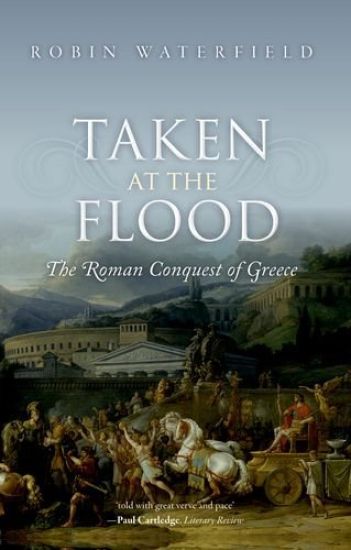
Taken at the Flood

Taken at the Flood

Robin Waterfield

Oxford University Press
2016
nidottu
The Romans first set military foot on Greek soil in 229 BCE; only sixty or so years later it was all over, and shortly thereafter Greece became one of the first provinces of the emerging Roman Empire. It was an incredible journey - a swift, brutal, and determined conquest of the land to whose art, philosophy, and culture the Romans owed so much. Rome found the eastern Mediterranean divided, in an unstable balance of power, between three great kingdoms - the three Hellenistic kingdoms that had survived and flourished after the wars of Alexander the Great's Successors: Macedon, Egypt, and Syria. Internal troubles took Egypt more or less out of the picture, but the other two were reduced by Rome. Having established itself, by its defeat of Carthage, as the sole superpower in the western Mediterranean, Rome then systematically went about doing the same in the east, until the entire Mediterranean was under her control. Apart from the thrilling military action, the story of the Roman conquest of Greece is central to the story of Rome itself and the empire it created. As Robin Waterfield shows, the Romans developed a highly sophisticated method of dominance by remote control over the Greeks of the eastern Mediterranean - the cheap option of using authority and diplomacy to keep order rather than standing armies. And it is a story that raises a number of fascinating questions about Rome, her empire, and her civilization. For instance, to what extent was the Roman conquest a planned and deliberate policy? What was it about Roman culture that gave it such a will for conquest? And what was the effect on Roman intellectual and artistic culture, on their very identity, of their entanglement with an older Greek civilization, which the Romans themselves recognized as supreme?
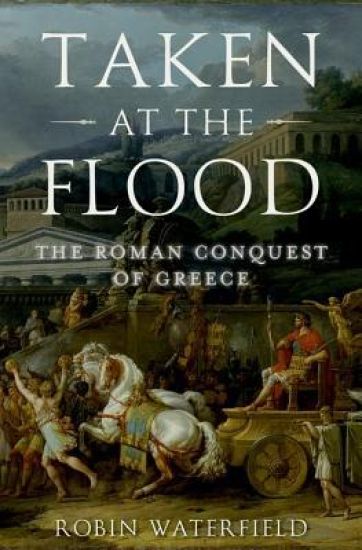
Taken at the Flood: The Roman Conquest of Greece

Taken at the Flood: The Roman Conquest of Greece

Robin Waterfield

Oxford University Press
2016
nidottu
"Is there anyone on earth who is so narrow-minded or uninquisitive that he could fail to want to know how and thanks to what kind of political system almost the entire known world was conquered and brought under a single empire in less than fifty-three years?" --Polybius, Histories The 53-year period Polybius had in mind stretched from the start of the Second Punic War in 219 BCE until 167, when Rome overthrew the Macedonian monarchy and divided the country into four independent republics. This was the crucial half-century of Rome's spectacular rise to imperial status, but Roman interest in its eastern neighbors began a little earlier, with the First Illyrian War of 229, and climaxed later with the infamous destruction of Corinth in 146. Taken at the Flood chronicles this momentous move by Rome into the Greek east. Until now, this period of history has been overshadowed by the threat of Carthage in the west, but events in the east were no less important in themselves, and Robin Waterfield's account reveals the peculiar nature of Rome's eastern policy. For over seventy years, the Romans avoided annexation so that they could commit their military and financial resources to the fight against Carthage and elsewhere. Though ultimately a failure, this policy of indirect rule, punctuated by periodic brutal military interventions and intense diplomacy, worked well for several decades, until the Senate finally settled on more direct forms of control. Waterfield's fast-paced narrative focuses mainly on military and diplomatic maneuvers, but throughout he interweaves other topics and themes, such as the influence of Greek culture on Rome, the Roman aristocratic ethos, and the clash between the two best fighting machines the ancient world ever produced: the Macedonian phalanx and Roman legion. The result is an absorbing account of a critical chapter in Rome's mastery of the Mediterranean.
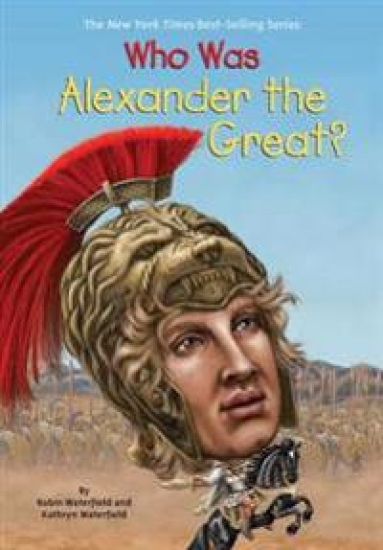
Who Was Alexander the Great?

Who Was Alexander the Great?

Kathryn Waterfield; Robin Waterfield

Grosset and Dunlap
2016
pokkari
When Alexander was a boy in ancient Macedon, he already had grand ambitions. He complained that his father, the great king of Macedon, wasn't leaving anything for him to conquer! This, of course, was not the case. King Alexander went on to control most of the known world of the time. His victories won him many supporters but they also earned him enemies. This easy to read biography offers a fascinating look at the life of Alexander and the world he lived in. A series of illustrated biographies for young readers featuring significant historical figures, including artists, scientists, and world leaders.
Taken at the Flood

Taken at the Flood

Robin Waterfield

Oxford University Press
2014
sidottu
The Romans first set military foot on Greek soil in 229 BCE; only sixty or so years later it was all over, and shortly thereafter Greece became one of the first provinces of the emerging Roman Empire. It was an incredible journey - a swift, brutal, and determined conquest of the land to whose art, philosophy, and culture the Romans owed so much. Rome found the eastern Mediterranean divided, in an unstable balance of power, between three great kingdoms - the three Hellenistic kingdoms that had survived and flourished after the wars of Alexander the Great's Successors: Macedon, Egypt, and Syria. Internal troubles took Egypt more or less out of the picture, but the other two were reduced by Rome. Having established itself, by its defeat of Carthage, as the sole superpower in the western Mediterranean, Rome then systematically went about doing the same in the east, until the entire Mediterranean was under her control. Apart from the thrilling military action, the story of the Roman conquest of Greece is central to the story of Rome itself and the empire it created. As Robin Waterfield shows, the Romans developed a highly sophisticated method of dominance by remote control over the Greeks of the eastern Mediterranean - the cheap option of using authority and diplomacy to keep order rather than standing armies. And it is a story that raises a number of fascinating questions about Rome, her empire, and her civilization. For instance, to what extent was the Roman conquest a planned and deliberate policy? What was it about Roman culture that gave it such a will for conquest? And what was the effect on Roman intellectual and artistic culture, on their very identity, of their entanglement with an older Greek civilization, which the Romans themselves recognized as supreme?
Taken at the Flood: The Roman Conquest of Greece

Taken at the Flood: The Roman Conquest of Greece

Robin Waterfield

Oxford University Press, USA
2014
sidottu
Is there anyone on earth who is so narrow-minded or uninquisitive that he could fail to want to know how and thanks to what kind of political system almost the entire known world was conquered and brought under a single empire in less than fifty-three years? --Polybius, Histories The 53-year period Polybius had in mind stretched from the start of the Second Punic War in 219 BCE until 167, when Rome overthrew the Macedonian monarchy and divided the country into four independent republics. This was the crucial half-century of Rome's spectacular rise to imperial status, butRoman interest in its eastern neighbors began a little earlier, with the First Illyrian War of 229, and climaxed later with the infamous destruction of Corinth in 146. Taken at the Flood chronicles this momentous move by Rome into the Greek east. Until now, this period of history has been overshadowed by the threat of Carthage in the west, but events in the east were no less important in themselves, and Robin Waterfield's account reveals the peculiar nature ofRome's eastern policy. For over seventy years, the Romans avoided annexation so that they could commit their military and financial resources to the fight against Carthage and elsewhere. Though ultimately a failure, this policy of indirect rule, punctuated by periodic brutal military interventionsand intense diplomacy, worked well for several decades, until the Senate finally settled on more direct forms of control. Waterfield's fast-paced narrative focuses mainly on military and diplomatic maneuvers, but throughout he interweaves other topics and themes, such as the influence of Greek culture on Rome, the Roman aristocratic ethos, and the clash between the two best fighting machines the ancient world everproduced: the Macedonian phalanx and Roman legion. The result is an absorbing account of a critical chapter in Rome's mastery of the Mediterranean.
The Greek Myths

The Greek Myths

Robin Waterfield; Kathryn Waterfield

Quercus Publishing
2013
pokkari
The Greek Myths contains some of the most thrilling, romantic and unforgettable stories in all human history. From Achilles rampant on the fields of Troy, to the gods at sport on Mount Olympus, from Icarus flying too close to the sun, to the superhuman feats of Heracles, Theseus and the wily Odysseus, these timeless tales exert a fascination and inspiration that have endured for millennia. There are few people as steeped in the Ancient World as Robin and Kathryn Waterfield, and in their hands the heroism, humour, mystery, sensuality and brutality of the Greek Myths are brought brilliantly to life.
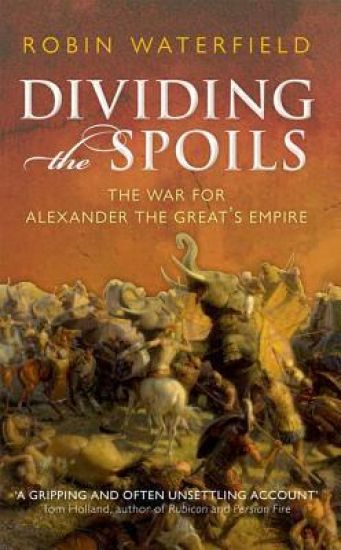
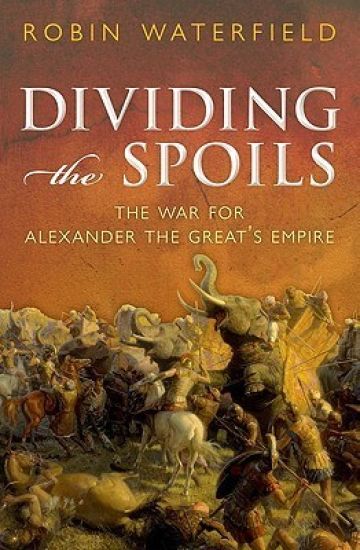
Dividing the Spoils: The War for Alexander the Great's Empire
Alexander the Great conquered an enormous empire--stretching from Greece to the Indian subcontinent--and his death triggered forty bloody years of world-changing events. These were years filled with high adventure, intrigue, passion, assassinations, dynastic marriages, treachery, shifting alliances, and mass slaughter on battlefield after battlefield. And while the men fought on the field, the women, such as Alexander's mother Olympias, schemed from their palaces and pavilions. Dividing the Spoils serves up a fast-paced narrative that captures this turbulent time as it revives the memory of the Successors of Alexander and their great contest for his empire. The Successors, Robin Waterfield shows, were no mere plunderers. Indeed, Alexander left things in great disarray at the time of his death, with no guaranteed succession, no administration in place suitable for such a large realm, and huge untamed areas both bordering and within his empire. It was the Successors--battle-tested companions of Alexander such as Ptolemy, Perdiccas, Seleucus, and Antigonus the One-Eyed--who consolidated Alexander's gains. Their competing ambitions, however, eventually led to the break-up of the empire. To tell their story in full, Waterfield draws upon a wide range of historical materials, providing the first account that makes complete sense of this highly complex period. Astonishingly, this period of brutal, cynical warfare was also characterized by brilliant cultural achievements, especially in the fields of philosophy, literature, and art. A new world emerged from the dust and haze of battle, and, in addition to chronicling political and military events, Waterfield provides ample discussion of the amazing cultural flowering of the early Hellenistic Age.
Dividing the Spoils

Dividing the Spoils

Robin Waterfield

Oxford University Press
2012
nidottu
This is the story of one of the great forgotten wars of history - which led to the division of one of the biggest empires the world has ever seen. Alexander the Great built up his huge empire in little more than a decade, stretching from Greece in the West, via Egypt, Syria, Babylonia, and Persia through to the Indian sub-continent in the East. After his death in 323 BC, it took forty years of world-changing warfare for his heirs to finish carving up these vast conquests. These years were filled with high adventure, intrigue, passion, assassinations, dynastic marriages, treachery, shifting alliances, and mass slaughter on battlefield after battlefield. And while the men fought on the field, the women schemed from their palaces and pavilions. Dividing the Spoils revives the memory of Alexander's Successors, whose fame has been dimmed only because they stand in his enormous shadow. In fact, Alexander left things in a mess at the time of his death, with no guaranteed succession, no administration in place suitable for such an enormous realm, and huge untamed areas both bordering and within his 'empire'. The Successors consolidated the Conqueror's gains. Their competing ambitions, however, meant that consolidation inevitably led to the break-up of the empire. Astonishingly, this period of brutal, cynical warfare was also characterized by brilliant cultural developments, especially in the fields of philosophy, literature, and art. As well as an account of the military action, this is also the story of an amazing cultural flowering. In some senses, a new world emerged from the dust and haze of battle - the world of Hellenistic Greece. A surprising amount of the history of many countries, from Greece to Afghanistan, began in the hearts and minds of the Successors of Alexander the Great. As this book demonstrates, their stories deserve to be better known.
Dividing the Spoils

Dividing the Spoils

Robin Waterfield

Oxford University Press
2011
sidottu
This is the story of one of the great forgotten wars of history - which led to the disintegration of one of the biggest empires the world has ever seen. Alexander the Great built up his huge empire in little more than a decade, stretching from Greece in the West, via Egypt, Syria, Babylonia, and Persia through to the Indian sub-continent in the East. After his death in 323 BC, it took forty years of world-changing warfare for his heirs to finish carving up these vast conquests. These years were filled with high adventure, intrigue, passion, assassinations, dynastic marriages, treachery, shifting alliances, and mass slaughter on battlefield after battlefield. And while the men fought on the field, the women schemed from their palaces and pavilions. Dividing the Spoils revives the memory of Alexander's Successors, whose fame has been dimmed only because they stand in his enormous shadow. In fact, Alexander left things in a mess at the time of his death, with no guaranteed succession, no administration in place suitable for such an enormous realm, and huge untamed areas both bordering and within his 'empire'. The Successors consolidated the Conqueror's gains. Their competing ambitions, however, meant that consolidation inevitably led to the break-up of the empire. Astonishingly, this period of brutal, cynical warfare was also characterized by brilliant cultural developments, especially in the fields of philosophy, literature, and art. So as well as an account of the military action, this is also the story of an amazing cultural flowering. In some senses, a new world emerged from the dust and haze of battle. A surprising amount of the history of many countries, from Greece to Afghanistan, began in the hearts and minds of the Successors of Alexander the Great. As this book demonstrates, their stories deserve to be better known.
Christians in Persia (RLE Iran C)

Christians in Persia (RLE Iran C)

Robin Waterfield

Routledge
2011
sidottu
When it was originally published this book broke new ground in presenting one continuous narrative of the history of Christians in Persia from the second century A.D to the 1970s. The material gathered here was previously only to be found in obscure books, manuscripts and foreign periodicals. Christians in Persia shows the intricate history of the period concerned; the personalities of the rulers and the ruled; the difficult task of the missionaries; their successes and failures and the consequences of their efforts. All this is related to the wider history of the country and to the expansion of Christianity in the East.
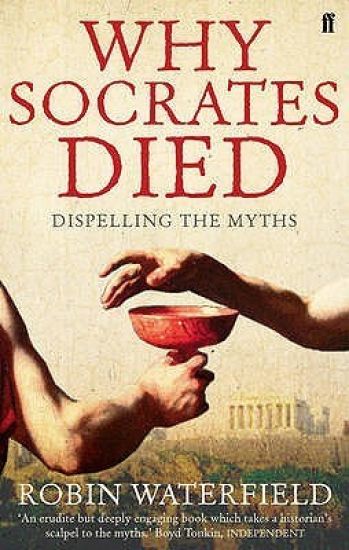
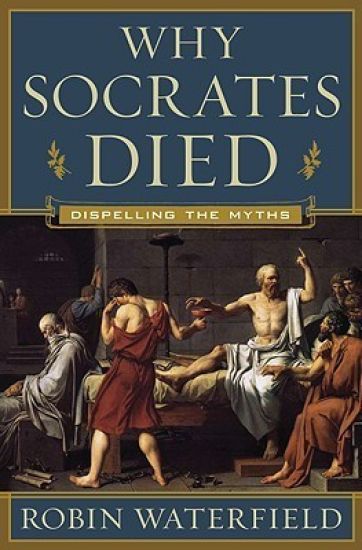
Why Socrates Died

Why Socrates Died

Robin Waterfield

Faber Faber
2010
pokkari
Socrates' trial and death together form an iconic moment in Western civilization. The picture we have of it - created by his immediate followers and perpetuated in countless works of literature and art ever since - is that a noble man was put to death in a fit of folly by the ancient Athenian democracy. But an icon, an image, is not reality. The trial was, in part, a response to troubled times - a catastrophic war and turbulent social changes - and so provides a good lens through which to explore the history of the period; the historical facts allow us to strip away some of the veneer that has for so long denied us glimpses of the real Socrates. Written by a scholar, but not only for scholars, this is an accessible, authoritative account of one of the defining periods of Western civilization.
Why Socrates Died

Why Socrates Died

Robin Waterfield

WW Norton Co
2009
sidottu
Socrates trial and death together form an iconic moment in Western civilization. In 399 BCE, the great philosopher stood before an Athenian jury on serious charges: impiety and subverting the young men of the city. The picture we have of it created by his immediate followers, Plato and Xenophon, and perpetuated in countless works of literature and art ever since is of a noble man putting his lips to the poisonous cup of hemlock, sentenced to death in a fit of folly by an ancient Athenian democracy already fighting for its own life. But an icon, an image, is not reality, and time has transmuted so many of the facts into historical fable. Aware of these myths, Robin Waterfield has examined the actual Greek sources and presents here a new Socrates, in which he separates the legend from the man himself. As Waterfield recounts the story, the charges of impiety and corrupting the youth of Athens were already enough for a death sentence, but the prosecutors accused him of more. They asserted that Socrates was not just an atheist and the guru of a weird sect but also an elitist who surrounded himself with politically undesirable characters and had mentored those responsible for defeat in the Peloponnesian War. Their claims were not without substance, for Plato and Xenophon, among Socrates closest companions, had idolized him as students, while Alcibiades, the hawkish and notoriously self-serving general, had brought Athens to the brink of military disaster. In fact, as Waterfield perceptively shows through an engrossing historical narrative, there was a great deal of truth, from an Athenian perspective, in these charges. The trial was, in part, a response to troubled times Athens was reeling from a catastrophic war and undergoing turbulent social changes and Socrates companions were unfortunately direct representatives of these troubles. Their words and actions, judiciously sifted and placed in proper context, not only serve to portray Socrates as a flesh-and-blood historical figure but also provide a good lens through which to explore both the trial and the general history of the period. Ultimately, the study of these events and principal figures allows us to finally strip away the veneer that has for so long denied us glimpses of the real Socrates. Why Socrates Died is an illuminating, authoritative account of not only one of the defining periods of Western civilization but also of one of its most defining figures."
Xenophon's Retreat: Greece, Persia, and the End of the Golden Age
In The Expedition of Cyrus, the Western world's first eyewitness account of a military campaign, Xenophon told how, in 401 B.C., a band of unruly Greek mercenaries traveled east to fight for the Persian prince Cyrus the Younger in his attempt to wrest the throne of the mighty Persian empire from his brother. With this first masterpiece of Western military history forming the backbone of his book, Robin Waterfield explores what remains unsaid and assumed in Xenophon's account--much about the gruesome nature of ancient battle and logistics, the lives of Greek and Persian soldiers, and questions of historical, political, and personal context, motivation, and conflicting agendas. The result is a rounded version of the story of Cyrus's ill-fated march and the Greeks' perilous retreat--a nuanced and dramatic perspective on a critical moment in history that may tell us as much about our present-day adventures in the Middle East, site of Cyrus's debacle and the last act of the Golden Age, as it does about the great powers of antiquity in a volatile period of transition. Just as Xenophon brought the thrilling, appalling expedition to life, Waterfield evokes Xenophon himself as a man of his times--reflecting for all time invaluable truths about warfare, overweaning ambition, the pitfalls of power, and the march of history.
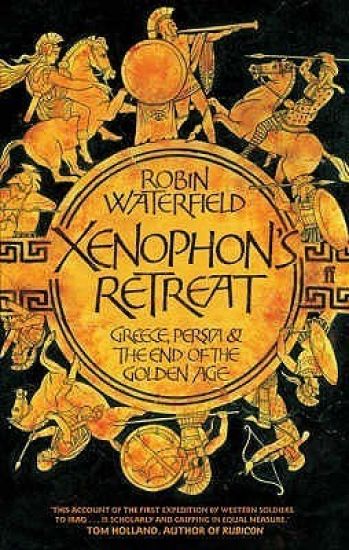
Xenophon's Retreat

Xenophon's Retreat

Robin Waterfield

Faber Faber
2007
pokkari
It is 401 BC. After an epic battle in Persia, Xenophon is elected general of the defeated Greek army and must lead the men on a fraught journey back home - a journey of hundreds of miles, north from modern-day Iraq into the mountains of Kurdistan and Armenia, and down to the coast of the Black Sea, fighting all the way, harried on all sides by Persian forces, wild mountain tribesmen, and a bitter winter...A gripping adventure full of drama, human interest, strong characters, pathos, and triumph.
Hidden Depths

Hidden Depths

Robin Waterfield

Brunner-Routledge
2004
nidottu
In Hidden Depths, Robin Waterfield explores the fascinating world of hypnosis, tracing the history of this often misunderstood craft beginning with a passage in the book of Genesis, and continuing through his own personal experiences today. Waterfield uses the history and controversy surrounding the practice of hypnosis to gain insight into our behavior and psychology, and considers how hypnotic techniques have been absorbed into society through advertising, media and popular culture.