
Kirjailija
Robin Williams
Kirjat ja teokset yhdessä paikassa: 15 kirjaa, julkaisuja vuosilta 1995-2026, suosituimpien joukossa After Hype. Vertaile teosten hintoja ja tarkista saatavuus suomalaisista kirjakaupoista.
15 kirjaa
Kirjojen julkaisuhaarukka 1995-2026.

Robin Williams, author of GIRL. returns to tell their story of the things that almost broke them in this raw and vulnerable collection. The Edge of Hope brings you through a journey of hurt, pain, betrayal, grief, and anger to the guaranteed destination of healing, self-love, forgiveness, confidence, and reflection all through a mix of modern and experimental poetry, prose, and affirmations.

These days, practically anyone may need to stand before an audience and deliver a great presentation. You're not a professional designer, but you want your slides to look great, persuade your audience, and help you achieve your goals. Do what more than a million people have already done: get start-to-finish help from Robin Williams, the beloved, best-selling "non-designer's designer" who’s taught an entire generation the basics of design and typography. In The Non-Designer's Presentation Book, Second Edition, Williams introduces four fundamental, easy-to-use principles for designing great presentation visuals, and four more principles specific to crystal-clear communication with slides. Whether you work with a Mac or PC, PowerPoint, Keynote, or some other tool, Robin guide you -- in her signature, light-hearted style -- through the entire process of creating an inspiring, visually powerful presentation that works. She’ll show you: Exactly what makes a good presentation -- or a bad one How to plan, organize, and outline your presentation more effectively Four principles of designing effective presentations Four principles for designing beautiful slides that communicate clearly An exhaustive list of timeless presentation rules...that you should totally ignore! This Second Edition has been expanded and updated with new examples reflecting modern design, plus new quizzes and projects to give you even more hands-on practice. It’s all you need to succeed -- even if you’ve never designed or delivered a presentation before!
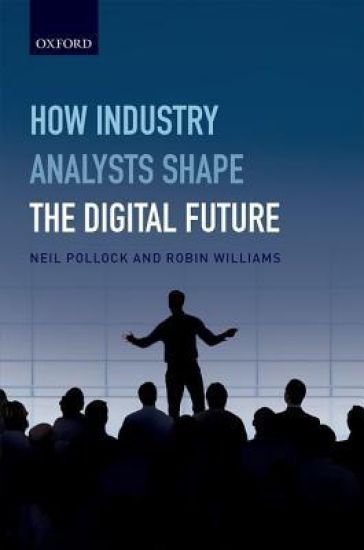
How Industry Analysts Shape the Digital Future
Neil Pollock; Robin Williams
Oxford University Press
2016
sidottu
Industry analysts are in the business of shaping the technological and economic future. They attempt to 'predict' what will become the next big thing; to spot new emerging trends and paradigms; to decide which hi-tech products will win out over others and to figure out which technology vendors can deliver on their promises. In just a few short years, they have developed a surprising degree of authority over technological innovation. Yet we know very little, if anything about them. This book seeks to explain how this was achieved and on what this authority rests. Who are the experts who increasingly command the attention of vendor and user communities? What is the nature of this new form of technical and business knowledge? How Industry Analysts Shape the Digital Future offers the first book length study into this rarely scrutinized form of business expertise. Contributions to this volume show how, from a small group of mainly North American players which arose in the 1970s, Gartner Inc. has emerged as clear leader of a $6 billion industry that involves several hundred firms worldwide. Through interviews and observation of Gartner Inc. and other industry analyst firms, the book explores how these firms create their predictions, market classifications and rankings, as well as with how these outputs are assessed and consumed. The book asks why many social scientists have ignored the proliferation of these new forms of management and technical expertise. In some cases scholars have 'deflated' this kind of business acumen, portraying it as arbitrary knowledge whose methods and content do not deserve enquiry. The valuable exception here has been the path-breaking work on the 'performativity' of economic, financial or accounting knowledge. Drawing upon recent performativity arguments, the book argues the case for a Sociology of Business Knowledge.
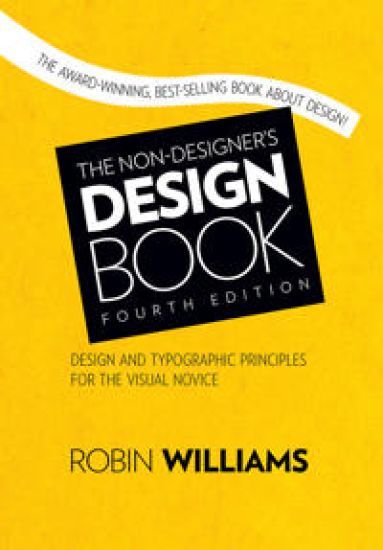
For nearly 20 years, designers and non-designers alike have been introduced to the fundamental principles of great design by author Robin Williams. Through her straightforward and light-hearted style, Robin has taught hundreds of thousands of people how to make their designs look professional using four surprisingly simple principles. Now in its fourth edition, The Non-Designer’s Design Book offers even more practical design advice, including a new chapter on the fundamentals of typography, more quizzes and exercises to train your Designer Eye, updated projects for you to try, and new visual and typographic examples to inspire your creativity. Whether you’re a Mac user or a Windows user, a type novice, or an aspiring graphic designer, you will find the instruction and inspiration to approach any design project with confidence. THIS ESSENTIAL GUIDE TO DESIGN WILL TEACH YOU The four principles of design that underlie every design projectHow to design with colorHow to design with typeHow to combine typefaces for maximum effectHow to see and think like a professional designerSpecific tips on designing newsletters, brochures, flyers, and other projects


This is the first book that addresses the genesis and career of the modern day enterprise system in a comprehensive and robust manner. It does so through setting out a new approach for the study of packaged solutions and presents novel empirical studies based on in-depth ethnographic and longitudinal research conducted within supplier organisations and other relevant sites. The authors shift the debate within the social study of information systems, from one that is primarily focused on ‘implementation studies’, to one that follows software as it evolves, matures and crosses organisational boundaries. Through tracing and comparing the ‘biography’ of a number of software systems the authors develop a new vocabulary for the dynamics that surround standardised software.Original in its approach, this book draws on a number of ethnographic studies in supplier organisations, user settings, user forums, and applies theories from the Sociology of Technology, Technology Studies, Innovation Studies, and beyond. As such it will be of interest across all of these subject areas and to researchers from the wider fields of Information Systems and Business Studies.

This is the first book that addresses the genesis and career of the modern day enterprise system in a comprehensive and robust manner. It does so through setting out a new approach for the study of packaged solutions and presents novel empirical studies based on in-depth ethnographic and longitudinal research conducted within supplier organisations and other relevant sites. The authors shift the debate within the social study of information systems, from one that is primarily focused on ‘implementation studies’, to one that follows software as it evolves, matures and crosses organisational boundaries. Through tracing and comparing the ‘biography’ of a number of software systems the authors develop a new vocabulary for the dynamics that surround standardised software.Original in its approach, this book draws on a number of ethnographic studies in supplier organisations, user settings, user forums, and applies theories from the Sociology of Technology, Technology Studies, Innovation Studies, and beyond. As such it will be of interest across all of these subject areas and to researchers from the wider fields of Information Systems and Business Studies.

This book is about the increasing significance of DNA profiling for crime investigation in modern society. It focuses on developments in the UK as the world-leader in the development and application of forensic DNA technology and in the construction of DNA databases as an essential element in the successful use of DNA for forensic purposes. The book uses data collected during the course of Wellcome Trust funded research into police uses of the UK National DNA Database (NDNAD) to describe the relationship between scientific knowledge and police investigations. It is illustrated throughout by reference to some of the major UK criminal cases in which DNA evidence has been presented and contested.

This book is about the increasing significance of DNA profiling for crime investigation in modern society. It focuses on developments in the UK as the world-leader in the development and application of forensic DNA technology and in the construction of DNA databases as an essential element in the successful use of DNA for forensic purposes. The book uses data collected during the course of Wellcome Trust funded research into police uses of the UK National DNA Database (NDNAD) to describe the relationship between scientific knowledge and police investigations. It is illustrated throughout by reference to some of the major UK criminal cases in which DNA evidence has been presented and contested.

Social Learning in Technological Innovation
Robin Williams; James Stewart; Roger Slack
Edward Elgar Publishing Ltd
2005
sidottu
This book explores the innovation processes involved in the application and use of Information and Communications Technologies (ICTs) at work and in everyday life. These are analysed through an unparalleled set of 23 European case studies, which, uniquely, address both the design/development and the implementation of ICT applications across the cultural, civic information and education sectors. The authors draw upon a range of analytical traditions - from sociology of technology and cultural and consumption studies, to computer systems design - to build an integrated, evolutionary understanding of the processes of innovation in ICT. Their social learning perspective addresses the collective learning and negotiation processes involved, highlighting the contribution of technology users, as well as designers and developers, in shaping innovation.The book will have an immediate readership amongst scholars of technology studies, as well as researchers and practitioners interested in computer system development and human computer interaction.

Covers punctuation, special characters, accent marks, fonts, tabs, indentations, widows and orphans, hyphenations, line breaks, linespacing, justified text, and typeface combinations.

Policies for Cleaner Technology
Tony Clayton; Graham Spinardi; Robin Williams
Earthscan Ltd
1999
nidottu
Clean technology does not just aim to dilute or detoxify industrial waste. It aims to eliminate it by re-engineering the entire production cycle. As industry is constrained by regulations on the one hand and consumer pressure on the other, energy-efficient, resource-efficient and pollution-free production becomes imperative. It will be the next stage of industrial development. Using extensive empirical analysis of a range of different industrial sectors, this book shows how cleaner technology can be implemented, above all by the companies themselves. It looks at regulatory initiatives and focuses on how firms themselves can introduce the new technologies, systems and polices required.

Expertise and Innovation
Robin Fincham; James Fleck; Rob Procter; Harry Scarbrough; Margaret Tierney; Robin Williams
Oxford University Press
1995
sidottu
The nature of technical expertise has become increasingly important and problematic in the post-modern era, as structured hierarchies and production methods are revised. Financial services, one of our most important economic sectors, has also been confronting very high degrees of uncertainty that reflect great institutional and market changes. In this fluid and competitive environment technological change - in particular the widening scope of information technology (IT) - has become vitally important. This study is about the strategic uses of IT in retail financial services. It is based on the Scottish part of the industry, a highly cohesive sector in its own right, but one with universal linkages to UK and global finance. A set of seven case studies forms the empirical base, while the study also focuses on key strategic projects within these case companies. The purpose is to arrive at an understanding of how firms develop a strategic approach to IT. This hinges on the management of expertise - the ability to integrate detailed technological expertise with wider organizational and marketing goals. The study examines a number of themes around this key issue: the process of formation of IT strategy, sectorial influences on the implementation of computer-based systems, and the occupational and career factors that shape IT expertise.