Kirjojen hintavertailu. Mukana 12 284 572 kirjaa ja 12 kauppaa.

Kirjailija

Rod Mengham

Kirjat ja teokset yhdessä paikassa: 15 kirjaa, julkaisuja vuosilta 1999-2026, suosituimpien joukossa Chance of a Storm. Vertaile teosten hintoja ja tarkista saatavuus suomalaisista kirjakaupoista.

15 kirjaa

Kirjojen julkaisuhaarukka 1999-2026.

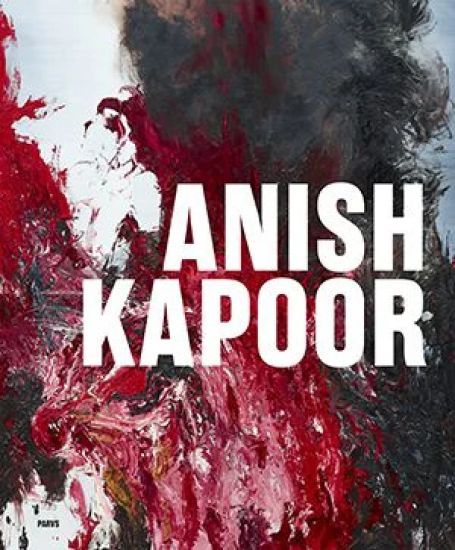
Anish Kapoor

Anish Kapoor

Esko Valtaoja; Timo Valjakka; Rod Mengham

Kustannusosakeyhtiö Parvs
2026
sidottu
Anish Kapoor on yksi maailman merkittävimmistä nykytaiteilijoista. Kapoorin vahvat ja aistikkaat veistokset pitävät katsojaa otteessaan ja määrittävät tilaa tai ympäristöä, joihin ne on luotu. Vaikka Anish Kapoorin teokset ovat usein ulottuvuuksiltaan monumentaalisia, ne ovat tunnelmaltaan intiimejä - ne vaikuttavat sijaitsevan sisäisen maailmamme ja ulkoisen todellisuuden välisellä rajaseudulla. Kapoor hyödyntää taiteessaan metafyysistä vastakkainasettelua, ikuisia kysymyksiä olemisesta ja olemattomuudesta, tuhosta ja syntymästä. Tämä kirja esittelee Kapoorin viimeaikaista tuotantoa ja dokumentoi Serlachiuksella kesällä 2026 avautuvaan näyttelyyn tehdyn monumentaaliveistoksen syntyä. Se sisältää professori Rod Menghamin ja emeritusprofessori Esko Valtaojan esseet sekä taiteilijan haastattelun, jonka on tehnyt näyttelyn kuraattori, taidekriitikko Timo Valjakka. Anish Kapoor is one of the world's leading contemporary artists. His bold, sensual sculptures take hold of the viewer and redefine the space or context in which they are created. Although frequently monumental in scale, Kapoor's works are intimate - as if occupying the borderland between our inner world and external reality. He makes use of visual archetypes and metaphysical opposites, the eternal questions of being and non-being, destruction and birth. This volume presents Kapoor's recent output and documents the genesis of the monumental sculpture made for the exhibition opening at Serlachius Museums, Finland, in summer 2026. There are also essays by Professor Rod Mengham and Professor Emeritus Esko Valtaoja, plus an interview with Anish Kapoor by the exhibition's curator, art critic Timo Valjakka.
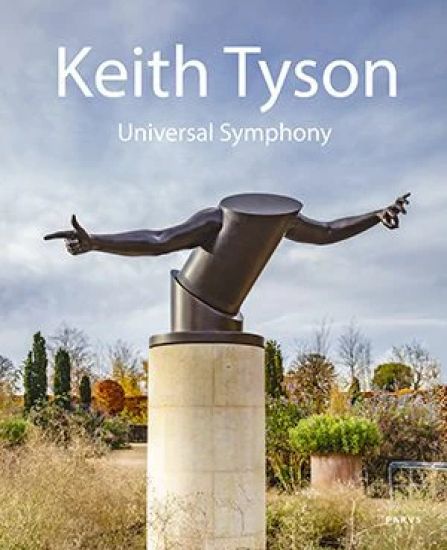
Keith Tyson

Keith Tyson

Keith Tyson; Rod Mengham; Timo Valjakka

Kustannusosakeyhtiö Parvs
2025
sidottu
Turner-palkittu brittitaiteilija Keith Tyson (s. 1969) ammentaa teknisesti ja käsitteellisesti hämmentävän monipuolisiin veistoksiinsa ja maalauksiinsa aineksia muun muassa luonnontieteistä, matematiikasta, runoudesta ja mytologiasta. Itseilmaisun asemesta häntä kiinnostaa se, miten arkielämässä kohtaamamme tietojärjestelmät, fyysiset prosessit sekä yhteiskunnalliset ja esteettiset impulssit synnyttävät teoksia, joista jokainen on lopulta oma ainutkertainen yksilönsä. Tysonin taiteessa kaikki liittyy kaikkeen, yllättävästi ja ilman hierarkiaa, heijastaen tarkasti meidän yhteisen maailmamme monimutkaisuutta. Kirjan on toimittanut Timo Valjakka.Turner Prize-winning British artist Keith Tyson's (b. 1969) technically and conceptually astonishing diverse sculptures and paintings are inspired by elements from, among other things, the natural sciences, mathematics, poetry and mythology. Instead of self-expression, Tyson is interested in how the information systems and physical processes as well as social and aesthetic impulses we encounter in our everyday lives give rise to works of art, each of which is ultimately a unique entity. In Tyson's art, everything is connected to everything, unexpectedly and without hierarchy, accurately reflecting the complexity of our shared world. The book is edited by Timo Valjakka.
Midnight in the Kant Hotel

Midnight in the Kant Hotel

Rod Mengham

Little Island Press
2021
nidottu
Midnight in the Kant Hotel is an absorbing account of contemporary art, composed over twenty years. The essays revisit the same artists as they develop, following them in time, changing perspectives as he, and they, develop. Mengham is a significant curator, organising exhibitions: 'There is no more productive engagement with someone else's artworks than finding the right way to show it, since artworks are always direct statements or questions about articulations of space, and the curator's job obviously is to enhance such questions and statements.' This discipline gives the writer a series of uniquely privileged perspectives, touching, lifting, moving and re-moving the objects: 'nothing compares to living with art'. The book opens with themes: what is domestic space? what does the atrocity exhibition tell us? what is the refugee aesthetic? Essays on particular artists follow, including Marc Atkins, Stephen Chambers, Jake and Dinos Chapman, Tony Cragg, Antony Gormley, Damien Hirst, Ilya and Emilia Kabakov, Anselm Kiefer, Laura Owens, Doris Salcedo, Agnes Thurnauer, Koen Vanmechelen and Alison Wilding. Always, he is in dialogue with the work, rather than with the artist.
Literature of the 1930s: Border Country

Literature of the 1930s: Border Country

Rod Mengham

Edinburgh University Press
2020
sidottu
The writing of the 1930s is the record of a time dominated by a sense of being caught between different times and places; between two world wars between generations, between modernism and realism, between middle class and working class, between local and national cultures and between national and international politics. British Literature showed more overt engagement with radical politics than ever before or since while also testing the uses and limits of difficulty, encryption and the legacy of modernism. Too often thought of as a period defined by the preoccupations of a handful of prestigious writers, the decade of the 1930s is here re-read in ways that relate these preoccupations to popular cultural emphases as well as to international debates, attending to middlebrow tastes as well as to avant- garde experimentation, and recognizing the significance of regional emphases and issues of gender.
Grimspound and Inhabiting Art

Grimspound and Inhabiting Art

Rod Mengham

Carcanet Press Ltd
2018
nidottu
Rod Mengham’s new offering comprises two complementary halves: a poetic meditation on a place (the Bronze Age site of Grimspound on Dartmoor); and a series of short essays on different cultural habitats. Grimspound is a four-part work combining prose and verse, composed on site over the course of ten years. It combines a `wild analysis’ of Hound of the Baskervilles (whose climactic scene takes place at Grimspound), a portrait of the Victorian excavator Sabine Baring-Gould, and a series of poems that draw on the Russian linguist Aharon Dolgopolsky’s experimental Nostratic Dictionary. Inhabiting Art gathers essays on cultural history in relation to landscape and cityscape, viewed either episodically or in the form of a palimpsest, where the present state of the habitat both reveals and conceals its own history and prehistory.
Koen Vanmechelen

Koen Vanmechelen

Jill Silverman van Coenegrachts; Hanna Johansson; Rod Mengham

Kustannusosakeyhtiö Parvs
2018
sidottu
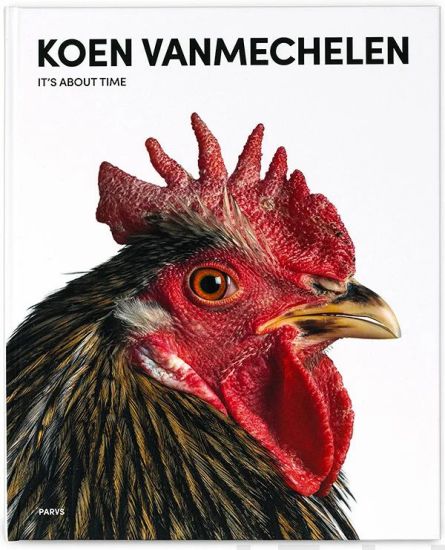
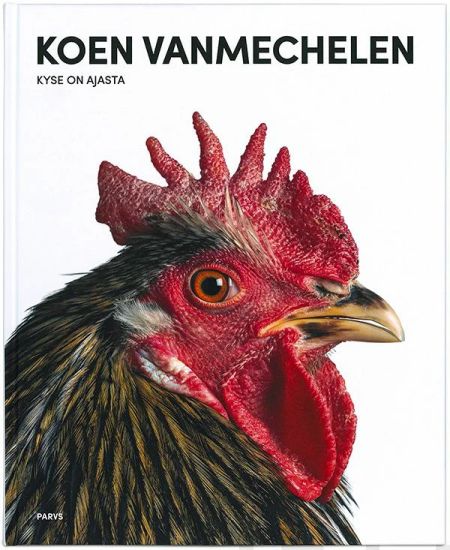
Koen Vanmechelen - Kyse on ajasta esittelee omaperäisen belgialaistaiteilijan Koen Vanmechelenin taidetta, johon kuuluu veistosten ja installaatioiden lisäksi kananjalostusta, eläintarhan pitoa sekä yhteiskunnallisia hankkeita Afrikassa. Kirjassa kansainvälisesti tunnettu käsitetaiteilija valottaa ainutlaatuista toimintafilosofiaansa ja näkemyksiään maailman tilasta. Vanmechelenin ensimmäinen näyttely Suomessa avautuu Serlachius-museo Göstassa Mäntässä 19.5.2018.
Koen Vanmechelen

Koen Vanmechelen

Rod Mengham; Hanna Johansson; Jill Silverman van Coenegrachts

Kustannusosakeyhtiö Parvs
2018
sidottu
Koen Vanmechelen - Kyse on ajasta esittelee omaperäisen belgialaistaiteilijan Koen Vanmechelenin taidetta, johon kuuluu veistosten ja installaatioiden lisäksi kananjalostusta, eläintarhan pitoa sekä yhteiskunnallisia hankkeita Afrikassa. Kirjassa kansainvälisesti tunnettu käsitetaiteilija valottaa ainutlaatuista toimintafilosofiaansa ja näkemyksiään maailman tilasta. Vanmechelenin ensimmäinen näyttely Suomessa avautuu Serlachius-museo Göstassa Mäntässä 19.5.2018.
Thomas Hardy's Shorter Fiction

Thomas Hardy's Shorter Fiction

Sophie Gilmartin; Rod Mengham

Edinburgh University Press
2016
nidottu
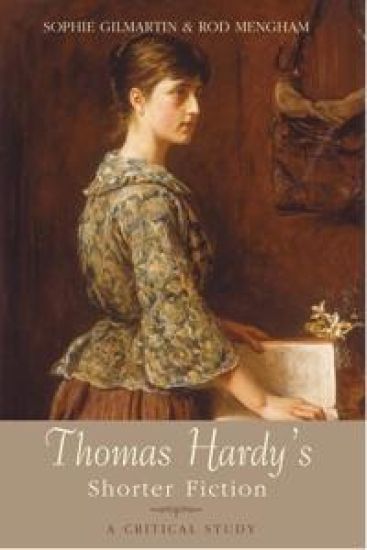
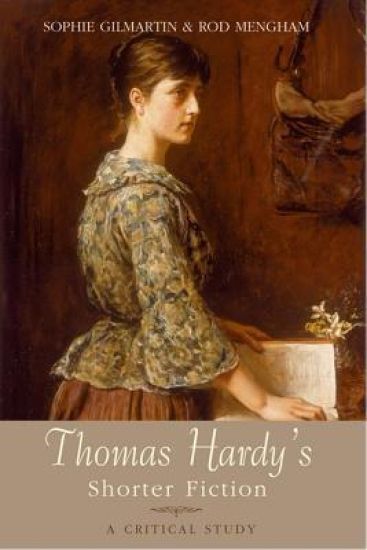
This critical study of Hardy's short stories provides a thorough account of the ruling preoccupations and recurrent writing strategies of his entire corpus as well as providing detailed readings of several individual texts. It relates the formal choices imposed on Hardy as contributor to Blackwood's Magazine and other periodicals to the methods he employed to encode in fiction his troubled attitude towards the social politics of the West Country, where most of the stories are set. No previous criticism has shown how the powerful challenges to the reader mounted in Hardy's later stories reveal the complexity of his motivations during a period when he was moving progressively in the direction of exchanging fiction for poetry.Features* The only book to provide comprehensive criticism of Hardy's entire output of short stories.* The provision of extremely full, extremely detailed, close readings of a number of key stories enhances the book's attractiveness as a potential teaching resource.* Draws on the work of social historians to make clear the background of social and political unrest in Dorset that is partly uncovered and partly hidden in Hardy's portrayals of his fictional Wessex.* Offers fascinating insights into Hardy's near-obsession in his mature phase with the marriage contract, and with its legal binding of erratic men and women.
Chance of a Storm

Chance of a Storm

Rod Mengham

Carcanet Press Ltd
2015
nidottu
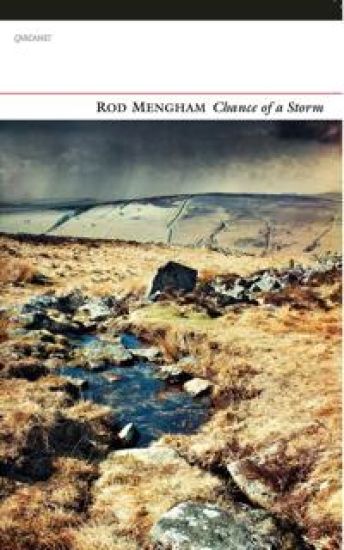
For Rod Mengham sculpture and painting exist in the world the way poems do. He invokes the Polish sculptor Katarzyna Kobro, who believes that sculpture must be understood as part of the world around it. In Chance of a Storm, poetry is language that comes trailing bits of other forms of speech and writing. ‘Poems should be finished, but be still hot to the touch, giving a vivid sense of the thinking and feeling that went into their creation,’ he says. Drew Milne speaks of the poems’ ‘beautiful, belligerent laconicism’. While the lyric is central to Mengham’s work, it cannot shrug off the ambition of epic, scaled down but still latent. This telescoping informs the structure of these poems, a species of modernist fable.
The Idiom of the Time

The Idiom of the Time

Rod Mengham

Cambridge University Press
2010
pokkari
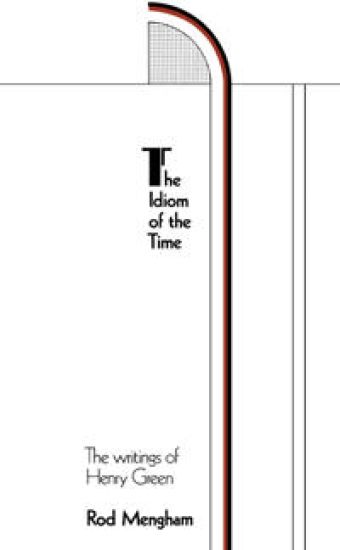
Henry Green (1905–1974) was the writer of nine technically outstanding novels, and of an autobiographical text. In the role of author he was intensely private, even secretive (Henry Green being a pseudonym), and his strange and heady writings derive their power in some way from their very secretiveness. In this 1982 study, Dr Mengham sets out to uncover the systematic basis of this quality in Green's writing, and to account for it in terms of the 'conditions of knowledge' of each text. Green, he argues, writes to maintain an 'idiom of the time', which constantly renews itself in a critical relation with the changing understanding of what goes to make us up - intellectually, socially, unconsciously. On the one hand, each of Green's books is treated on its own chronological succession; on the other, there is a continuous examination of manuscripts and typescripts making clear the development of certain writing procedures.
Thomas Hardy's Shorter Fiction

Thomas Hardy's Shorter Fiction

Sophie Gilmartin; Rod Mengham

Edinburgh University Press
2007
sidottu
This critical study of Hardy's short stories provides a thorough account of the ruling preoccupations and recurrent writing strategies of his entire corpus as well as providing detailed readings of several individual texts. It relates the formal choices imposed on Hardy as contributor to Blackwood's Magazine and other periodicals to the methods he employed to encode in fiction his troubled attitude towards the social politics of the West Country, where most of the stories are set. No previous criticism has shown how the powerful challenges to the reader mounted in Hardy's later stories reveal the complexity of his motivations during a period when he was moving progressively in the direction of exchanging fiction for poetry. Features * The only book to provide comprehensive criticism of Hardy's entire output of short stories. * The provision of extremely full, extremely detailed, close readings of a number of key stories enhances the book's attractiveness as a potential teaching resource. * Draws on the work of social historians to make clear the background of social and political unrest in Dorset that is partly uncovered and partly hidden in Hardy's portrayals of his fictional Wessex. * Offers fascinating insights into Hardy's near-obsession in his mature phase with the marriage contract, and with its legal binding of erratic men and women.
Vanishing Points

Vanishing Points

Rod Mengham

Salt Publishing
2004
nidottu
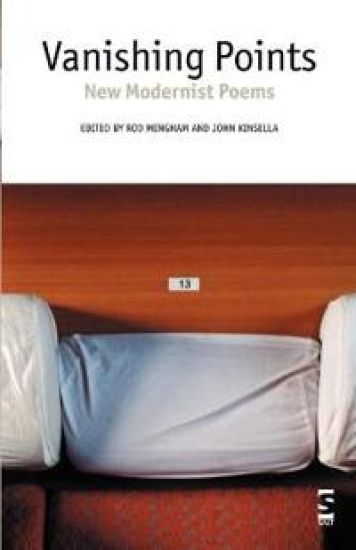
This major international anthology provides students and the general reader with an invaluable introduction to contemporary modernist poetry. Containing over thirty poets from Australia, Canada, New Zealand, the UK and USA, this selection offers a powerful vision of late-Twentieth-century poetic achievement: international, politically- and socially-engaged, and radical in imaginative vision and practice. It celebrates risk, resistance, protest and diversity within poetry, reaching across national and cultural boundaries. Vanishing Points provides students of Creative Writing, Cultural Studies, English and American Studies, as well as the general reader, with an important survey of modernist poetry at the start of the new millennium. • A unique introduction to the wide range of modernist experiment in contemporary poetry • Ideal study aid for students of poetry and poetics • Broad, international selection of acclaimed modernist poets • Substantial contributions offer important insights into the range of each poet’s work From the Introduction: The vanishing point lies beyond the horizon established by ruling conventions, it is where the imagination takes over from the understanding. Most anthologies of contemporary verse are filled with poems that do not cross that dividing-line, but our contention is that many poems in this volume are situated on the threshold of conventional sense-making. They go beyond the perspective of accepted canons of taste and judgement and ask questions about where they belong, and who they are meant for, often combining the pathos of estrangement with the irascibility of the refusenik. All anthologies enter the world fully aware of their genealogy, of where they fit in, of how they relate to certain traditions of writing by affiliation or rejection. This combination of dependent and independent gestures is inevitable, particularly in the case of selections of work aligned with national or regional versions of literary history. The present anthology does not fall into that category; its international reach does not, however, bring exemption from the dilemma of wanting to stand apart from conditions of rivalry while also needing to claim a special value in comparison with publications already available.