Kirjojen hintavertailu. Mukana 12 390 323 kirjaa ja 12 kauppaa.

Kirjailija

Rodney Castleden

Kirjat ja teokset yhdessä paikassa: 38 kirjaa, julkaisuja vuosilta 1989-2024, suosituimpien joukossa The Mycenaeans. Vertaile teosten hintoja ja tarkista saatavuus suomalaisista kirjakaupoista.

38 kirjaa

Kirjojen julkaisuhaarukka 1989-2024.

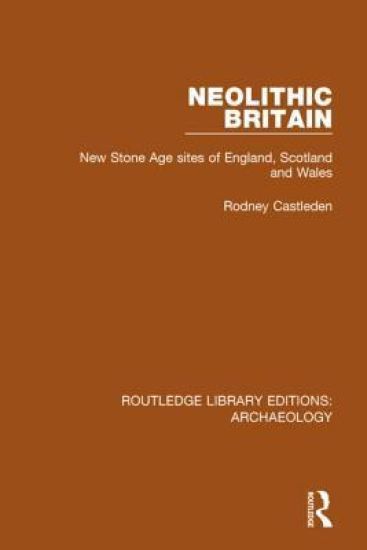
Neolithic Britain

Neolithic Britain

Rodney Castleden

Routledge
2014
sidottu
The climax of the Stone Age in Britain, the Neolithic period (4700-2000BC), was a period of startling achievement. The British Isles are rich in Neolithic sites, which give us evidence of a complex and surprisingly developed archaic society. The author surveys 1100 secular and ceremonial sites in Britain, selecting some for detailed explanation; from these a sense of the diversity and dynamism of the living Neolithic communities emerges. He presents a comprehensive, profusely illustrated and up-to-date view of the Neolithic, organised by county.Archaeologists and prehistorians will find this book of interest and it should prove indispensable to students of archaeology as a source of information about the British Neolithic.
On Blatchington Hill

On Blatchington Hill

Rodney Castleden

Lulu.com
2013
nidottu
The story of a small Sussex Downland village is told for the first time. Using a wide range of sources, including historic maps, house histories, old letters and personal reminiscences, the complex history of East Blatchington emerges, with unexpected results. The book reveals how close the village came to extinction in the Black Death, and how the ambition of the last squire led to many of the village's present-day problems. And some extraordinary personalities reappear from the past. What emerges is an unexpectedly rich and colourful picture of an English village that has come close to being forgotten. 309pp, over 90 black and white illustrations.
On Blatchington Beach

On Blatchington Beach

Rodney Castleden

Lulu.com
2013
nidottu
The biography of part of the Sussex coast is told for the first time: the central stretch of Seaford Bay. The coastline of East Blatchington parish is less than a thousand yards long, but it has had a surprisingly rich and dramatic history. In 1545 it was the focus of a startling attack by a huge French fleet. In 1809 it was at the centre of the Seven Ships disaster. Exploring the history of Blatchington beach uncovers the stories of many different people: fishermen, smugglers, wreckers, coastguards, soldiers and sailors, drunkards and heroes, murderers and their victims. The biographies of several little-known figures are revealed, some of whom performed remarkable acts of bravery, saving the lives of strangers in the sea.
The Sussex Coast

The Sussex Coast

Rodney Castleden

Lulu.com
2013
nidottu
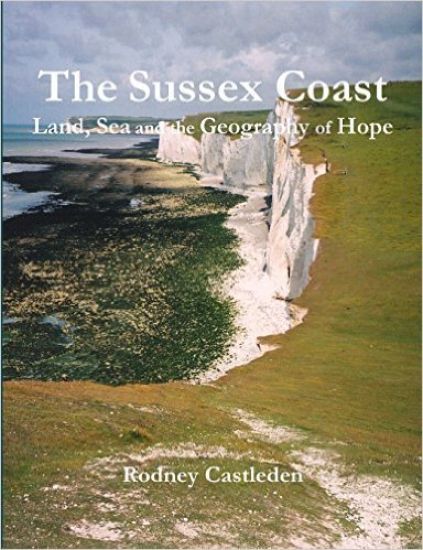
The Sussex coast has attracted people for thousands of years - for foraging, fishing, trade and defence, and more recently for retirement and leisure. Settlements are destroyed as the sea advances or stranded as it retreats; living here is exciting - and risky. Now that nearly one million people live on the Sussex coast, the problem of managing the relationship between people and the sea has become acute. A landscape history approach is used in this book, drawing on history, geography, geology, archaeology and the latest findings on coastal processes, to describe the trialogue between people, land and sea. This is essential reading for all who love the Sussex coast, are curious about its past and concerned about its future. 317pp, with 135 black and white illustrations.
Genius!

Genius!

Rodney Castleden

Lulu.com
2012
nidottu
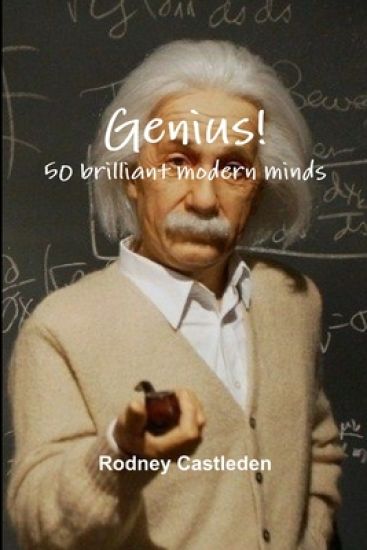
How do we identify a brilliant mind? IQ? Achievement? Originality? This book tells the stories of 50 people whose brilliance, achievement and originality changed the way we live, or the way we think. It is often assumed that geniuses are a race apart, but in many ways they are ordinary people, facing the ordinary problems of everyday life. Some have to struggle to make a living. Some even have to overcome disadvantage, discrimination or disability in order to achieve. Their stories are an inspiration to the rest of us.
The Wilmington Giant

The Wilmington Giant

Rodney Castleden

Lulu.com
2012
nidottu
This is the first book to have been written about the Long Man of Wilmington. Many different theories about the Long Man's origins are discussed and evaluated. The book is a guide to the history and archaeology of the Giant's Downland setting, and will appeal to everyone who loves the landscape, heritage, history and lore of the South Downs. An expanded version of the 1983 edition, which has been described in a review as 'a modern antiquarian classic'. 258 pages, 96 black and white illustrations.
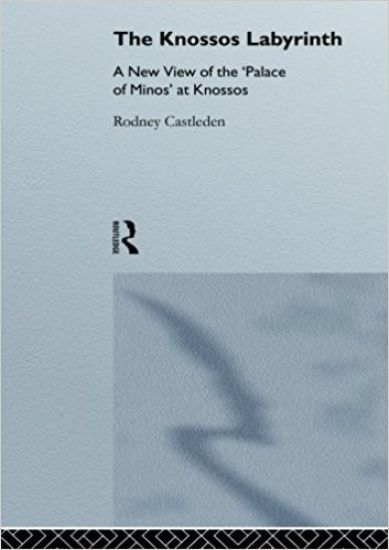
The Knossos Labyrinth

The Knossos Labyrinth

Rodney Castleden

Routledge
2011
nidottu
Knossos, like the Acropolis or Stonehenge, is a symbol for an entire culture. The Knossos Labyrinth was first built in the reign of a Middle Kingdom Egyptian pharaoh, and was from the start the focus of a glittering and exotic culture. Homer left elusive clues about the Knossian court and when the lost site of Knossos gradually re-emerged from obscurity in the nineteenth century, the first excavators - Minos Kalokairinos, Heinrich Schliemann, and Arthur Evans - were predisposed to see the site through the eyes of the classical authors. Rodney Castleden argues that this line of thought was a false trail and gives an alternative insight into the labyrinth which is every bit as exciting as the traditional explanations, and one which he believes is much closer to the truth. Rejecting Evans' view of Knossos as a bronze age royal palace, Castleden puts forward alternative interpretations - that the building was a necropolis or a temple - and argues that the temple interpretation is the most satisfactory in the light of modern archaeological knowledge about Minoan Crete.
The Mycenaeans

The Mycenaeans

Rodney Castleden

Routledge
2005
sidottu
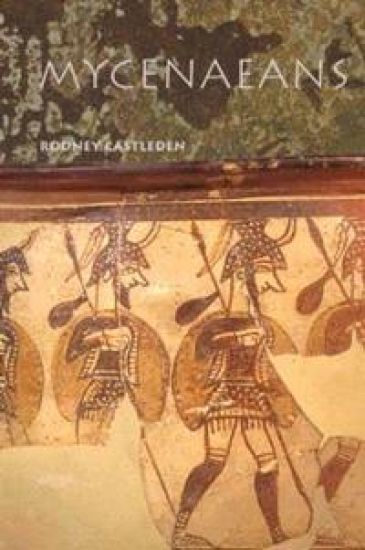
Following on from Rodney Castleden's best-selling study Minoans, this major contribution to our understanding of the crucial Mycenaean period clearly and effectively brings together research and knowledge we have accumulated since the discovery of the remains of the civilization of Mycenae in the 1870s.In lively prose, informed by the latest research and using a full bibliography and over 100 illustrations, this vivid study delivers the fundamentals of the Mycenaean civilization including its culture, hierarchy, economy and religion. Castleden introduces controversial views of the Mycenaean palaces as temples, and studies their impressive sea empire and their crucial interaction with the outside Bronze Age world before discussing the causes of the end of their civilization. Providing clear, easy information and understanding, this is a perfect starting point for the study of the Greek Bronze Age.
The Mycenaeans

The Mycenaeans

Rodney Castleden

Routledge
2005
nidottu
Following on from Rodney Castleden's best-selling study Minoans, this major contribution to our understanding of the crucial Mycenaean period clearly and effectively brings together research and knowledge we have accumulated since the discovery of the remains of the civilization of Mycenae in the 1870s.In lively prose, informed by the latest research and using a full bibliography and over 100 illustrations, this vivid study delivers the fundamentals of the Mycenaean civilization including its culture, hierarchy, economy and religion. Castleden introduces controversial views of the Mycenaean palaces as temples, and studies their impressive sea empire and their crucial interaction with the outside Bronze Age world before discussing the causes of the end of their civilization. Providing clear, easy information and understanding, this is a perfect starting point for the study of the Greek Bronze Age.
King Arthur

King Arthur

Rodney Castleden

Routledge
2003
nidottu
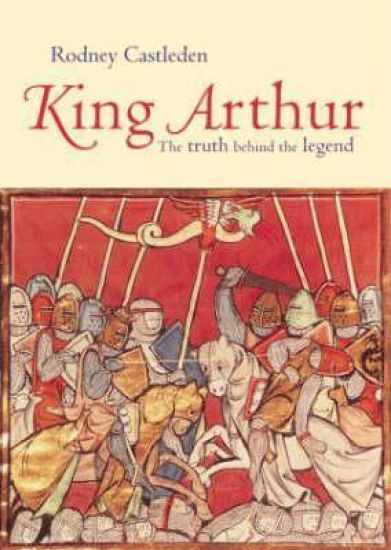
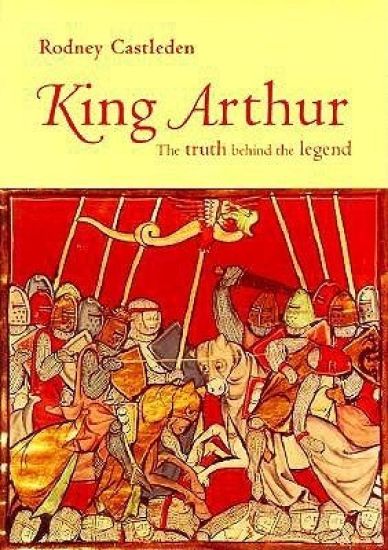
King Arthur is often written off as a medieval fantasy, the dream of those yearning for an age of strong, just rulers and a contented kingdom. Those who accept his existence at all generally discard the stories that surround him. This exciting new investigation argues not only that Arthur did exist, as a Dark Age chieftain, but that many of the romantic tales - of Merlin, Camelot and Excalibur - are rooted in truth.In his quest for the real King Arthur, Rodney Castleden uses up-to-date archaeological and documentary evidence to recreate the history and society of Dark Age Britain and its kings. He revives the possibility that Tintagel was an Arthurian legend, and proposes a radical new theory - that Arthur escaped alive from his final battle. A location is even suggested for perhaps the greatest mystery, the whereabouts of Arthur's grave.King Arthur: The Truth Behind the Legend offers a more complete picture of Arthur's Britain and his place in it than ever before. The book's bold approach and compelling arguments will be welcomed by all readers with an interest in Arthuriana.
Atlantis Destroyed

Atlantis Destroyed

Rodney Castleden

Routledge
2001
nidottu
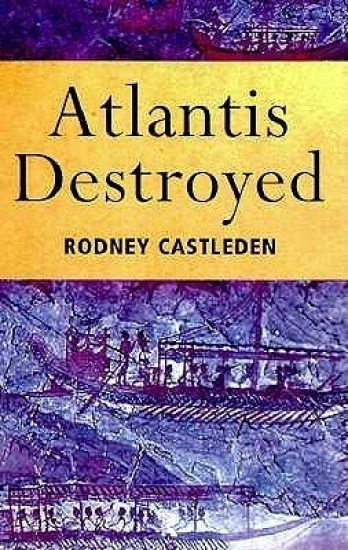
Plato's legend of Atlantis has become notorious among scholars as the absurdest lie in literature. Atlantis Destroyed explores the possibility that the account given by Plato is historically true. Rodney Castleden first considers the location of Atlantis re-examining two suggestions put forward in the early twentieth century; Minoan Crete and Minoan Thera. He outlines the latest research findings on Knossos and Bronze Age Thera, discussing the material culture, trade empire and agricultural system, writing and wall paintings, art, religion and society of the Minoan civilization. Castleden demonstrates the many parallels between Plato's narrative and the Minoan Civilization in the Aegean.Fired by the imagination a new vision of Atlantis has arisen over the last one hundred and fifty years as a lost utopia. Rodney Castleden discusses why this picture arose and xplains how it has become confused with Plato's genuine account.
King Arthur

King Arthur

Rodney Castleden

Routledge
1999
sidottu
King Arthur is often written off as a medieval fantasy, the dream of those yearning for an age of strong, just rulers and a contented kingdom. Those who accept his existence at all generally discard the stories that surround him. This exciting new investigation argues not only that Arthur did exist, as a Dark Age chieftain, but that many of the romantic tales - of Merlin, Camelot and Excalibur - are rooted in truth.In his quest for the real King Arthur, Rodney Castleden uses up-to-date archaeological and documentary evidence to recreate the history and society of Dark Age Britain and its kings. He revives the possibility that Tintagel was an Arthurian legend, and proposes a radical new theory - that Arthur escaped alive from his final battle. A location is even suggested for perhaps the greatest mystery, the whereabouts of Arthur's grave.King Arthur: The Truth Behind the Legend offers a more complete picture of Arthur's Britain and his place in it than ever before. The book's bold approach and compelling arguments will be welcomed by all readers with an interest in Arthuriana.
Atlantis Destroyed

Atlantis Destroyed

Rodney Castleden

Routledge
1998
sidottu
Plato's legend of Atlantis has become notorious among scholars as the absurdest lie in literature. Atlantis Destroyed explores the possibility that the account given by Plato is historically true. Rodney Castleden first considers the location of Atlantis re-examining two suggestions put forward in the early twentieth century; Minoan Crete and Minoan Thera. He outlines the latest research findings on Knossos and Bronze Age Thera, discussing the material culture, trade empire and agricultural system, writing and wall paintings, art, religion and society of the Minoan civilization. Castleden demonstrates the many parallels between Plato's narrative and the Minoan Civilization in the Aegean.Fired by the imagination a new vision of Atlantis has arisen over the last one hundred and fifty years as a lost utopia. Rodney Castleden discusses why this picture arose and xplains how it has become confused with Plato's genuine account.
The Making of Stonehenge

The Making of Stonehenge

Rodney Castleden

Routledge
1993
sidottu
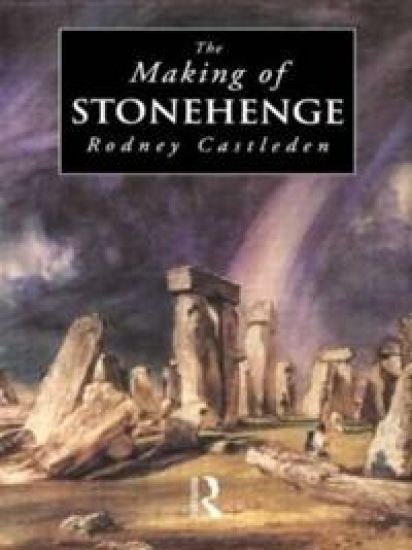
Every generation has created its own interpretation of Stonehenge, but rarely do these relate to the physical realities of the monument. Rodney Castleden begins with those elements which made possible the building of this vast stone circle: the site, the materials and the society that undertook the enormous task of transporting and raising the great vertical stones, then capping them, all to a carefully contrived plan. What emerges from this detailed examination is a much fuller sense of Stonehenge, both in relation to all the similar sites close by, and in terms of the uses to which it was put. Castleden suggests that there is no one 'meaning' or 'purpose' for Stonehenge, that from its very beginning it has filled a variety of needs. The Romans saw it as a centre of resistance; the antiquaries who 'rediscovered' it in the seventeenth century saw a long line of continuity leading back into the nation's past. The archaeologists see it as a subject for rational, scientific investigation; The National Trust and English Heritage view it as an unfailing magnet for visitors; UNESCO has declared it a World Heritage Site, the cultural property of the whole of humanity. Lost to view amid competing interests over the millenia are the uses it has served for those who live within its penumbra, for whom Stonehenge has never been 'lost' or 'rediscovered'. It exists in local myth and legend, stretching back beyond history.
The Stonehenge People

The Stonehenge People

Rodney Castleden

Routledge
1990
nidottu
First published in 1990. Of all the monuments left by the past, Stonehenge is the most evocative, the most memorable and the most mysterious. Whilst the monuments of other cultures have gradually surrendered their mysteries, Stonehenge alone seems to stimulate endless conjecture. Rodney Castleden's vivid presentation of the world of the megaliths answers many of the most baffling questions about Stonehenge. There are, he stresses, few absolute certainties, but from the vast body of evidence assembled during the last hundred years it is now possible to get much closer to the truth than ever before. Who built the monuments and for what purpose? How were the bluestones moved from the sacred mountains of the west to Salisbury Plain? Who were the people responsible for this amazing undertaking, and what did they think and believe?
The Knossos Labyrinth

The Knossos Labyrinth

Rodney Castleden

Routledge
1989
sidottu
Knossos, like the Acropolis or Stonehenge, is a symbol for an entire culture. The Knossos Labyrinth was first built in the reign of a Middle Kingdom Egyptian pharaoh, and was from the start the focus of a glittering and exotic culture. Homer left elusive clues about the Knossian court and when the lost site of Knossos gradually re-emerged from obscurity in the nineteenth century, the first excavators - Minos Kalokairinos, Heinrich Schliemann, and Arthur Evans - were predisposed to see the site through the eyes of the classical authors. Rodney Castleden argues that this line of thought was a false trail and gives an alternative insight into the labyrinth which is every bit as exciting as the traditional explanations, and one which he believes is much closer to the truth. Rejecting Evans' view of Knossos as a bronze age royal palace, Castleden puts forward alternative interpretations - that the building was a necropolis or a temple - and argues that the temple interpretation is the most satisfactory in the light of modern archaeological knowledge about Minoan Crete.