Kirjojen hintavertailu. Mukana 12 390 323 kirjaa ja 12 kauppaa.

Kirjailija

Rodney Wilson

Kirjat ja teokset yhdessä paikassa: 15 kirjaa, julkaisuja vuosilta 1977-2021, suosituimpien joukossa Fingered for Murder: Shorty's Street Drama Vol. 1. Vertaile teosten hintoja ja tarkista saatavuus suomalaisista kirjakaupoista.

15 kirjaa

Kirjojen julkaisuhaarukka 1977-2021.

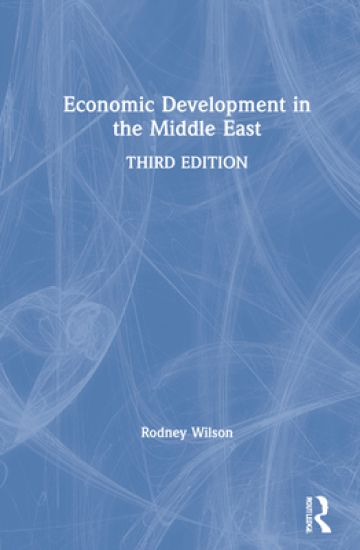
Economic Development in the Middle East
This new edition examines how development in the Middle East is being influenced by global economic change. This comparative textbook focuses on the region’s strengths, and highlights development success, especially in the Gulf, Turkey and Israel. The major structural changes in the economies of the Middle East are analysed and current employment challenges are discussed.The impact of demographic changes is considered, notably the dramatic decline in birth rates which will have implications for future employment. The contribution of banks and capital markets to the region’s development is appraised, including that of Islamic financial institutions which play a prominent role in the Gulf Cooperation Council (GCC) countries but are on the margins of the financial systems elsewhere. Historically, development in the GCC was linked to oil and gas production and prices, a key issue being whether these are being decoupled as economies diversify and become more self-sustaining. The evidence on this from the GCC is encouraging, with transparent and accountable financial management and major improvements in economic governance despite the lack of democracy. Examining the drivers of economic development in the Middle East in a regional and global context, this fully updated textbook is a key resource for students and academics interested in economic development and the political economy of the Middle East.
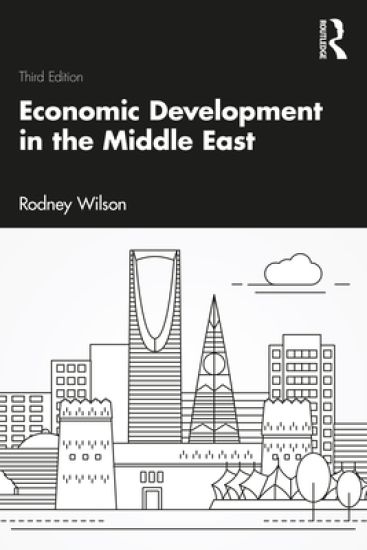
Economic Development in the Middle East
This new edition examines how development in the Middle East is being influenced by global economic change. This comparative textbook focuses on the region’s strengths, and highlights development success, especially in the Gulf, Turkey and Israel. The major structural changes in the economies of the Middle East are analysed and current employment challenges are discussed.The impact of demographic changes is considered, notably the dramatic decline in birth rates which will have implications for future employment. The contribution of banks and capital markets to the region’s development is appraised, including that of Islamic financial institutions which play a prominent role in the Gulf Cooperation Council (GCC) countries but are on the margins of the financial systems elsewhere. Historically, development in the GCC was linked to oil and gas production and prices, a key issue being whether these are being decoupled as economies diversify and become more self-sustaining. The evidence on this from the GCC is encouraging, with transparent and accountable financial management and major improvements in economic governance despite the lack of democracy. Examining the drivers of economic development in the Middle East in a regional and global context, this fully updated textbook is a key resource for students and academics interested in economic development and the political economy of the Middle East.
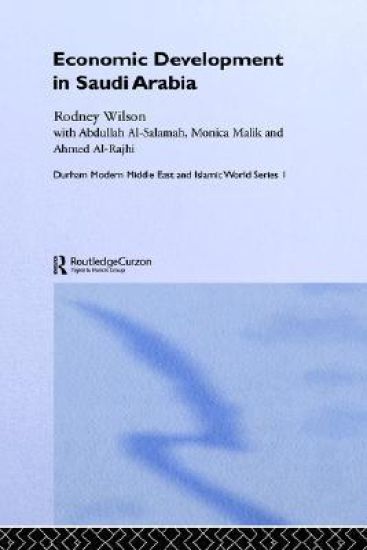
Economic Development in Saudi Arabia

Economic Development in Saudi Arabia

Ahmed Al Rajhi; Abdullah Al Salamah; Monica Malik; Rodney Wilson

Routledge
2018
nidottu
The changing political situation in the Middle East poses challenges for the economies of the region, and some see none more vulnerable to collapse than Saudi Arabia's. Yet as this study demonstrates, the fundamentals of the Kingdom's economy are relatively robust, as over three quarters of GDP is accounted for by the non-oil sector, and impressive modern industries have been established, notably in petrochemicals. The financial system functions well, and despite substantial government debts, there is low inflation and currency stability. The private sector increasingly drives the economy, although job creation has been insufficient to prevent rising youth unemployment. The development challenges Saudi Arabia faces are similar to those of other middle-income countries, and three decades of diversification have made the economy less unique than it was in the oil boom years of the 1970s.
Islam and Economic Policy

Islam and Economic Policy

Rodney Wilson

Edinburgh University Press
2015
nidottu
This book explores whether public policy in Muslim majority countries has been influenced by Islamic economic discourse. Islamist political parties have enjoyed unprecedented election victories in recent times. The Islamic Revolution in Iran, the election of the Justice and Development Party in Turkey and the coming to power of Islamists, albeit briefly, after the Arab Spring, has changed the political landscape in the Middle East and has ramifications for the entire Muslim World. Yet the continuing success of these parties depends on their record on economic development and employment creation. Are their economic policies different from those of their autocratic predecessors? Have they been influenced by the writings of academic Islamist economists? This book looks at the impact of Islamic teaching on public economic policy and asks how Islamic economics differs from mainstream micro and macroeconomics. It looks at how Islamic values can influence choices made by businesses and governments. It asks whether Shari'ah teaching affects taxation and social welfare policies. It assesses the potential of Islamic economics to provide an alternative to a capitalist economic system and looks at the implications for international economic relations. It's individual chapters evaluate the economic successes and failures of OIC member states (Bangladesh, Egypt, Indonesia, Iran, Malaysia, Pakistan, Tunisia and Turkey) and their changing status in the global economic order.
Islam and Economic Policy

Islam and Economic Policy

Rodney Wilson

Edinburgh University Press
2015
sidottu
Islamist political parties have enjoyed unprecedented election victories in recent times. The Islamic Revolution in Iran, the election of the Justice and Development Party in Turkey and the coming to power of Islamists, albeit briefly, after the Arab Spring, has changed the political landscape in the Middle East and has ramifications for the entire Muslim World. Yet the continuing success of these parties depends on their record on economic development and employment creation. Are their economic policies different from those of their autocratic predecessors? Have they been influenced by the writings of academic Islamist economists? This book looks at the impact of Islamic teaching on public economic policy and asks how Islamic economics differs from mainstream micro and macroeconomics.
Legal, Regulatory and Governance Issues in Islamic Finance

Legal, Regulatory and Governance Issues in Islamic Finance

Rodney Wilson

Edinburgh University Press
2012
nidottu
The use of common and civil law to licence and govern Islamic financial institutions is examined in detail in this book. It also makes international comparisons and discusses specific laws, from Iran (where all banking is shariah compliant) to Malaysia and the gulf, where Islamic financial institutions compete with conventional banks. As most Islamic banks operate under national banking laws, consideration is given as to how their assets and liabilities differ from their conventional counterparts and what the implications are for risk management. The remit of the guide includes takaful operators, fund management and shariah compliant securities as well as Islamic banks. Key Features *Detailed examination of Islamic banking laws *Evaluation of regulatory systems governing Islamic finance *Global coverage including the Islamic world and countries with Muslim minorities *Examples of the deposit and financing terms and conditions offered by leading Islamic banks Key Words: Islamic banking; Islamic finance; shari'ah compliant securities; sukuk; takaful; Islamic funds
Legal, Regulatory and Governance Issues in Islamic Finance

Legal, Regulatory and Governance Issues in Islamic Finance

Rodney Wilson

Edinburgh University Press
2012
sidottu
The use of common and civil law to licence and govern Islamic financial institutions is examined in detail in this book. It also makes international comparisons and discusses specific laws, from Iran (where all banking is shariah compliant) to Malaysia and the gulf, where Islamic financial institutions compete with conventional banks. As most Islamic banks operate under national banking laws, consideration is given as to how their assets and liabilities differ from their conventional counterparts and what the implications are for risk management. The remit of the guide includes takaful operators, fund management and shariah compliant securities as well as Islamic banks. Key Features *Detailed examination of Islamic banking laws *Evaluation of regulatory systems governing Islamic finance *Global coverage including the Islamic world and countries with Muslim minorities *Examples of the deposit and financing terms and conditions offered by leading Islamic banks Key Words: Islamic banking; Islamic finance; shari'ah compliant securities; sukuk; takaful; Islamic funds
Economic Development in Saudi Arabia

Economic Development in Saudi Arabia

Ahmed Al Rajhi; Abdullah Al Salamah; Monica Malik; Rodney Wilson

RoutledgeCurzon
2003
sidottu
The changing political situation in the Middle East poses challenges for the economies of the region, and some see none more vulnerable to collapse than Saudi Arabia's. Yet as this study demonstrates, the fundamentals of the Kingdom's economy are relatively robust, as over three quarters of GDP is accounted for by the non-oil sector, and impressive modern industries have been established, notably in petrochemicals. The financial system functions well, and despite substantial government debts, there is low inflation and currency stability. The private sector increasingly drives the economy, although job creation has been insufficient to prevent rising youth unemployment. The development challenges Saudi Arabia faces are similar to those of other middle-income countries, and three decades of diversification have made the economy less unique than it was in the oil boom years of the 1970s.
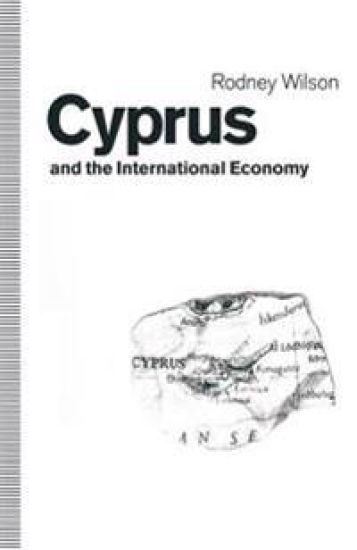
Cyprus and the International Economy

Cyprus and the International Economy

Rodney Wilson

Palgrave Macmillan
1992
nidottu
This is an evaluation of the external economic relations of the island of Cyprus involving trade, finance and tourism. Cyprus has an increasingly open economy, and a study of its external economic relations is, to a considerable extent, a profile of its modern development.