Kirjojen hintavertailu. Mukana 12 390 323 kirjaa ja 12 kauppaa.

Kirjailija

Rodolphe Gasché

Kirjat ja teokset yhdessä paikassa: 27 kirjaa, julkaisuja vuosilta 1988-2023, suosituimpien joukossa Plato's Stranger. Vertaile teosten hintoja ja tarkista saatavuus suomalaisista kirjakaupoista.

27 kirjaa

Kirjojen julkaisuhaarukka 1988-2023.

Plato's Stranger

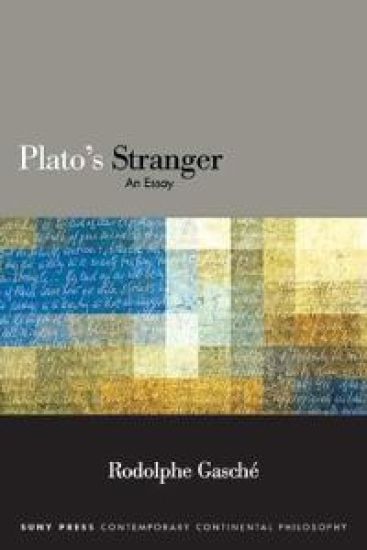
Plato's Stranger

Rodolphe Gasché

STATE UNIVERSITY OF NEW YORK PRESS
2023
pokkari
Meditation on the character of the Eleatic Stranger in Plato's late dialogues, arguing that the prominent place afforded to this foreigner—the other—represents an important philosophical and political legacy regarding the way thought, and life in the community, is understood.The dramatic introduction in two of Plato's late dialogues-the Sophist and the Statesman, both part of a trilogy that also includes the Theaetetus-of a stranger, the Eleatic Stranger, who replaces Socrates, is a consequential move, especially since it occurs in the context of decidedly new insights into the philosophical logos and life together in a community. The introduction of a radical stranger, a stranger to all native identity, has theoretical implications, and, rather than a rhetorical or merely literary device, is of the order of an argument. Plato's Stranger argues that in these late dialogues, Plato bestows on the West a philosophical and political legacy at the core of which the stranger holds a prominent place because it provides the foreigner-the other-with a previously unheard-of constitutive role in the way thinking, as well as life in community, is understood. What is to be learned from these late dialogues is that, without a constitutive relation to otherness, discursive and political life in a community-in other words, also of the way one relates to oneself-remain lacking.
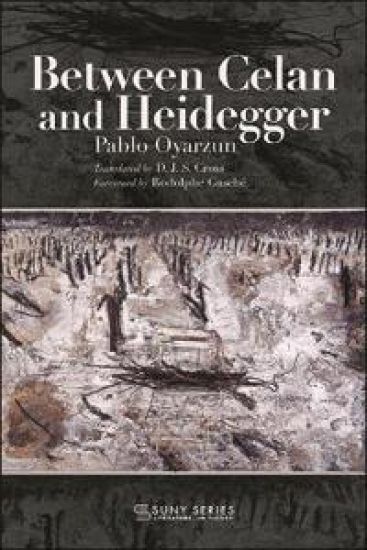
Between Celan and Heidegger

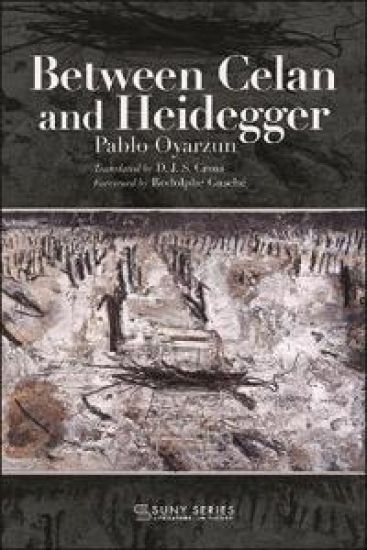
Between Celan and Heidegger

Pablo Oyarzun; Rodolphe Gasché

STATE UNIVERSITY OF NEW YORK PRESS
2022
pokkari
Probing reassessment of the relation between Celan's poetry and Heidegger's thought.The relevance of Martin Heidegger's thinking to Paul Celan's poetry is well known. Between Celan and Heidegger proposes that, while the relation between them is undeniable, it is also marked by irreducible discord. Pablo Oyarzun begins with a deconstruction of Celan's Todtnauberg, written after the poet visited Heidegger in his Schwarzwald cabin. The poem stands as a milestone, not only in the complex relationship between the two men but also in the state of poetry and philosophy in late modernity, in the aftermath of the Holocaust. Discussion then turns to The Meridian, Celan's acceptance speech for the prestigious Büchner Prize for German language literature. Other issues are insistently addressed-place, art, language, pain, existence, and the Heideggerian notion of dialogue-as Oyarzun revisits several essential poems from Celan's oeuvre. A rare translation of Oyarzun's work into English, Between Celan and Heidegger affirms the uniqueness of Celan's poetry in confrontation both with Heidegger's discourse on Dichtung (a poetic saying centered in the idea of gathering) and with Western philosophical notions of art, techne, mimesis, poiesis, language, and thinking more broadly.
Plato's Stranger

Plato's Stranger

Rodolphe Gasché

STATE UNIVERSITY OF NEW YORK PRESS
2022
sidottu
Meditation on the character of the Eleatic Stranger in Plato's late dialogues, arguing that the prominent place afforded to this foreigner—the other—represents an important philosophical and political legacy regarding the way thought, and life in the community, is understood.The dramatic introduction in two of Plato's late dialogues-the Sophist and the Statesman, both part of a trilogy that also includes the Theaetetus-of a stranger, the Eleatic Stranger, who replaces Socrates, is a consequential move, especially since it occurs in the context of decidedly new insights into the philosophical logos and life together in a community. The introduction of a radical stranger, a stranger to all native identity, has theoretical implications, and, rather than a rhetorical or merely literary device, is of the order of an argument. Plato's Stranger argues that in these late dialogues, Plato bestows on the West a philosophical and political legacy at the core of which the stranger holds a prominent place because it provides the foreigner-the other-with a previously unheard-of constitutive role in the way thinking, as well as life in community, is understood. What is to be learned from these late dialogues is that, without a constitutive relation to otherness, discursive and political life in a community-in other words, also of the way one relates to oneself-remain lacking.
Between Celan and Heidegger

Between Celan and Heidegger

Pablo Oyarzun; Rodolphe Gasché

STATE UNIVERSITY OF NEW YORK PRESS
2022
sidottu
Probing reassessment of the relation between Celan's poetry and Heidegger's thought.The relevance of Martin Heidegger's thinking to Paul Celan's poetry is well known. Between Celan and Heidegger proposes that, while the relation between them is undeniable, it is also marked by irreducible discord. Pablo Oyarzun begins with a deconstruction of Celan's Todtnauberg, written after the poet visited Heidegger in his Schwarzwald cabin. The poem stands as a milestone, not only in the complex relationship between the two men but also in the state of poetry and philosophy in late modernity, in the aftermath of the Holocaust. Discussion then turns to The Meridian, Celan's acceptance speech for the prestigious Büchner Prize for German language literature. Other issues are insistently addressed-place, art, language, pain, existence, and the Heideggerian notion of dialogue-as Oyarzun revisits several essential poems from Celan's oeuvre. A rare translation of Oyarzun's work into English, Between Celan and Heidegger affirms the uniqueness of Celan's poetry in confrontation both with Heidegger's discourse on Dichtung (a poetic saying centered in the idea of gathering) and with Western philosophical notions of art, techne, mimesis, poiesis, language, and thinking more broadly.
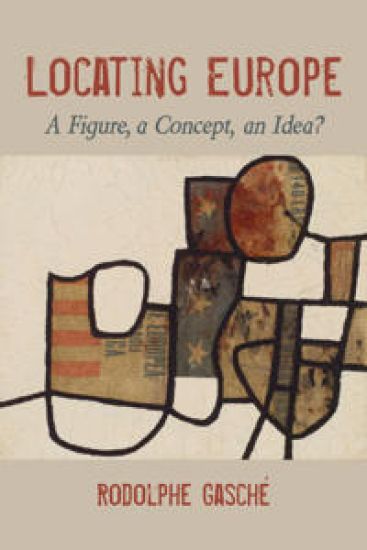
Locating Europe

Locating Europe

Rodolphe Gasché

Indiana University Press
2021
pokkari
Is the idea of Europe outdated? The concept of European unity, the animating spirit of the European Union, seems increasingly fragile in the face of far-right populist movements. In Locating Europe , Rodolphe Gasché attempts to answer the question of how to think about Europe. Is it a figure, a concept, or an idea? Is there anything still compelling and urgent about the idea of Europe? By looking at phenomenologist and postphenomenological thinkers in the second half of the 20th century, Gasché reveals that Europe is more than just one geographical and cultural entity. The idea of Europe is based on common foundations: a distinctive conception of reason, of self-criticism, of responsibility, freedom, equality, human rights, and democracy, and it is these foundations that are under threat. In Locating Europe: A Figure, a Concept, an Idea? Gasché engages the philosophy of Hans-Georg Gadamer, Karl Jaspers, Karl Löwith, and others, focuses on the most significant philosophical representations of Europe, and explores the potential, and especially the limits, of the notion of Europe.
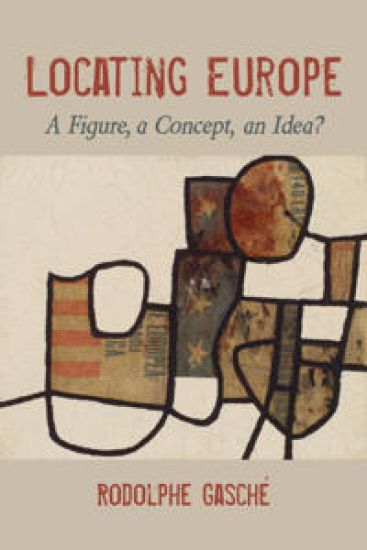
Locating Europe

Locating Europe

Rodolphe Gasché

Indiana University Press
2021
sidottu
Is the idea of Europe outdated? The concept of European unity, the animating spirit of the European Union, seems increasingly fragile in the face of far-right populist movements. In Locating Europe , Rodolphe Gasché attempts to answer the question of how to think about Europe. Is it a figure, a concept, or an idea? Is there anything still compelling and urgent about the idea of Europe? By looking at phenomenologist and postphenomenological thinkers in the second half of the 20th century, Gasché reveals that Europe is more than just one geographical and cultural entity. The idea of Europe is based on common foundations: a distinctive conception of reason, of self-criticism, of responsibility, freedom, equality, human rights, and democracy, and it is these foundations that are under threat. In Locating Europe: A Figure, a Concept, an Idea? Gasché engages the philosophy of Hans-Georg Gadamer, Karl Jaspers, Karl Löwith, and others, focuses on the most significant philosophical representations of Europe, and explores the potential, and especially the limits, of the notion of Europe.
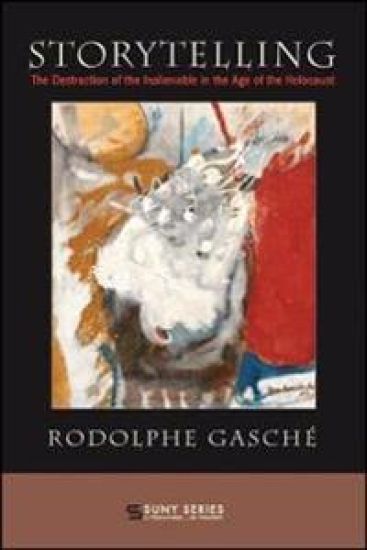
Storytelling

Storytelling

Rodolphe Gasché

State University of New York Press
2019
pokkari
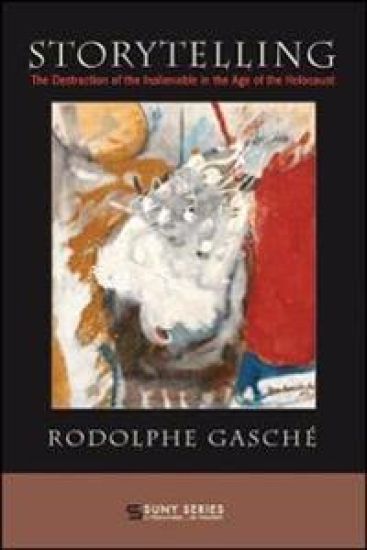
An innovative philosophical meditation on the muteness of Holocaust survivors and the human faculty of storytelling.In Storytelling, Rodolphe Gasché reexamines the muteness of Holocaust survivors, that is, their inability to tell their stories. This phenomenon has not been explained up to now without reducing the violence of the events to which survivors were subjected, on the one hand, and diminishing the specific harm that has been done to them as human beings, on the other. Distinguishing storytelling from testifying and providing information, Gasché asserts that the utter senselessness of the violence inflicted upon them is what inhibited survivors from making sense of their experience in the form of tellable stories. In a series of readings of major theories of storytelling by three thinkers-Wilhelm Schapp, whose work will be a welcome discovery to many English-speaking audiences, Walter Benjamin, and Hannah Arendt-Gasché systematically assesses the consequences of the loss of the storytelling faculty, considered by some an inalienable possession of the human, both for the victims' humanity and for philosophy.This book is freely available in an open access edition thanks to Knowledge Unlatched-an initiative that provides libraries and institutions with a centralized platform to support OA collections and from leading publishing houses and OA initiatives. Learn more at the Knowledge Unlatched website at https://www.knowledgeunlatched.org/.
Storytelling

Storytelling

Rodolphe Gasché

State University of New York Press
2018
sidottu
An innovative philosophical meditation on the muteness of Holocaust survivors and the human faculty of storytelling.In Storytelling, Rodolphe Gasché reexamines the muteness of Holocaust survivors, that is, their inability to tell their stories. This phenomenon has not been explained up to now without reducing the violence of the events to which survivors were subjected, on the one hand, and diminishing the specific harm that has been done to them as human beings, on the other. Distinguishing storytelling from testifying and providing information, Gasché asserts that the utter senselessness of the violence inflicted upon them is what inhibited survivors from making sense of their experience in the form of tellable stories. In a series of readings of major theories of storytelling by three thinkers-Wilhelm Schapp, whose work will be a welcome discovery to many English-speaking audiences, Walter Benjamin, and Hannah Arendt-Gasché systematically assesses the consequences of the loss of the storytelling faculty, considered by some an inalienable possession of the human, both for the victims' humanity and for philosophy.This book is freely available in an open access edition thanks to Knowledge Unlatched-an initiative that provides libraries and institutions with a centralized platform to support OA collections and from leading publishing houses and OA initiatives. Learn more at the Knowledge Unlatched website at https://www.knowledgeunlatched.org/.
Persuasion, Reflection, Judgment

Persuasion, Reflection, Judgment

Rodolphe Gasché

Indiana University Press
2017
sidottu
As one of the most respected voices of Continental philosophy today, Rodolphe Gasché pulls together Aristotle's conception of rhetoric, Martin Heidegger's debate with theory, and Hannah Arendt's conception of judgment in a single work on the centrality of these themes as fundamental to human flourishing in public and political life. Gasché's readings address the distinctively human space of the public square and the actions that occur there, and his valorization of persuasion, reflection, and judgment reveals new insight into how the philosophical tradition distinguishes thinking from other faculties of the human mind.
Persuasion, Reflection, Judgment

Persuasion, Reflection, Judgment

Rodolphe Gasché

Indiana University Press
2017
pokkari
As one of the most respected voices of Continental philosophy today, Rodolphe Gasché pulls together Aristotle's conception of rhetoric, Martin Heidegger's debate with theory, and Hannah Arendt's conception of judgment in a single work on the centrality of these themes as fundamental to human flourishing in public and political life. Gasché's readings address the distinctively human space of the public square and the actions that occur there, and his valorization of persuasion, reflection, and judgment reveals new insight into how the philosophical tradition distinguishes thinking from other faculties of the human mind.
Deconstruction, Its Force, Its Violence

Deconstruction, Its Force, Its Violence

Rodolphe Gasché

State University of New York Press
2016
pokkari
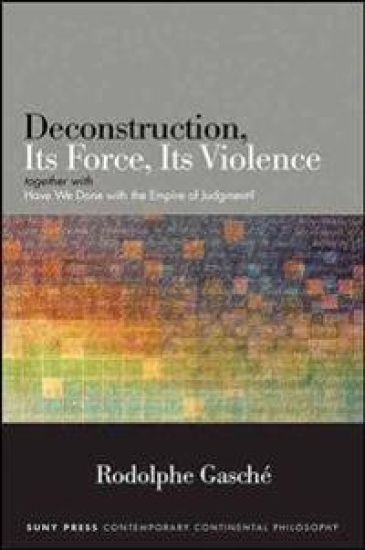
A reappraisal of deconstruction from one of its leading commentators, focusing on the themes of force and violence.In this book, Rodolphe Gasché returns to some of the founding texts of deconstruction to propose a new and broader way of understanding it-not as an operation or method to reach an elusive outside, or beyond, of metaphysics, but as something that takes place within it. Rather than unraveling metaphysics, deconstruction loosens its binary and hierarchical conceptual structure. To make this case, Gasché focuses on the concepts of force and violence in the work of Jacques Derrida, looking to his essays "Force and Signification" and "Force of Law," and his reading on Of Grammatology in Claude Lévi-Strauss's autobiographical Tristes Tropiques. The concept of force has not drawn extensive scrutiny in Derrida scholarship, but it is crucial to understanding how, by way of spacing and temporizing, philosophical opposition is reinscribed into a differential economy of forces. Gasché concludes with an essay addressing the question of deconstruction and judgment and considers whether deconstruction suspends the possibility of judgment, or whether it is, on the contrary, a hyperbolic demand for judgment.
Deconstruction, Its Force, Its Violence

Deconstruction, Its Force, Its Violence

Rodolphe Gasché

State University of New York Press
2016
sidottu
A reappraisal of deconstruction from one of its leading commentators, focusing on the themes of force and violence.In this book, Rodolphe Gasché returns to some of the founding texts of deconstruction to propose a new and broader way of understanding it-not as an operation or method to reach an elusive outside, or beyond, of metaphysics, but as something that takes place within it. Rather than unraveling metaphysics, deconstruction loosens its binary and hierarchical conceptual structure. To make this case, Gasché focuses on the concepts of force and violence in the work of Jacques Derrida, looking to his essays "Force and Signification" and "Force of Law," and his reading on Of Grammatology in Claude Lévi-Strauss's autobiographical Tristes Tropiques. The concept of force has not drawn extensive scrutiny in Derrida scholarship, but it is crucial to understanding how, by way of spacing and temporizing, philosophical opposition is reinscribed into a differential economy of forces. Gasché concludes with an essay addressing the question of deconstruction and judgment and considers whether deconstruction suspends the possibility of judgment, or whether it is, on the contrary, a hyperbolic demand for judgment.
Geophilosophy

Geophilosophy

Rodolphe Gasché

Northwestern University Press
2014
nidottu
Rodolphe Gasché’s commentary on Deleuze and Guattari’s last book, What Is Philosophy?, homes in on what the two thinkers define as philosophy in distinction from the sciences and the arts and what it is that they understand themselves to have done while doing philosophy.Gasché is concerned with the authors’ claim not only that philosophy is a Greek invention but also that it is, for fundamental reasons, geophilosophical in nature. Gasché also intimates that, rather than a marginal issue of their conception of philosophy, geocentrism is a central dimension of their thinking. Indeed, Gasché argues, if all the principal traits that constitute philosophy according to What is Philosophy?—autochthony, philia, and doxa—imply in an essential manner a concern with Earth, it follows that what Deleuze and Guattari have been doing while engaging in philosophy has been marked by this concern from the start.
Georges Bataille

Georges Bataille

Rodolphe Gasché

Stanford University Press
2012
sidottu
This book investigates what Bataille, in "The Pineal Eye," calls mythological representation: the mythological anthropology with which this unusual thinker wished to outflank and undo scientific (and philosophical) anthropology. Gasché probes that anthropology by situating Bataille's thought with respect to the quatrumvirate of Schelling, Hegel, Nietzsche, and Freud. He begins by showing what Bataille's understanding of the mythological owes to Schelling. Drawing on Hegel, Nietzsche, and Freud, he then explores the notion of image that constitutes the sort of representation that Bataille's innovative approach entails. Gasché concludes that Bataille's mythological anthropology takes on Hegel's phenomenology in a systematic fashion. By reading it backwards, he not only dismantles its architecture, he also ties each level to the preceding one, replacing the idealities of philosophy with the phantasmatic representations of what he dubs "low materialism." Phenomenology, Gasché argues, thus paves the way for a new "science" of phantasms.
Georges Bataille

Georges Bataille

Rodolphe Gasché

Stanford University Press
2012
pokkari
This book investigates what Bataille, in "The Pineal Eye," calls mythological representation: the mythological anthropology with which this unusual thinker wished to outflank and undo scientific (and philosophical) anthropology. Gasché probes that anthropology by situating Bataille's thought with respect to the quatrumvirate of Schelling, Hegel, Nietzsche, and Freud. He begins by showing what Bataille's understanding of the mythological owes to Schelling. Drawing on Hegel, Nietzsche, and Freud, he then explores the notion of image that constitutes the sort of representation that Bataille's innovative approach entails. Gasché concludes that Bataille's mythological anthropology takes on Hegel's phenomenology in a systematic fashion. By reading it backwards, he not only dismantles its architecture, he also ties each level to the preceding one, replacing the idealities of philosophy with the phantasmatic representations of what he dubs "low materialism." Phenomenology, Gasché argues, thus paves the way for a new "science" of phantasms.
The Stelliferous Fold

The Stelliferous Fold

Rodolphe Gasché

Fordham University Press
2011
pokkari
This book seeks to develop a novel approach to literature beyond the conventional divide between realism/formalism and history/aestheticism. It accomplishes this not only through a radical reassessment of the specificity of literature in distinction from one of its others—namely, philosophy—but above all by taking critical issue with the venerable concept of the "text" and its association with the artisanal techniques of weaving and interlacing. This conception of the text as an artisanal fabric is, the author holds, the unreflected presupposition of both realist, or historicist, and reflective, or "deconstructive," criticism. Gasché argues that "the scenes of production" within literary works, created by their authors yet independent of those authors' intentions, stage a work's own production in virtual fashion and thus accomplish for those works a certain ideal ontological status that allows for both historical endurance and creative interpretation. In Gasché's construction of these scenes, in which literary works render visible within their own fabric the invisible conditions of their autonomous existence, certain images prevail: the fold, the star, the veil. By showing that these literary images are not simply the opposites of concepts, he not only puts into question the common opposition between literature and philosophy but shows that literary works perform a way of "argumentation" that, in spite of all its difference from philosophical conceptuality, is on a par with it. The argument progresses through close readings of literary works by Lautréamont, Nerval, de l'Isle Adam, Huysman, Flaubert, Artaud, Blanchot, Defoe, and Melville.
The Stelliferous Fold

The Stelliferous Fold

Rodolphe Gasché

Fordham University Press
2011
sidottu
This book seeks to develop a novel approach to literature beyond the conventional divide between realism/formalism and history/aestheticism. It accomplishes this not only through a radical reassessment of the specificity of literature in distinction from one of its others—namely, philosophy—but above all by taking critical issue with the venerable concept of the "text" and its association with the artisanal techniques of weaving and interlacing. This conception of the text as an artisanal fabric is, the author holds, the unreflected presupposition of both realist, or historicist, and reflective, or "deconstructive," criticism. Gasché argues that "the scenes of production" within literary works, created by their authors yet independent of those authors' intentions, stage a work's own production in virtual fashion and thus accomplish for those works a certain ideal ontological status that allows for both historical endurance and creative interpretation. In Gasché's construction of these scenes, in which literary works render visible within their own fabric the invisible conditions of their autonomous existence, certain images prevail: the fold, the star, the veil. By showing that these literary images are not simply the opposites of concepts, he not only puts into question the common opposition between literature and philosophy but shows that literary works perform a way of "argumentation" that, in spite of all its difference from philosophical conceptuality, is on a par with it. The argument progresses through close readings of literary works by Lautréamont, Nerval, de l'Isle Adam, Huysman, Flaubert, Artaud, Blanchot, Defoe, and Melville.
Europe, or the Infinite Task

Europe, or the Infinite Task

Rodolphe Gasché

Stanford University Press
2008
pokkari
What exactly does "Europe" mean for philosophy today? Putting aside both Eurocentrism and anti-Eurocentrism, Gasché returns to the old name "Europe" to examine it as a concept or idea in the work of four philosophers from the phenomenological tradition: Husserl, Heidegger, Patocka, and Derrida. Beginning with Husserl, the idea of Europe became central to such issues as rationality, universality, openness to the other, and responsibility. Europe, or The Infinite Task tracks the changes these issues have undergone in phenomenology in order to investigate "Europe's" continuing potential for critical and enlightened resistance in a world that is progressively becoming dominated by the mono-perspectivism of global market economics. Rather than giving up on the idea of Europe as an anachronism, Gasché aims to show that it still has philosophical legs.
Europe, or the Infinite Task

Europe, or the Infinite Task

Rodolphe Gasché

Stanford University Press
2008
sidottu
What exactly does "Europe" mean for philosophy today? Putting aside both Eurocentrism and anti-Eurocentrism, Gasché returns to the old name "Europe" to examine it as a concept or idea in the work of four philosophers from the phenomenological tradition: Husserl, Heidegger, Patocka, and Derrida. Beginning with Husserl, the idea of Europe became central to such issues as rationality, universality, openness to the other, and responsibility. Europe, or The Infinite Task tracks the changes these issues have undergone in phenomenology in order to investigate "Europe's" continuing potential for critical and enlightened resistance in a world that is progressively becoming dominated by the mono-perspectivism of global market economics. Rather than giving up on the idea of Europe as an anachronism, Gasché aims to show that it still has philosophical legs.
The Honor of Thinking

The Honor of Thinking

Rodolphe Gasché

Stanford University Press
2006
pokkari
The Honor of Thinking investigates the limits of criticism, theory, and philosophy in light of what Martin Heidegger and French post-Heideggerian philosophers have established about the nature and tasks of thinking. In addition to in-depth analyses of Walter Benjamin's conception of critique—and in particular the relation of critique to ethics, as well as alternative models of criticism (such as Heidegger's notion of "Auseinandersetzung," and Derridean deconstruction)—this book contains essays on the notion of theory from the Greeks and the early German Romantics to the contemporary use of this notion in literary studies. The last part of the book investigates the different ways of understanding philosophical thinking that are found in contemporary French thought, examining works of Foucault, Deleuze, Lyotard, and Derrida.