Kirjojen hintavertailu. Mukana 12 390 323 kirjaa ja 12 kauppaa.

Kirjailija

Rodric Braithwaite

Kirjat ja teokset yhdessä paikassa: 11 kirjaa, julkaisuja vuosilta 2007-2023, suosituimpien joukossa Moscow 1941: A City and Its People at War. Vertaile teosten hintoja ja tarkista saatavuus suomalaisista kirjakaupoista.

11 kirjaa

Kirjojen julkaisuhaarukka 2007-2023.

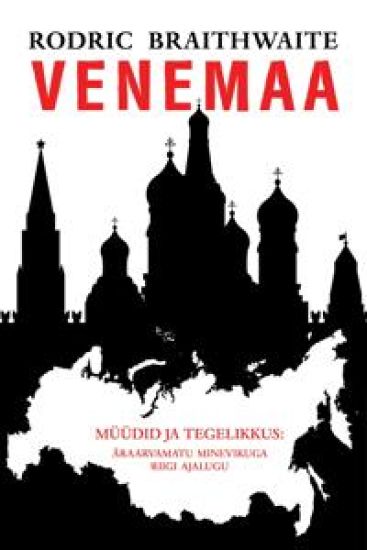
Venemaa. Muudid ja tegelikkus: Äraarvamatu minevikuga riigi ajalugu
Tuntud ajaloolane ja endine Ühendkuningriigi suursaadik Moskvas Rodric Braithwaite heidab pilgu Venemaa ajaloole, kirjeldades riigi teekonda Bütsantsi ripatsist tänaseks paariariigiks.Winston Churchill on öelnud, et Venemaa on saladusse peidetud ja müsteeriumisse mähitud mõistatus. Autori arvates sobib selline suhtumine mõttelaiskuse väljavabandamiseks. Tema sõnul on Venemaa lihtsalt müütide kütkes ja neist tuleb vabaneda. Täpselt seda autor oma raamatuga teha püüabki: vaadata müütide taha peidetud fakte ja Venemaa lugu kainel pilgul kuni juurteni lahti harutada.Venemaa on pindalalt maailma suurim riik, ka venelaste tuumaarsenalile pole võrdväärset. Üle tuhande aasta on Kiievi-Venemaa, Moskoovia, Vene Keisririigi ja Nõukogude Liidu nime all tuntud riik oma piiridega meelevaldselt mänginud, sageli teiste rahvaste vere hinnaga. Kolmkümmend aastat tagasi Venemaa Föderatsioonina sündinud uus riik jätkab vanu traditsioone ning venelased oma ajaloo ümber kirjutamist. Nii jäetakse välja rahvusliku häbi episoodid, et teha ruumi müütidest välja kasvanud patriootlikele õhkamistele, ja ununeb tõde.Venemaa pole mingi mõistatus. Küll on ta ajalugu vägivaldne, traagiline, kohati ka väge täis - ikka ja alati keeruline.
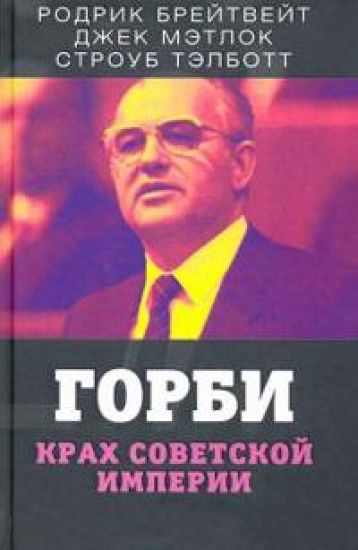
Gorbi. Krakh sovetskoj imperii

Gorbi. Krakh sovetskoj imperii

Jack Foust Matlock; Strobe Talbott; Rodric Braithwaite

Rodina
2023
sidottu
Dvoe iz avtorov etoj knigi rabotali v Sovetskom Sojuze v period gorbachevskoj "perestrojki": Rodrik Brejtvejt byl poslom Velikobritanii v SSSR, Dzhek Metlok - poslom SSHA. Oni khorosho znali Mikhaila Gorbacheva, mnogo raz vstrechalis s nim, a krome togo, znali ego soratnikov i vragov. Tretij iz avtorov, Stroub Telbott, byl sovetnikom i zamestitelem Gosudarstvennogo sekretarja SSHA, imel vlijanie na vneshnjuju politiku Soedinennykh Shtatov, v tom chisle v otnoshenii SSSR.V svoikh vospominanijakh oni pishut o tom, kak Gorbachev provodil "perestrojku", o ego peregovorakh i sekretnykh dogovorennostej s R. Rejganom i Dzh. Bushem, s M. Tetcher. Pomimo etogo, podrobno rasskazyvaetsja o takikh vidnykh figurakh epokhi perestrojki, kak B. Eltsin, A. Jakovlev, E. Shevardnadze, Ju. Afanasev; o V. Krjuchkove, D. Jazove, E. Ligacheve; o GKCHP i ego provale; o "demokraticheskoj revoljutsii" i razvale SSSR.V dopolnenie k knige dajutsja nikogda ranee ne publikovavshiesja pisma iranskogo lidera ajatolly Khomejni k Gorbachevu, livijskogo rukovoditelja M. Kaddafi v adres GKCHP i vyskazyvanija prezidenta Iraka S. Khusejna o Gorbacheve.Perevodchik: Kudrjavtseva T., Isakovich V., Izosimova N.
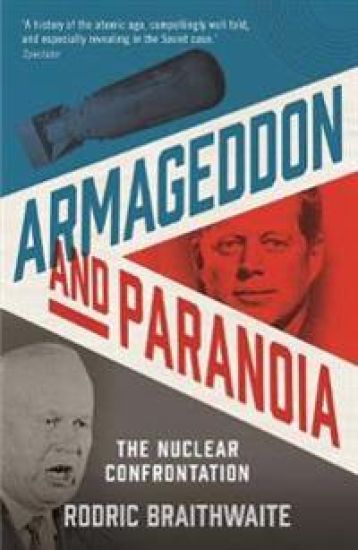
Armageddon and Paranoia

Armageddon and Paranoia

Rodric Braithwaite

Profile Books Ltd
2019
pokkari
Bestselling author, former British diplomat and expert on Russia Rodric Braithwaite's gripping account of the intense rivalry between Russia and the West In 1945, the atom bomb was dropped on Hiroshima and warfare was never the same again. Armageddon and Paranoia relates how the power of the atom was harnessed to produce weapons capable of destroying human civilisation and considers what this has done to the world. There are few villains in this story: on both sides of the Iron Curtain, dedicated scientists cracked the secrets of nature, dutiful military men planned out possible manoeuvres and politicians wrestled with potentially intolerable decisions. Patriotic citizens acquiesced to the idea that their country needed the ultimate means of defence. Some tried to grapple with the unanswerable question: what end could possibly be served by such fearsome means? Those who protested went unheard. None of them wanted to start a nuclear war, but all of them were paranoid about what the other side might do. The danger of annihilation by accident or misjudgement has not been entirely absent since. Rodric Braithwaite, author of bestsellers Moscow 1941 and Afgantsy, paints a vivid and detailed portrait of this intense period in history. Its implications are terrifyingly relevant today, as ignorant and thoughtless talk about nuclear war begins to spread once more.
Armageddon and Paranoia: The Nuclear Confrontation Since 1945

Armageddon and Paranoia: The Nuclear Confrontation Since 1945

Rodric Braithwaite

Oxford University Press
2018
sidottu
Former British Ambassador to the Soviet Union and author of the definitive account of the Soviet invasion and occupation of Afghanistan, Sir Rodric Braithwaite offers here a tour d'horizon of nuclear policy from the end of World War II and start of the Cold War to the present day. Armageddon and Paranoia unfolds the full history of nuclear weapons that began with the arms race between the United States and the Soviet Union and now extends worldwide. For decades, an apocalypse seemed imminent, staved off only by the certainty that if one side launched these missiles the other would launch an equally catastrophic counterstrike. This method of avoiding all-out nuclear warfare was called "Deterrence," a policy of Mutually Assured Destruction (MAD). Still, though neither side actively wanted to plunge the world into nuclear wasteland, the possibility of war by misjudgment or mistake meant fears could never be entirely assuaged. Both an exploration of Deterrence and the long history of superpower nuclear policy, Armageddon and Paranoia comes at a time when tensions surrounding nuclear armament have begun mounting once more. No book until this one has offered so comprehensive a history of the topic that has guided--at times dominated--the world in which we live.
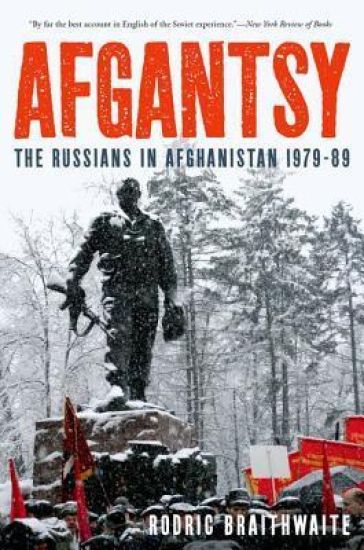
Afgantsy: The Russians in Afghanistan 1979-89

Afgantsy: The Russians in Afghanistan 1979-89

Rodric Braithwaite

Oxford University Press
2013
nidottu
The story of the Soviet occupation of Afghanistan is well known: the expansionist Communists overwhelmed a poor country as a means of reaching a warm-water port on the Persian Gulf. Afghan mujahideen upset their plans, holding on with little more than natural fighting skills, until CIA agents came to the rescue with American arms. Humiliated in battle, the Soviets hastily retreated. It is a great story-but it never happened. In this brilliant, myth-busting account, Rodric Braithwaite, the former British ambassador to Moscow, challenges much of what we know about the Soviets in Afghanistan. He provides an inside look at this little-understood episode, using first-hand accounts and piercing analysis to show the war as it was fought and experienced by the Russians. The invasion was a defensive response to a chaotic situation in the Soviets' immediate neighbor. They intended to establish a stable, friendly government, secure the major towns, and train the police and armed forces before making a rapid exit. But the mission escalated, as did casualties. Braithwaite does not paint the occupation as a Russian triumph. To the contrary, he illustrates the searing effect of the brutal conflict on soldiers, their families, and the broader public, as returning veterans struggled to regain their footing back home. Now available in paperback, Braithwaite carries readers through these complex and momentous events, capturing those violent and tragic days as no one has done before.
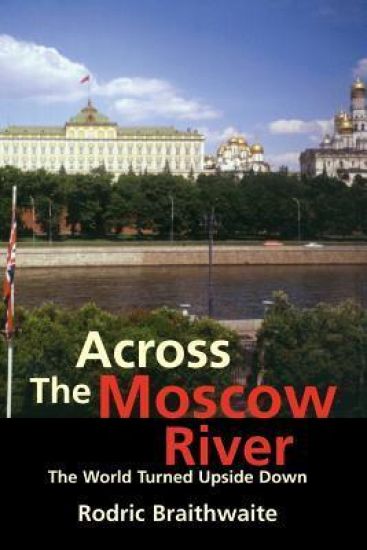
Across the Moscow River

Across the Moscow River

Rodric Braithwaite

Yale University Press
2013
pokkari
Rodric Braithwaite was British ambassador to Moscow during the critical years of perestroika and the collapse of the Soviet Union, the failed coup of August 1991, and the rise of Boris Yeltsin. With his long experience of Russia, on good personal terms with Mikhail Gorbachev, he was in a privileged position close to the center of Russia’s changing relationship with the West.This frank and engrossing book gives an intimate account of momentous change and the people who drove it. As the Soviet Empire fell apart a demoralized army crept home from Afghanistan, Eastern Europe, and the outlying parts of the Soviet Union itself. Against the opposition of the generals, Gorbachev and his allies struggled to modernize and democratize a system that had already reached the point of terminal decay. The apex of the drama came in August 1991 when a gang of generals, politicians, and secret policemen sought—by storming Moscow’s White House—to reverse the course of history.
Afgantsy

Afgantsy

Rodric Braithwaite

Profile Books Ltd
2012
pokkari
Russia's invasion of Afghanistan, told by a former British Ambassador Twenty-five years ago, when the Soviets pulled out of Afghanistan after a gruelling nine-year occupation, they left a legacy obscured by distortion and distrust. Fuelled by Cold War propaganda and the myths of the nineteenth-century Great Game, in many ways it remains so. The USSR entered the country in 1979 as part of efforts to quash growing anti-Soviet feeling in Kabul. What followed was a particularly brutal and bloody episode in world history - and one that is often credited as setting the stage for the Taliban's takeover in 1996. Basing his account on Russian sources and interviews, Rodric Braithwaite shows the conflict through the eyes of the Russians who fought it - politicians, officers, soldiers, advisers and journalists - moving seamlessly from the high politics of the Kremlin to lonely Russian conscripts in isolated mountain outposts. This is a powerful and sweeping history of the Soviets in Afghanistan, told with the unique insights of a former Ambassador to Moscow.
Afgantsy: The Russians in Afghanistan 1979-89

Afgantsy: The Russians in Afghanistan 1979-89

Rodric Braithwaite

Oxford University Press
2011
sidottu
The story of the Soviet occupation of Afghanistan is well known: the expansionist Communists overwhelmed a poor country as a means of reaching a warm-water port on the Persian Gulf. Afghan mujahideen upset their plans, holding on with little more than natural fighting skills, until CIA agents came to the rescue with American arms. Humiliated in battle, the Soviets hastily retreated. It is a great story-but it never happened.In this brilliant, myth-busting account, Rodric Braithwaite, the former British ambassador to Moscow, challenges much of what we know about the Soviets in Afghanistan. He provides an inside look at this little-understood episode, using first-hand accounts and piercing analysis to show the war as it was fought and experienced by the Russians. The invasion was a defensive response to a chaotic situation in the Soviets' immediate neighbor. They intended to establish a stable, friendly government, secure the major towns, and train the police and armed forces before making a rapid exit. But the mission escalated, as did casualties. Braithwaite does not paint the occupation as a Russian triumph. To the contrary, he illustrates the searing effect of the brutal conflict on soldiers, their families, and the broader public, as returning veterans struggled to regain their footing back home.Now available in paperback, Braithwaite carries readers through these complex and momentous events, capturing those violent and tragic days as no one has done before.
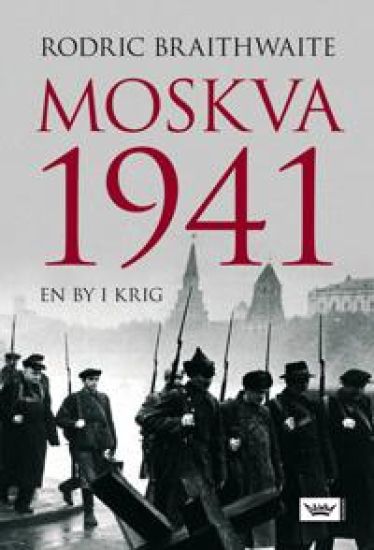
Moskva 1941

Moskva 1941

Rodric Braithwaite

Damm
2007
pokkari
Slaget om Moskva i 1941 var det største under andre verdenskrig, og dermed det største slaget i verdenshistorien. Kampene strakte seg over et område like stort som Frankrike, varte i seks måneder og involverte over sju millioner soldater. Tapene var enorme, særlig på sovjetisk side. Dette er historien om hvordan Moskvas befolkning forsvarte byen mot Hitlers armeer. Moskovittene var hardt prøvet av Stalins jernharde regime og fikk nå også en ytre fiende å forsvare seg mot. Det er en historie om matmangel, kulde, død og tragedie – og ikke minst heltemot. En rystende og levende skildring av hvordan innbyggerne hindret at Moskva falt i fiendens hender.
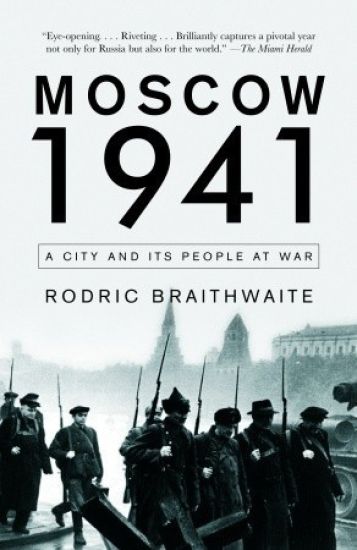
Moscow 1941: A City and Its People at War
In 1941 close to one million Russian soldiers died defending Moscow from German invasion-more causalities than that of the United States and Britain during all of World War II. Many of these soldiers were in fact not soldiers at all, but instead ordinary people who took up arms to defend their city. Students dropped their books for guns; released prisoners exchanged their freedom for battle; and women fought alongside men on the bloody, mud-covered frozen road to Moscow. By the time the United States entered the war the Germans were already retreating and a decisive victory had been won for the Allies. With extensive research into the lives of soldiers, politicians, writers, artists, workers, and children, Rodric Braithwaite creates a richly detailed narrative that captures this crucial moment. Moscow 1941 is a dramatic, unforgettable portrait of an often overlooked battle that changed the world.
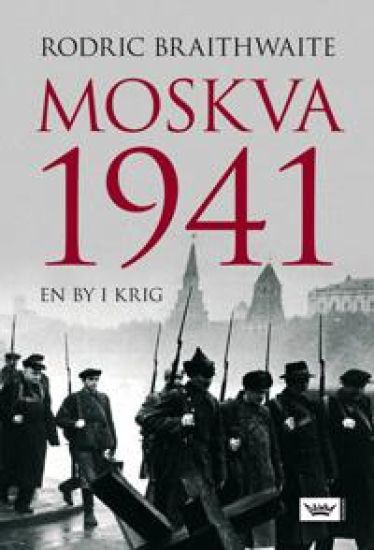
Moskva 1941

Moskva 1941

Rodric Braithwaite

Damm
2007
sidottu
Slaget om Moskva i 1941 var det største under andre verdenskrig, og dermed det største slaget i verdenshistorien. Kampene strakte seg over et område like stort som Frankrike, varte i seks måneder og involverte over sju millioner soldater. Tapene var enorme, særlig på sovjetisk side.Dette er historien om hvordan Moskvas befolkning forsvarte byen mot Hitlers armeer. Moskovittene var hardt prøvet av Stalins jernharde regime og fikk nå også en ytre fiende å forsvare seg mot. Det er en historie om matmangel, kulde, død og tragedie – og ikke minst heltemot. En rystende og levende skildring av hvordan innbyggerne hindret at Moskva falt i fiendens hender.