Kirjojen hintavertailu. Mukana 12 595 353 kirjaa ja 12 kauppaa.

Kirjailija

Rodrigo Nunes

Kirjat ja teokset yhdessä paikassa: 5 kirjaa, julkaisuja vuosilta 2015-2026, suosituimpien joukossa Anatomy of Disintegration. Vertaile teosten hintoja ja tarkista saatavuus suomalaisista kirjakaupoista.

5 kirjaa

Kirjojen julkaisuhaarukka 2015-2026.

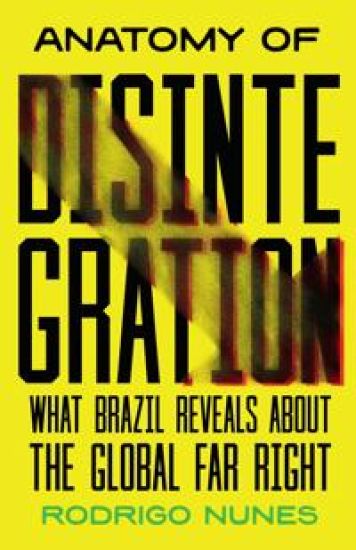
Anatomy of Disintegration

Anatomy of Disintegration

Rodrigo Nunes

Haymarket Books
2026
sidottu
A leading political philosopher dissects the global far right’s appeal through the lens of Bolsonarismo, tracing its roots to the social disintegration caused by the crisis of neoliberalism and looming climate change For four years, Jair Bolsonaro led Brazil and the popular, far-right movement that bore his name. His rise, defeat, and the chaos he left in his wake reflect patterns that are playing out in several countries, from the US to Argentina to India. In Anatomy of Disintegration, Rodrigo Nunes uses Brazil as a point of departure to make sense of why the far right is on the rise all over the world, where its appeal comes from, and explain the dystopian horizon it is moving toward. Through sharp, original analyses of the social composition of its supporters, the material and affective conditions that underpin it, and the mainstream’s inability to respond to it, Rodrigo Nunes argues that the contemporary far right is better understood not as an effort to block but as an attempt to harness and accelerate forces of social disintegration set in motion by capital and intensified by the crisis of neoliberalism.
Anatomy of Disintegration

Anatomy of Disintegration

Rodrigo Nunes

Haymarket Books
2026
pokkari
A leading political philosopher dissects the far right’s appeal through the lens of Bolsonarismo, tracing its roots to the social, cultural, and economic disintegration caused by the crisis of neoliberalism. In 2022, Brazilians defeated the far right at the polls—and, in 2025, the country’s high court jailed its leader, former president Jair Bolsonaro, for plotting a coup. But for four years, Bolsonaro led the nation and the popular, far-right movement that bore his name. Anatomy of Disintegration is about how Bolsonaro came to power and was defeated, but it is also about much more: it offers a perspective on the global rise of the far right as seen from one of the largest countries in the Global South. What explains the far right’s appeal, in Brazil, in the US, and across the world? What is so attractive about its message and the future it offers, one that valorizes individualism, glorifies trolls, con artists, and conspiracy theorists, and imagines a world in which punishment and political violence are celebrated? Through sharp analyses of the social composition of the far right, the affective conditions that underpin it, and the mainstream’s inability to respond to it, Rodrigo Nunes argues that the far right’s power comes not from some mysterious “outside” source, but from the unresolved conflicts produced by neoliberalism and the failed promises of contemporary capitalism. What emerges, then, is a portrait of a world in disintegration, beset by climate collapse, rampant inequality, and the proliferation of sacrifice zones for the poor and protected enclaves for the rich. It is essential that we understand the forces that are trying to accelerate that process––and how the left might effectively fight back.
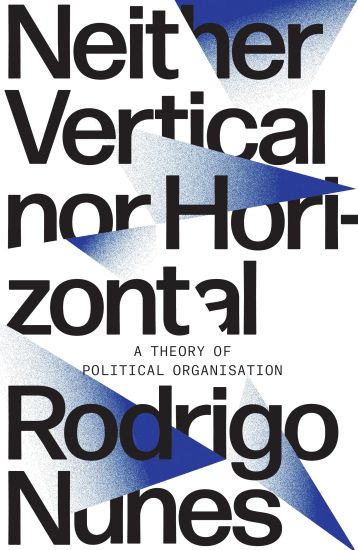
Neither Vertical nor Horizontal

Neither Vertical nor Horizontal

Rodrigo Nunes

Verso Books
2021
nidottu
A decade ago, a wave of mass mobilisations described as "horizontal" and "leaderless" swept the planet, holding the promise of real democracy and justice for the 99%. Many saw its subsequent ebb as proof of the need to go back to what was once called "the question of organisation". For something so often described as essential, however, political organisation remains a surprisingly under-theorised field. In this book, Rodrigo Nunes proposes to remedy that lack by starting again from scratch. Redefining the terms of the problem, he rejects the confusion between organisation and any of the forms it can take, such as the party, and argues that organisation must be understood as always supposing a diverse ecology of different initiatives and organisational forms. Drawing from a wide array of sources and traditions that include cybernetics, poststructuralism, network theory and Marxism, Nunes develops a grammar that eschews easy oppositions between "verticalism" and "horizontalism", centralisation and dispersion, and offers a fresh approach to enduring issues like spontaneity, leadership, democracy, strategy, populism, revolution, and the relationship between movements and parties.
Art & Crisis

Art & Crisis

Caroline Ann Baur; T. J. Demos; Florian Dombois; David Keller; Dominique Lammli; Rodrigo Nunes; El Rass; Erik Steinbrecher; Judith Welter

JRP Ringier
2018
nidottu
Art & Crisis is a theoretical publication on educational processes and what it means to teach and learn fine arts in a city such as Zurich. It brings together contributions from 2017 MFA students, their professors at Zurich University of the Arts and guest writers.