Kirjailija
Roger Allen
Kirjat ja teokset yhdessä paikassa: 22 kirjaa, julkaisuja vuosilta 1995-2025, suosituimpien joukossa Tales of Tangier. Vertaile teosten hintoja ja tarkista saatavuus suomalaisista kirjakaupoista.
22 kirjaa
Kirjojen julkaisuhaarukka 1995-2025.
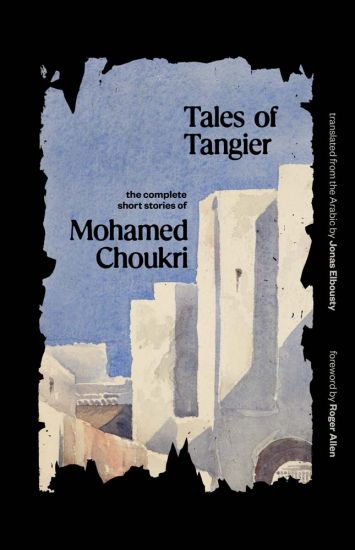
The complete short stories of acclaimed Moroccan author Mohamed Choukri, translated into English and collected in one volume for the first time A World Literature Today Notable Translation of 2023 “Choukri is one of Morocco’s most revered figures. . . . To have his words translated is to have the privilege to view the inner world of his intellect and the obscured landscapes of Tangier.”—Noshin Bokth, The New Arab Mohamed Choukri’s vivid stories invite the reader to wander the streets of Tangier, the ancient coastal crossroads between Europe and Africa, and to meet its denizens at markets, beaches, cafés, and brothels. Choukri’s Tangier is a place where newborns are for sale, swindlers hawk the Prophet’s shoes, and boys collect trash to sell for food. Choukri says that “writing is a protest, not a parade.” And in these thirty-one stories he privileges the voices of those ignored by society: the abused, the abandoned, the addicted. The tales are at once vibrant local vignettes and profound reflections on the lives, sufferings, and hopes of Choukri’s fellow Tangerines.
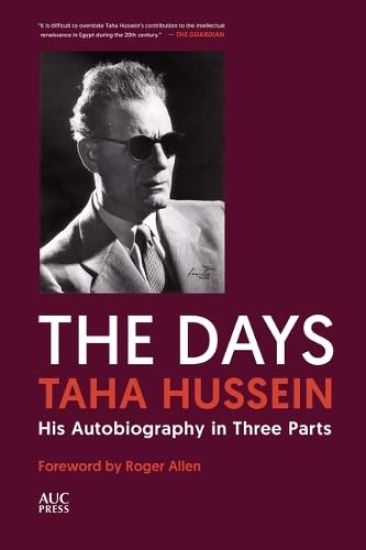
Taha Hussein's classic autobiographical novel The Days helped usher in the era of modern Arabic writing and remains one of the most influential and best-known works of Arabic literature"It is difficult to overstate Taha Hussein's contribution to the intellectual renaissance in Egypt during the 20th century."—The GuardianThe monumental three-part autobiography of one of modern Egypt's greatest writers and thinkers is again available in a single paperback in this classic reissue. The first part, An Egyptian Childhood (1929), is full of the sounds and smells of rural Egypt. It tells of Hussein's childhood and early education in a small village in Upper Egypt, as he learns not only to come to terms with his blindness but to excel in spite of it and win a place at the prestigious Azhar University in Cairo. The second part, The Stream of Days: A Student at the Azhar (1939), is an enthralling picture of student life in Egypt in the early 1900s, and the record of the growth of an unusually gifted personality. More than forty years later, Hussein published A Passage to France (1973), carrying the story on to his final attainment of a doctorate at the Sorbonne, a saga of perseverance in the face of daunting odds.
Award-winning news photographer Roger Allen had often taken animal photos, but never grasped how badly humans can mistreat other sentient beings until he met Mely, an orangutan that had been chained all its adult life to the verandah of a waterfront house in a remote part of Borneo. They met, touched hands, and in an instant he was converted into an impassioned animal rights campaigner. In this stunning book, Roger documents the dramatic animal rescues he has brought to world attention – of lions, tigers, rhinos, dogs and bears – as well as, in many cases, their happy outcomes.
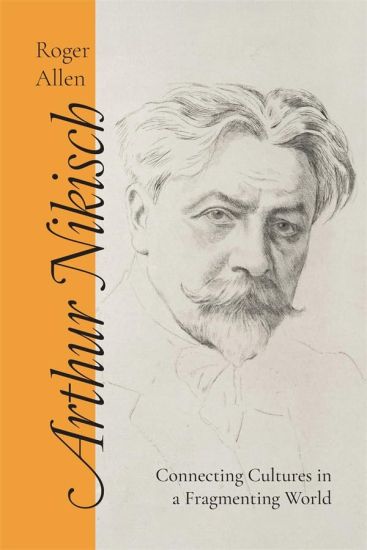
Considers Nikisch as a primary link between the later nineteenth century performance practice, and the twentieth-century 'fetishisation' of the superstar conductor as a commercially driven phenomenon. The Hungarian-born conductor Arthur Nikisch (1855-1922) was among the first of the new breed of virtuoso conductors who came to prominence in the immediate aftermath of Wagner. As a youthful violinist in the Vienna Court Orchestra, he played under Wagner, Verdi and Brahms; in 1895 he reached the pinnacle of German musical life as Chief Conductor of the Leipzig Gewandhaus and Berlin Philharmonic Orchestras. His career was, however, by no means confined to Austro-German lands. He spent four seasons in the USA as Director of the Boston Symphony Orchestra and travelled regularly to conduct in Imperial Russia. His visits to Britain had a significant impact on London's concert life through his associations with the newly opened Queen's Hall, the fledgling London Symphony Orchestra, Covent Garden Opera House and even as piano accompanist at the Bechstein (later Wigmore) Hall. He was also a fervent champion of the music of non-Austro German composers such as the Russian Pyotr Ilyich Tchaikovsky and the Englishman Edward Elgar. This book considers Nikisch's role and influence as a leading musical executant within the declining Habsburg monarchy and the ascendant German Empire. It also examines how the newly established phenomenon of the virtuoso conductor reached across international boundaries at a time when hardening ideologies and shifting political allegiances were leading towards the disintegration of the old Europe in the carnage of the First World War. It considers Nikisch as a primary link between the later nineteenth century performance practice and aesthetics of Wagner and the twentieth century phenomenon of the all-powerful superstar conductor who came to surpass even the composer in importance.
The first English translation of one of the novels that helped change modern Arab literatureMohamed Choukri, one of the most important writers of modern Moroccan literature, grew up in extreme poverty in Tangier and was illiterate until the age of twenty. After learning to read, he realized that "writing could also be a way to expose, to protest against those who have stolen my childhood, my teenage-hood and a piece of my youthfulness." His vivid portrayals of marginalized people, which had been considered taboo, led to the censorship of his work and a cultural backlash in the Middle East.In Faces, the third book in his trilogy of fictionalized autobiographical works, he describes gritty events, extreme poverty, prostitution, violence, sexual revelry, deprivation, and abuse. It is through his storytelling that Choukri reflects on human nature, love, and kindness–emphasizing the need for community and collaboration. Faces humanizes those undergoing poverty and places the blame for the violence they encounter squarely on colonial forces and the resulting postcolonial government, while opening literary traditions to a new style of writing.Choukri's friendships with Tennessee Williams, Paul Bowles, Jean Genet, and other writers brought him attention in his lifetime. But Faces—his last novel, which was originally published in Arabic in 2000—has remained untranslated until now. In English for the first time, Jonas Elbousty's translation allows Choukri's work to reach wider international discussions of contemporary Arab literature.
An engaging collection of contemporary short stories from various Arabic countries develops students’ mastery of literary analysis and cultural awarenessAswat Mu’asira introduces advanced level students to contemporary short stories from across the Middle East. Fifty-five stories in Arabic from twenty countries engage students with current topics and literary approaches that open the door to discovering both established and emerging authors and literary traditions. The book includes voices from often overlooked Arabic-speaking countries and peoples, giving readers the opportunity to broaden their understanding of Arabic cultures. While most Arabic literature textbooks include only excerpts of longer works, the short stories in this collection are designed to be read in one sitting, giving students the opportunity to immerse themselves in a complete piece of literature. Stories are organized into chapters based on their country of origin. Each story is preceded by an author biography and followed by exercises to help students practice vocabulary and comprehension, explore the literary tradition, and master literary analysis. Scholars of Arabic literature will also welcome these new stories, many of which are available outside the Middle East for the first time in this collection and expand the understanding of the short story and of contemporary literature from this important region.
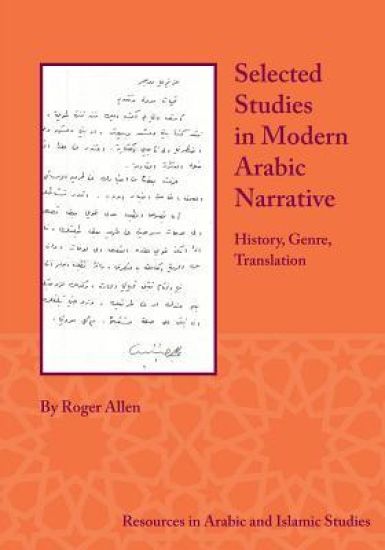
No Western scholar has contributed as much to the study of modern Arabic narrative as has Roger Allen. His doctoral dissertation was the very first Oxford D.Phil. in modern Arabic literature, completed in 1968 under the supervision of Mustafa Badawi. That same year, he took a position in Arabic language and literature at the University of Pennsylvania, the oldest professorial post in Arabic in the United States. Roger Allen has been phenomenally prolific: fifty books and translations, two hundred articles and counting-on Arabic language pedagogy, on translation, on Arabic literary history, criticism and literature. He is also one of the most decorated and acclaimed translators of Arabic literature. The present volume brings together sixteen of Roger Allen's articles on modern Arabic narrative, with a focus on genre, translation and literary history, and features analyses of the works of Rashid Abu Jadrah, Bensalem Himmich, Yusuf Idris, Naguib Mahfouz, and Tayeb Salih.
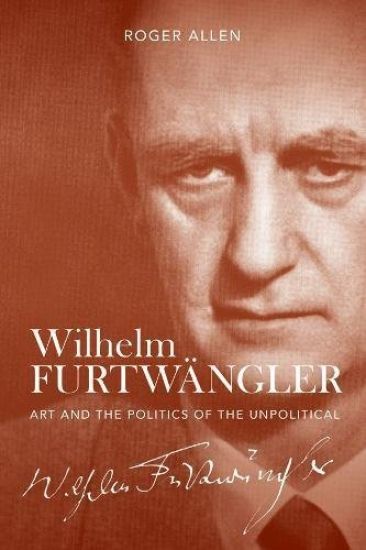
A pathbreaking, new intellectual biography of the composer and conductor Wilhelm Furtwängler. Wilhelm Furtwängler (1886-1954) has entered the historical memory as a renowned interpreter of the canon of Austro-German musical masterworks. His extensive legacy of recorded performances of Beethoven, Brahms, Bruckner and Wagneris widely regarded as unsurpassed. Yet more than sixty years after his death he remains a controversial figure: the complexities and equivocacy of his high-profile position within the Third Reich still cast a long shadow over hisreputation. This book builds an intellectual biography of Furtwängler, probing this ambiguity, through a critical examination of his extensive series of essays, addresses and symphonies. It traces the development of his thought from its foundations in late nineteenth-century traditions of Bildung and associated discourses of conservative-minded nationalism, through the turbulent years of the Weimar Republic and the cultural and moral dilemmasof the Nazi period, to the post-World War II years of Bundesrepublik reconstruction, in which the beleaguered idealist found himself adrift in an alien cultural environment overshadowed by the unfolding narrative of the Nazi holocaust. The book will be of interest not only to music scholars but to cultural and intellectual historians as well. ROGER ALLEN is a Fellow of St Peter's College, Oxford and author of Richard Wagner's Beethoven (1870): A New Translation (Boydell Press, 2014)
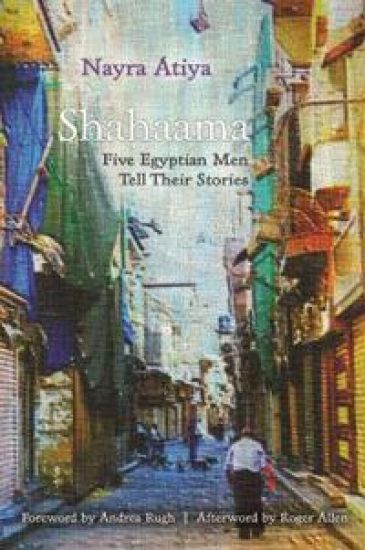
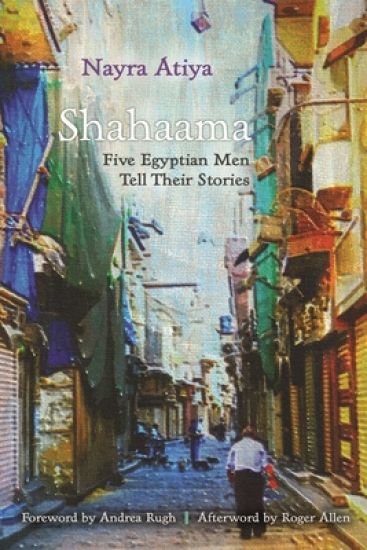
Between the late 1970s and the early 1980s, Nayra Atiya gathered the oral histories of five Egyptian men: a fisherman, an attorney, a scholar, a businessman, and a production manager. Through personal interviews over the course of several years, Atiya intimately captured the everyday triumphs and struggles of these young men in a rapidly changing Egyptian society. These tender stories of childhood experiences in the rural countryside, of the rigors of schooling, and of the many challenges in navigating adulthood shed light on both the rich diversity of Egyptian society and the values and traditions that are shared by all Egyptians. The concept of shahaama—a code of honor that demands loyalty, generosity, and a readiness to help others—is threaded throughout the narratives, reflecting its deeply rooted presence in Egyptian culture. Moving beyond leaden stereotypes of the oppressive Middle Eastern male, these candid selfportraits reveal the complexity of male identity in contemporary Egyptian society, highlighting the men—s desires for economically viable lives, the same desires that fuel the many Egyptians today working toward revolutionary change.
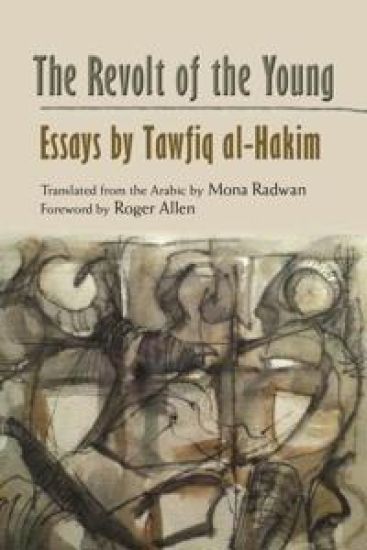
Tawfiq al-Hakim (1898–1987) is recognized as one of the most important figures in the history of modern Arabic literature. Considered a pioneer in many literary forms, including drama, novels, and short stories, al-Hakim influenced generations of Egyptian writers. The Revolt of the Young is a collection of essays originally published in 1984 that shows al-Hakim as a public intellectual addressing the ongoing conflict between generations.Al-Hakim muses on the cultural, artistic, and intellectual links and breakages between the old and the young generations. He focuses on the young and their role in the continuing development of Egyptian society, which over the course of the last century or so has undergone foreign occupation, an experiment in parliamentary democracy within a monarchical system, a socialist revolution characterized by both successes and failures, the emergence of a dictatorial presidency, and now the development of a complex political scenario currently dominated by groups with varyingly strong ties to the tenets of Islam. Al-Hakim did not live long enough to witness the most recent phases of this elongated and often disruptive process of experimentation and change, but in his writing, he focuses on the institution that he regards as crucial to any forward progress: the family.The essays present readers with a voice from the past, with uncanny foretelling of issues raised by the events that occurred in Egypt more than twenty years after al-Hakim’s death. Radwan’s translation, along with Roger Allen’s foreword, brings to light al-Hakim’s lucid and erudite commentary, much of it as relevant to the problems facing Egyptian youth today as it was when first published.
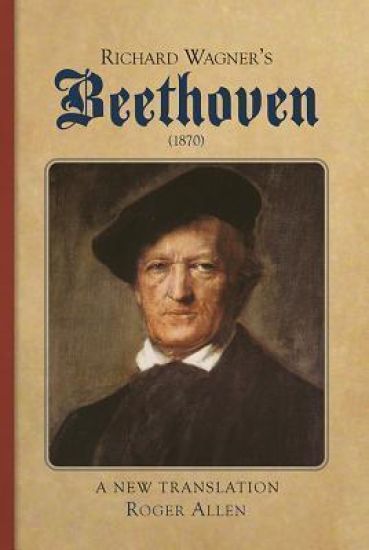
Indispensable reading for historians and musicologists as well as those interested in Wagner's philosophy and the aesthetics of music. Despite the enormous and accelerating worldwide interest in Wagner leading to the bicentenary of his birth in 2013, his prose writings have received scant scholarly attention. Wagner's book-length essay on Beethoven, written to celebrate the centenary of Beethoven's birth in 1870, is really about Wagner himself rather than Beethoven. It is generally regarded as the principal aesthetic statement of the composer's later years, representing a reassessment ofthe ideas of the earlier Zurich writings, especially Oper und Drama, in the light of the experience gained through the composition of Tristan und Isolde, Die Meistersinger von Nürnberg and the greater part of DerRing des Nibelungen. It contains Wagner's most complete exegesis of his understanding of Schopenhauer's philosophy and its perceived influence on the compositional practice of his later works. The essay also influenced the young Nietzsche. It is an essential text in the teaching of not only Wagnerian thought but also late nineteenth-century musical aesthetics in general. Until now the English reader with no access to the German original has been obliged to work from two Victorian translations. This brand new edition gives the German original and the newly translated English text on facing pages. It comes along with a substantial introduction placing the essay not onlywithin the wider historical and intellectual context of Wagner's later thought but also in the political context of the establishment of the German Empire in the 1870s. The translation is annotated throughout with a full bibliography. Richard Wagner's Beethoven will be indispensable reading for historians and musicologists as well as those interested in Wagner's philosophy and the aesthetics of music. ROGER ALLEN is Fellow and Tutor in Music at St Peter's College, Oxford.
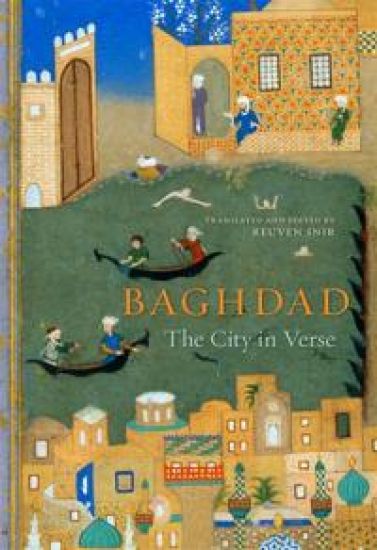
Baghdad: The City in Verse captures the essence of life lived in one of the world’s great enduring metropolises. In this unusual anthology, Reuven Snir offers original translations of more than 170 Arabic poems—most of them appearing for the first time in English—which represent a cross-section of genres and styles from the time of Baghdad’s founding in the eighth century to the present day. The diversity of the fabled city is reflected in the Bedouin, Muslim, Christian, Kurdish, and Jewish poets featured here, including writers of great renown and others whose work has survived but whose names are lost to history.Through the prism of these poems, readers glimpse many different Baghdads: the city built on ancient Sumerian ruins, the epicenter of Arab culture and Islam’s Golden Age under the enlightened rule of Harun al-Rashid, the bombed-out capital of Saddam Hussein’s fallen regime, the American occupation, and life in a new but unstable Iraq. With poets as our guides, we visit bazaars, gardens, wine parties, love scenes (worldly and mystical), brothels, prisons, and palaces. Startling contrasts emerge as the day-to-day cacophony of urban life is juxtaposed with eternal cycles of the Tigris, and hellish winds, mosquitoes, rain, floods, snow, and earthquakes are accompanied by somber reflections on invasions and other catastrophes.Documenting the city’s 1,250-year history, Baghdad: The City in Verse shows why poetry has been aptly called the public register of the Arabs.
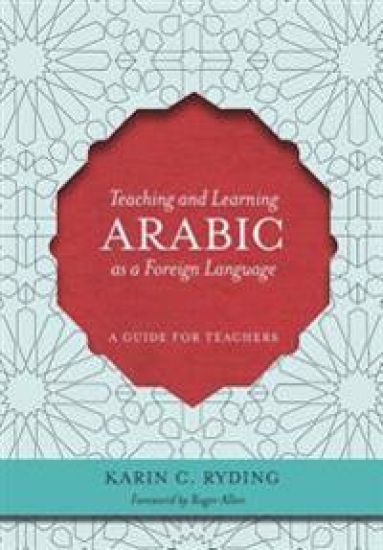
Teaching and Learning Arabic as a Foreign Language
Karin C. Ryding; Roger Allen
Georgetown University Press
2013
pokkari
This guide clearly and succinctly presents the basic tenets of teaching foreign languages specifically for Arabic teachers. Consolidating findings from second language acquisition (SLA) research and applied linguistics, it covers designing curricula, theory and methods, goals, testing, and research, and intersperses practical information with background literature in order to help teachers improve their teaching of Arabic as a foreign language (TAFL). Karin C. Ryding, a well-regarded scholar of Arabic linguistics and former president of the American Association of Teachers of Arabic, frames the discussion with SLA literature and suggests practical and effective ways of helping students learn. Ryding discusses issues at the core of Arabic teaching effectiveness and the achievement of communicative competence, such as the teaching of pronunciation, speaking, reading, listening, and writing; teaching mixed-level classes; creative classroom organization; corrective feedback; and use of activities and exercises, with plenty of examples from Arabic and tips for teachers. She also covers materials development and proficiency testing, providing study questions and recommended readings for each chapter. This guide, which can be used as a textbook, is the first of its kind aimed specifically at TAFL, and should be of interest to Arabic instructors-in-training, academics, graduate students, linguists, department chairs, language coordinators, and teacher trainers. It also serves as a resource for teachers of other less commonly taught languages (LCTLs), who struggle with similar issues.
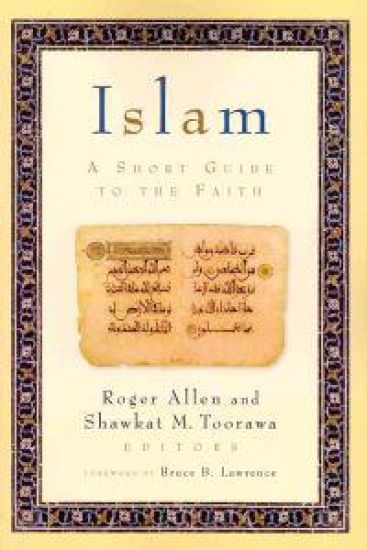
In Islam: A Short Guide to the Faith, editors Roger Allen and Shawkat M. Toorawa have assembled fifteen chapters by fifteen noted scholars, each of which provides a lucid description and exploration of an aspect of Islam, its institutions, doctrines, and interactions, notably with Christianity, Judaism, and the modern world. The chapters are preceded by a foreword by a renowned scholar, sixteen full-color images, and a user-friendly bibliography for further viewing and reading. This concise yet thorough introduction to Islam is ideal for the general reader interested in learning more about Islam, and for use as an introductory text in high school and college classes.
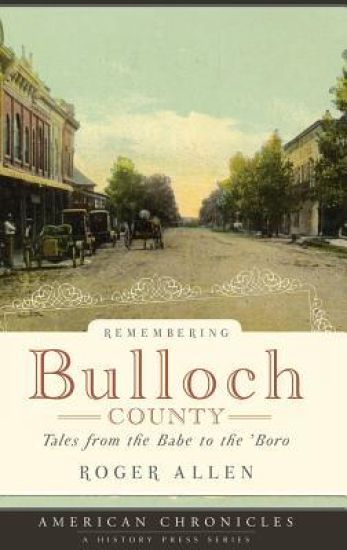
Remembering Bulloch County: Tales from the Babe to the 'boro
Roger Allen
History Press Library Editions
2008
sidottu
In this assortment of his best articles, discover why Statesboro Herald columnist Roger Allen attracts a large and devoted Bulloch County following. Allen aptly entertains his audience with local lore and forgotten history, compiling a diverse and eclectic array of tales. Read about a local baseball game in 1935 in which Babe Ruth took on the South Georgia Teachers Conference. Other chapters detail colonial and Native American influences on the region, the role of Bulloch County residents during World War II and the settlement of a Baptist community in Statesboro. Become reacquainted with Bulloch County s rich and quirky past through this captivating collection."
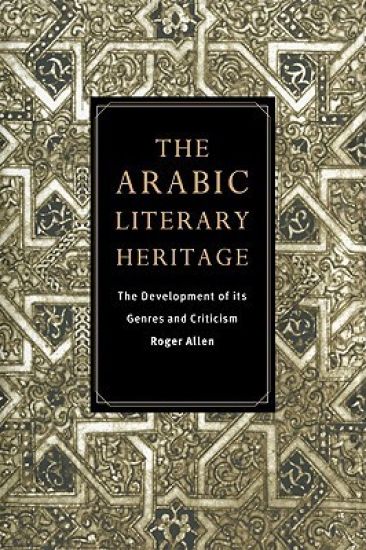
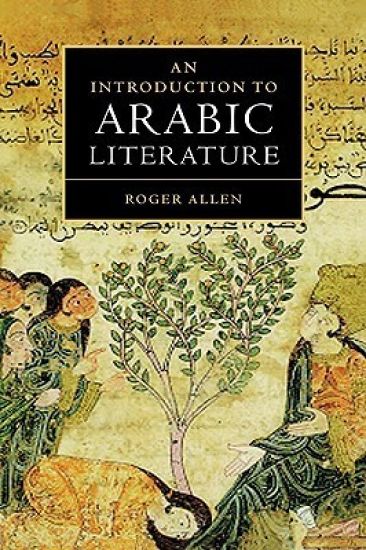
Offers an account of the cultural tradition of literary texts in Arabic, from their unknown beginnings in the fifth century AD. Within each chapter the emphasis is on the texts themselves, and those who created and commented on them, but the author also demonstrates his awareness of Western theoretical and critical approaches.
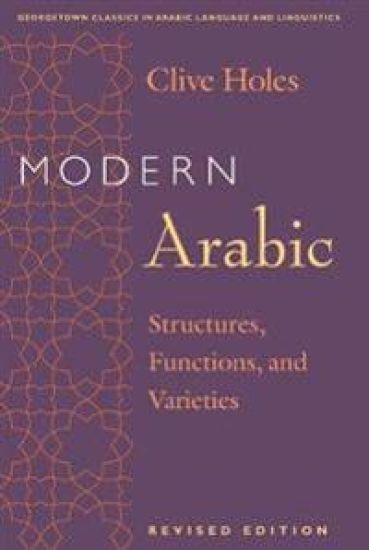
The revised and updated edition of "Modern Arabic" takes this authoritative, concise linguistic description of the structure and use of modern Arabic to an invaluable new level. Clive Holes traces the development of the Arabic language from Classical Arabic, the written language used in the 7th century for the Qur'an and poetry, through the increasingly symbiotic use of Modern Standard Arabic or MSA (the language of writing and formal speech) and dialectal Arabic (the language of normal conversation). He shows how Arabic has been shaped over the centuries by migration, urbanization, and education - giving us "a balanced, dispassionate, and accurate picture of the structures, functions, and varieties of the contemporary Arabic language". Holes explains the structural characteristics - phonology, morphology, syntax, semantics, and lexical and stylistic developments - that the majority of the dialects share, as distinguished from Modern Standard Arabic. He also shows how native speakers use both types of Arabic for different purposes, with MSA being the language of power and control as used on television and in political speeches, and the dialects serving as the language of intimacy and domesticity. He further shows how MSA and spoken dialects are not as compartmentalized as one might be led to believe. "Modern Arabic" illustrates the use of the Arabic language in real life, whether in conversation, news bulletins and newspaper articles, serious literature, or song. This new edition takes into account research published in several areas of Arabic linguistics since the first edition was published in 1995. It includes more extensive comment on the North African Arabic vocabulary of Modern Standard Arabic, more information about "mixed" varieties of written Arabic that are not in MSA (especially in Egypt), updated references, explanations, and many new examples. All Arabic is transcribed, except for an appendix presenting the Arabic alphabet and script. Students of the Arabic language will find "Modern Arabic" without peer - as will those general linguists who are interested in discovering how Arabic compares structurally and sociolinguistically with European languages.
Roger Allen provides a comprehensive introductory survey of literary texts in Arabic, from their unknown beginnings in the fifth century AD to the present day. The volume focuses on the major genres of Arabic literature, dealing with Islam’s sacred text, the Qur’an, and a wealth of poetry, narrative prose, drama and criticism. Allen reveals the continuities that link the creative output of the present day to the illustrious literary heritage of the past and incorporates an enormously rich body of popular literature typified most famously by The Arabian Nights. The volume is informed by Western critical approaches, but within each chapter the emphasis is on the texts themselves, with extensive quotations in English translation. Reference features include a chronology and a guide to further reading. A revised and abridged version of Allen’s acclaimed study, The Arabic Literary Heritage, this book provides an invaluable student introduction to a major non-Western literary tradition.