Kirjojen hintavertailu. Mukana 12 595 353 kirjaa ja 12 kauppaa.

Kirjailija

Roger C. Schonfeld

Kirjat ja teokset yhdessä paikassa: 3 kirjaa, julkaisuja vuosilta 2003-2023, suosituimpien joukossa Along Came Google. Vertaile teosten hintoja ja tarkista saatavuus suomalaisista kirjakaupoista.

3 kirjaa

Kirjojen julkaisuhaarukka 2003-2023.

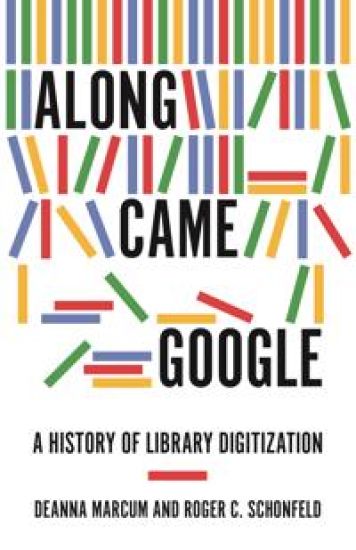
Along Came Google

Along Came Google

Deanna Marcum; Roger C. Schonfeld

PRINCETON UNIVERSITY PRESS
2023
pokkari
An incisive history of the controversial Google Books project and the ongoing quest for a universal digital libraryLibraries have long talked about providing comprehensive access to information for everyone. But when Google announced in 2004 that it planned to digitize books to make the world's knowledge accessible to all, questions were raised about the roles and responsibilities of libraries, the rights of authors and publishers, and whether a powerful corporation should be the conveyor of such a fundamental public good. Along Came Google traces the history of Google's book digitization project and its implications for us today.Deanna Marcum and Roger Schonfeld draw on in-depth interviews with those who both embraced and resisted Google's plans, from librarians and technologists to university leaders, tech executives, and the heads of leading publishing houses. They look at earlier digital initiatives to provide open access to knowledge, and describe how Google founders Sergey Brin and Larry Page made the case for a universal digital library and drew on their company's considerable financial resources to make it a reality. Marcum and Schonfeld examine how librarians and scholars organized a legal response to Google, and reveal the missed opportunities when a settlement with the tech giant failed.Along Came Google sheds light on the transformational effects of the Google Books project on scholarship and discusses how we can continue to think imaginatively and collaboratively about expanding the digital availability of knowledge.
Along Came Google

Along Came Google

Deanna Marcum; Roger C. Schonfeld

PRINCETON UNIVERSITY PRESS
2021
sidottu
An incisive history of the controversial Google Books project and the ongoing quest for a universal digital libraryLibraries have long talked about providing comprehensive access to information for everyone. But when Google announced in 2004 that it planned to digitize books to make the world's knowledge accessible to all, questions were raised about the roles and responsibilities of libraries, the rights of authors and publishers, and whether a powerful corporation should be the conveyor of such a fundamental public good. Along Came Google traces the history of Google's book digitization project and its implications for us today.Deanna Marcum and Roger Schonfeld draw on in-depth interviews with those who both embraced and resisted Google's plans, from librarians and technologists to university leaders, tech executives, and the heads of leading publishing houses. They look at earlier digital initiatives to provide open access to knowledge, and describe how Google founders Sergey Brin and Larry Page made the case for a universal digital library and drew on their company's considerable financial resources to make it a reality. Marcum and Schonfeld examine how librarians and scholars organized a legal response to Google, and reveal the missed opportunities when a settlement with the tech giant failed.Along Came Google sheds light on the transformational effects of the Google Books project on scholarship and discusses how we can continue to think imaginatively and collaboratively about expanding the digital availability of knowledge.

JSTOR

JSTOR

Roger C. Schonfeld; Hal Varian

Princeton University Press
2003
sidottu
Ten years ago, most scholars and students relied on bulky card catalogs, printed bibliographic indices, and hardcopy books and journals. Today, much content is available electronically or online. This book examines the history of one of the first, and most successful, digital resources for scholarly communication, JSTOR. Beginning as a grant-funded project of the Andrew W. Mellon Foundation at the University of Michigan, JSTOR has grown to become a major archive of the backfiles of academic journals, and its own nonprofit organization. Roger Schonfeld begins this history by looking at JSTOR's original mission of saving storage space and thereby storage costs, a mission that expanded immediately to improving access to the literature. What role did the University play? Could JSTOR have been built without the active involvement of a foundation? Why was it seen as necessary to "spin off" the project? This case study proceeds as an organizational history of the birth and maturation of this nonprofit, which had to emerge from the original university partnership to carve its own identity. How did the grant project evolve into a successful marketplace enterprise? How was JSTOR able to serve its twofold mission of archiving its journals while also providing access to them? What has accounted for its growth? Finally, Schonfeld considers implications of the economic and organizational aspects of archiving as well as the system-wide savings that JSTOR ensures by broadly distributing costs.