
Kirjojen hintavertailu. Mukana 12 476 565 kirjaa ja 12 kauppaa.

Kirjailija

Roger D. Blair

Kirjat ja teokset yhdessä paikassa: 11 kirjaa, julkaisuja vuosilta 2005-2024, suosituimpien joukossa Intellectual Property. Vertaile teosten hintoja ja tarkista saatavuus suomalaisista kirjakaupoista.

11 kirjaa

Kirjojen julkaisuhaarukka 2005-2024.

Intellectual Property

Intellectual Property

Roger D. Blair; Thomas F. Cotter

Cambridge University Press
2005
pokkari
This book addresses several aspects of the law and economics of intellectual property rights (IPRs) that have been underanalyzed in the existing literature. It begins with a brief overview of patents, trade secrets, copyrights, and trademarks, and the enforcement and licensing of IPRs, focusing on the remedies available for infringement (injunctions, various forms of damages, and damages calculation issues); the standard of care (strict liability versus an intent- or negligence-based standard); and the rules for determining standing to sue and joinder of defendant for IPR violations. The authors demonstrate that the core assumption of IPR regimes - that IPRs maximize certain social benefits over social costs by providing a necessary inducement for the production and distribution of intellectual products - have several important implications for the optimal design of remedies, the standard of care, and the law of standing and joinder.

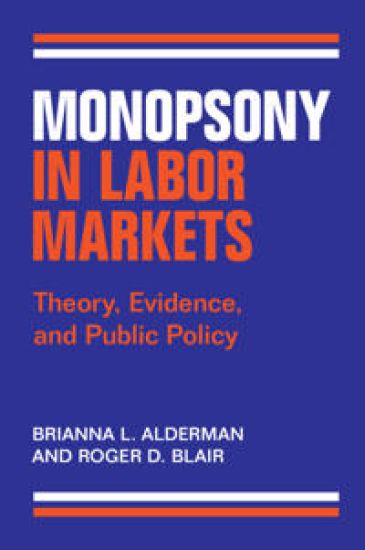
Monopsony in Labor Markets

Monopsony in Labor Markets

Brianna L. Alderman; Roger D. Blair

Cambridge University Press
2024
sidottu
The economics of monopsony power results in lower wages and other forms of compensation, as well as reduced employment. Wealth is transferred from workers to their employers. In addition, the employer's output is reduced, which leads to increased prices for consumers. Monopsony in Labor Markets demonstrates that elements of monopsony are pervasive and explores the available antitrust policy options. It presents the economic and empirical foundations for antitrust concerns and sets out the relevant antitrust policy. Building on this foundation, it examines collusion on compensation, collusive no-poaching agreements, and the inclusion of non-compete agreements in employment contracts. It also addresses the influence of labor unions, labor's antitrust exemption, which permits the exercise of countervailing power, and the consequences of mergers to monopsony. Offering a thorough explanation of antitrust policy, this book identifies the basic economic problems with monopsony in labor markets and explains the remedies currently available.
Monopsony in Labor Markets

Monopsony in Labor Markets

Brianna L. Alderman; Roger D. Blair

Cambridge University Press
2024
pokkari
The economics of monopsony power results in lower wages and other forms of compensation, as well as reduced employment. Wealth is transferred from workers to their employers. In addition, the employer's output is reduced, which leads to increased prices for consumers. Monopsony in Labor Markets demonstrates that elements of monopsony are pervasive and explores the available antitrust policy options. It presents the economic and empirical foundations for antitrust concerns and sets out the relevant antitrust policy. Building on this foundation, it examines collusion on compensation, collusive no-poaching agreements, and the inclusion of non-compete agreements in employment contracts. It also addresses the influence of labor unions, labor's antitrust exemption, which permits the exercise of countervailing power, and the consequences of mergers to monopsony. Offering a thorough explanation of antitrust policy, this book identifies the basic economic problems with monopsony in labor markets and explains the remedies currently available.
Antitrust Policy in Health Care Markets

Antitrust Policy in Health Care Markets

Roger D. Blair; Christine Piette Durrance; Tirza J. Angerhofer

Cambridge University Press
2022
sidottu
Health care costs in the United States are much higher than in other countries. These cost differences can be explained in part by a lack of competition in the United States. Some markets, such as pharmaceuticals and medical equipment, have elements of monopoly. Other markets, such as health insurance, have elements of monopsony. Many other markets may be subject to collusion on prices, such as generic drugs, or wages, such as the nurse labor market. Lawful monopoly and monopsony are beyond the reach of antitrust laws, but collusion is not. When appropriate, vigorous antitrust enforcement challenging anticompetitive conduct can aid in reducing health care costs. This book addresses monopoly, monopsony, cartels of sellers and buyers, horizontal and vertical merger policy, and antitrust enforcement through private suits as well as the efforts of the antitrust Agencies. The authors demonstrate how enforcing antitrust laws can ultimately promote competition and reduce health care costs.
Antitrust Policy in Health Care Markets

Antitrust Policy in Health Care Markets

Roger D. Blair; Christine Piette Durrance; Tirza J. Angerhofer

Cambridge University Press
2022
pokkari
Health care costs in the United States are much higher than in other countries. These cost differences can be explained in part by a lack of competition in the United States. Some markets, such as pharmaceuticals and medical equipment, have elements of monopoly. Other markets, such as health insurance, have elements of monopsony. Many other markets may be subject to collusion on prices, such as generic drugs, or wages, such as the nurse labor market. Lawful monopoly and monopsony are beyond the reach of antitrust laws, but collusion is not. When appropriate, vigorous antitrust enforcement challenging anticompetitive conduct can aid in reducing health care costs. This book addresses monopoly, monopsony, cartels of sellers and buyers, horizontal and vertical merger policy, and antitrust enforcement through private suits as well as the efforts of the antitrust Agencies. The authors demonstrate how enforcing antitrust laws can ultimately promote competition and reduce health care costs.
Sports Economics

Sports Economics

Roger D. Blair

Cambridge University Press
2011
sidottu
Sports Economics, the most comprehensive textbook in the field by celebrated economist Roger D. Blair, focuses primarily on the business and economics aspects of major professional sports and the NCAA. It employs the basic principles of economics to address issues such as the organization of leagues, pricing, advertising and broadcasting as well as the labor market in sports. Among its novel features is the candid coverage of the image and integrity of players, teams, managers and the leagues themselves, including cases of gambling, cheating, misconduct and steroids. Blair explains how economic decisions are made under conditions of uncertainty using the well-known expected utility model and makes extensive use of present value concepts to analyze investment decisions. Numerous examples are drawn from the daily press. The text offers ample boxes to illustrate sports themes, as well as extensive use of diagrams, tables, problem sets and research questions.
The Economics of Franchising

The Economics of Franchising

Roger D. Blair; Francine Lafontaine

Cambridge University Press
2010
pokkari
This 2005 book describes in much detail both how and why franchising works. It also analyses the economic tensions that contribute to conflict in the franchisor-franchisee relationship. The treatment includes a great deal of empirical evidence on franchising, its importance in various segments of the economy, the terms of franchise contracts and what we know about how all these have evolved over time, especially in the US market. A good many myths are dispelled in the process. The economic analysis of the franchisor-franchisee relationship begins with the observation that for franchisors, franchising is a contractual alternative to vertical integration. Subsequently, the tensions that arise between a franchisor and its franchisees, who in fact are owners of independent businesses, are examined in turn. In particular the authors discuss issues related to product quality control, tying arrangements, pricing, location and territories, advertising, and termination and renewals.
Monopsony in Law and Economics

Monopsony in Law and Economics

Roger D. Blair; Jeffrey L. Harrison

Cambridge University Press
2010
pokkari
Most readers are familiar with the concept of a monopoly. A monopolist is the only seller of a good or service for which there are not good substitutes. Economists and policy makers are concerned about monopolies because they lead to higher prices and lower output. The topic of this book is monopsony, the economic condition in which there is one buyer of a good or service. It is a common misunderstanding that if monopolists raise prices, then monopsonists must lower them. It is true that a monopsonist may force sellers to sell to them at lower prices, but this does not mean consumers are better off as a result. This book explains why monopsonists can be harmful and the way law has developed to respond to these harms.
Monopsony in Law and Economics

Monopsony in Law and Economics

Roger D. Blair; Jeffrey L. Harrison

Cambridge University Press
2010
sidottu
Most readers are familiar with the concept of a monopoly. A monopolist is the only seller of a good or service for which there are not good substitutes. Economists and policy makers are concerned about monopolies because they lead to higher prices and lower output. The topic of this book is monopsony, the economic condition in which there is one buyer of a good or service. It is a common misunderstanding that if monopolists raise prices, then monopsonists must lower them. It is true that a monopsonist may force sellers to sell to them at lower prices, but this does not mean consumers are better off as a result. This book explains why monopsonists can be harmful and the way law has developed to respond to these harms.
Intellectual Property

Intellectual Property

Roger D. Blair; Thomas F. Cotter

Cambridge University Press
2005
sidottu
This book addresses several aspects of the law and economics of intellectual property rights (IPRs) that have been underanalyzed in the existing literature. It begins with a brief overview of patents, trade secrets, copyrights, and trademarks, and the enforcement and licensing of IPRs, focusing on the remedies available for infringement (injunctions, various forms of damages, and damages calculation issues); the standard of care (strict liability versus an intent- or negligence-based standard); and the rules for determining standing to sue and joinder of defendant for IPR violations. The authors demonstrate that the core assumption of IPR regimes - that IPRs maximize certain social benefits over social costs by providing a necessary inducement for the production and distribution of intellectual products - have several important implications for the optimal design of remedies, the standard of care, and the law of standing and joinder.
The Economics of Franchising

The Economics of Franchising

Roger D. Blair; Francine Lafontaine

Cambridge University Press
2005
sidottu
This 2005 book describes in much detail both how and why franchising works. It also analyses the economic tensions that contribute to conflict in the franchisor-franchisee relationship. The treatment includes a great deal of empirical evidence on franchising, its importance in various segments of the economy, the terms of franchise contracts and what we know about how all these have evolved over time, especially in the US market. A good many myths are dispelled in the process. The economic analysis of the franchisor-franchisee relationship begins with the observation that for franchisors, franchising is a contractual alternative to vertical integration. Subsequently, the tensions that arise between a franchisor and its franchisees, who in fact are owners of independent businesses, are examined in turn. In particular the authors discuss issues related to product quality control, tying arrangements, pricing, location and territories, advertising, and termination and renewals.