Kirjojen hintavertailu. Mukana 12 096 058 kirjaa ja 12 kauppaa.

Kirjailija

Roger D. Launius

Kirjat ja teokset yhdessä paikassa: 25 kirjaa, julkaisuja vuosilta 1995-2025, suosituimpien joukossa The Birth of Nasa. Vertaile teosten hintoja ja tarkista saatavuus suomalaisista kirjakaupoista.

Mukana myös kirjoitusasut: Roger D Launius

25 kirjaa

Kirjojen julkaisuhaarukka 1995-2025.

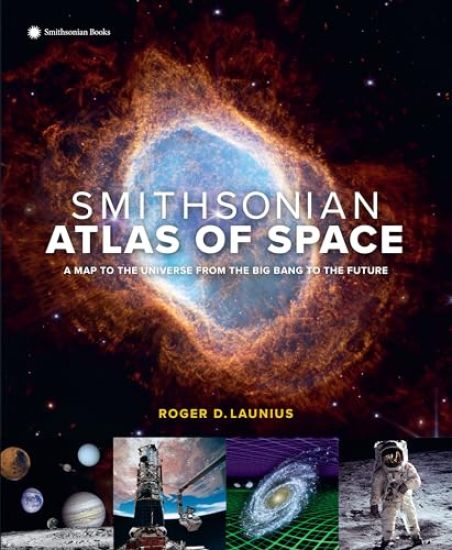
Smithsonian Atlas of Space

Smithsonian Atlas of Space

Roger D. Launius

Smithsonian Books
2024
sidottu
Journey to the farthest corners of the universe in this visually stunning coffee-table atlas by the former chief historian of NASA 300 maps and illustrations tell the incredible story of the past, present, and future of the universe and space exploration Navigate the Solar System, the Milky Way, and beyond with 300 magnificent charts, illustrations, and photographs. This large-format atlas makes the immense universe feel more intimate, with striking full-page spreads and engaging text. Former chief historian of NASA Roger D. Launius offers important perspective on the trajectory of space exploration and its achievements, covering topics like ancient ideas of the cosmos; the evolution of galaxies; the search for extraterrestrial intelligence; investigating the inner and outer solar system; and human migration to the Moon and to Mars. The book includes: Full-page and full-spread historical, scientific, cosmology, and specially commissioned maps. Amazing photos from NASA's archives and stunning new artworkBiographical sidebars highlighting important people involved in the search for knowledge about the universe, from Galileo to Nancy Grace Roman to Subrahmanyan Chandrasekhar.With the growing market for space tourism, space exploration verges on a new era, and this book looks toward the future to include conceptions of futuristic space activities. The marvelous collection of maps provide visual reference to better understand science and humanity's place in the universe. Absorbing and exquisitely detailed, Smithsonian Atlas of Space is a showstopping journey through the cosmos.
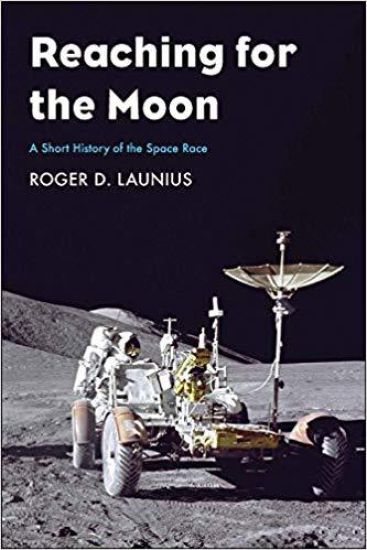
Reaching for the Moon

Reaching for the Moon

Roger D Launius

Yale University Press
2019
sidottu
Fifty years after the Moon landing, a new history of the space race explores the lives of both Soviet and American engineers At the dawn of the space age, technological breakthroughs in Earth orbit flight were both breathtaking feats of ingenuity and disturbances to a delicate global balance of power. In this short book, aerospace historian Roger D. Launius concisely and engagingly explores the driving force of this era: the race to the Moon. Beginning with the launch of Sputnik 1 in October 1957 and closing with the end of the Apollo program in 1972, Launius examines how early space exploration blurred the lines between military and civilian activities, and how key actions led to space firsts as well as crushing failures. Launius places American and Soviet programs on equal footing—following American aerospace engineers Wernher von Braun and Robert Gilruth, their Soviet counterparts Sergei Korolev and Valentin Glushko, and astronaut Buzz Aldrin and cosmonaut Alexei Leonov—to highlight key actions that led to various successes, failures, and ultimately the American Moon landing.
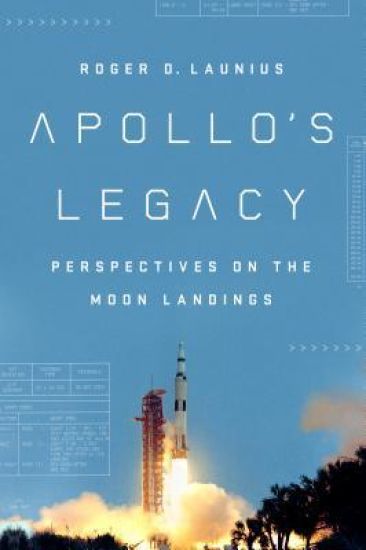
Apollo'S Legacy

Apollo'S Legacy

Roger D. Launius

Smithsonian Books
2019
sidottu
An all-encompassing look at the history and enduring impact of the Apollo space program In Apollo's Legacy, space historian Roger D. Launius explores the many-faceted stories told about the meaning of the Apollo program and how it forever altered American society. The Apollo missions marked the first time human beings left Earth's orbit and visited another world, and thus they loom large in our collective memory. Many have detailed the exciting events of the Apollo program, but Launius offers unique insight into its legacy as seen through multiple perspectives. He surveys a wide range of viewpoints and narratives, both positive and negative, surrounding the program. These include the argument that Apollo epitomizes American technological--and political--progress; technological and scientific advances garnered from the program; critiques from both sides of the political spectrum about the program's expenses; and even conspiracy theories and denials of the program's very existence. Throughout the book, Launius weaves in stories from important moments in Apollo's history to draw readers into his analysis. Apollo's Legacy is a must-read for space buffs interested in new angles on a beloved cultural moment and those seeking a historic perspective on the Apollo program.
The History of Space Exploration

The History of Space Exploration

Roger D. Launius

Thames Hudson Ltd
2018
sidottu
For centuries humanity has engaged in a virtual exploration of space through astronomical observation, aided by astounding scientific and technological advances. In more than sixty years since the launch of Sputnik 1 in 1957, more than 6,000 functioning satellites have been launched into Earth’s orbit and beyond – some to the farthest reaches of the Solar System – and more than 540 people have travelled into space. Unprecedented in its chronological and geographical scope, this book charts the history of space exploration from the first gunpowder rockets through the Moon landings, and into a future of space tourism. Numerous sidebars focus on the key individuals and inventions that brought us closer to the farthest reaches of the universe. Filled with astonishing images from the Smithsonian, NASA archives and other international collections, this is the first in-depth, fully illustrated survey of this universal human journey.
Abandoned in Place

Abandoned in Place

Roland Miller; Roger D. Launius

University of New Mexico Press
2016
sidottu
Stenciled on many of the deactivated facilities at Cape Canaveral Air Force Station, the evocative phrase “abandoned in place” indicates the structures that have been deserted. Some structures, too solid for any known method of demolition, stand empty and unused in the wake of the early period of US space exploration. Now Roland Miller’s color photographs document the NASA, Air Force, and Army facilities across the nation that once played a crucial role in the space race.Rapidly succumbing to the elements and demolition, most of the blockhouses, launch towers, tunnels, test stands, and control rooms featured in Abandoned in Place are located at secure military or NASA facilities with little or no public access. Some have been repurposed, but over half of the facilities photographed no longer exist. The haunting images collected here impart artistic insight while preserving an important period in history.
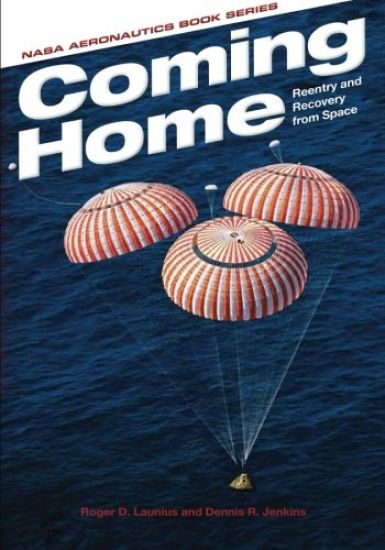
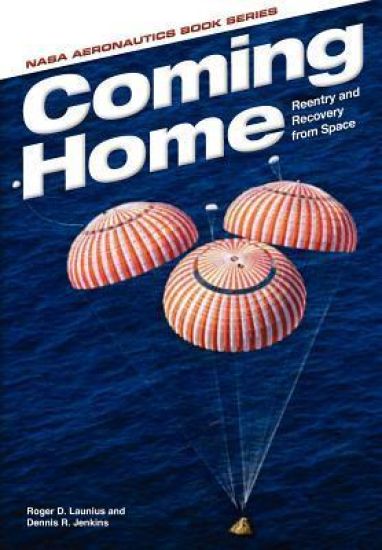
Coming Home: Reentry and Recovery from Space

Coming Home: Reentry and Recovery from Space

Roger D. Launius; Dennis R. Jenkins; National Aeronautics and Administration

Createspace Independent Publishing Platform
2013
nidottu
This study represents a means of highlighting the myriad of technological developments that made possible the safe reentry and return from space and the landing on Earth. This story extends back at least to the work of Walter Hohmann and Eugen S nger in Germany in the 1920s and involved numerous aerospace engineers at the National Advisory Committee for Aeronautics (NACA)/NASA Langley and the Lewis (now the John H. Glenn Research Center at Lewis Field) and Ames Research Centers. For example, researchers such as H. Julian Allen and Alfred J. Eggers, Jr., at Ames pioneered blunt-body reentry techniques and ablative thermal protection systems in the 1950s, while Francis M. Rogallo at Langley developed creative parasail concepts that informed the development of the recovery systems of numerous reentry vehicles. The chapters that follow relate in a chronological manner the way in which NASA has approached the challenge of reentering the atmosphere after a space mission and the technologies associated with safely dealing with the friction of this encounter and the methods used for landing safely on Earth.
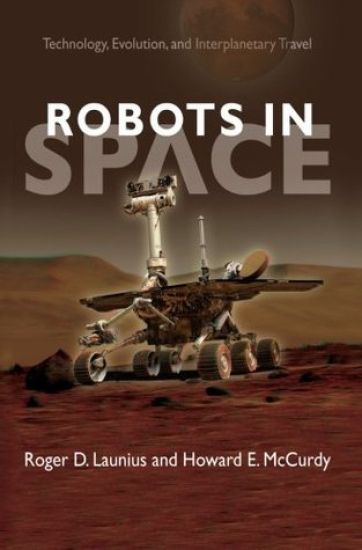
Robots in Space

Robots in Space

Roger D. Launius; Howard E. McCurdy

Johns Hopkins University Press
2012
pokkari
Given the near incomprehensible enormity of the universe, it appears almost inevitable that humankind will one day find a planet that appears to be much like the Earth. This discovery will no doubt reignite the lure of interplanetary travel. Will we be up to the task? And, given our limited resources, biological constraints, and the general hostility of space, what shape should we expect such expeditions to take? In Robots in Space, Roger Launius and Howard McCurdy tackle these seemingly fanciful questions with rigorous scholarship and disciplined imagination, jumping comfortably among the worlds of rocketry, engineering, public policy, and science fantasy to expound upon the possibilities and improbabilities involved in trekking across the Milky Way and beyond. They survey the literature-fictional as well as academic studies; outline the progress of space programs in the United States and other nations; and assess the current state of affairs to offer a conclusion startling only to those who haven't spent time with Asimov, Heinlein, and Clarke: to traverse the cosmos, humans must embrace and entwine themselves with advanced robotic technologies. Their discussion is as entertaining as it is edifying and their assertions are as sound as they are fantastical. Rather than asking us to suspend disbelief, Robots in Space demands that we accept facts as they evolve.
Apollo

Apollo

Roger D. Launius

Books Express Publishing
2011
pokkari
First published in 1994 in the NASA Monograph in Aerospace History series. From the introduction: "On 25 May 1961 President John F. Kennedy announced to the nation a goal of sending an American safely to the Moon before the end of the decade. This decision involved much study and review prior to making it public, and tremendous expenditure and effort to make it a reality by 1969. Only the building of the Panama Canal rivaled the Apollo program's size as the largest non- military technological endeavor ever undertaken by the United States; only the Manhattan Project was comparable in a wartime setting. The human spaceflight imperative was a direct outgrowth of it; Projects Mercury (at least in its latter stages), Gemini, and Apollo were each designed to execute it. It was finally successfully accomplished on 20 July 1969, when Apollo 11's astronaut Neil Armstrong left the Lunar Module and set foot on the surface of the Moon." Illustrated.
Apollo

Apollo

Roger D. Launius

BOOKS EXPRESS PUBLISHING
2011
sidottu
First published in 1994 in the NASA Monograph in Aerospace History series. From the introduction: "On 25 May 1961 President John F. Kennedy announced to the nation a goal of sending an American safely to the Moon before the end of the decade. This decision involved much study and review prior to making it public, and tremendous expenditure and effort to make it a reality by 1969. Only the building of the Panama Canal rivaled the Apollo program's size as the largest non- military technological endeavor ever undertaken by the United States; only the Manhattan Project was comparable in a wartime setting. The human spaceflight imperative was a direct outgrowth of it; Projects Mercury (at least in its latter stages), Gemini, and Apollo were each designed to execute it. It was finally successfully accomplished on 20 July 1969, when Apollo 11's astronaut Neil Armstrong left the Lunar Module and set foot on the surface of the Moon." Illustrated.