Kirjojen hintavertailu. Mukana 12 595 353 kirjaa ja 12 kauppaa.

Kirjailija

Roger Ebert

Kirjat ja teokset yhdessä paikassa: 16 kirjaa, julkaisuja vuosilta 2002-2017, suosituimpien joukossa For the Love of Mike. Vertaile teosten hintoja ja tarkista saatavuus suomalaisista kirjakaupoista.

16 kirjaa

Kirjojen julkaisuhaarukka 2002-2017.

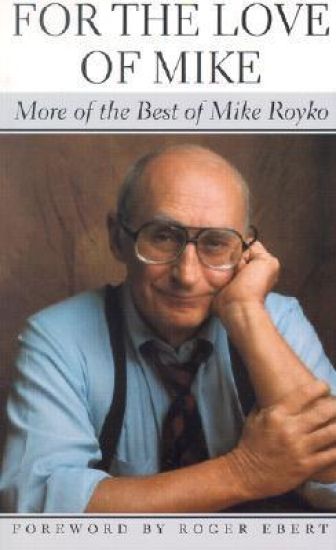
For the Love of Mike

For the Love of Mike

Mike Royko; Roger Ebert

University of Chicago Press
2002
nidottu
In 1999, the University of Chicago Press published a collection of Mike Royko's columns entitled One More Time: The Best of Mike Royko. The response was immediate and overwhelming - readers almost instantly began asking when the second volume of Royko columns would appear. With more than a hundred vintage Royko columns and a foreword by Roger Ebert, For the Love of Mike was the answer.
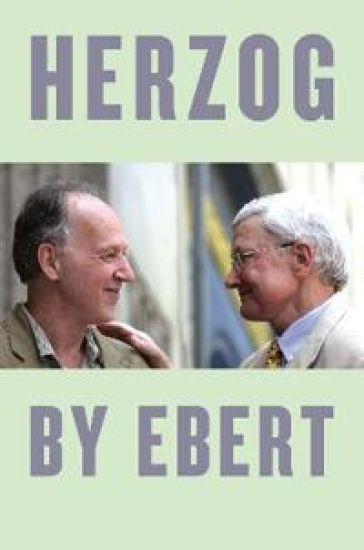
Herzog by Ebert

Herzog by Ebert

Roger Ebert; Werner Herzog

University of Chicago Press
2017
sidottu
Roger Ebert was the most influential film critic in the United States, the first to win a Pulitzer Prize. For almost fifty years, he wrote with plainspoken eloquence about the films he loved for the Chicago Sun-Times, his vast cinematic knowledge matched by a sheer love of life that bolstered his appreciation of films. Ebert had particular admiration for the work of director Werner Herzog, whom he first encountered at the New York Film Festival in 1968, the start of a long and productive relationship between the filmmaker and the film critic.Herzog by Ebert is a comprehensive collection of Ebert's writings about the legendary director, featuring all of his reviews of individual films, as well as longer essays he wrote for his Great Movies series. The book also brings together other essays, letters, and interviews, including a letter Ebert wrote Herzog upon learning of the dedication to him of "Encounters at the End of the World;" a multifaceted profile written at the 1982 Cannes Film Festival; and an interview with Herzog at Facet's Multimedia in 1979 that has previously been available only in a difficult-to-obtain pamphlet. Herzog himself contributes a foreword in which he discusses his relationship with Ebert. Brimming with insights from both filmmaker and film critic, Herzog by Ebert will be essential for fans of either of their prolific bodies of work.
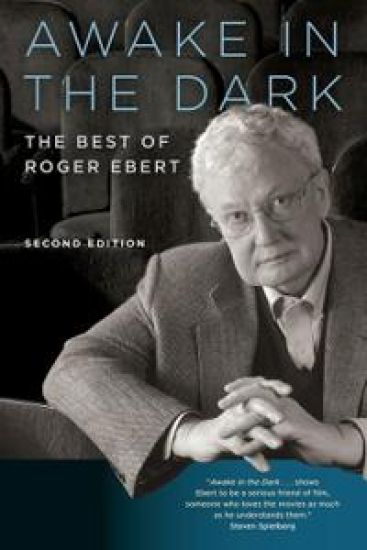
Awake in the Dark

Awake in the Dark

Roger Ebert; David Bordwell

University of Chicago Press
2017
nidottu
For nearly half a century, Roger Ebert's wide knowledge, keen judgment, prodigious energy, and sharp sense of humor made him America's most renowned and beloved film critic. From Ebert's Pulitzer Prize to his star on the Hollywood Walk of Fame, from his astonishing output of daily reviews to his pioneering work on television with Gene Siskel, his was a career in cinema criticism without peer. Arriving fifty years after Ebert published his first film review in 1967, this second edition of Awake in the Dark collects Ebert's essential writings into a single, irresistible volume. Featuring new Top Ten Lists and reviews of the years' finest films through 2012, this edition allows both fans and film buffs to bask in the best of an extraordinary lifetime's work.Including reviews from The Godfather to GoodFellas and interviews with everyone from Martin Scorsese to Meryl Streep, as well as showcasing some of Ebert's most admired essays among them a moving appreciation of John Cassavetes and a loving tribute to the virtues of black-and-white films Ebert's Awake in the Dark is a treasure trove not just for fans of this era-defining critic, but for anyone desiring a compulsively readable chronicle of the silver screen. Stretching from the dramatic rise of rebel Hollywood and the heyday of the auteur to the triumph of blockbuster films such as Star Wars and Raiders of the Lost Ark, to the indie revolution that is still with us today, Awake in the Dark reveals a writer whose exceptional intelligence and daily bursts of insight and enthusiasm helped shape the way we think about the movies. But more than this, Awake in the Dark is a celebration of Ebert's inimitable voice a voice still cherished and missed.
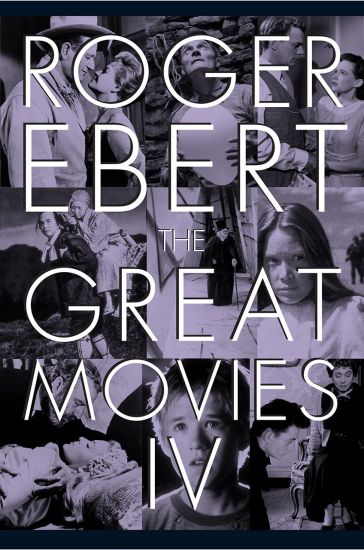
The Great Movies IV

The Great Movies IV

Roger Ebert; Chaz Ebert; Matt Zoller Seitz

University of Chicago Press
2016
sidottu
No film critic has ever been as influential or as beloved as Roger Ebert. Over more than four decades, he built a reputation writing reviews for the Chicago Sun-Times and, later, arguing onscreen with rival Chicago Tribune critic Gene Siskel and later Richard Roeper about the movies they loved and loathed. But Ebert went well beyond a mere "thumbs up" or "thumbs down." Readers could always sense the man behind the words, a man with interests beyond film and a lifetime's distilled wisdom about the larger world. Although the world lost one of its most important critics far too early, Ebert lives on in the minds of moviegoers today, who continually find themselves debating what he might have thought about a current movie.The Great Movies IV is the fourth and final collection of Roger Ebert's essays, comprising sixty-two reviews of films ranging from the silent era to the recent past. From films like The Cabinet of Caligari and Viridiana that have been considered canonical for decades to movies only recently recognized as masterpieces to Superman, The Big Lebowski, and Pink Floyd: The Wall, the pieces gathered here demonstrate the critical acumen seen in Ebert's daily reviews and the more reflective and wide-ranging considerations that the longer format allowed him to offer. Ebert's essays are joined here by an insightful foreword by film critic Matt Zoller Seitz, the current editor-in-chief of the official Roger Ebert website, and a touching introduction by Chaz Ebert. A fitting capstone to a truly remarkable career, The Great Movies IV will introduce newcomers to some of the most exceptional movies ever made, while revealing new insights to connoisseurs as well.
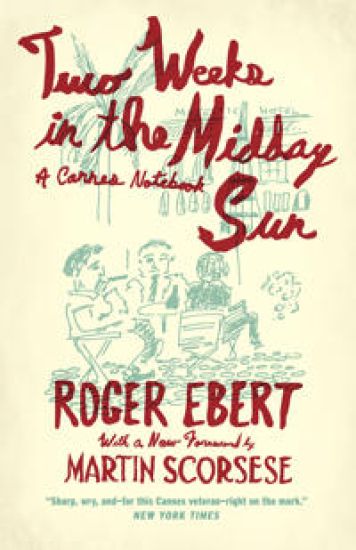
Two Weeks in the Midday Sun

Two Weeks in the Midday Sun

Roger Ebert; Martin Scorsese

University of Chicago Press
2016
nidottu
A paragon of cinema criticism for decades, Roger Ebert—with his humor, sagacity, and no-nonsense thumb—achieved a renown unlikely ever to be equaled. His tireless commentary has been greatly missed since his death, but, thankfully, in addition to his mountains of daily reviews, Ebert also left behind a legacy of lyrical long-form writing. And with Two Weeks in the Midday Sun, we get a glimpse not only into Ebert the man, but also behind the scenes of one of the most glamorous and peculiar of cinematic rituals: the Cannes Film Festival. More about people than movies, this book is an intimate, quirky, and witty account of the parade of personalities attending the 1987 festival—Ebert’s twelfth, and the fortieth anniversary of the event. A wonderful raconteur with an excellent sense of pacing, Ebert presents lighthearted ruminations on his daily routine and computer troubles alongside more serious reflection on directors such as Fellini and Coppola, screenwriters like Charles Bukowski, actors such as Isabella Rossellini and John Malkovich, the very American press agent and social maverick Billy “Silver Dollar” Baxter, and the stylishly plunging necklines of yore. He also comments on the trajectory of the festival itself and the “enormous happiness” of sitting, anonymous and quiet, in an ordinary French café. And, of course, he talks movies. Illustrated with Ebert’s charming sketches of the festival and featuring both a new foreword by Martin Scorsese and a new postscript by Ebert about an eventful 1997 dinner with Scorsese at Cannes, Two Weeks in the Midday Sun is a small treasure, a window onto the mind of this connoisseur of criticism and satire, a man always so funny, so un-phony, so completely, unabashedly himself.
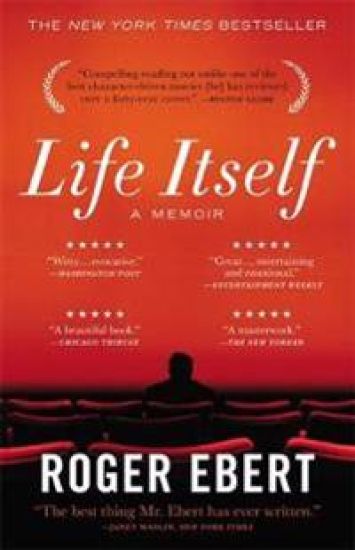
Life Itself

Life Itself

Roger Ebert

Grand Central Publishing
2012
pokkari
Roger Ebert is the best-known film critic of our time. He has been reviewing films for the Chicago Sun-Times since 1967, and was the first film critic ever to win a Pulitzer Prize. He has appeared on television for four decades, including twenty-three years as cohost of Siskel & Ebert at the Movies.In 2006, complications from thyroid cancer treatment resulted in the loss of his ability to eat, drink, or speak. But with the loss of his voice, Ebert has only become a more prolific and influential writer. And now, for the first time, he tells the full, dramatic story of his life and career.Roger Ebert's journalism carried him on a path far from his nearly idyllic childhood in Urbana, Illinois. It is a journey that began as a reporter for his local daily, and took him to Chicago, where he was unexpectedly given the job of film critic for the Sun-Times, launching a lifetime's adventures.In this candid, personal history, Ebert chronicles it all: his loves, losses, and obsessions; his struggle and recovery from alcoholism; his marriage; his politics; and his spiritual beliefs. He writes about his years at the Sun-Times, his colorful newspaper friends, and his life-changing collaboration with Gene Siskel. He remembers his friendships with Studs Terkel, Mike Royko, Oprah Winfrey, and Russ Meyer (for whom he wrote Beyond the Valley of the Dolls and an ill-fated Sex Pistols movie). He shares his insights into movie stars and directors like John Wayne, Werner Herzog, and Martin Scorsese.This is a story that only Roger Ebert could tell. Filled with the same deep insight, dry wit, and sharp observations that his readers have long cherished, this is more than a memoir-it is a singular, warm-hearted, inspiring look at life itself.
A Horrible Experience of Unbearable Length: More Movies That Suck
More scathing than a thumbs down, more inflamed than burning film in an overheated projector--such are the reviews that Roger Ebert has penned about bad movies. Collected here are more than 200 of his most biting, sarcastic, and funny critiques, selected from those unlucky movies that garnered a rating of a mere two stars or fewer. Roger Ebert's I Hated, Hated, Hated This Movie and Your Movie Sucks, which gathered some of his most scathing reviews, were best-sellers. This new collection continues the tradition, reviewing not only movies that were at the bottom of the barrel, but also movies that he found underneath the barrel. A Horrible Experience of Unbearable Length collects more than 200 of his reviews since 2006 in which he gave movies two stars or fewer. Known for his fair-minded and well-written film reviews, Roger is at his razor-sharp humorous best when skewering bad movies. Consider this opener for the one-star Your Highness: "Your Highness is a juvenile excrescence that feels like the work of 11-year-old boys in love with dungeons, dragons, warrior women, pot, boobs, and four-letter words. That this is the work of David Gordon Green beggars the imagination. One of its heroes wears the penis of a minotaur on a string around his neck. I hate it when that happens." And finally, the inspiration for the title of this book, the one-star Transformers: Revenge of the Fallen: Transformers: Revenge of the Fallen is a horrible experience of unbearable length, briefly punctuated by three or four amusing moments. One of these involves a doglike robot humping the leg of the heroine. If you want to save yourself the ticket price go, go into the kitchen, cue up a male choir singing the music of hell, and get a kid to start banging pots and pans together. Then close your eyes and use your imagination." Movie buffs and humor lovers alike will relish this treasury of movies so bad that you may just want to see them for a good laugh
The Great Movies III

The Great Movies III

Roger Ebert

University of Chicago Press
2011
nidottu
Roger Ebert has been writing film reviews for "The Chicago Sun-Times" for over four decades now, and his biweekly essays on great movies have been featured there since 1996. As Ebert noted in the introduction to the first collection of those pieces, "They are not the greatest films of all time, because all lists of great movies are a foolish attempt to codify works which must stand alone. But it's fair to say: if you want to take a tour of the landmarks of the first century of cinema, start here." Enter "The Great Movies III", Ebert's third collection of essays on the creme de la creme of the silver screen, each one a model of critical appreciation and a blend of love and analysis that will send readers back to the films with a fresh set of eyes and renewed enthusiasm - or maybe even lead to a first-time viewing. From "The Godfather: Part II" to "Groundhog Day", from "The Last Picture Show" to "Last Tango in Paris", the hundred pieces gathered here display a welcome balance between the familiar and the esoteric, spanning Hollywood blockbusters and hidden gems, independent works and foreign language films alike.
The Great Movies III

The Great Movies III

Roger Ebert

University of Chicago Press
2010
sidottu
Roger Ebert has been writing film reviews for "The Chicago Sun-Times" for over four decades now, and his biweekly essays on great movies have been featured there since 1996. As Ebert noted in the introduction to the first collection of those pieces, "They are not the greatest films of all time, because all lists of great movies are a foolish attempt to codify works which must stand alone. But it's fair to say: if you want to take a tour of the landmarks of the first century of cinema, start here." Enter "The Great Movies III", Ebert's third collection of essays on the creme de la creme of the silver screen, each one a model of critical appreciation and a blend of love and analysis that will send readers back to the films with a fresh set of eyes and renewed enthusiasm - or maybe even lead to a first-time viewing. From "The Godfather: Part II" to "Groundhog Day", from "The Last Picture Show" to "Last Tango in Paris", the hundred pieces gathered here display a welcome balance between the familiar and the esoteric, spanning Hollywood blockbusters and hidden gems, independent works and foreign language films alike.
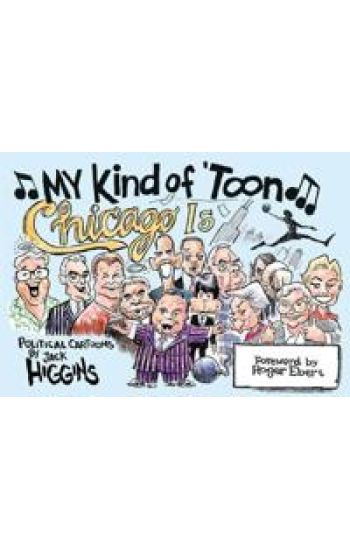
My Kind of 'Toon, Chicago is

My Kind of 'Toon, Chicago is

Jack Higgins; Roger Ebert

Northwestern University Press
2009
nidottu
An institution at the ""Chicago Sun-Times"", his home paper for more than twenty-five years, Pulitzer Prize - winning editorial cartoonist Jack Higgins gathers for the first time in ""My Kind of 'Toon, Chicago Is"" approximately 250 editorial and political cartoons. Over the years, he has filed syndicated cartoons from the Soviet Union, Hungary, Ireland, and Cuba. From his front-row seat, he has lately focused on the highs and lows of the Chicago and Illinois politics that produced both the first African American president and a string of corrupt gubernatorial administrations.
Scorsese by Ebert

Scorsese by Ebert

Roger Ebert; Martin Scorsese

University of Chicago Press
2009
nidottu
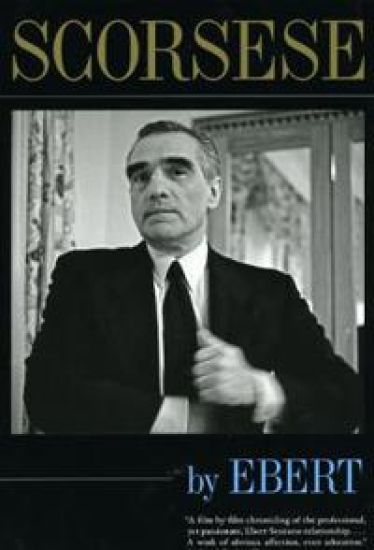
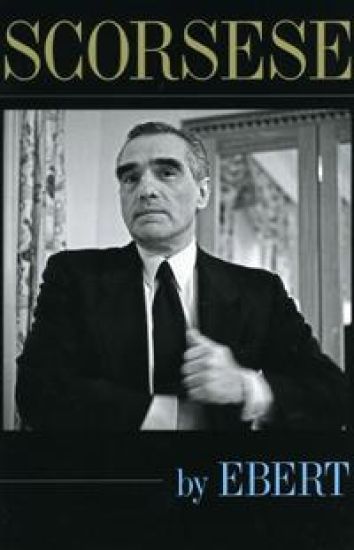
Roger Ebert wrote the first film review that director Martin Scorsese ever received - for 1967's "I Call First", later renamed "Who's That Knocking at My Door" - creating a lasting bond that made him one of Scorsese's most appreciative and perceptive commentators. "Scorsese by Ebert" offers the first record of America's most respected film critic's engagement with the works of America's greatest living director, chronicling every single feature film in Scorsese's considerable oeuvre, from his aforementioned debut to his 2008 release, the "Rolling Stones" documentary "Shine a Light". In the course of eleven interviews done over almost forty years, the book also includes Scorsese's own insights on both his accomplishments and disappointments. Ebert has also written and included six new reconsiderations of the director's less commented upon films, as well as a substantial introduction that provides a framework for understanding both Scorsese and his profound impact on American cinema.
Scorsese by Ebert

Scorsese by Ebert

Roger Ebert; Martin Scorsese

University of Chicago Press
2008
sidottu
Roger Ebert wrote the first film review that director Martin Scorsese ever received - for 1967's "I Call First", later renamed "Who's That Knocking at My Door" - creating a lasting bond that made him one of Scorsese's most appreciative and perceptive commentators. "Scorsese by Ebert" offers the first record of America's most respected film critic's engagement with the works of America's greatest living director, chronicling every single feature film in Scorsese's considerable oeuvre, from his aforementioned debut to his 2008 release, the "Rolling Stones" documentary "Shine a Light". In the course of eleven interviews done over almost forty years, the book also includes Scorsese's own insights on both his accomplishments and disappointments. Ebert has also written and included six new reconsiderations of the director's less commented upon films, as well as a substantial introduction that provides a framework for understanding both Scorsese and his profound impact on American cinema.
Your Movie Sucks

Your Movie Sucks

Roger Ebert

Andrews McMeel Publishing
2007
pokkari
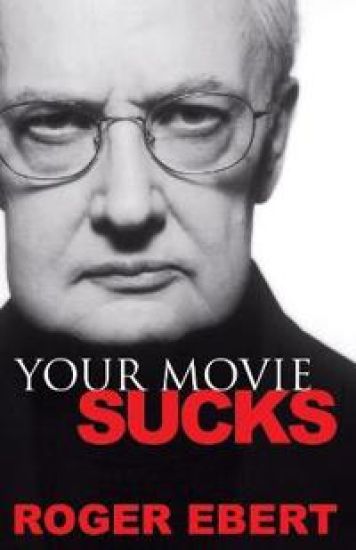
Roger Ebert's I Hated Hated Hated This Movie, which gathered some of his most scathing reviews, was a best-seller. This new collection continues the tradition, reviewing not only movies that were at the bottom of the barrel, but also movies that he found underneath the barrel.From Roger's review of Deuce Bigalow: European Gigolo (0 stars): "The movie created a spot of controversy in February 2005. According to a story by Larry Carroll of MTV News, Rob Schneider took offense when Patrick Goldstein of the Los Angeles Times listed this year's Best Picture nominees and wrote that they were 'ignored, unloved, and turned down flat by most of the same studios that . . . bankroll hundreds of sequels, including a follow-up to Deuce Bigalow: Male Gigolo, a film that was sadly overlooked at Oscar time because apparently nobody had the foresight to invent a category for Best Running Penis Joke Delivered by a Third-Rate Comic.'Schneider retaliated by attacking Goldstein in full-page ads in Daily Variety and the Hollywood Reporter. In an open letter to Goldstein, Schneider wrote: 'Well, Mr. Goldstein, I decided to do some research to find out what awards you have won. I went online and found that you have won nothing. Absolutely nothing. No journalistic awards of any kind. . . . Maybe you didn't win a Pulitzer Prize because they haven't invented a category for Best Third-Rate, Unfunny Pompous Reporter Who's Never Been Acknowledged by His Peers. . . .'Schneider was nominated for a 2000 Razzie Award for Worst Supporting Actor, but lost to Jar-Jar Binks. But Schneider is correct, and Patrick Goldstein has not yet won a Pulitzer Prize. Therefore, Goldstein is not qualified to complain that Columbia financed Deuce Bigalow: European Gigolo while passing on the opportunity to participate in Million Dollar Baby, Ray, The Aviator, Sideways, and Finding Neverland. As chance would have it, I have won the Pulitzer Prize, and so I am qualified. Speaking in my official capacity as a Pulitzer Prize winner, Mr. Schneider, your movie sucks."
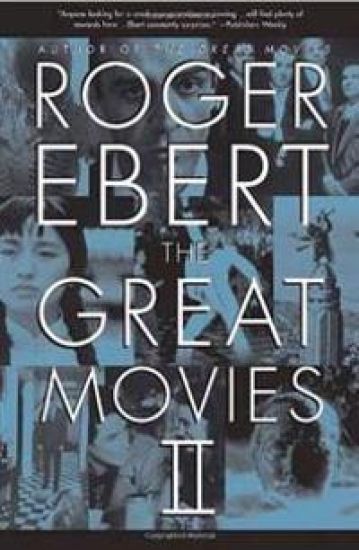
The Great Movies II

The Great Movies II

Roger Ebert

Broadway Books (A Division of Bantam Doubleday Dell Publishing Group Inc)
2006
pokkari
A new compilation of one hundred essays by the popular film critic represents key writings as prepared by the author for his bi-weekly feature of the same title, in a collection that includes his analyses of the films that epitomize the finest examples of cinematic art, enhanced by by a collection of film stills. Reprint. 25,000 first printing.
The Great Movies

The Great Movies

Roger Ebert

Broadway Books (A Division of Bantam Doubleday Dell Publishing Group Inc)
2003
pokkari
One hundred essays by the popular film critic represent key writings as prepared by the author for his bi-weekly feature of the same title, in a collection that includes his analyses of such films as Casablanca, The Godfather and The Wizard of Oz, among other great movies. Reprint.
Die Zustaendigkeit Der Tarifvertragsparteien Zum Abschluß Von Verbands- Und Firmentarifvertraegen
Die Einordnung des Arbeitgebers in einen Zustandigkeitsbereich der Tarifvertragsparteien ist fur Verbande, Arbeitgeber und Arbeitnehmer von hoechster Bedeutung. Dies gilt nicht nur, weil die Tarifzustandigkeit nach dem Bundesarbeitsgericht Wirksamkeitsvoraussetzung eines Tarifvertrages ist. Die Zugehoerigkeit zu einem Zustandigkeitsbereich bedeutet vielmehr auch die Teilhabe an den fur diesen Wirtschaftszweig vereinbarten tariflichen Arbeitsbedingungen. Die Arbeit geht daher vor allem zwei Fragen nach: Ist das Unternehmen oder der Betrieb auf Arbeitgeberseite die massgebliche Tarif- und Arbeitskampfeinheit? Welche tarifrechtlichen Folgen zieht die Auslagerung von Unternehmensteilen nach sich, die als rechtlich verselbstandigte Rechtstrager in andere Zustandigkeitsbereiche als bisher fallen?