Kirjojen hintavertailu. Mukana 12 390 323 kirjaa ja 12 kauppaa.

Kirjailija

Roger H. Mitchell

Kirjat ja teokset yhdessä paikassa: 6 kirjaa, julkaisuja vuosilta 1986-2013, suosituimpien joukossa Kimberlites. Vertaile teosten hintoja ja tarkista saatavuus suomalaisista kirjakaupoista.

6 kirjaa

Kirjojen julkaisuhaarukka 1986-2013.

Kimberlites

Kimberlites

Roger H. Mitchell

Kluwer Academic/Plenum Publishers
1986
sidottu
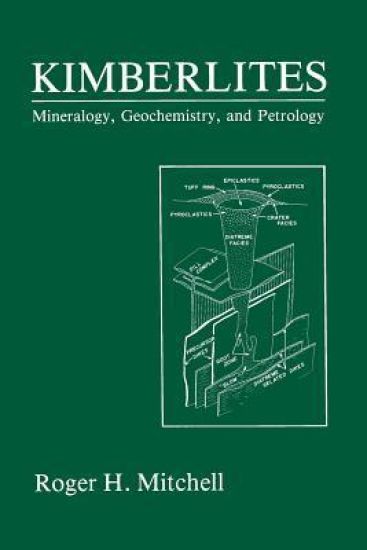
This is a book about the petrology of kimberlites. It is not about upper mantle xenoliths, diamonds, or prospecting for kimberlites. The object of the book is to provide a comprehensive survey and critique of the advances which have been made in kimberlite studies over the last twenty-five years. Kimberlites are rare rock types; however, their relative obscurity is overriden by their economic and petrological importance to a degree which is not shared with the commoner varieties of igneous rocks. Kimberlites are consequently of interest to a diverse group of earth scientists, ranging from isotope g~ochemists concerned with the evolution of the mantle, to volcanologists pondering the origins of diatremes, to exploration geologists seeking new occurrences of the diamondiferous varieties. A common factor essential to all of these activities is a thorough understanding of the characteristics of kimberlites. For the petrologist, kimberlites are exciting and challenging objects for study. Their petrographic diversity, complex mineralogy and geochemistry, and unusual style of intrusion provide endless opportunities for stimulating hypothesis and conjecture concerning their origin and evolution. Kimberlites are a part of a wide spectrum of continental intra-cratonic magmatism. Only by understanding all of the parts of this activity in detail may we make progress in our understanding of the whole.
Kimberlites

Kimberlites

Roger H. Mitchell

Springer-Verlag New York Inc.
2013
nidottu
This is a book about the petrology of kimberlites. It is not about upper mantle xenoliths, diamonds, or prospecting for kimberlites. The object of the book is to provide a comprehensive survey and critique of the advances which have been made in kimberlite studies over the last twenty-five years. Kimberlites are rare rock types; however, their relative obscurity is overriden by their economic and petrological importance to a degree which is not shared with the commoner varieties of igneous rocks. Kimberlites are consequently of interest to a diverse group of earth scientists, ranging from isotope g~ochemists concerned with the evolution of the mantle, to volcanologists pondering the origins of diatremes, to exploration geologists seeking new occurrences of the diamondiferous varieties. A common factor essential to all of these activities is a thorough understanding of the characteristics of kimberlites. For the petrologist, kimberlites are exciting and challenging objects for study. Their petrographic diversity, complex mineralogy and geochemistry, and unusual style of intrusion provide endless opportunities for stimulating hypothesis and conjecture concerning their origin and evolution. Kimberlites are a part of a wide spectrum of continental intra-cratonic magmatism. Only by understanding all of the parts of this activity in detail may we make progress in our understanding of the whole.
Kimberlites, Orangeites, and Related Rocks

Kimberlites, Orangeites, and Related Rocks

Roger H. Mitchell

Springer-Verlag New York Inc.
2012
nidottu
Many people have contributed to the production of this book, and I wish to acknowledge the following colleagues who have, over the past 15 years, contributed much discussion, preprints, thin sections, rock samples, and unpublished and/or difficult-to- obtain information: Steve Bergman, Roger Clement, Howard Coopersmith, Barry Dawson, Alan Edgar, Tony Erlank, Steve Haggerty, Barry Hawthorne, Bram Janse, Viktoria Komilova, Sergei Kostrovitskii, Henry Meyer, Peter Nixon, Nick Rock, Mike Skinner, Patricia Sheahan, Simon Shee, Barbara Scott Smith, Andy Spriggs, Ken Tainton, Larry Taylor, Nikolai Vladykin, Allan Woolley, and Peter Wyllie. Special thanks go to Henry Meyer, for providing many hours of microprobe time at Purdue University, and to Mike Skinner, for samples and the opportunity to examine the Anglo-American Research Laboratory collection of orangeites. Particular thanks are expressed to Ken Tainton for permission to quote data from his Ph.D. thesis. Particular gratitude is expressed to Sam Spivak for drafting and photographic work and to Anne Hammond for preparing many polished thin sections of these difficult rocks. Their dedication, skills, and attention to detail are greatly appreciated by the author. Others from Lakehead University who helped materially during the production of this work include Reino Viitala (thin sections), Alan MacKenzie (electron microscopy), and Shelley Moogk-Pickard (trace element analysis). Carl Hager is thanked for assistance in using the Purdue microprobe.
Petrology of Lamproites

Petrology of Lamproites

Roger H. Mitchell; S.C. Bergman

Springer-Verlag New York Inc.
2012
nidottu
In this book, the first dedicated entirely to the petrology of lamproites and their relationships to other potassium-rich rocks, the objective of the authors is to provide a comprehensive critical review of the occurrence, mineralogy, geochemistry, and petrogenesis of the clan. Although lamproites represent one of the rarest of all rock types, they are both economically and scientifically important and we believe the time is ripe for a review of the advances made in their petrology over the past two decades. Many of these advances stem from the recognition of diamond-bearing lamproites in Western Australia and the reclassification of several anomalous diamond-bearing kim­ berlites as lamproites. Consequently lamproites, previously of interest only to a small number of mineralogists specializing in exotica outside the mainstream of igneous petrol­ ogy, have become prime targets for diamond exploration on a worldwide basis. Contemporaneously with these developments, petrologists realized that lamproites possess isotopic signatures complementary to those of midoceanic ridge basalts, alkali basalts, kimberlites, and other mantle-derived melts. These isotopic studies provided new insights into the long-term development of the mantle by suggesting that the source regions of lamproites were metasomatically enriched in light rare earth and other incompatible elements up to 1-2 Ga prior to the melting events leading to generation of the magma.
Kimberlites, Orangeites, and Related Rocks

Kimberlites, Orangeites, and Related Rocks

Roger H. Mitchell

Kluwer Academic/Plenum Publishers
1995
sidottu
The final volume in a trilogy of monographs devoted to the petrology of primary diamond-bearing rocks. The principal objective is to present a revised terminology for primary diamond-bearing rocks. Much of the text is devoted to summarizing all that is known of the mineralogy and geochemistry of ora
Petrology of Lamproites

Petrology of Lamproites

Roger H. Mitchell; S.C. Bergman

Kluwer Academic/Plenum Publishers
1991
sidottu
In this book, the first dedicated entirely to the petrology of lamproites and their relationships to other potassium-rich rocks, the objective of the authors is to provide a comprehensive critical review of the occurrence, mineralogy, geochemistry, and petrogenesis of the clan. Although lamproites represent one of the rarest of all rock types, they are both economically and scientifically important and we believe the time is ripe for a review of the advances made in their petrology over the past two decades. Many of these advances stem from the recognition of diamond-bearing lamproites in Western Australia and the reclassification of several anomalous diamond-bearing kim­ berlites as lamproites. Consequently lamproites, previously of interest only to a small number of mineralogists specializing in exotica outside the mainstream of igneous petrol­ ogy, have become prime targets for diamond exploration on a worldwide basis. Contemporaneously with these developments, petrologists realized that lamproites possess isotopic signatures complementary to those of midoceanic ridge basalts, alkali basalts, kimberlites, and other mantle-derived melts. These isotopic studies provided new insights into the long-term development of the mantle by suggesting that the source regions of lamproites were metasomatically enriched in light rare earth and other incompatible elements up to 1-2 Ga prior to the melting events leading to generation of the magma.