Kirjojen hintavertailu. Mukana 12 390 323 kirjaa ja 12 kauppaa.

Kirjailija

Roger J Newell

Kirjat ja teokset yhdessä paikassa: 6 kirjaa, julkaisuja vuosilta 2010-2018, suosituimpien joukossa Jacobus Arminius Stands His Ground. Vertaile teosten hintoja ja tarkista saatavuus suomalaisista kirjakaupoista.

6 kirjaa

Kirjojen julkaisuhaarukka 2010-2018.

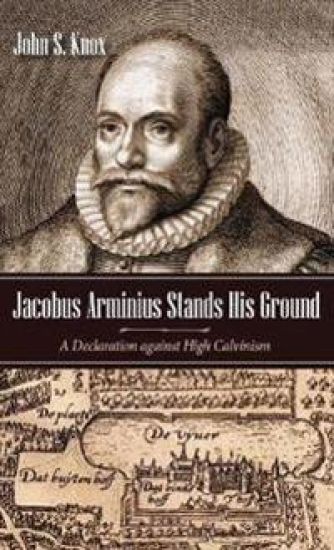
Jacobus Arminius Stands His Ground

Jacobus Arminius Stands His Ground

John S Knox; Roger J Newell; Vic Reasoner

Wipf Stock Publishers
2018
sidottu
On October 30, 1608, Jacobus Arminius presented his Declaration of Sentiments to the Assembly of the States of Holland and West Friesland in the Binnenhof at The Hague. First, Arminius sought to defend himself and his theological views from the spirited attacks of opponents such as Gomarus, Lubbertus, and Plancius. Second, Arminius hoped to bring to light the wrongdoings of the European church and its extremist understanding of certain Christian doctrines. Having trained in Geneva under Jean Calvin's successor, Theodore Beza (1519-1605), and having further expanded and honed his theology at the University of Leyden from both lectern and the pulpit, Arminius thoroughly presented his theological views in both oral and written form. He spoke in his native Dutch language to an assembly of his peers and religious authorities with the hopes of avoiding a theological rift in Holland--while at the same time hoping to remove a long-standing conflict with the Supralapsarian faction warring against him. Thus, Arminius' Declaration of Sentiments is a sophisticated, passionate appeal to reason, scripture, and community. With each section, Arminius seeks not only to demonstrate the error of the attacks on him, but also to point out how and why reconciliation can take place through a careful examination of various precepts of Christian thought. ""Little did I know, all those years ago, when John Knox encountered Jacob Arminius in my Church History II course, that John would go on to an investigation like this one, in which he redeems Arminius from the extreme 'Arminianism' with which that misunderstood reformer is often maligned. This is a gracious, balanced presentation. And I humbly and with pleasure confess that with this work John Knox has mentored his mentor."" --Daniel L. Brunner, Portland Seminary, George Fox University ""Regardless of your theological bent, you will profit from these thoughtful essays on Arminius. Dr. Knox seeks neither to condemn nor defend this pivotal theologian. Rather, he invites us to join him in listening to the heart of this humble follower of Christ. My appreciation for this controversial sixteenth century scholar has forever changed."" --Mark M. Goodwin, retired pastor, Church of the Nazarene John S. Knox is an Associate Professor with Liberty University's School of Behavioral Sciences and School of Divinity in Lynchburg, Virginia. He has taught Bible, history, and sociology for nearly two decades at several Christian universities in the United States. He lives in Virginia with his wife, Brenda, and their two sons, Jacob and Joseph. He is the author of The Letter of Alon (2013), Sacro-Egoism (Wipf & Stock, 2016), John Wesley's 52 Standard Sermons (Wipf & Stock, 2017), God in the Details (2017), and A Lexicon of Sociological Terms and Theorists (2018)..
Jacobus Arminius Stands His Ground

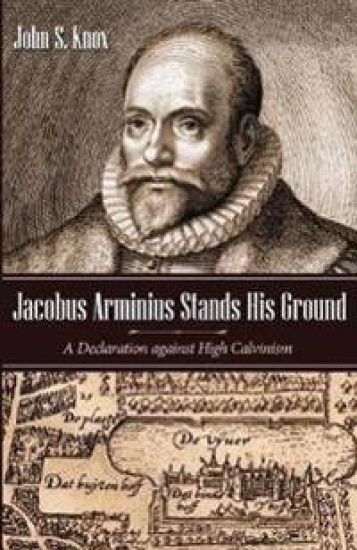
Jacobus Arminius Stands His Ground

John S Knox; Roger J Newell; Vic Reasoner

Wipf Stock Publishers
2018
pokkari
On October 30, 1608, Jacobus Arminius presented his Declaration of Sentiments to the Assembly of the States of Holland and West Friesland in the Binnenhof at The Hague. First, Arminius sought to defend himself and his theological views from the spirited attacks of opponents such as Gomarus, Lubbertus, and Plancius. Second, Arminius hoped to bring to light the wrongdoings of the European church and its extremist understanding of certain Christian doctrines. Having trained in Geneva under Jean Calvin's successor, Theodore Beza (1519-1605), and having further expanded and honed his theology at the University of Leyden from both lectern and the pulpit, Arminius thoroughly presented his theological views in both oral and written form. He spoke in his native Dutch language to an assembly of his peers and religious authorities with the hopes of avoiding a theological rift in Holland--while at the same time hoping to remove a long-standing conflict with the Supralapsarian faction warring against him. Thus, Arminius' Declaration of Sentiments is a sophisticated, passionate appeal to reason, scripture, and community. With each section, Arminius seeks not only to demonstrate the error of the attacks on him, but also to point out how and why reconciliation can take place through a careful examination of various precepts of Christian thought. ""Little did I know, all those years ago, when John Knox encountered Jacob Arminius in my Church History II course, that John would go on to an investigation like this one, in which he redeems Arminius from the extreme 'Arminianism' with which that misunderstood reformer is often maligned. This is a gracious, balanced presentation. And I humbly and with pleasure confess that with this work John Knox has mentored his mentor."" --Daniel L. Brunner, Portland Seminary, George Fox University ""Regardless of your theological bent, you will profit from these thoughtful essays on Arminius. Dr. Knox seeks neither to condemn nor defend this pivotal theologian. Rather, he invites us to join him in listening to the heart of this humble follower of Christ. My appreciation for this controversial sixteenth century scholar has forever changed."" --Mark M. Goodwin, retired pastor, Church of the Nazarene John S. Knox is an Associate Professor with Liberty University's School of Behavioral Sciences and School of Divinity in Lynchburg, Virginia. He has taught Bible, history, and sociology for nearly two decades at several Christian universities in the United States. He lives in Virginia with his wife, Brenda, and their two sons, Jacob and Joseph. He is the author of The Letter of Alon (2013), Sacro-Egoism (Wipf & Stock, 2016), John Wesley's 52 Standard Sermons (Wipf & Stock, 2017), God in the Details (2017), and A Lexicon of Sociological Terms and Theorists (2018)..
Keine Gewalt! No Violence!

Keine Gewalt! No Violence!

Roger J Newell

Wipf Stock Publishers
2017
sidottu
A study tour to Leipzig in the former East Germany (GDR) raised new questions for Roger Newell about the long struggle of the Protestant church with the German state in the twentieth century. How was it possible that a church, unable to stop the Nazis, helped bring a totalitarian government to its knees fifty years later? How did an institution marginalized in every way possible by the state education system, stripped of its traditional privileges, ridiculed by the government and the media as a dinosaur, become the catalyst for a transformation that enabled a great but troubled nation to be peacefully reunited--something unprecedented in German history? What were the connecting relationships and theological struggles that joined the church's failed resistance to Hitler with the peaceful revolution of 1989? The chapters that follow tell the backstory of the theological debates and personal acts of faith and courage leading to the moment when the church became the cradle for Germany's only nonviolent revolution. The themes that emerge remain relevant for our own era of seemingly endless conflict. ""Thanks to Newell for this inspiring account of 'candles and prayers' changing the course of history. It is amazing how the nonviolent approach of Pastor Christian Fuhrer and the people of Nikolaikirche in Leipzig, firmly rooted in the teachings of Jesus, served as a catalyst in reuniting Germany in 1989. Newell provides a fresh take on church-state relations in Germany from the Nazi period through reunification, highlighting the witness of Bonhoeffer, Barth, and Niemoller."" --Mark Brocker, Lead Pastor, St. Andrew Lutheran Church, Beaverton, Oregon ""Barth scholar Roger Newell in his work Keine Gewalt tells the story of ""Nikolaikirch,"" an historic twelfth century church in Leipzig that was the nexus between 1981 through 1989 for a Christian prayer for peace movement that would transform a divided land, the eastern half under totalitarian control, into the modern unified Germany. Newell's expertise helps to set this remarkable development in church-state relations in an historic theological context. He begins in the Nazi era and deals with the key figures who laid the foundations for this revolution including: Martin Niemoller, Karl Barth, and Dietrich Bonhoeffer. Key documents including the Barman Declaration and The Stuttgart Declaration of 1945 are included for those who would like to dig deeper. This is a compelling read for the laity and for scholars--a fascinating look at how the power of prayer can transform individuals and governments."" -- Nathan P. Feldmeth, Assistant Professor, Fuller Theological Seminary Ordained in the United Reformed Church of England in 1984, Roger J. Newell is Professor Emeritus of Religion at George Fox University in Newberg, Oregon, where he has taught since 1997. He holds a PhD in Systematic Theology from the University of Aberdeen, Scotland, where he studied with James Torrance. He has served churches in Long Beach, California; Tulsa, Oklahoma; Durham, England; and Portland, Oregon.
Keine Gewalt! No Violence!

Keine Gewalt! No Violence!

Roger J Newell

Wipf Stock Publishers
2017
pokkari
A study tour to Leipzig in the former East Germany (GDR) raised new questions for Roger Newell about the long struggle of the Protestant church with the German state in the twentieth century. How was it possible that a church, unable to stop the Nazis, helped bring a totalitarian government to its knees fifty years later? How did an institution marginalized in every way possible by the state education system, stripped of its traditional privileges, ridiculed by the government and the media as a dinosaur, become the catalyst for a transformation that enabled a great but troubled nation to be peacefully reunited--something unprecedented in German history? What were the connecting relationships and theological struggles that joined the church's failed resistance to Hitler with the peaceful revolution of 1989? The chapters that follow tell the backstory of the theological debates and personal acts of faith and courage leading to the moment when the church became the cradle for Germany's only nonviolent revolution. The themes that emerge remain relevant for our own era of seemingly endless conflict. ""Thanks to Newell for this inspiring account of 'candles and prayers' changing the course of history. It is amazing how the nonviolent approach of Pastor Christian Fuhrer and the people of Nikolaikirche in Leipzig, firmly rooted in the teachings of Jesus, served as a catalyst in reuniting Germany in 1989. Newell provides a fresh take on church-state relations in Germany from the Nazi period through reunification, highlighting the witness of Bonhoeffer, Barth, and Niemoller."" --Mark Brocker, Lead Pastor, St. Andrew Lutheran Church, Beaverton, Oregon ""Barth scholar Roger Newell in his work Keine Gewalt tells the story of ""Nikolaikirch,"" an historic twelfth century church in Leipzig that was the nexus between 1981 through 1989 for a Christian prayer for peace movement that would transform a divided land, the eastern half under totalitarian control, into the modern unified Germany. Newell's expertise helps to set this remarkable development in church-state relations in an historic theological context. He begins in the Nazi era and deals with the key figures who laid the foundations for this revolution including: Martin Niemoller, Karl Barth, and Dietrich Bonhoeffer. Key documents including the Barman Declaration and The Stuttgart Declaration of 1945 are included for those who would like to dig deeper. This is a compelling read for the laity and for scholars--a fascinating look at how the power of prayer can transform individuals and governments."" -- Nathan P. Feldmeth, Assistant Professor, Fuller Theological Seminary Ordained in the United Reformed Church of England in 1984, Roger J. Newell is Professor Emeritus of Religion at George Fox University in Newberg, Oregon, where he has taught since 1997. He holds a PhD in Systematic Theology from the University of Aberdeen, Scotland, where he studied with James Torrance. He has served churches in Long Beach, California; Tulsa, Oklahoma; Durham, England; and Portland, Oregon.