Kirjojen hintavertailu. Mukana 12 207 393 kirjaa ja 12 kauppaa.
Kirjailija
Roger Jeffery
Kirjat ja teokset yhdessä paikassa: 6 kirjaa, julkaisuja vuosilta 1996-2019, suosituimpien joukossa Confronting Saffron Demography. Vertaile teosten hintoja ja tarkista saatavuus suomalaisista kirjakaupoista.
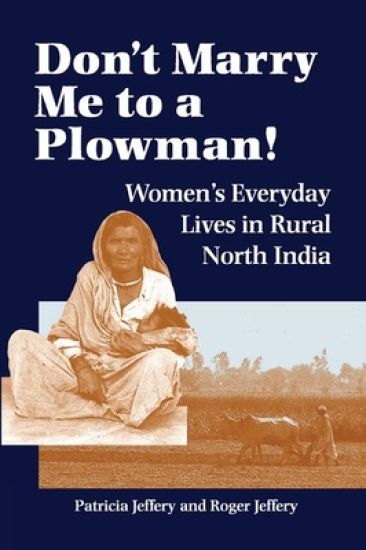
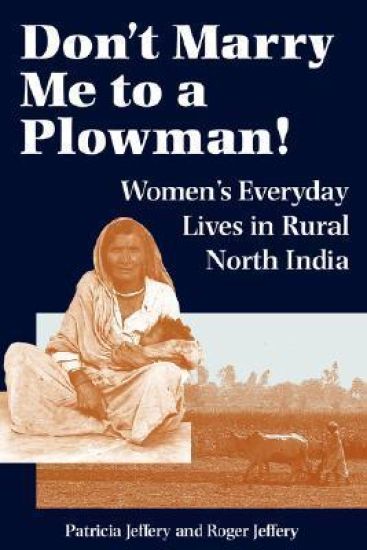
Popular Western images of Indian women range from submissive brides behind their veils to the powerful, active women of Indian politics. In this lively and unique book, Patricia and Roger Jeffery present a different perspective on women's lives. Focusing on the mundane rather than the exotic, they explore the complex interplay between the power of
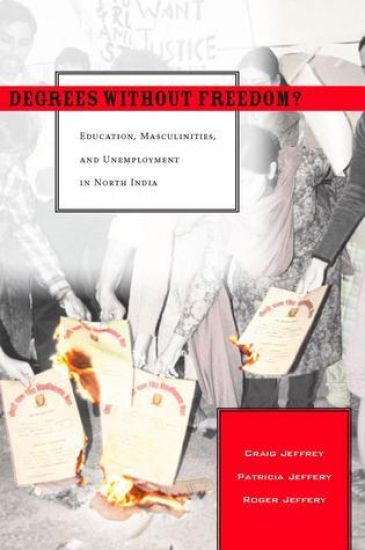
Degrees Without Freedom? re-evaluates debates on education, modernity, and social change in contemporary development studies and anthropology. Education is widely imputed with the capacity to transform the prospects of the poor. But in the context of widespread unemployment in rural north India, it is better understood as a contradictory resource, providing marginalized youth with certain freedoms but also drawing them more tightly into systems of inequality. The book advances this argument through detailed case studies of educated but unemployed or underemployed young men in rural western Uttar Pradesh. This book draws on fourteen months' ethnographic research with young men from middle caste Hindu, Muslim, and ex-Untouchable backgrounds. In addition to offering a new perspective on how education affects the rural poor in South Asia, Degrees Without Freedom? includes in-depth reflection on the politics of modernity, changing rural masculinities, and caste and communal politics.
Degrees Without Freedom? re-evaluates debates on education, modernity, and social change in contemporary development studies and anthropology. Education is widely imputed with the capacity to transform the prospects of the poor. But in the context of widespread unemployment in rural north India, it is better understood as a contradictory resource, providing marginalized youth with certain freedoms but also drawing them more tightly into systems of inequality. The book advances this argument through detailed case studies of educated but unemployed or underemployed young men in rural western Uttar Pradesh. This book draws on fourteen months' ethnographic research with young men from middle caste Hindu, Muslim, and ex-Untouchable backgrounds. In addition to offering a new perspective on how education affects the rural poor in South Asia, Degrees Without Freedom? includes in-depth reflection on the politics of modernity, changing rural masculinities, and caste and communal politics.
Roger and Patricia Jeffery are well known for their work on religion and gender in South Asia. In their latest book, a study of the demographic processes of two castes in rural north India, they ask why fertility levels are higher among the Muslim Sheikhs than the Hindu Jats. They conclude that explanations can only partially be attributed to gender relationships and religion, and it is the economic and political interests of both groups which are the defining factors. Their marginal economic position provides little incentive for the Sheikhs to raise small families, while the Jats, who are locally dominant, are encouraged to use birth control and educate their children. The authors go on to demonstrate the significance of this analysis for a wider understanding of the problems of population and politics in India generally. The book will be invaluable for students of South Asia and for anyone interested in the demography of developing countries.
Popular Western images of Indian women range from submissive brides behind their veils to the powerful, active women of Indian politics. In this lively and unique book, Patricia and Roger Jeffery present a different perspective on women's lives. Focusing on the mundane rather than the exotic, they explore the complex interplay between the power of social structures to constrain individuals and the ways women negotiate these constraints to carve out places for themselves.Based on information collected by the authors during their research in villages in Bijnor District, western Uttar Pradesh, the volume offers eight life histories of Hindu and Muslim women. The women's life histories present a variety of class positions and domestic circumstances, illustrating many aspects of north Indian village life. Interspersed with thematic discussions composed of dialogues, episodes, and songs, the life histories deal with topics of vital concern for women in rural north India: the birth of children, worries about dowry, arranging weddings, sexual politics in marriage, relationships with in-laws, relationships with natal kin, and widowhood.