Kirjojen hintavertailu. Mukana 12 275 655 kirjaa ja 12 kauppaa.
Kirjailija
Roger Keil
Kirjat ja teokset yhdessä paikassa: 9 kirjaa, julkaisuja vuosilta 1996-2023, suosituimpien joukossa New Developments in Urban Governance. Vertaile teosten hintoja ja tarkista saatavuus suomalaisista kirjakaupoista.
Jonathan S. Davies; Ismael Blanco; Adrian Bua; Ioannis Chorianopoulos; Mercè Cortina-Oriol; Andrés Feandeiro; Niamh Gaynor; Brendan Gleeson; Steven Griggs; Pierre Hamel; Hayley Henderson; David Howarth; Roger Keil; Madeleine Pill; Yunailis Salazar; Helen Sullivan
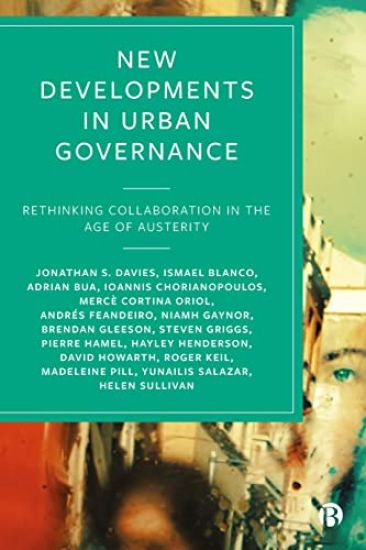
This book presents the findings of a major Economic and Social Research Council (ESRC) project into urban austerity governance in eight cities across the world (Athens, Baltimore, Barcelona, Melbourne, Dublin, Leicester, Montréal and Nantes). It offers comparative reflections on the myriad experiences of collaborative governance and its limitations. An international collaborative from across the social sciences, the book discusses ways that citizens, activists and local states collaborate and come into conflict in attempting to build just cities. It examines the development of egalitarian collaborative governance strategies, provides innovative ideas and tools to extend emancipatory governance practices and shows hopeful possibilities for cities beyond austerity and neoliberalism.
Jonathan S. Davies; Ismael Blanco; Adrian Bua; Ioannis Chorianopoulos; Mercè Cortina-Oriol; Andrés Feandeiro; Niamh Gaynor; Brendan Gleeson; Steven Griggs; Pierre Hamel; Hayley Henderson; David Howarth; Roger Keil; Madeleine Pill; Yunailis Salazar; Helen Sullivan
This book presents the findings of a major Economic and Social Research Council (ESRC) project into urban austerity governance in eight cities across the world (Athens, Baltimore, Barcelona, Melbourne, Dublin, Leicester, Montréal and Nantes). It offers comparative reflections on the myriad experiences of collaborative governance and its limitations. An international collaborative from across the social sciences, the book discusses ways that citizens, activists and local states collaborate and come into conflict in attempting to build just cities. It examines the development of egalitarian collaborative governance strategies, provides innovative ideas and tools to extend emancipatory governance practices and shows hopeful possibilities for cities beyond austerity and neoliberalism.
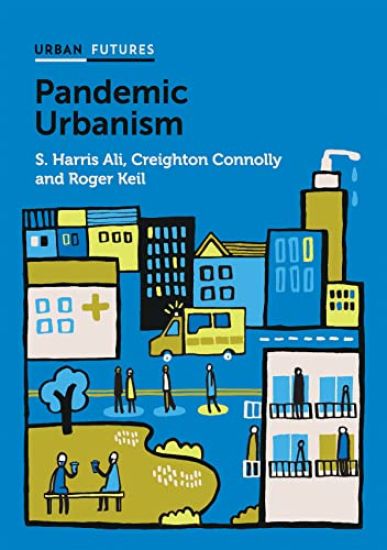
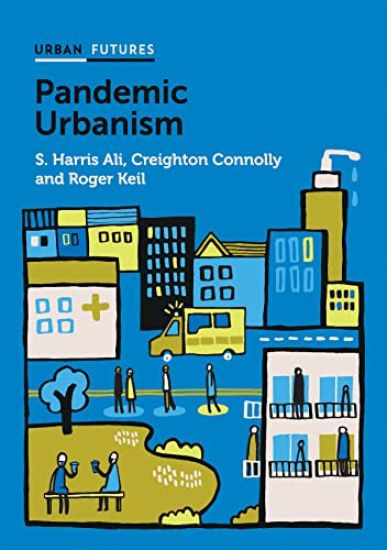
Emerging infectious disease outbreaks have transformed the very nature of urban life worldwide, even as the extent and experience of pandemics are shaped by the planetary urban condition. Pandemic Urbanism critically investigates these relationships in a world faced with its first pandemic on a majority urban planet. The authors reveal the social and historical context of recent infectious disease events and how they have variously transformed the urban fabric. They highlight the important role played by socio-ecological processes associated with the global urban periphery – suburban or post-suburban zones and hinterland areas of “extended” urbanization – changing mobility patterns, and new forms of urban governance and pandemic response. The book develops novel insights for post-pandemic urban governance and planning grounded in the quest for social and spatial justice. In doing so, it reveals a paradox at the heart of pandemic urbanism: urban life enables contagion to spread easily, yet at the same time offers unique possibilities to contain and respond to disease outbreaks. Multidisciplinary in approach and written by experts in the field, this book is an invaluable primer on the origins, pathways, and management of infectious disease.
The urban century manifests itself at the peripheries. While the massive wave of present urbanization is often referred to as an 'urban revolution', most of this startling urban growth worldwide is happening at the margins of cities. This book is about the process that creates the global urban periphery – suburbanization – and the ways of life – suburbanisms – we encounter there. Richly detailed with examples from around the world, the book argues that suburbanization is a global process and part of the extended urbanization of the planet. This includes the gated communities of elites, the squatter settlements of the poor, and many built forms and ways of life in-between. The reality of life in the urban century is suburban: most of the earth's future 10 billion inhabitants will not live in conventional cities but in suburban constellations of one kind or another. Inspired by Henri Lefebvre's demand not to give up urban theory when the city in its classical form disappears, this book is a challenge to urban thought more generally as it invites the reader to reconsider the city from the outside in.
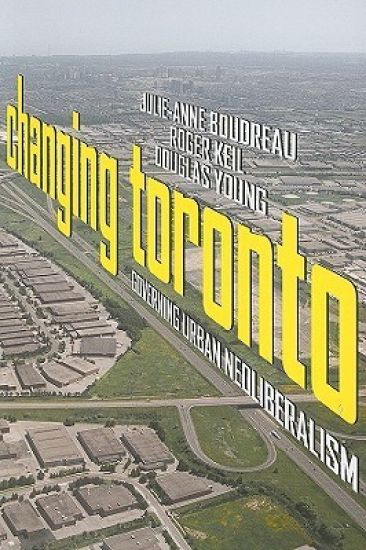
By exploring the formative years of the New City of Toronto (between 1995 and 2005, the period just before, during, and after metropolitan amalgamation), Changing Toronto analyzes the political, social, and environmental challenges of living in, and governing, a major metropolitan city region that bills itself as a multicultural, world-class city.
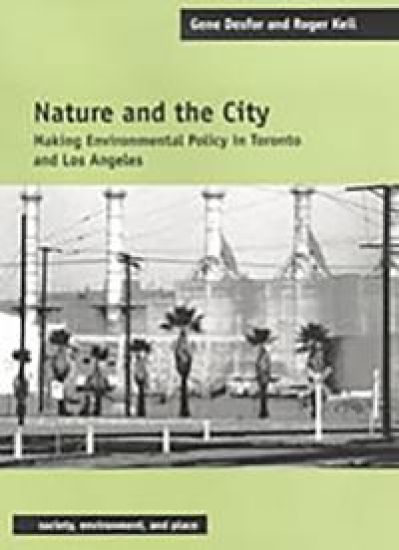
Pollution of air, soil, and waterways has become a primary concern of urban environmental policy making, and over the past two decades there has emerged a new era of urban policy that links development with ecological issues, based on the notion that both nature and the economy can be enhanced through technological changes to production and consumption systems. This book takes a new look at this application of "ecological modernization" to contemporary urban political-ecological struggles. Considering policy processes around land-use in urban watersheds and pollution of air and soil in two disparate North American "global cities," it criticizes the dominant belief in the power of markets and experts to regulate environments to everyone's benefit, arguing instead that civil political action by local constituencies can influence the establishment of beneficial policies. The book emphasizes 'subaltern environmental justice concerns as instrumental in shaping the policy process. Looking back to the 1990s when ecological modernization began to emerge as a dominant approach to environmental policy and theory Desfor and Keil examine four case studies: restoration of the Don River in Toronto, cleanup of contaminated soil in Toronto, regeneration of the Los Angeles River, and air pollution reduction in Los Angeles. In each case, they show that local constituencies can develop political strategies that create alternatives to ecological modernization. When environmental policies appear to have been produced through solely technical exercises, they warn, one must be suspicious about the removal of contention from the process. In the face of economic and environmental processes that have been increasingly influenced by neo-liberalism and globalization, Desfor and Keil's analysis posits that continuing modernization of industrial capitalist societies entails a measure of deliberate change to societal relationships with nature in cities. Their book shows that environmental policies are about much more than green capitalism or the technical mastery of problems; they are about how future urban generations live their lives with sustainability and justice.
More than half the world's population will live in urban centres by the turn of the millennium and most will be exposed to degraded urban environments. "Local Places" looks at the complex social, economic and political contexts of cities in the 1990s and suggests that cities and urbanity, while part of the problem, also need to be considered as part of the solution.