Kirjojen hintavertailu. Mukana 12 595 353 kirjaa ja 12 kauppaa.

Kirjailija

Roger Silverstone

Kirjat ja teokset yhdessä paikassa: 10 kirjaa, julkaisuja vuosilta 1994-2012, suosituimpien joukossa E-Merging Media. Vertaile teosten hintoja ja tarkista saatavuus suomalaisista kirjakaupoista.

10 kirjaa

Kirjojen julkaisuhaarukka 1994-2012.

Die Internet-Ökonomie

Die Internet-Ökonomie

Axel Zerdick; Klaus Schrape; Alexander Artope; Klaus Goldhammer; Dominik K. Heger; Ulrich T. Lange; Eckart Vierkant; Esteban Lopez-Escobar; Roger Silverstone

Springer-Verlag Berlin and Heidelberg GmbH Co. K
2012
nidottu
Das Buch analysiert die zentrale Rolle von Medien, Telekommunikation und Informationstechnologie als Antriebsfaktoren auf dem Weg in eine digitale Wirtschaft: der Internet-Ökonomie. Schon im Jahr 2005 wird die Hälfte der deutschen Bevölkerung online sein. Die in wesentlichen Teilen überarbeitete dritte Auflage des Buches bezieht die aktuellen Entwicklungen des dynamischen Marktes ein. In der Neuauflage werden insbesondere die Themen Ökonomie der Aufmerksamkeit und Elektronic Commerce erweitert und fortgeführt. Auch der umfangreiche Datenanhang, der die wichtigsten europäischen Kennziffern liefert, wurde auf den neuesten Stand gebracht. Mit diesem Konzept und der internationalen Einbindung steht das Buch konkurrenzlos da. Die zukunftsbezogene Analyse macht es zu einem unverzichtbaren Standardwerk für Industrie und Wissenschaft.
Media and Morality

Media and Morality

Roger Silverstone

Polity Press
2006
sidottu
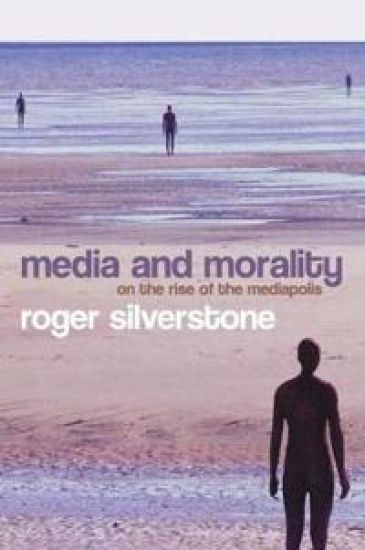
Roger Silverstone's compelling new book places the global media at the heart of the moral future of civilisation. It argues that the media (the press, broadcasting, the Internet and increasingly peer-to-peer technologies and networks) have a profound significance for the way in which the world is understood by its citizens. It also argues that without a clear understanding of that significance, and without a critique of the way in which the media go about their daily business, we are likely to see an erosion in the capacity of human beings to understand and respect each other, especially those whom they see and hear only in their mediation. In a world of increasing polarisation and demonisation, the media have a powerful role to play. They can reinforce or they can challenge that polarisation. The book proposes that we should think of the global media as a mediapolis, a single space of political and social communication, in which the basis for the relationships between neighbours and strangers can be either constructed or destroyed. The mediapolis is a moral space, a space of hospitality, responsibility, obligation and judgement. And questioning its present and future requires attention to issues of media justice, media literacy and media regulation. Media and Morality is essential reading for all students and scholars of the media but will be of equal fascination to anyone interested in the workings of our modern world.
Media and Morality

Media and Morality

Roger Silverstone

Polity Press
2006
nidottu
Roger Silverstone's compelling new book places the global media at the heart of the moral future of civilisation. It argues that the media (the press, broadcasting, the Internet and increasingly peer-to-peer technologies and networks) have a profound significance for the way in which the world is understood by its citizens. It also argues that without a clear understanding of that significance, and without a critique of the way in which the media go about their daily business, we are likely to see an erosion in the capacity of human beings to understand and respect each other, especially those whom they see and hear only in their mediation. In a world of increasing polarisation and demonisation, the media have a powerful role to play. They can reinforce or they can challenge that polarisation. The book proposes that we should think of the global media as a mediapolis, a single space of political and social communication, in which the basis for the relationships between neighbours and strangers can be either constructed or destroyed. The mediapolis is a moral space, a space of hospitality, responsibility, obligation and judgement. And questioning its present and future requires attention to issues of media justice, media literacy and media regulation. Media and Morality is essential reading for all students and scholars of the media but will be of equal fascination to anyone interested in the workings of our modern world.
E-Merging Media

E-Merging Media

Axel Zerdick; Klaus Schrape; Jean-Claude Burgelmann; Roger Silverstone; Valerie Feldmann; Dominik K. Heger; Carolin Wolff

Springer-Verlag Berlin and Heidelberg GmbH Co. K
2003
sidottu
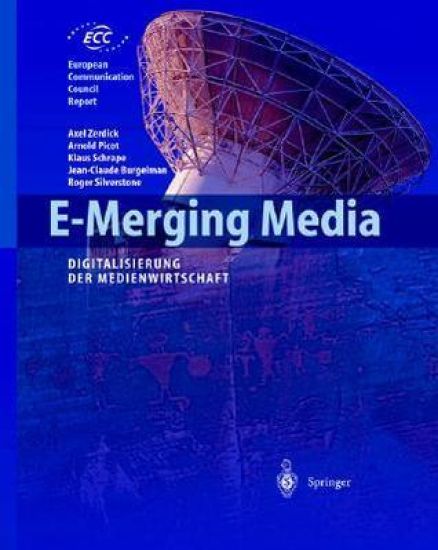
Der neue Report des European Communication Council (ECC) untersucht aus unterschiedlichen Blickwinkeln den tiefgreifenden gesellschaftlichen und wirtschaftlichen Wandel der Medienlandschaft, der vor allem durch Digitalisierung und Vernetzung eingeleitet wird. Er beleuchtet vor dem Hintergrund der jungeren Mediengeschichte u.a. die Rolle des Internet-Hype als Wegbereiter in die veranderte Mediengesellschaft. Zentrale Frage ist, wie die mediale Zukunft aussehen wird. Betrachtet werden in diesem Zusammenhang tiefgreifende Auswirkungen und neue Perspektiven in den Bereichen Wirtschaft, Gesellschaft und Politik. Die Aspekte Verhaltenswirkungen, Geschaftsmodelle, Rechts- und Regulierungsfragen, Selbstverstandnis von Gesellschaft und Medienwirtschaft werden von internationalen Autoren zur Debatte gestellt, um fur den Leser das Verstandnis fur die Zukunft der Medien zu verbessern und Handlungsoptionen zu eroffnen.
Why Study the Media?

Why Study the Media?

Roger Silverstone

SAGE Publications Inc
1999
nidottu
"It's easy to be snobbish about media culture; the great merit of Roger Silverstone's book is to make the reader understand just how important that culture is." - Richard Sennett, New York University "A remarkable book which argues for a new paradigm for the study of the media." - Daniel Dayan, Centre National de la Recherche "A persuasive and sophisticated discussion of the role of the media in modern life at the threshold of the twenty-first century." - Ellen Seiter, University of California "A very important book, one that moves media theory and argument on at long last. This is an attempt to get people to think differently about the media - not just when they are writing essays, but also when they are arguing about media in everyday life." - Simon Frith, University of Stirling The centrality of the media, all media, to human experience - from the conduct of everyday life, to the exercise of power, to the creation of culture - is inescapable. We live in an intensely mediated world. Yet the academic study of the media has rarely made its own insights accessible and relevant to those outside its own limited sphere. Indeed it is constantly under attack for its lack of rigour, apparent failure to address the needs of industry and its inability to tell us anything substantive about the world in which we live. Written as a manifesto and in order to set a new intellectual agenda, Why Study the Media? argues for the importance of the media in our culture and society and the consequent necessity of taking the media seriously as an object of enlightened but rigorous investigation. At once human and humane, Why Study the Media? will be welcomed by all those in search of new ways of thinking about our mediated world.
Why Study the Media?

Why Study the Media?

Roger Silverstone

SAGE Publications Inc
1999
sidottu
"It's easy to be snobbish about media culture; the great merit of Roger Silverstone's book is to make the reader understand just how important that culture is." - Richard Sennett, New York University "A remarkable book which argues for a new paradigm for the study of the media." - Daniel Dayan, Centre National de la Recherche "A persuasive and sophisticated discussion of the role of the media in modern life at the threshold of the twenty-first century." - Ellen Seiter, University of California "A very important book, one that moves media theory and argument on at long last. This is an attempt to get people to think differently about the media - not just when they are writing essays, but also when they are arguing about media in everyday life." - Simon Frith, University of Stirling The centrality of the media, all media, to human experience - from the conduct of everyday life, to the exercise of power, to the creation of culture - is inescapable. We live in an intensely mediated world. Yet the academic study of the media has rarely made its own insights accessible and relevant to those outside its own limited sphere. Indeed it is constantly under attack for its lack of rigour, apparent failure to address the needs of industry and its inability to tell us anything substantive about the world in which we live. Written as a manifesto and in order to set a new intellectual agenda, Why Study the Media? argues for the importance of the media in our culture and society and the consequent necessity of taking the media seriously as an object of enlightened but rigorous investigation. At once human and humane, Why Study the Media? will be welcomed by all those in search of new ways of thinking about our mediated world.
International Media Research

International Media Research

John R. Corner; Philip Schlesinger; Professor Philip R Schlesinger; Roger Silverstone

Routledge
1998
nidottu
International Media Research offers a rigorous and critical review of key approaches and concerns that have recently defined the field of media research. In this clearly argued collection of essays, the contributors analyze and reflect upon dominant themes and debates that have made media research an increasingly important element of cultural theory. The volume begins with a critical evaluation of the work of the leading media scholar, Elihu Katz, and continues with an exploration of the relationship between media studies and adjacent disciplines: cultural studies and gender and sexuality.Contributors drawn from Britain, America, Canada and Belgium consider the relationships between media research and media policy in different national and international contexts. Focusing on the European Union, East-Central Europe, North America and Latin America, chapters assess the impact of social, economic and political circumstances on policy debates and the shaping of the research agenda. The final chapter adopts a transatlantic perspective in tracing and analysing the history of the media's role in reporting war.
International Media Research

International Media Research

John R. Corner; Philip Schlesinger; Professor Philip R Schlesinger; Roger Silverstone

Routledge
1996
sidottu
International Media Research offers a rigorous and critical review of key approaches and concerns that have recently defined the field of media research. In this clearly argued collection of essays, the contributors analyze and reflect upon dominant themes and debates that have made media research an increasingly important element of cultural theory. The volume begins with a critical evaluation of the work of the leading media scholar, Elihu Katz, and continues with an exploration of the relationship between media studies and adjacent disciplines: cultural studies and gender and sexuality.Contributors drawn from Britain, America, Canada and Belgium consider the relationships between media research and media policy in different national and international contexts. Focusing on the European Union, East-Central Europe, North America and Latin America, chapters assess the impact of social, economic and political circumstances on policy debates and the shaping of the research agenda. The final chapter adopts a transatlantic perspective in tracing and analysing the history of the media's role in reporting war.
Television And Everyday Life

Television And Everyday Life

Roger Silverstone

Routledge
1994
nidottu
Television is a central dimension in our everyday lives and yet its meaning and its potency varies according to our individual circumstances, mediated by the social and cultural worlds which we inhabit. In this fascinating book, Roger Silverstone explores the enigma of television and how it has found its way so profoundly and intimately into the fabric of our everyday lives. His investigation, of great significance to those with a personal or professional interest in media, film and television studies, unravels its emotional and cognitive, spatial, temporal and political significance.Drawing on a wide range of literature, from psychoanalysis to sociology and from geography to cultural studies, Silverstone constructs a theory of the medium which locates it centrally within the multiple realities and discourses of everyday life. Television emerges from these arguments as the fascinating, complex and contradictory medium that it is, but in the process many of the myths that surround it are exploded.This outstanding book presents a radical new approach to the medium of television, one that both challenges received wisdoms and offers a compellingly original view of the place of television in everyday life.
Television And Everyday Life

Television And Everyday Life

Roger Silverstone

Routledge
1994
sidottu
Television is a central dimension in our everyday lives and yet its meaning and its potency varies according to our individual circumstances, mediated by the social and cultural worlds which we inhabit. In this fascinating book, Roger Silverstone explores the enigma of television and how it has found its way so profoundly and intimately into the fabric of our everyday lives. His investigation, of great significance to those with a personal or professional interest in media, film and television studies, unravels its emotional and cognitive, spatial, temporal and political significance.Drawing on a wide range of literature, from psychoanalysis to sociology and from geography to cultural studies, Silverstone constructs a theory of the medium which locates it centrally within the multiple realities and discourses of everyday life. Television emerges from these arguments as the fascinating, complex and contradictory medium that it is, but in the process many of the myths that surround it are exploded.This outstanding book presents a radical new approach to the medium of television, one that both challenges received wisdoms and offers a compellingly original view of the place of television in everyday life.