Kirjojen hintavertailu. Mukana 12 595 353 kirjaa ja 12 kauppaa.

Kirjailija

Roger Traub

Kirjat ja teokset yhdessä paikassa: 2 kirjaa, julkaisuja vuosilta 2024-2025, suosituimpien joukossa Brain Leitmotifs. Vertaile teosten hintoja ja tarkista saatavuus suomalaisista kirjakaupoista.

2 kirjaa

Kirjojen julkaisuhaarukka 2024-2025.

Brain Leitmotifs

Brain Leitmotifs

Roger Traub; Andreas Draguhn

Springer International Publishing AG
2025
nidottu
This book tackles the question of why the brain is so difficult to fully understand. In neuroscience, data are acquired and analyzed with astonishing techniques and accumulate rapidly. Nevertheless, try to explain how a person can think or why there is such a condition as schizophrenia, and it appears that we really know little. To approach these difficulties, the authors first present a number of case studies in which the operation of a neural circuit is worked out in some detail and, at the same time, the functional significance of the operation is also understood. These examples are complicated in their biologic specifics but are conceptually straightforward. The examples are hoped to provoke an appreciation for what neuroscience can accomplish. The authors then develop some thoughts on how these issues can be addressed----instead of considering cognition in general, taking instead a subset of cognition that does lend itself to formal description.
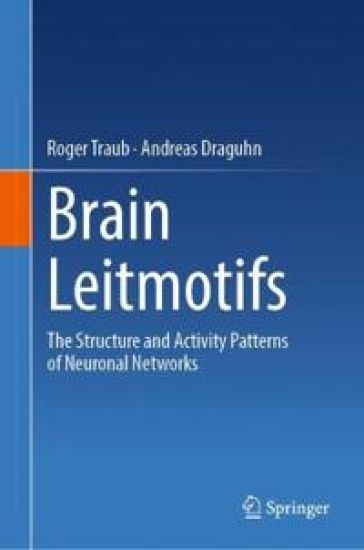
Brain Leitmotifs

Brain Leitmotifs

Roger Traub; Andreas Draguhn

Springer International Publishing AG
2024
sidottu
This book tackles the question of why the brain is so difficult to fully understand. In neuroscience, data are acquired and analyzed with astonishing techniques and accumulate rapidly. Nevertheless, try to explain how a person can think or why there is such a condition as schizophrenia, and it appears that we really know little. To approach these difficulties, the authors first present a number of case studies in which the operation of a neural circuit is worked out in some detail and, at the same time, the functional significance of the operation is also understood. These examples are complicated in their biologic specifics but are conceptually straightforward. The examples are hoped to provoke an appreciation for what neuroscience can accomplish. The authors then develop some thoughts on how these issues can be addressed----instead of considering cognition in general, taking instead a subset of cognition that does lend itself to formal description.