

Kirjailija
Roger Watson
Kirjat ja teokset yhdessä paikassa: 9 kirjaa, julkaisuja vuosilta 2000-2022, suosituimpien joukossa Capturing the Light. Vertaile teosten hintoja ja tarkista saatavuus suomalaisista kirjakaupoista.
9 kirjaa
Kirjojen julkaisuhaarukka 2000-2022.

Following the success of previous editions, Anatomy and Physiology for Nurses continues to be an excellent reference resource in anatomy and physiology for students of nursing and allied health, as well as for healthcare assistants and those studying Foundation degrees or diplomas in health studies. Its easy-to-understand approach and small size make it an excellent revision tool and invaluable to take on placements. Now enhanced with full colour illustrations throughout, this book is the perfect guide to aid learning and understanding. This new edition includes: Clear text, diagrams, images and tables to aid the learning process Learning objectives to help with learning and revision Questions to test your knowledge Clinical examples to help relate the theory to practice Full colour images for the most effective reference Clear text, diagrams, images and tables to aid the learning process Learning objectives to help with learning and revision Questions to test your knowledge Clinical examples to help relate the theory to practice Full colour images for the most effective reference Full colour artwork programme Updated questions for each chapter Updated clinical content, ensure it is up to date and relevant
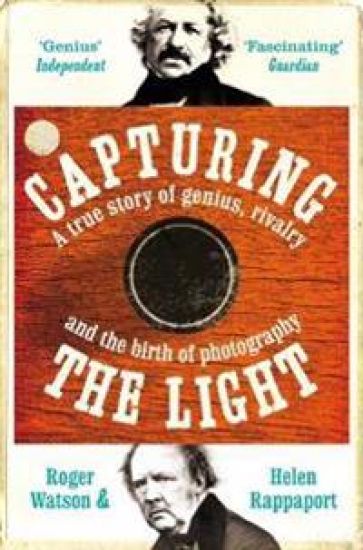
Capturing the Light starts with a tiny scrap of purple-tinged paper, 176 years old and about the size of a postage stamp. On it you can just make out a tiny, ghostly image of a gothic window, an image so small and perfect that it ‘might be supposed to be the work of some Lilliputian artist’: the world’s first photographic negative. This captivating book traces the lives of two very different men in the 1830s, both racing to be the first to solve one of the world’s oldest problems: how to capture an image and keep it for ever. On the one hand there is Henry Fox Talbot: a quiet, solitary gentleman-amateur tinkering away on his farm in the English countryside. On the other Louis Daguerre, a flamboyant, charismatic French showman in search of fame and fortune. Only one question remains: who will get there first?

Capturing the Light: The Birth of Photography, a True Story of Genius and Rivalry
Roger Watson; Helen Rappaport
St. Martin's Griffin
2015
nidottu
An intimate look at the journeys of two men--a gentleman scientist and a visionary artist--as they struggled to capture the world around them, and in the process invented modern photography During the 1830s, in an atmosphere of intense scientific enquiry fostered by the industrial revolution, two quite different men--one in France, one in England--developed their own dramatically different photographic processes in total ignorance of each other's work. These two lone geniuses--Henry Fox Talbot in the seclusion of his English country estate at Lacock Abbey and Louis Daguerre in the heart of post-revolutionary Paris--through diligence, disappointment and sheer hard work overcame extraordinary odds to achieve the one thing man had for centuries been trying to do--to solve the ancient puzzle of how to capture the light and in so doing make nature 'paint its own portrait'. With the creation of their two radically different processes--the Daguerreotype and the Talbotype--these two giants of early photography changed the world and how we see it. Drawing on a wide range of original, contemporary sources and featuring plates in colour, sepia and black and white, many of them rare or previously unseen, Capturing the Light by Roger Watson and Helen Rappaport charts an extraordinary tale of genius, rivalry and human resourcefulness in the quest to produce the world's first photograph.
Successful Statistics for Nursing and Healthcare
Roger Watson; Ian Atkinson; Patricia Egerton
Red Globe Press
2006
nidottu
Successful Statistics For Nursing and Healthcare helps students to gain an understanding of statistical methods within the evidence-based health care context. It builds confidence in descriptive statistics, concentrating on appropriate statistical tools and the techniques used in research, whilst gently introducing the mathematics required.
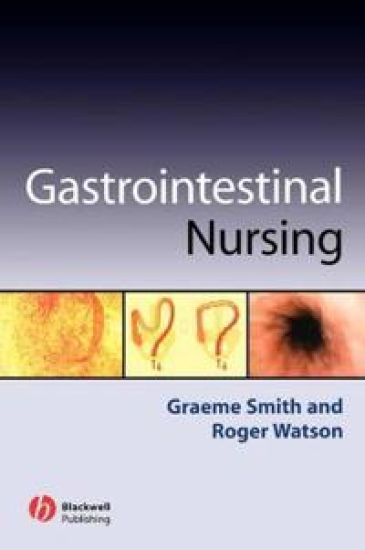
Many nurses work as specialist practitioners within several areas of gastrointestinal medicine, including inflammatory bowel disease, stoma care, nutrition, endoscopy and counselling. There has been a steady increase in nurse-led services and gastrointestinal nursing is an expanding area. This comprehensive text lays the foundation by reviewing the anatomy and physiology underlying common conditions before covering the pathophysiology of clinical features, causes, investigation and management. Underlying this approach will be the specific nursing aspects of caring for patients with gastrointestinal conditions, covering psychosocial factors and issues such as the measurement of health related quality of life.

Nursing students quite often find it difficult to relate what they learn with respect to normal and abnormal physiology to patient care. In this useful text Roger Watson and Tonks Fawcett clearly explain:* the concept of homeostasis* the relevance of physiology to common disorders* the patient's response to these disorders* the appropriate nursing response.Each chapter is presented in a standard format with a brief outline of the relevant normal physiology and how homeostatic mechanisms normally cope. The student is led to understand what the patient with a specific disorder feels like and why, and is clearly instructed in what nursing action to take. Pathophysiology, Homeostasis and Nursing shows clearly how understanding physiology can improve nursing care and covers the main issues that relate to basic observations. It includes questions to help the reader test their knowledge as they go along and provides an accessible concise text for health care students, particularly nurses.

Nursing students quite often find it difficult to relate what they learn with respect to normal and abnormal physiology to patient care. In this useful text Roger Watson and Tonks Fawcett clearly explain:* the concept of homeostasis* the relevance of physiology to common disorders* the patient's response to these disorders* the appropriate nursing response.Each chapter is presented in a standard format with a brief outline of the relevant normal physiology and how homeostatic mechanisms normally cope. The student is led to understand what the patient with a specific disorder feels like and why, and is clearly instructed in what nursing action to take. Pathophysiology, Homeostasis and Nursing shows clearly how understanding physiology can improve nursing care and covers the main issues that relate to basic observations. It includes questions to help the reader test their knowledge as they go along and provides an accessible concise text for health care students, particularly nurses.

(Music Sales America). The first complete instructional book for the Anglo-chromatic concertina This book assumes no knowledge on the part of the student, taking the beginner from first notes to famous folk melodies. Features easy-to-follow text with clear diagrams.