Kirjojen hintavertailu. Mukana 12 390 323 kirjaa ja 12 kauppaa.

Kirjailija

Roger Welsch

Kirjat ja teokset yhdessä paikassa: 13 kirjaa, julkaisuja vuosilta 1980-2021, suosituimpien joukossa Embracing Fry Bread. Vertaile teosten hintoja ja tarkista saatavuus suomalaisista kirjakaupoista.

13 kirjaa

Kirjojen julkaisuhaarukka 1980-2021.

Embracing Fry Bread

Embracing Fry Bread

Roger Welsch

Bison Books
2012
pokkari
When he was out playing Indian, enacting Hollywood-inspired scenarios, it never occurred to the child Roger Welsch that the little girl sitting next to him in school was Indian. A lifetime of learning later, Welsch's enthusiasm is undimmed, if somewhat more enlightened. In Embracing Fry Bread Welsch tells the story of his lifelong relationship with Native American culture, which, beginning in earnest with the study of linguistic practices of the Omaha tribe during a college anthropology course, resulted in his becoming an adopted member and kin of both the Omaha and the Pawnee tribes. With requisite humility and a healthy dose of humor, Welsch describes his long pilgrimage through Native life, from lessons in the vagaries of "Indian time" and the difficulties of reservation life, to the joy of being allowed to participate in special ceremonies and developing a deep and lasting love of fry bread. Navigating another culture is a complicated task, and Welsch shares his mistakes and successes with engaging candor. Through his serendipitous wanderings, he finds that the more he learns about Native culture the more he learns about himself—and about a way of life whose allure offers true insight into indigenous America.
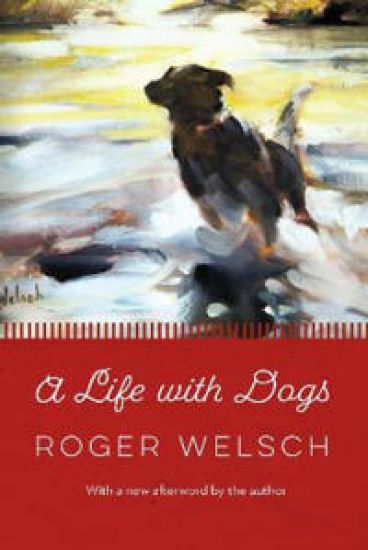
A Life with Dogs

A Life with Dogs

Roger Welsch

University of Nebraska Press
2021
pokkari
“Who’s a good dog?!” They’re ALL good dogs, that’s who! Big or little, pedigree or mutt, rolling in stinky stuff, or stealing a T-bone meant for the barbecue grill, dogs are humankind’s best hope for sanity in trying times. Dogs are eternally optimistic and somehow know how to comfort the more fragile human psyche. In A Life with Dogs Roger Welsch celebrates his lifelong admiration (as well as envy) of the canine spirit. And yet, for all their evident intellectual transparency, dogs also seem to have an understanding of life-and death-well beyond the grasp of those who think they own them. Dogs are great friends, nurses, workmates, and, if we are good students, great professors of philosophy. Roger laughs and wonders at their wile and beauty-and always appreciates that, wild or domestic, they know more about humans than we may ever know about them. Roger still mourns the dogs he has lost, and though he missed having a warm ear to rub now and then, he dared not risk further loss. Then an older dog in need came along, and Roger adopted Triumph, the Compliment Dog. With humankind’s best friend nearby, all is not lost.
Why I'm an Only Child and Other Slightly Naughty Plains Folktales
2017 Nebraska Book Award Nonfiction: Folklore One day Roger Welsch ventured to ask his father a delicate personal question: “Why am I an only child?” His father’s answer is one of many examples of the delightful and laughter-inducing ribald tales Welsch has compiled from a lifetime of listening to and sharing the folklore of the Plains. More narrative than simple jokes, and the product of multiple retellings, these coarse tales were even delivered by such prudish sources as Welsch’s stern and fearsome German great-aunts. Speaking of cucumbers and sausages in a toast to a newly married couple, the prim and proper women of Welsch’s memory voice the obscene and unspeakable in stories fit for general company. Why I’m an Only Child and Other Slightly Naughty Plains Folktales is Welsch’s celebration of the gentle and evocative bits of humor reflecting the personality of the people of the Plains.
The Reluctant Pilgrim

The Reluctant Pilgrim

Roger Welsch

Bison Books
2015
pokkari
Forty years ago, while paging through a book sent as an unexpected gift from a friend, Roger Welsch came across a curious reference to stones that were round, "like the sun and moon." According to Tatonka-ohitka, Brave Buffalo (Sioux), these stones were sacred. "I make my request of the stones and they are my intercessors," Brave Buffalo explained. Moments later, another friend appeared at Welsch's door bearing yet another unusual gift: a perfectly round white stone found on top of a mesa in Colorado. So began Welsch's lesson from stones, gifts that always presented themselves unexpectedly: during a walk, set aside in an antique store, and in the mail from complete strangers. The Reluctant Pilgrim shares a skeptic's spiritual journey from his Lutheran upbringing to the Native sensibilities of his adoptive families in both the Omaha and Pawnee tribes. Beginning with those round stones, increasing encounters during his life prompted Welsch to confront a new way of learning and teaching as he was drawn inexorably into another world. Confronting mainstream contemporary culture's tendency to dismiss the magical, mystical, and unexplained, Welsch shares his personal experiences and celebrates the fact that even in our scientific world, "Something Is Going On," just beyond our ken.
The Convivial Cup

The Convivial Cup

Roger Welsch

Lulu.com
2011
pokkari
Alcohol has been with us in many forms for thousands of years and yet it remains one of the least understood of foods. Roger Welsch has his own particular take on alcohol (as he does on almost everything else) and in this book explores the history, technology, hazards, and joys of drink. If you don't agree this is one of the best reads of the year, then Roger suggests that you pour yourself another drink and try reading it again!
My Nebraska

My Nebraska

Roger Welsch

Bison Books
2011
pokkari
Roger Welsch is a fierce fan of Nebraska—not just the football team, or the state's famous beef, or its endless sky, or its ferocious and ferociously unpredictable weather, but the whole thing. His license plate says CAPT NEB, and he means it. Welsch loves Nebraska as the heart of America's Great Plains. His perception of the state is not always conventional—occasionally it's even abrasive—but he's thought a lot about this place some call "Fly-Over Country" or "The Middle of Nowhere" or even "The End of the Earth." And what he has to say about it makes interesting reading not just for natives but certainly also for outsiders, for those who love the place and those who would rather travel through hell than make another drive across Nebraska's endless miles.
Golden Years My Ass

Golden Years My Ass

Roger Welsch

Lulu.com
2010
pokkari
Roger Welsch's humorous take on his hahahaha Golden Years, a subject in which he now considers himself an expert. Portions of this book have been shared with friends facing medical problems and have each and every one found the humor encouraging and heartening. Anyone who is thinking about getting older will profit from a reading of this book...and of course anyone who is pretty much giving up might find something here that would change his mind. You can get old and complain, or get old and laugh; the choice is yours, and this volume gives you that choice.
Cather's Kitchens

Cather's Kitchens

Roger Welsch; Linda K. Welsch; Susan J. Rosowski

Bison Books
2002
pokkari
Roger and Linda Welsch matched references from Willa Cather's writing with recipes they collected from Cather family recipe files, from other period cookbooks, and from old-time ethnic cooks still living in the Bohemian tradition. Cather's Kitchens comes as close as possible to the precise recipes Cather had in mind and memory as she wrote.
It's not the End of the Earth, but You Can See It from Here
Roger Welsch did what many Americans only dream of doing. While still in his professional prime, the folklorist and humorist quit a tenured professorship and headed toward the hinterland. Resettled in the open heart of Nebraska with his wife, Welsch proceeded to learn how to live. It's Not the End of the Earth, but You Can See It from Here is, in his own words, "a celebration" of his "rural education." These twenty-eight tales of the Great Plains convey in familiar Welschian style "the importance, charm, beauty, and value of the typical." They describe the wisdom that Welsch's new-found teachers share with him. From everyday country people, he learns the fine arts of relaxing, using his noggin, trusting his instincts, and laughing a lot more, while Omaha Indian friends teach him the most profound lessons of all.
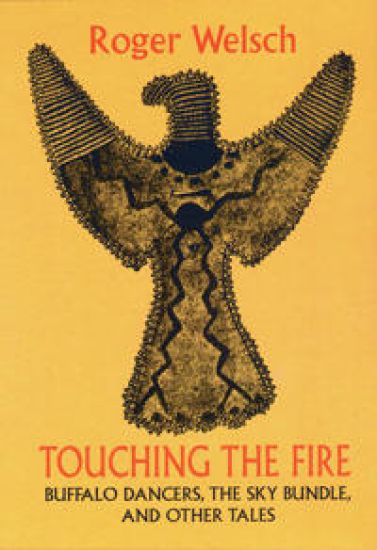
Touching the Fire

Touching the Fire

Roger Welsch

Bison Books
1997
pokkari
The Turtle Creek band of the fictional Nehawka Indians wages a battle for the return of their sacred Sky Bundle, a medicine pouch containing artifacts. It reposes under glass in an eastern museum at the beginning of Touching the Fire. Seven interlinked stories, beginning with a court battle in the year 2001 and going far back in time to the origin of the Bundle and the first Nehawka village on the Great Plains, reveal the richness and depth of Indian cultural heritage. Touching the Fire is multilayered—sad, humorous, and always informative.
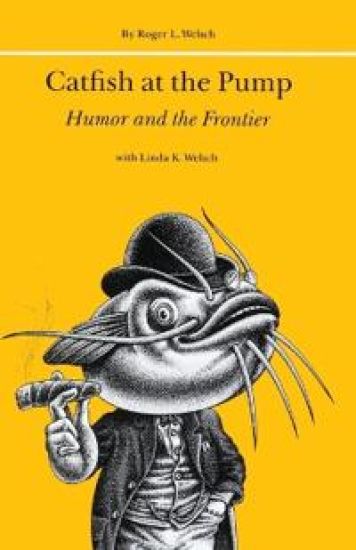
Catfish at the Pump

Catfish at the Pump

Roger Welsch; Linda K. Welsch

University of Nebraska Press
1986
pokkari
Were our forefathers liars? "You bet they were," says Roger Welsch, "and damned fine ones at that." The proof is in Catfish at the Pump, a collection of the kind of humor that softened the hardships of pioneering on the Great Plains. From yellowed newspapers, magazines, and forgotten Nebraska Federal Writers' Project files, the well-known folklorist and humorist Roger Welsch has produced a book to be treasured. Here are jokes, anecdotes, legends, tall tales, and lugubriously funny poems about the things that preoccupied the pioneer plainsman: weather extremes; soil quality; food and whiskey; an arkload of animals, including grasshoppers, bed bugs, hoop snakes, the ubiquitous mule, and some mighty big fish; and even sickness and the poverty that would inspire black laughter again in the Great Depression. Catfish at the Pump proves abundantly that the art of story telling was practiced diligently by our plains ancestors. Roger Welsch, who brought out Shingling the Fog and Other Plains Lies in 1972 (reprinted by the University of Nebraska Press in 1980), now issues this "book about lies and liars," knowing full well that "underlying the pioneer sense of humor is a profound respect for truth."
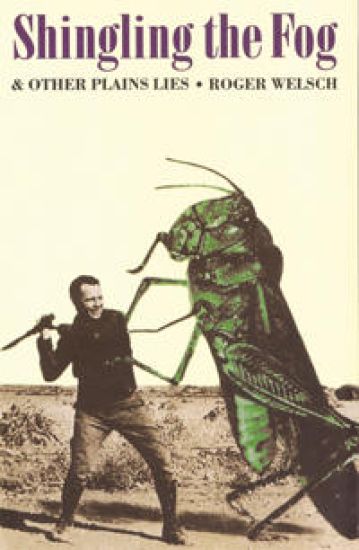
Shingling the Fog and Other Plains Lies
"More than corn grows tall on the American Plains. Here for the delectation of amateur folklorists is a collection of country whoppers from the frontier of Nebraska, Oklahoma and Iowa—funny and fantastic yarns and anecdotes of pioneer vintage that belie the erroneous notion that the men and women who settled the Plains were 'grimly serious' forerunners of Grant Wood's farming couple."—Publishers Weekly