Kirjojen hintavertailu. Mukana 12 390 323 kirjaa ja 12 kauppaa.

Kirjailija

Rohan Gunaratna

Kirjat ja teokset yhdessä paikassa: 13 kirjaa, julkaisuja vuosilta 2011-2025, suosituimpien joukossa Countering Extremism: Building Social Resilience Through Community Engagement. Vertaile teosten hintoja ja tarkista saatavuus suomalaisista kirjakaupoista.

13 kirjaa

Kirjojen julkaisuhaarukka 2011-2025.

Rohingya Crisis, The

Rohingya Crisis, The

Rohan Gunaratna; Jolene Jerard; Iftekharul Bashar

World Scientific Europe Ltd
2025
sidottu
The Rohingya Crisis aims to analyse communal violence in western Myanmar and highlight its transnational security implications. Based on ethnographic research in the Bangladesh-Myanmar borderland, the book analyses the complex often-contested narratives of the dynamics of communal violence and the role of various actors in this conflict. The Rohingya Crisis argues that the communal violence in western Myanmar has cascading security ramifications for South and Southeast Asia, and cautions that continued violence in the Rakhine state might lead to an escalation of transnational crime and militancy in the region. The political dynamics in Myanmar intersects with a rapidly evolving terrorist threat landscape in the Southeast Asian region, presenting an unenviable challenge of managing the Rohingya Crisis.
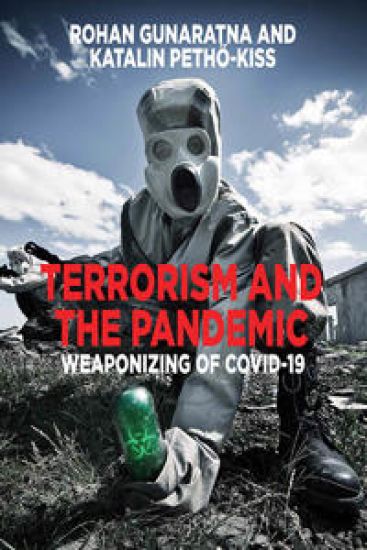
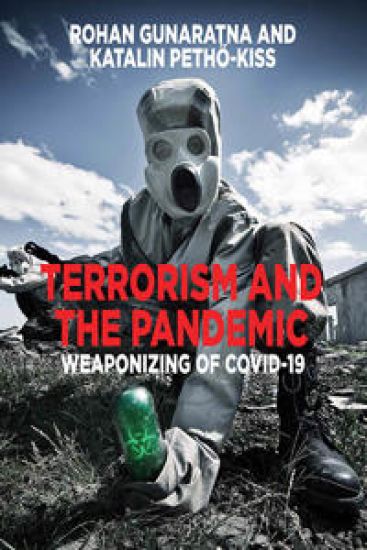
Terrorism and the Pandemic

Terrorism and the Pandemic

Rohan Gunaratna; Katalin Petho-Kiss

BERGHAHN BOOKS
2025
nidottu
The global pandemic has offered extraordinary opportunities for extremists and terrorists to mobilize themselves and revive as more powerful actors in the security landscape. But could these threat groups actually capitalize on the coronavirus crisis and advance their malevolent agendas? Utilizing the largest COVID-19-related terrorism database, the book presents an analysis built upon a quantitative and qualitative comparison between the nature of both the radical Islamist and the far-right-related threat in 2018 and 2020. It provides, for the first time, a true picture of novel trends since the pandemic outbreak.
A Fortified Far Right?

A Fortified Far Right?

Katalin Petho-Kiss; Rohan Gunaratna

TAYLOR FRANCIS LTD
2024
nidottu
Petho-Kiss and Gunaratna understand the nature of the threat posed by the far right because of their findings and they propose effective provisions and mechanisms for detecting and countering it.The book undertakes a consistent procession and empirical examination of available information to arrive at the recognition that in order to dissolve the complexity of the associated threat, we need to scrutinize the functioning of far-right threat groups. In-depth and consistent analysis on their mode of operation and mindset enables us to identify ways to detect and counter their malicious efforts and activities. The theoretical framework for the analysis lies upon the concept of wave theory. The main question that this book examines is whether far-right terrorism constitutes a new wave of global terrorism. One question emerges from this statement that requires further elaboration. Is far-right terrorism a novel wave of terrorism? If yes, how is it novel and what are the novelties or developments in it?This book is for scholars as well as practitioners in the counter-terrorism (CT) and the prevention/countering violent extremism (PCVE) field. Through specific case studies students studying CT and/or PCVE could gain insight into the operational functionalities of far-right threat groups. This may help them to get a more accurate understanding of the threat posed by these entities. Examining the recruitment, funding, communication practices, and modus operandi of worrisome threat actors equips us to design the most effective countermeasures and identify the hiatuses in applicable legislative regimes.
A Fortified Far Right?

A Fortified Far Right?

Katalin Petho-Kiss; Rohan Gunaratna

TAYLOR FRANCIS LTD
2024
sidottu
Petho-Kiss and Gunaratna understand the nature of the threat posed by the far right because of their findings and they propose effective provisions and mechanisms for detecting and countering it.The book undertakes a consistent procession and empirical examination of available information to arrive at the recognition that in order to dissolve the complexity of the associated threat, we need to scrutinize the functioning of far-right threat groups. In-depth and consistent analysis on their mode of operation and mindset enables us to identify ways to detect and counter their malicious efforts and activities. The theoretical framework for the analysis lies upon the concept of wave theory. The main question that this book examines is whether far-right terrorism constitutes a new wave of global terrorism. One question emerges from this statement that requires further elaboration. Is far-right terrorism a novel wave of terrorism? If yes, how is it novel and what are the novelties or developments in it?This book is for scholars as well as practitioners in the counter-terrorism (CT) and the prevention/countering violent extremism (PCVE) field. Through specific case studies students studying CT and/or PCVE could gain insight into the operational functionalities of far-right threat groups. This may help them to get a more accurate understanding of the threat posed by these entities. Examining the recruitment, funding, communication practices, and modus operandi of worrisome threat actors equips us to design the most effective countermeasures and identify the hiatuses in applicable legislative regimes.
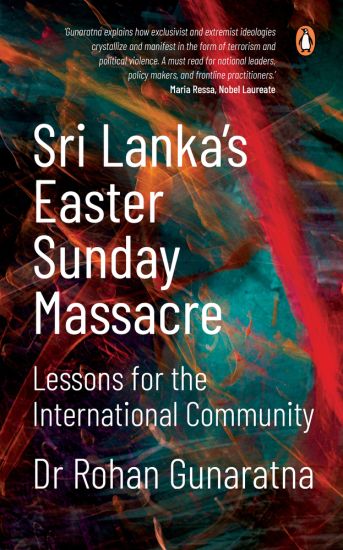
Sri Lanka's Easter Sunday Massacre

Sri Lanka's Easter Sunday Massacre

Rohan Gunaratna

Penguin Random House SEA
2023
pokkari
Radical Islam is an enduring global challenge that presents a national and international security threat. Instigation by hate preachers, inadequate government, societal attention, religious and reciprocal radicalization have allowed this threat to manifest into terrorist violence. Extremist ideologies have infiltrated religious, educational, and digital spaces and thus, terrorism’s shadow continues to shroud the safety and stability of countries and communities worldwide today.On 21 April 2019, the world’s most dangerous threat movement, the Islamic State, mounted one of its deadliest attacks in Sri Lanka. The surge of fear, suspicion, and prejudice following what is now known as ‘Sri Lanka’s Easter Sunday Massacre’ fragmented the country, imbuing hatred and anger against the Muslim community. Years later, the radicalization pipeline remains intact, and the threat persists. With the global expansion of the Islamic State and al-Qaeda, will the world witness attacks of a similar or greater scale in the future?Equal parts treatise and reference material, this book answers this question by tracing the genesis, threat trajectory, and aftermath of the bombings and the personalities behind them. With unprecedented access to accounts from Islamic State detainees, affected families, intelligence specialists, and investigators, the book reflects on lessons learned and provides insight into how such attacks are organized and what measures can be taken to prevent or respond to these threats effectively.
Terrorism and the Pandemic

Terrorism and the Pandemic

Rohan Gunaratna; Katalin Petho-Kiss

BERGHAHN BOOKS
2023
sidottu
The global pandemic has offered extraordinary opportunities for extremists and terrorists to mobilize themselves and revive as more powerful actors in the security landscape. But could these threat groups actually capitalize on the coronavirus crisis and advance their malevolent agendas? Utilizing the largest COVID-19-related terrorism database, the book presents an analysis built upon a quantitative and qualitative comparison between the nature of both the radical Islamist and the far-right-related threat in 2018 and 2020. It provides, for the first time, a true picture of novel trends since the pandemic outbreak.
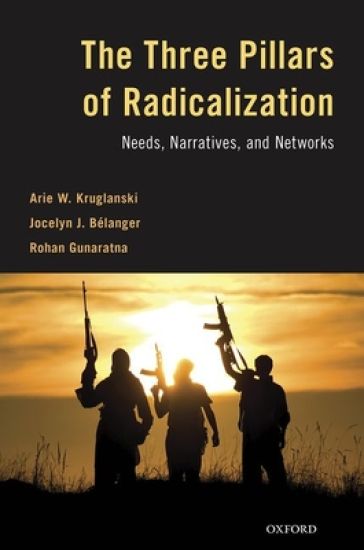
The Three Pillars of Radicalization

The Three Pillars of Radicalization

Arie W. Kruglanski; Jocelyn J. Bélanger; Rohan Gunaratna

Oxford University Press Inc
2019
sidottu
What fuels radicalization? Is deradicalization a possibility? The Three Pillars of Radicalization: Needs, Narratives, and Networks addresses these crucial questions by identifying the three major determinants of radicalization that progresses into violent extremism. The first determinant is the need: individuals' universal desire for personal significance. The second determinant is narrative, which guides members in their "quest for significance." The third determinant is the network, or membership in one's group that validates the collective narrative and dispenses rewards like respect and veneration to members who implement it. In this book, Arie W. Kruglanski, Jocelyn J. Bélanger, and Rohan Gunaratna present a new model of radicalization that takes into account factors that activate the individual's quest for significance. Synthesizing varied empirical evidence, this volume reinterprets prior theories of radicalization and examines major issues in deradicalization and recidivism, which will only become more relevant as communities continue to negotiate the threat of extremism.
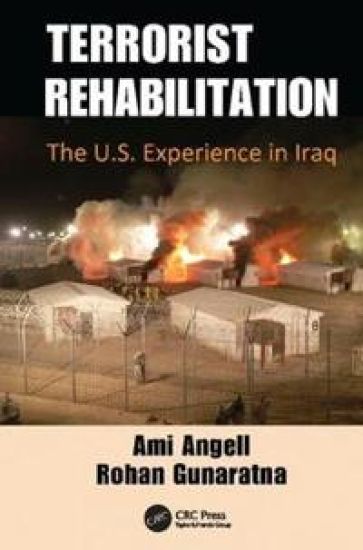
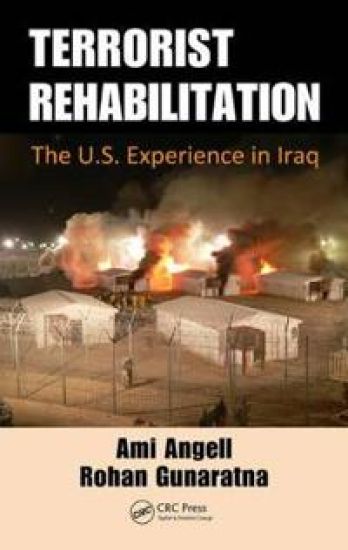
Terrorist Rehabilitation

Terrorist Rehabilitation

Ami Angell; Rohan Gunaratna

CRC Press
2017
nidottu
Because terrorists are made, not born, it is critically important to world peace that detainees and inmates influenced by violent ideology are deradicalized and rehabilitated back into society. Exploring the challenges in this formidable endeavor, Terrorist Rehabilitation: The U.S. Experience in Iraq demonstrates through the actual experiences of military personnel, defense contractors, and Iraqi nationals that deradicalization and rehabilitation programs can succeed and have the capability to positively impact thousands of would-be terrorists globally if utilized to their full capacity.Custodial and community rehabilitation of terrorists and extremists is a new frontier in the fight against terrorism. This forward-thinking volume:Highlights the success of a rehabilitation program curriculum in IraqEncourages individuals and governments to embrace rehabilitation as the next most logical step in fighting terrorismExamines the recent history of threat groups in IraqDemonstrates where the U.S. went awry in its war effort, and the steps it took to correct the situationDescribes religious, vocational training, education, creative expression, and Tanweer programs introduced to the detainee populationProvides insight into future steps based on lessons learned from current rehabilitation programsIt is essential that we shift the focus from solely detainment and imprisonment to addressing the ideological mindset during prolonged incarceration. It is possible to effect an ideological transformation in detainees that qualifies them to be reclassified as no longer posing a security threat. This volume demonstrates that with the proper program and encouragement, a detainee’s misunderstanding or extremist ideology can be replaced with the principles of moderation, toleration, and coexistence.
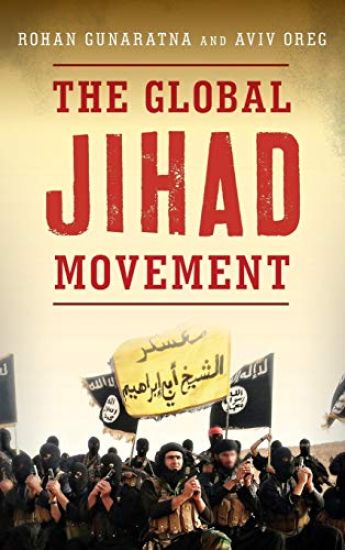
The Global Jihad Movement

The Global Jihad Movement

Rohan Gunaratna; Aviv Oreg

Rowman Littlefield
2015
sidottu
Three to four dozen international and local organizations, up to one hundred thousand individuals, and millions of supporters are part of the phenomenon of Global Jihad. The Global Jihad Movement endeavors to name and differentiate these organizations and to explain their infrastructure, operational capabilities, and activities. It also analyzes their mutual and multi-lateral relations inside and outside the “jihadi framework.” In essence, this is a “who’s who” in the Global Jihad. The first section deals with ideology, focusing on the emergence of the Salafi and the Salafi-jihadi ideologies, which are still the most important factors behind the operational performance of Global Jihadi elements. The second section addresses the “affiliate groups” of al-Qaeda, such as al-Qaeda in the Arabian Peninsula, al-Qaeda in the Islamic Maghreb, and al-Qaeda in Iraq. This section focuses mainly on the groups that adopted al-Qaeda’s Global Jihad strategy by incorporating Western targets in their vicinity of operations in their targeting policies. The next section discusses the different jihad arenas that have emerged over the last three decades, absorbing jihadi fighters from Islamic communities around the world. Finally, tThe last section examines the long process of radicalization, from regular and normative lifestyle patterns to the final jihadi stage—which in many cases involves martyrdom as suicide bombers in the name of radical Islam.
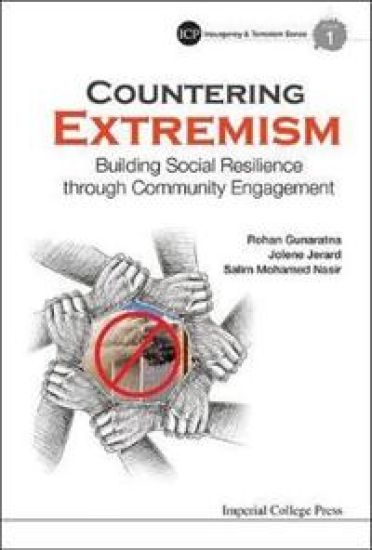
Countering Extremism: Building Social Resilience Through Community Engagement

Countering Extremism: Building Social Resilience Through Community Engagement

Rohan Gunaratna; Jolene Jerard; Salim Mohamed Nasir

Imperial College Press
2013
sidottu
This unique work is the first to address the subject of community engagement strategies in countering extremism, and explores the development and research of these strategies. In so doing it demystifies the process of community engagement, while simultaneously extolling the virtues of the ground breaking strategies to have been effectively employed in Asia, the Middle East, and the West.The book then proceeds to examine the efforts of community engagement made by several countries against their unique operational and geopolitical environments. Finally, detailed reference is made to the role and work of the media and non-government organizations to have conducted effective community engagement efforts.With contributions from authors of diverse backgrounds, including media, the social services, security, and academia, this book will be of interest to both the general public and to researchers.
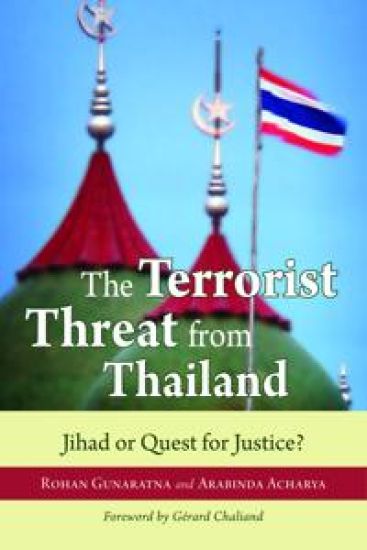
The Terrorist Threat from Thailand

The Terrorist Threat from Thailand

Rohan Gunaratna

Potomac Books Inc
2012
sidottu
Since January 2004, the violence in the southern provinces in Thailand has claimed more than 4,600 lives. The violence has also adversely affected the local economy and quality of life in the southern provinces. The atmosphere of fear and intimidation is dividing the society on religious lines with growing apprehension that what began as a separatist nationalist conflict might well end up as a clash between Buddhism and Islam. There is also a strong potential for the Muslim insurgency in southern Thailand to get sucked into the global jihad.Gunaratna and Acharya provide a short history of the conflict, which dates at least to the early 1900s, as well as an analysis of factors contributing to the most recent escalation of violence in 2004. The authors shed light on the causes of the Southern Thai conflict and examine its potential to spread from Thailand to neighboring countries such as Malaysia, Singapore, the Philippines, and Indonesia. A strong potential also exists for this predominantly localized conflict to get absorbed into the global jihad. In addition to analyzing the insurgents' capabilities and opportunities, the authors provide a critique of government policies and make astute suggestions for resolving the conflict.
Terrorist Rehabilitation

Terrorist Rehabilitation

Ami Angell; Rohan Gunaratna

CRC Press Inc
2011
sidottu
Because terrorists are made, not born, it is critically important to world peace that detainees and inmates influenced by violent ideology are deradicalized and rehabilitated back into society. Exploring the challenges in this formidable endeavor, Terrorist Rehabilitation: The U.S. Experience in Iraq demonstrates through the actual experiences of military personnel, defense contractors, and Iraqi nationals that deradicalization and rehabilitation programs can succeed and have the capability to positively impact thousands of would-be terrorists globally if utilized to their full capacity.Custodial and community rehabilitation of terrorists and extremists is a new frontier in the fight against terrorism. This forward-thinking volume:Highlights the success of a rehabilitation program curriculum in IraqEncourages individuals and governments to embrace rehabilitation as the next most logical step in fighting terrorismExamines the recent history of threat groups in IraqDemonstrates where the U.S. went awry in its war effort, and the steps it took to correct the situationDescribes religious, vocational training, education, creative expression, and Tanweer programs introduced to the detainee populationProvides insight into future steps based on lessons learned from current rehabilitation programsIt is essential that we shift the focus from solely detainment and imprisonment to addressing the ideological mindset during prolonged incarceration. It is possible to effect an ideological transformation in detainees that qualifies them to be reclassified as no longer posing a security threat. This volume demonstrates that with the proper program and encouragement, a detainee’s misunderstanding or extremist ideology can be replaced with the principles of moderation, toleration, and coexistence.