Kirjojen hintavertailu. Mukana 12 657 676 kirjaa ja 12 kauppaa.

Kirjailija

Roland Meinert

Kirjat ja teokset yhdessä paikassa: 5 kirjaa, julkaisuja vuosilta 1994-2016, suosituimpien joukossa Postmodernism, Religion, and the Future of Social Work. Vertaile teosten hintoja ja tarkista saatavuus suomalaisista kirjakaupoista.

5 kirjaa

Kirjojen julkaisuhaarukka 1994-2016.

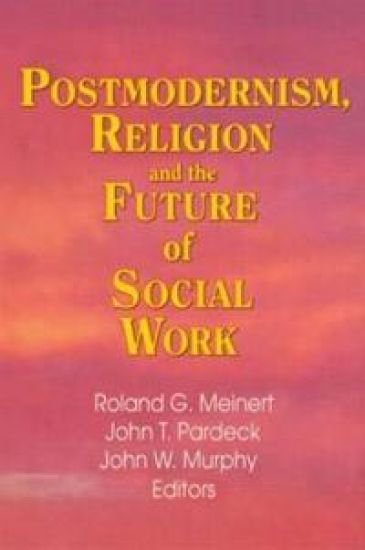
Postmodernism, Religion, and the Future of Social Work

Postmodernism, Religion, and the Future of Social Work

Jean A Pardeck; John W Murphy; Roland Meinert

Routledge
2016
nidottu
Postmodernism, Religion, and the Future of Social Work discusses the benefits and disadvantages of the postmodern philosophy as a foundation for social work and human service practice. Social work students and practitioners will learn about the developments that have shaped postmodern thinking as they pertain to society in general, as well as to the profession of social work. By exploring this increasingly popular philosophy, Postmodernism, Religion, and the Future of Social Work provides you with methods and theories that help you evalute contemporary problems more effectively, resulting in better services for your clients.Challenging traditional social work practices, Postmodernism, Religion, and the Future of Social Work examines postmodernism in terms of a world view that is emerging along indeterminate and ambiguous lines. With the goal of helping you provide more helpful and relevant services to your clients, Postmodernism, Religion, and the Future of Social Work discusses many themes related to postmodernism, including:understanding how principles of postmodernism are characterized by ongoing change, indeterminacy, and relativism reviewing the historical movement of a postmodern perspective and its present implications on social work practice supporting the strengths perspective through a postmodernist approach discussing some unintended and potentially negative consequences of postmodernism that arise from uncritically adopting postmodernistic principles analyzing the nature of social work and social welfare in Britain and the Western World to gain insight into how social theory is associated with postmodernity, postmodernization, and post-Fordism exploring the postmodernistic relationship between institutionalized religions and social services provided by religious auspices Although postmodernism offers a new and different way of understanding social problems and of structuring social work practice, this text urges you to be critical in the evaluation of its aspects and outlines some possibly negative outcomes in certain situations. In evaluating postmodernism and its relevance to social services and social problems, Postmodernism, Religion, and the Future of Social Work offers theories and research into methods that go beyond traditional practices to assist you in providing effective and relevant services for your clients.

Social Work

Social Work

Jean A Pardeck; Roland Meinert; Larry W Kreuger

Routledge Member of the Taylor and Francis Group
2000
sidottu
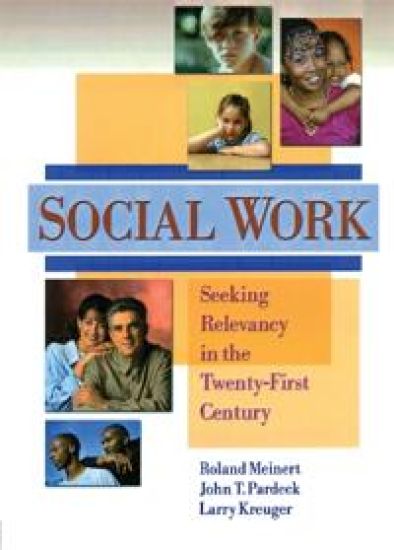
Discover why social work must be restructured if it is to remain viable!Social Work: Seeking Relevancy in the Twenty-First Century provides you with a critical examination of the major issues that social work education and practice must confront if social work is to remain as a mainline profession. The book explores issues that are not normally covered in social work literature, such as the challenge of reconstructing the social work profession, the use of technology in social work, and the tension surrounding various social work education curriculums. You will benefit from this thorough discussion of the many problems that the social work profession is facing: a lack of scholarly research, inadequate educational programs, and the use of hypertechnology to educate social work students.Social Work: Seeking Relevancy in the Twenty-First Century examines the epistemological, theoretical, socio/technical, and practice directions that social work has branched into. You'll discover that today's central direction for social work is generated from liberal, postmodern, and increasingly feminist ideological perspectives. In a field where conceptual and theoretical input rarely allow for intellectual diversity, this volume demonstrates that several views are best for inquiry and exploration in social work.Issues discussed include:examining real or unreal social work values by separating them from beliefs, preferences, norms, attitudes, and opinions creating social work course outlines that incorporate practices developed around the globe, allowing for more conceptual and theoretical growth within the field realizing the tremendous difference between communication in the instrumental sense via technology, and in the affective, soul-oriented sense via personal interaction investigating the negative effects of communicating with hypertechnology (modems, e-mail) in the social work profession realizing the need for a greater quantity and quality of social work research to progress further in the fieldSocial Work: Seeking Relevancy in the Twenty-First Century invites you to reinvent social work for today's post-industrial and post-modern era. You will discover a series of challenges that social work must meet and overcome if it is to move into the new century as a relevant and viable profession. You will explore solutions such as increasing scholarship and research among social workers, and decreasing the use of technology (for example, classes held via the Internet) in social work education programs in order to increase the quality of the social work profession.
Social Work

Social Work

Jean A Pardeck; Roland Meinert; Larry W Kreuger

Routledge Member of the Taylor and Francis Group
2000
nidottu
Discover why social work must be restructured if it is to remain viable!Social Work: Seeking Relevancy in the Twenty-First Century provides you with a critical examination of the major issues that social work education and practice must confront if social work is to remain as a mainline profession. The book explores issues that are not normally covered in social work literature, such as the challenge of reconstructing the social work profession, the use of technology in social work, and the tension surrounding various social work education curriculums. You will benefit from this thorough discussion of the many problems that the social work profession is facing: a lack of scholarly research, inadequate educational programs, and the use of hypertechnology to educate social work students.Social Work: Seeking Relevancy in the Twenty-First Century examines the epistemological, theoretical, socio/technical, and practice directions that social work has branched into. You'll discover that today's central direction for social work is generated from liberal, postmodern, and increasingly feminist ideological perspectives. In a field where conceptual and theoretical input rarely allow for intellectual diversity, this volume demonstrates that several views are best for inquiry and exploration in social work.Issues discussed include:examining real or unreal social work values by separating them from beliefs, preferences, norms, attitudes, and opinions creating social work course outlines that incorporate practices developed around the globe, allowing for more conceptual and theoretical growth within the field realizing the tremendous difference between communication in the instrumental sense via technology, and in the affective, soul-oriented sense via personal interaction investigating the negative effects of communicating with hypertechnology (modems, e-mail) in the social work profession realizing the need for a greater quantity and quality of social work research to progress further in the fieldSocial Work: Seeking Relevancy in the Twenty-First Century invites you to reinvent social work for today's post-industrial and post-modern era. You will discover a series of challenges that social work must meet and overcome if it is to move into the new century as a relevant and viable profession. You will explore solutions such as increasing scholarship and research among social workers, and decreasing the use of technology (for example, classes held via the Internet) in social work education programs in order to increase the quality of the social work profession.
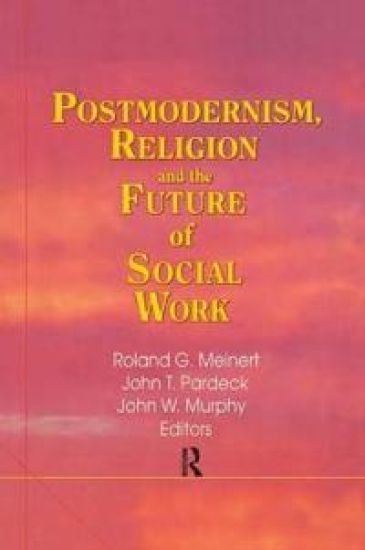
Postmodernism, Religion, and the Future of Social Work

Postmodernism, Religion, and the Future of Social Work

Jean A Pardeck; John W Murphy; Roland Meinert

Routledge Member of the Taylor and Francis Group
1998
sidottu
Postmodernism, Religion, and the Future of Social Work discusses the benefits and disadvantages of the postmodern philosophy as a foundation for social work and human service practice. Social work students and practitioners will learn about the developments that have shaped postmodern thinking as they pertain to society in general, as well as to the profession of social work. By exploring this increasingly popular philosophy, Postmodernism, Religion, and the Future of Social Work provides you with methods and theories that help you evalute contemporary problems more effectively, resulting in better services for your clients.Challenging traditional social work practices, Postmodernism, Religion, and the Future of Social Work examines postmodernism in terms of a world view that is emerging along indeterminate and ambiguous lines. With the goal of helping you provide more helpful and relevant services to your clients, Postmodernism, Religion, and the Future of Social Work discusses many themes related to postmodernism, including:understanding how principles of postmodernism are characterized by ongoing change, indeterminacy, and relativism reviewing the historical movement of a postmodern perspective and its present implications on social work practice supporting the strengths perspective through a postmodernist approach discussing some unintended and potentially negative consequences of postmodernism that arise from uncritically adopting postmodernistic principles analyzing the nature of social work and social welfare in Britain and the Western World to gain insight into how social theory is associated with postmodernity, postmodernization, and post-Fordism exploring the postmodernistic relationship between institutionalized religions and social services provided by religious auspices Although postmodernism offers a new and different way of understanding social problems and of structuring social work practice, this text urges you to be critical in the evaluation of its aspects and outlines some possibly negative outcomes in certain situations. In evaluating postmodernism and its relevance to social services and social problems, Postmodernism, Religion, and the Future of Social Work offers theories and research into methods that go beyond traditional practices to assist you in providing effective and relevant services for your clients.
Issues in Social Work

Issues in Social Work

Roland Meinert; Patrick Sullivan

Praeger Publishers Inc
1994
sidottu
Today, the profession of social work is confronted with a number of critical issues. Many of these relate to theory development: the evaluation of practice effectiveness; the appropriate role of social work in policy development at the state, national, and international levels; emerging concerns about social work education; and so on. This volume seeks to draw together the current thinking on these issues, analyze them, and project areas for further analysis.Written by leading scholars in social work, this volume will be of value to social work educators, practitioners, students, and others in the social policy arena.