Kirjojen hintavertailu. Mukana 12 180 010 kirjaa ja 12 kauppaa.

Kirjailija

Roland Rau

Kirjat ja teokset yhdessä paikassa: 6 kirjaa, julkaisuja vuosilta 2006-2020, suosituimpien joukossa Visualizing Mortality Dynamics in the Lexis Diagram. Vertaile teosten hintoja ja tarkista saatavuus suomalaisista kirjakaupoista.

6 kirjaa

Kirjojen julkaisuhaarukka 2006-2020.

Visualizing Mortality Dynamics in the Lexis Diagram

Visualizing Mortality Dynamics in the Lexis Diagram

Kenneth Land; James W Vaupel; Roland Rau

Saint Philip Street Press
2020
sidottu
The goal of this book is simple: We would like to show how mortality dynamics can be visualized in the so-called Lexis diagram. To appeal to as many potentialreaders as possible, we do not require any specialist knowledge. This approachmay be disappointing: Demographers may have liked more information aboutthe mathematical underpinnings of population dynamics on the Lexis surface asdemonstrated, for instance, by Arthur and Vaupel in 1984. Statisticians would haveprobably preferred more information about the underlying smoothing methods thatwere used. Epidemiologists likewise might miss discussions about the etiology ofdiseases. Sociologists would have probably expected that our results were moreembedded into theoretical frameworks... This work was published by Saint Philip Street Press pursuant to a Creative Commons license permitting commercial use. All rights not granted by the work's license are retained by the author or authors.
Visualizing Mortality Dynamics in the Lexis Diagram

Visualizing Mortality Dynamics in the Lexis Diagram

Kenneth Land; James W Vaupel; Roland Rau

Saint Philip Street Press
2020
pokkari
The goal of this book is simple: We would like to show how mortality dynamics can be visualized in the so-called Lexis diagram. To appeal to as many potentialreaders as possible, we do not require any specialist knowledge. This approachmay be disappointing: Demographers may have liked more information aboutthe mathematical underpinnings of population dynamics on the Lexis surface asdemonstrated, for instance, by Arthur and Vaupel in 1984. Statisticians would haveprobably preferred more information about the underlying smoothing methods thatwere used. Epidemiologists likewise might miss discussions about the etiology ofdiseases. Sociologists would have probably expected that our results were moreembedded into theoretical frameworks... This work was published by Saint Philip Street Press pursuant to a Creative Commons license permitting commercial use. All rights not granted by the work's license are retained by the author or authors.
Visualizing Mortality Dynamics in the Lexis Diagram

Visualizing Mortality Dynamics in the Lexis Diagram

Roland Rau; Christina Bohk-Ewald; Magdalena M. Muszynska; James W. Vaupel

Springer International Publishing AG
2018
nidottu
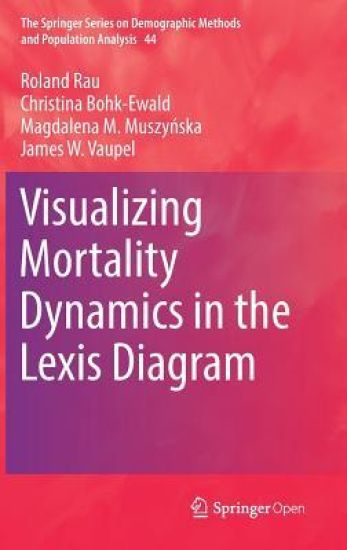
This book visualizes mortality dynamics in the Lexis diagram. While the standard approach of plotting death rates is also covered, the focus in this book is on the depiction of rates of mortality improvement over age and time. This rather novel approach offers a more intuitive understanding of the underlying dynamics, enabling readers to better understand whether period- or cohort-effects were instrumental for the development of mortality in a particular country. Besides maps for single countries, the book includes maps on the dynamics of selected causes of death in the United States, such as cardiovascular diseases or lung cancer. The book also features maps for age-specific contributions to the change in life expectancy, for cancer survival and for seasonality in mortality for selected causes of death in the United States. The book is accompanied by instructions on how to use the freely available R Software to produce these types of surface maps. Readers are encouraged to use the presented tools to visualize other demographic data or any event that can be measured by age and calendar time, allowing them to adapt the methods to their respective research interests. The intended audience is anyone who is interested in visualizing data by age and calendar time; no specialist knowledge is required.This book is open access under a CC BY license.
Visualizing Mortality Dynamics in the Lexis Diagram

Visualizing Mortality Dynamics in the Lexis Diagram

Roland Rau; Christina Bohk-Ewald; Magdalena M. Muszynska; James W. Vaupel

Springer International Publishing AG
2017
sidottu
This book visualizes mortality dynamics in the Lexis diagram. While the standard approach of plotting death rates is also covered, the focus in this book is on the depiction of rates of mortality improvement over age and time. This rather novel approach offers a more intuitive understanding of the underlying dynamics, enabling readers to better understand whether period- or cohort-effects were instrumental for the development of mortality in a particular country. Besides maps for single countries, the book includes maps on the dynamics of selected causes of death in the United States, such as cardiovascular diseases or lung cancer. The book also features maps for age-specific contributions to the change in life expectancy, for cancer survival and for seasonality in mortality for selected causes of death in the United States. The book is accompanied by instructions on how to use the freely available R Software to produce these types of surface maps. Readers are encouraged to use the presented tools to visualize other demographic data or any event that can be measured by age and calendar time, allowing them to adapt the methods to their respective research interests. The intended audience is anyone who is interested in visualizing data by age and calendar time; no specialist knowledge is required.This book is open access under a CC BY license.
Seasonality in Human Mortality

Seasonality in Human Mortality

Roland Rau

Springer-Verlag Berlin and Heidelberg GmbH Co. K
2010
nidottu
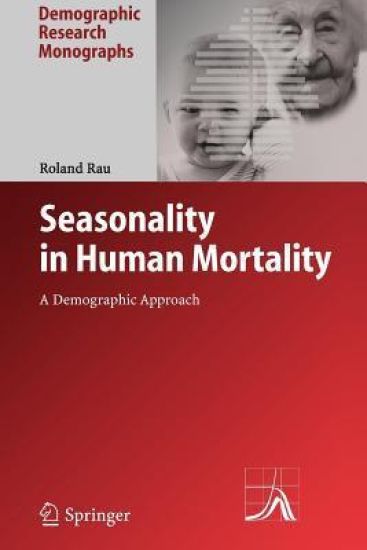
Seasonal fluctuations in mortality are a persistent phenomenon across populations. In Western countries of the Northern hemisphere, mortality is typically larger in winter than in summer which is attributed to the detrimental effects of cold to health. This does, however, not explain why in colder countries the differences between winter and summer mortality are smaller than in countries with warm or moderate climate. This book, therefore, investigates whether sociodemographic and socioeconomic factors play a role as important for seasonal mortality as they do for mortality in general. Using modern statistical methods, the book shows, for example for the United States, that the fluctuations between winter and summer mortality are smaller the more years someone has spent in school.
Seasonality in Human Mortality

Seasonality in Human Mortality

Roland Rau

Springer-Verlag Berlin and Heidelberg GmbH Co. K
2006
sidottu
Seasonal fluctuations in mortality are a persistent phenomenon across populations. In Western countries of the Northern hemisphere, mortality is typically larger in winter than in summer which is attributed to the detrimental effects of cold to health. This does, however, not explain why in colder countries the differences between winter and summer mortality are smaller than in countries with warm or moderate climate. This book, therefore, investigates whether sociodemographic and socioeconomic factors play a role as important for seasonal mortality as they do for mortality in general. Using modern statistical methods, the book shows, for example for the United States, that the fluctuations between winter and summer mortality are smaller the more years someone has spent in school.