Kirjailija
Rolf Arnold
Kirjat ja teokset yhdessä paikassa: 37 kirjaa, julkaisuja vuosilta 1992-2026, suosituimpien joukossa Erwachsen hat ein s zu viel. Vertaile teosten hintoja ja tarkista saatavuus suomalaisista kirjakaupoista.
37 kirjaa
Kirjojen julkaisuhaarukka 1992-2026.


If we could look into the hearts and minds of our children, we would often realize how little contact there is when we are teaching them. Teaching without a relationship is like swimming without water! This means you cannot raise a child if there is no real relationship. Of course, it is all about the kind of relationship which you as the adult establish towards the children. This is not a partnership and our children are not our friends – they are something else and more: They need our adult voice, but also affection and guidance – in a positive, i.e., horizon-broadening, security-giving, and also a boundary-marking way. This book is about the concept of inclusive parenting and teaching. The 29 Rules for Smart Parenting are intended to help the reader to become more effective as parents and teachers.

If we could look into the hearts and minds of our children, we would often realize how little contact there is when we are teaching them. Teaching without a relationship is like swimming without water! This means you cannot raise a child if there is no real relationship. Of course, it is all about the kind of relationship which you as the adult establish towards the children. This is not a partnership and our children are not our friends – they are something else and more: They need our adult voice, but also affection and guidance – in a positive, i.e., horizon-broadening, security-giving, and also a boundary-marking way. This book is about the concept of inclusive parenting and teaching. The 29 Rules for Smart Parenting are intended to help the reader to become more effective as parents and teachers.
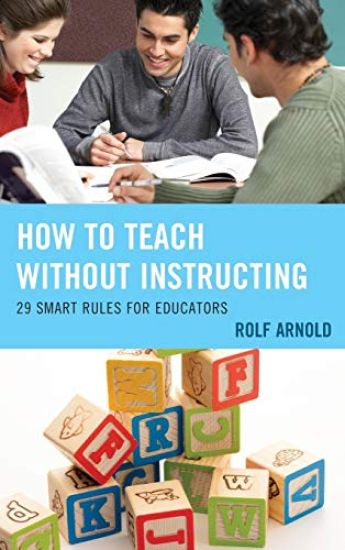
“Teaching” and “learning” are two interrelated terms used to express our thinking about a major aspect of human development. However, didactics developed into an art, the “art” of teaching, while the processes of learning were neglected and not researched. Nowadays, many people perceive “learning” as an undesirable activity. The experience of learning is thought of as something expected of them from the outside and it is often remembered as stressful, a pressure to perform, a fear of failure, and alienation. But there are also some enriching experiences such as the joy of discovery, to ultimately achieve after many attempts something that you could not do previously, or to see a situation in a new light. How to Teach Without Instructing relinks teaching and learning. It examines the teaching practices in institutions of learning and formulates “rules” that assist teachers in their efforts to focus their teaching on the learner. The rules are based on situations that are routinely encountered in the teaching environment.
“Teaching” and “learning” are two interrelated terms used to express our thinking about a major aspect of human development. However, didactics developed into an art, the “art” of teaching, while the processes of learning were neglected and not researched. Nowadays, many people perceive “learning” as an undesirable activity. The experience of learning is thought of as something expected of them from the outside and it is often remembered as stressful, a pressure to perform, a fear of failure, and alienation. But there are also some enriching experiences such as the joy of discovery, to ultimately achieve after many attempts something that you could not do previously, or to see a situation in a new light. How to Teach Without Instructing relinks teaching and learning. It examines the teaching practices in institutions of learning and formulates “rules” that assist teachers in their efforts to focus their teaching on the learner. The rules are based on situations that are routinely encountered in the teaching environment.

Es gehört an den deutschen Hochschulen und in der interessierten Öffentlichkeit mittlerweile zum guten Ton, sich grundlegend und bisweilen auch vernichtend zum Bolognaprozess zu äußern. In dem in Gang gesetzten Umbau des deutschen Hochschulsystems wird dabei die eigentliche Ursache für alle möglichen Verfallsprozesse in den deutschen Universitäten gesehen – eine vielfach eindimensionale Ursachenzuschreibung. Rolf Arnold zeigt in seinem Buch, dass ‚Bologna‘ die Hochschulen in Deutschland aufgerüttelt hat und dass man tatsächlich erst jetzt beginnt, sich den überlieferten Fragwürdigkeiten des Hochschulsystems zuzuwenden.
Ein kluges und sehr persönliches Buch über verantwortliches Führen. Mit konkreten Anregungen und nützlichen Checklisten für den Führungsalltag.Viele Führungskräfte haben den Zugang zu ihren Emotionen verloren und spüren nicht, was für die Situation, die Organisation und die Mitarbeiter das Notwendige und Erforderliche ist. Um die eigene Kraft wieder zu wecken, bedarf es einer behutsam angeleiteten Selbstreflexion. In einem fiktiven Briefwechsel zwischen einer Führungskraft und ihrem akademischen Coach vermittelt dieses Buch grundlegende Erkenntnisse über das Führen mit Gefühl und das Spirituelle der Führung. Aus einer philosophisch sowie führungstheoretisch tief begründeten Perspektive heraus stellt der Autor konkrete Vorschläge, Vorgehensweisen und Instrumente für wirksames Führen vor. Es geht dabei sowohl um die Entfaltung der Potenziale und Ressourcen der Mitarbeiter als auch um die Entfaltung der eigenen Kräfte.
How to Lead without Domineering: 29 Smart Leadership Rules is a kind of tool book which contains almost 30 suggestions for self-reflection of leaders in any kind of leading situation – on the job, in a honorary post, or in any other context. Leaders reach their own limits and the limits of others, but how can they overcome these limits? What is characteristic for a good leader and how is it possible to achieve one’s objectives in cooperation with others? Clever and wise leaders support contexts, form relationships, and promote spirit by consolidating the momentum or dynamic of groups, teams, and organizations. Clever leaders rarely use commands or lay down the law, even though instruments of power and their handling are not unknown to them. Clever leadership implies taking risks, as leaders who adopt the principles of this book give up one-dimensional arguing and if-then-logic statements. Professor Dr. Rolf Arnold presents different tools for clever and effective leadership, and he shows how the typical challenges for a leader in the nowadays world can be met. His book is based on recent scientific findings in the field of leadership research and on almost thirty years of practical experience as a leader, supervisor, and coach within different fields and organizations worldwide.
How to Lead without Domineering: 29 Smart Leadership Rules is a tool book that contains valuable suggestions for self-reflection by leaders in a variety of roles — on the job, in a honorary post, or in any other context. Leaders reach their own limits and the limits of others, but how can they overcome these limits? What is characteristic for a good leader and how is it possible to achieve one’s objectives in cooperation with others? Wise leaders support contexts, form relationships, and promote spirit by consolidating the momentum or the dynamic of groups, teams, and organizations. These leaders rarely use commands or lay down the law. Clever leadership implies taking risks, as leaders who adopt the principles of this book give up one-dimensional arguing and if-then-logic statements. Dr. Arnold presents different tools for clever and effective leadership and shows how typical challenges for today's leader can be met. His book is based on recent scientific findings in the field of leadership research and on almost thirty years of practical experience as a leader, supervisor, and coach within different fields and organizations worldwide.


In einem fiktiven Briefwechsel zwischen der Führungskraft Bernhard und ihrem akademischen Coach Karl vermittlet dieses Buch grundlegende Erkenntnisse über das Spirituelle der Führung. Berhard sucht nach den tieferen Spuren seines Leitungshandelns und fragt nach einer sinnvollen, „guten“ und wirksamen Praxis des Umgangs mit sich selbst und anderen im Führungsalltag. Karl antwortet aus einer philosophisch sowie führungstheoretisch tief begründeten Perspektive heraus, und es entspannt sich ein sehr persönlicher, aber auch grundsätzlicher Dialog über das Spirituelle der Führung. Beide entwickeln dabei sehr konkrete Vorschläge, Vorgehensweisen und Instrumente – so wie in dem Buch „Führen mit Gefühl“ (2. Auflage Gabler 2011) desselben Autors.
Der Briefwechsel zwischen einer Führungskraft und ihrem Mentor zeigt die Gefühle, Fragen und Zweifel des erschöpften Managers. Im Dialog erarbeiten sie eine Sammlung von Tools, die die emotionale Kompetenz stärken. Mit diesem wirkungsvollen Selbstcoaching-ABC bringt der Führende die Potenziale und Ressourcen der Menschen, für die er Verantwortung trägt, und die eigenen Kräfte wirklich zur Entfaltung.


Grundlinien einer Ermöglichungsdidaktik
Rolf Arnold; Claudia Gómez Tutor
Ziel- Zentrum F. Interdis
2007
nidottu
Lebensvorbereitende (Aus-)Bildung wird angesichts der Debatte um die Anforderungen der Wissensgesellschaft an die Einzelnen zu einem immer weniger tragfähigen Konzept. Eine Subjektstärkung durch die Entwicklung von Selbststeuerungskompetenzen erscheint damit als ein Weg aus der bisherigen defensiven Lernkultur, in der allein Lehrende stellvertretend für die Lernenden die Bildungsinhalte auswählen, aufbereiten und vermitteln wollen. Rolf Arnold und Claudia G?mez Tutor erläutern in ihrem Buch auf systemisch-konstruktivistischer Grundlage die Konsequenzen aus einem Perspektivenwechsel für die Erwachsenenbildung und die pädagogische Professionalität von Lehrenden und zeigen mit ihrer lernerorientierten Sichtweise Wege aus den bislang vorhandenen erzeugungsdidaktischen Arrangements hin zu einer Ermöglichungsdidaktik auf, die hierbei auch die emotionale Kompetenz mit in den Blick nimmt. Aus dem Inhalt: Bildung, Wissen, Kompetenz - Lernkulturwandel - Erzeugungs- vs. Ermöglichungsdidaktik - selbstgesteuertes Lernen - Selbstlernkompetenz - virtuelle Lernumgebungen - pädagogische Professionalität - emotionale Kompetenzen und systemische Achtsamkeit