Kirjojen hintavertailu. Mukana 12 595 353 kirjaa ja 12 kauppaa.

Kirjailija

Rolf Haenni

Kirjat ja teokset yhdessä paikassa: 2 kirjaa, julkaisuja vuosilta 2010-2013, suosituimpien joukossa Probabilistic Logics and Probabilistic Networks. Vertaile teosten hintoja ja tarkista saatavuus suomalaisista kirjakaupoista.

2 kirjaa

Kirjojen julkaisuhaarukka 2010-2013.

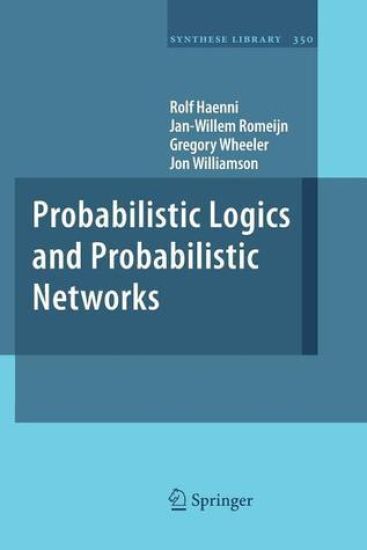
Probabilistic Logics and Probabilistic Networks

Probabilistic Logics and Probabilistic Networks

Rolf Haenni; Jan-Willem Romeijn; Gregory Wheeler; Jon Williamson

Springer
2013
nidottu
While probabilistic logics in principle might be applied to solve a range of problems, in practice they are rarely applied - perhaps because they seem disparate, complicated, and computationally intractable. This programmatic book argues that several approaches to probabilistic logic fit into a simple unifying framework in which logically complex evidence is used to associate probability intervals or probabilities with sentences. Specifically, Part I shows that there is a natural way to present a question posed in probabilistic logic, and that various inferential procedures provide semantics for that question, while Part II shows that there is the potential to develop computationally feasible methods to mesh with this framework. The book is intended for researchers in philosophy, logic, computer science and statistics. A familiarity with mathematical concepts and notation is presumed, but no advanced knowledge of logic or probability theory is required.
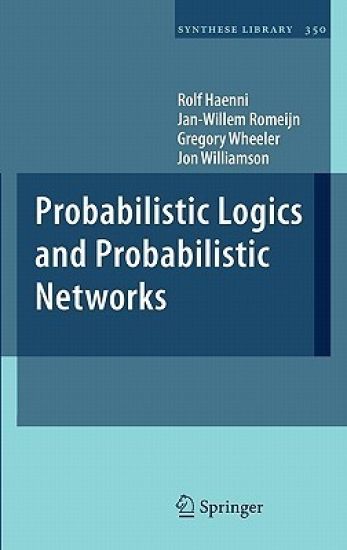
Probabilistic Logics and Probabilistic Networks

Probabilistic Logics and Probabilistic Networks

Rolf Haenni; Jan-Willem Romeijn; Gregory Wheeler; Jon Williamson

Springer
2010
sidottu
While probabilistic logics in principle might be applied to solve a range of problems, in practice they are rarely applied - perhaps because they seem disparate, complicated, and computationally intractable. This programmatic book argues that several approaches to probabilistic logic fit into a simple unifying framework in which logically complex evidence is used to associate probability intervals or probabilities with sentences. Specifically, Part I shows that there is a natural way to present a question posed in probabilistic logic, and that various inferential procedures provide semantics for that question, while Part II shows that there is the potential to develop computationally feasible methods to mesh with this framework. The book is intended for researchers in philosophy, logic, computer science and statistics. A familiarity with mathematical concepts and notation is presumed, but no advanced knowledge of logic or probability theory is required.