Kirjojen hintavertailu. Mukana 12 595 353 kirjaa ja 12 kauppaa.
Kirjailija
Rollin Mccraty
Kirjat ja teokset yhdessä paikassa: 12 kirjaa, julkaisuja vuosilta 2016-2024, suosituimpien joukossa Efectos del estrés laboral en la variabilidad de la frecuencia cardiaca de los empleados. Vertaile teosten hintoja ja tarkista saatavuus suomalaisista kirjakaupoista.
"Toda a gente sabe o que o stress e ningu m sabe o que o stress" (Hans Selye, 1976, "The Evolution of the Stress Concept"). "Para os psicoterapeutas, as coisas s o radicalmente diferentes. O seu trabalho consiste em melhorar o funcionamento mental dos seus pacientes. Mas como que eles podem saber quando as suas interven es est o a correr mal ou, j agora, bem? Onde est o feedback? A maioria dos psicoterapeutas avalia a resposta dos seus clientes ao tratamento n o com dados objectivos, mas observando-os na cl nica. Mas estes dados s o muito pouco fi veis. Afinal de contas, os pacientes podem ter tend ncia para exagerar a forma como est o a reagir para agradar ao terapeuta, um problema bem conhecido em psicoterapia. Mas h um problema mais profundo. Os psicoterapeutas raramente acompanham os seus clientes depois de terminada a terapia. Isto significa que n o recebem qualquer feedback sobre o impacto duradouro das suas interven es. N o fazem ideia se os seus m todos est o a funcionar ou a falhar em termos de melhoria efectiva do funcionamento a longo prazo." (Matthew Syed, 2015, "Black Box Thinking").
"Tutti sanno cos' lo stress e nessuno sa cos' lo stress" (Hans Selye, 1976, "The Evolution of the Stress Concept"). "Per gli psicoterapeuti le cose sono radicalmente diverse. Il loro lavoro consiste nel migliorare il funzionamento mentale dei loro pazienti. Ma come fanno a capire quando i loro interventi stanno andando male o, se per questo, bene? Dov' il feedback? La maggior parte degli psicoterapeuti valuta la risposta dei clienti al trattamento non con dati oggettivi, ma osservandoli in clinica. Ma questi dati sono altamente inaffidabili. Dopotutto, i pazienti potrebbero essere portati a esagerare il loro stato di salute per compiacere il terapeuta, un problema ben noto in psicoterapia. Ma c' un problema pi profondo. Gli psicoterapeuti raramente seguono i loro clienti al termine della terapia. Ci significa che non ricevono alcun feedback sull'impatto duraturo dei loro interventi. Non hanno idea se i loro metodi stiano funzionando o fallendo in termini di effettivo miglioramento del funzionamento a lungo termine". (Matthew Syed, 2015, "Black Box Thinking"). "Questo progetto riguarda voi. Riguarda lo stress che abbiamo vissuto, che ne siamo consapevoli o meno, semplicemente l ". (Dr. Adrian Low, 2018, autore).
"Tout le monde sait ce qu'est le stress et personne ne sait ce qu'est le stress" (Hans Selye, 1976, "The Evolution of the Stress Concept"). "Pour les psychoth rapeutes, les choses sont radicalement diff rentes. Leur travail consiste am liorer le fonctionnement mental de leurs patients. Mais comment peuvent-ils savoir si leurs interventions se d roulent bien ou mal ? O est le retour d'information ? La plupart des psychoth rapeutes valuent la r action de leurs clients au traitement non pas l'aide de donn es objectives, mais en les observant en clinique. Mais ces donn es sont tr s peu fiables. Apr s tout, les patients pourraient tre enclins exag rer leur tat pour plaire au th rapeute, un probl me bien connu en psychoth rapie. Mais il y a un probl me plus profond. Les psychoth rapeutes suivent rarement leurs clients apr s la fin de la th rapie. Cela signifie qu'ils n'obtiennent aucun retour d'information sur l'impact durable de leurs interventions. Ils n'ont aucune id e de l'efficacit ou de l' chec de leurs m thodes en termes d'am lioration du fonctionnement long terme". (Matthew Syed, 2015, "Black Box Thinking"). "Ce projet vous concerne. Il concerne le stress que nous avons subi, que nous en soyons conscients ou non, il est simplement l ." (Dr. Adrian Low, 2018, Auteur).
"Jeder wei , was Stress ist, und niemand wei , was Stress ist" (Hans Selye, 1976, "The Evolution of the Stress Concept"). "F r Psychotherapeuten sind die Dinge radikal anders. Ihre Aufgabe ist es, das psychische Funktionieren ihrer Patienten zu verbessern. Aber wie k nnen sie erkennen, ob ihre Interventionen falsch oder richtig sind? Wo ist das Feedback? Die meisten Psychotherapeuten messen die Reaktion ihrer Patienten auf die Behandlung nicht anhand objektiver Daten, sondern durch Beobachtung in der Klinik. Doch diese Daten sind h chst unzuverl ssig. Schlie lich k nnten die Patienten dazu neigen, zu bertreiben, um dem Therapeuten zu gefallen - ein bekanntes Problem in der Psychotherapie. Aber es gibt noch ein tieferes Problem. Psychotherapeuten verfolgen selten die Entwicklung ihrer Klienten nach Abschluss der Therapie. Das bedeutet, dass sie keine R ckmeldung ber die nachhaltige Wirkung ihrer Interventionen erhalten. Sie haben keine Ahnung, ob ihre Methoden im Hinblick auf eine tats chliche Verbesserung der langfristigen Funktionsf higkeit funktionieren oder versagen." (Matthew Syed, 2015, "Black Box Thinking"). "In diesem Projekt geht es um Sie. Es geht um den Stress, den wir erlebt haben, ob wir uns dessen bewusst sind oder nicht, er ist einfach da." (Dr. Adrian Low, 2018, Autor).
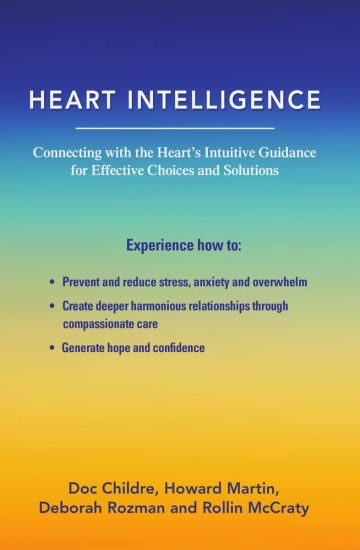
It's easy to feel powerless in the current state of the world - but it doesn't have to be this way. You can unlock the natural intelligence of your heart to reconnect with hope, wellbeing, and empowerment. This new edition of Heart Intelligence shows you how. It has been updated to help you navigate more effectively through today's challenging times. You'll learn easy, effective techniques and exercises and see benefits right away. These tools will empower you to rise above the stress and overwhelm of today's changing times and learn to feel good (again). You can reclaim balance and self-security in managing your energy and life's direction. Heart intelligence increases your heart-brain connection, providing access to your heart's intuitive guidance and practical intuition needed at important choice points, allowing you to choose your responses rather than mechanically react in the same old stress-producing behaviors. Humanity is realizing that the heart contains a higher intelligence for providing the intuitive guidance needed for navigating life effectively. People instinctively know there's something seriously intelligent about the heart. This may be why we say, "When there's nowhere else to go for an answer, go to your heart." The fun question is, why not go there to start with, rather than everywhere else first? Most of us sense that profound societal changes will continue to take place, as our world becomes increasingly interconnected. An important step for humanity to achieve its potential, is that we learn to get along with each other. People kind of know this is a missing piece, yet the mind without the heart hasn't been able to pull this off. The heart's intuitive intelligence can offer us, personally and collectively, a chance to create (not wait for) our fulfillment. Building trust in our heart's intuitive guidance leads to uplifting possibilities and the increased capacity to manifest them. This enables us to become our true self--with the heart power and effectiveness of our love and care to help change the world.
A hot bath, a glass of milk; if you are dealing with sleeplessness, you know that these home remedies are just not enough. HeartMath's twenty-five years of research brings you a holistic solution to the issue of sleeplessness by training you to reset your natural sleep rhythms. Practiced regularly, the HeartMath techniques provided in this program help you to fall asleep more easily and wake more rested in the morning. How you manage stress during the day is key to how well you sleep at night. This program show you how to release stress as you go, resulting in more calm and ease during the day and deeper sleep at night. For accelerated resetting your body's rhythms, the Better Sleep program shows you how to integrate the technique with HeartMath heart rhythm coherence technology (Inner Balance, emwave2 or emWave Pro). "It has now been about three and a half weeks that I have been enjoying about 6 hours of non-medicated sleep per night. What a difference this HeartMath program has made Sometimes I do wake up in the middle of the night, in which case I just repeat the before-bed process. At first I used the emWave for just five minutes before bed, now I'm finding that 15-20 minutes goes by with little effort, and then sleep just comes."- Natalie E., Singer, Songwriter, Performer"I have PTSD and have had nightmares almost every night all my life. The first time I used emWave right before sleep, I had my first night's sleep with NO nightmares, and it still works every night Also, having once been very articulate, I was very frustrated by memory problems affecting word recall. I struggled to find even simple every day words as I stammered, felt stupid and was often unable to express what I wanted. A few days after using emWave daily, I actually found myself discussing some fairly deep, abstract subjects fluently and effortlessly with NO word recall problem It's also helped me with anxiety - it helps me calm before difficult tasks, calm after upsets, and get clearer to make important decisions. emWave has improved my life in many ways "- Becky F., Psychiatric Social Worker
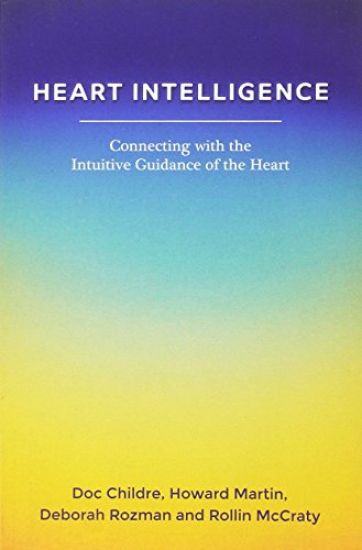
?Doc Childre’s writing is eloquent, his wisdom is profound, and his easy way of communicating makes this book a treasure. His colleagues present the energy of the heart in the safety of a scientific context that invites us again and again to move beyond it.” -- Gary Zukav, author The Seat of the Soul and The Dancing Wu Li Masters Heart Intelligence, Connecting with the Intuitive Guidance of the Heart provides readers with a new, high definition picture of the energetic heart as a unifying, creative, intuitive intelligence that we can learn to draw on for moment to moment guidance. Heart Intelligence links the physical heart to the spiritual (energetic) heart. Through its extensive communication with the brain and body, the heart is intimately involved in how we think, feel, and respond to the world. Expanding on their breakthrough book, The HeartMath Solution, the authors offer heart-based techniques and guidelines for living from the heart, which connects the puzzle pieces of our purpose and fulfillment. The book provides information and simple practices for accessing our heart’s intuitive guidance to connect with our highest choices for better outcomes. Our choices are especially important through these changing times because they constantly create or disrupt our peace, happiness and self-security. Our thoughts and feelings influence the chemistry that regulates much of our health ? how we feel, for better or worse. Our thoughts, feelings, emotions and attitudes are just frequencies that we can learn to change ? once we put our heart into our intention. Heart Intelligence provides practices to replace fear with the attitude of intelligent concern (managed concern) which leaves us in charge and more attuned to intuitive direction. We learn the benefits of practicing simple coherence techniques a few times a day for boosting resilience and emotional balance; making appropriate choices; and clearing our mind from anxiety or overwhelm when needed. It is through deepening our heart intelligence, coherence and connection that humanity will be able to shift from separation to cooperation resulting in higher solutions to our personal and global problems
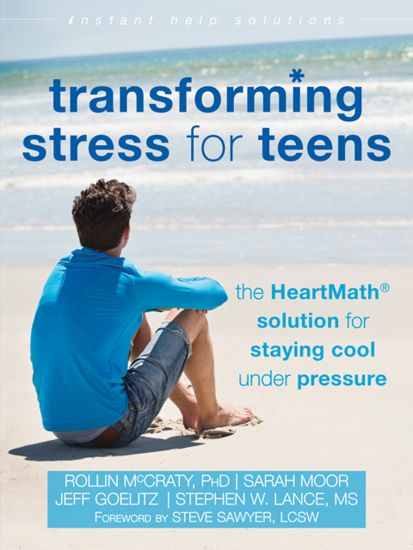
The teen years are a time of significant change and growth, and teens face numerous stressors like homework overload, conflict with friends and family, balancing school and other responsibilities, and dealing the all-too common feeling of being left out or of not belonging. Emotions can "drain your battery," and many teens struggle when it comes to managing their everyday stress. Some withdraw or even turn to destructive behaviors in an effort to feel better.Following the success of Transforming Stress, this book is the first to provide teens with the life-changing, proven-effective HeartMath skills for reducing stress. Using these practical evidence-based concepts and techniques, this book will help you manage stress by showing you how to manage your emotions. And with these emotion regulation skills, like the relaxing heart-breathing technique, you'll feel calmer, be more confident, think more clearly, bounce back from challenging situations, and enjoy life with a new understanding of what's really important to you.Transforming Stress for Teens will help you recognize the mental, emotional, and physical impact of stress, and guide you toward finding balance, clarity, and self-assurance with the proven HeartMath tools. When you feel better, you do better-this book will show you how.