Kirjailija
Rom Harré
Kirjat ja teokset yhdessä paikassa: 31 kirjaa, julkaisuja vuosilta 1980-2026, suosituimpien joukossa Psychology of Music. Vertaile teosten hintoja ja tarkista saatavuus suomalaisista kirjakaupoista.
Mukana myös kirjoitusasut: Rom Harre, Rom Harré
31 kirjaa
Kirjojen julkaisuhaarukka 1980-2026.
From the physical vibrations of sound to the perplexing questions of how music conveys meaning, Psychology of Music: From Sound to Significance takes readers on a wide-ranging exploration of this vibrant multidisciplinary field of study. Now in its third edition, the book emphasizes meaningful links between academic learning and real-world contexts, pointing readers towards intriguing strands of research in both basic and applied areas that are highlighted throughout.In this new edition, the authors apply the same richness of depth and scope that were the hallmarks of the previous editions of this text, exploring the foundations of music psychology; the perception and cognition of music; development, learning and performance; and the meaning and significance of music.Key features include:- More than 400 new citations to reflect advances in the field- New boxes exploring topics such as the musical experience of cochlear implant users, pitch and rhythm perception in animals, gene-environment interplay, and the benefits of music in medical and therapeutic contexts.- An expanded appendix including many new tried-and-tested projects and exercises for instructors.This book continues to be invaluable to both Psychology and Music undergraduate and postgraduate students and instructors, and will appeal to anyone interested in the vital and expanding field of psychology of music.
Wittgenstein made use of his insights into the nature and powers of language to search out the source of conceptual confusions in the foundations of mathematics and in philosophy of psychology. Once he has established the use account of language, his Philosophical Investigations opens out into an extensive coverage of psychological phenomena and the concepts with which we identify and manage them. In this book Harr nd Tissaw display Wittgenstein's analysis of the 'grammar' of the most important of these concepts in a systematic and accessible way. Previous studies of the psychological aspects of Wittgenstein's writings, admirable as exegeses of his thought, have paid little attention to the relevant psychology. Here, the 'adjacent' theories and empirical investigations from mainstream psychology have been described in sufficient detail to show how Wittgenstein's work impinges on psychology as it has actually been practiced. In using this book, philosophers will be able to get a sense of the relevance of Wittgenstein's philosophical psychology to the development of psychology as a science. Psychologists will be able to see how to use Wittgenstein's insights to enrich and discipline their attempts to gain an understanding of human thinking, feeling, acting and perceiving, the domain of psychology as science. The book includes an historical overview of the sources of Wittgenstein's philosophy in the Vienna of the last years of Austro-Hungary, as well as a brief presentation of the main themes of his Tractatus Logico-Philosophicus as it anticipated computational models of cognition. Student use is emphasized with frequent summaries and self-test questionnaires.
Theories and Things: a Brief Study in Prescriptive Metaphysics
Rom Harré
Hassell Street Press
2021
nidottu
This work has been selected by scholars as being culturally important and is part of the knowledge base of civilization as we know it.This work is in the public domain in the United States of America, and possibly other nations. Within the United States, you may freely copy and distribute this work, as no entity (individual or corporate) has a copyright on the body of the work.Scholars believe, and we concur, that this work is important enough to be preserved, reproduced, and made generally available to the public. To ensure a quality reading experience, this work has been proofread and republished using a format that seamlessly blends the original graphical elements with text in an easy-to-read typeface.We appreciate your support of the preservation process, and thank you for being an important part of keeping this knowledge alive and relevant.
Theories and Things: a Brief Study in Prescriptive Metaphysics
Rom Harré
Hassell Street Press
2021
sidottu
This work has been selected by scholars as being culturally important and is part of the knowledge base of civilization as we know it.This work is in the public domain in the United States of America, and possibly other nations. Within the United States, you may freely copy and distribute this work, as no entity (individual or corporate) has a copyright on the body of the work.Scholars believe, and we concur, that this work is important enough to be preserved, reproduced, and made generally available to the public. To ensure a quality reading experience, this work has been proofread and republished using a format that seamlessly blends the original graphical elements with text in an easy-to-read typeface.We appreciate your support of the preservation process, and thank you for being an important part of keeping this knowledge alive and relevant.
Wittgenstein made use of his insights into the nature and powers of language to search out the source of conceptual confusions in the foundations of mathematics and in philosophy of psychology. Once he has established the use account of language, his Philosophical Investigations opens out into an extensive coverage of psychological phenomena and the concepts with which we identify and manage them. In this book Harr nd Tissaw display Wittgenstein's analysis of the 'grammar' of the most important of these concepts in a systematic and accessible way. Previous studies of the psychological aspects of Wittgenstein's writings, admirable as exegeses of his thought, have paid little attention to the relevant psychology. Here, the 'adjacent' theories and empirical investigations from mainstream psychology have been described in sufficient detail to show how Wittgenstein's work impinges on psychology as it has actually been practiced. In using this book, philosophers will be able to get a sense of the relevance of Wittgenstein's philosophical psychology to the development of psychology as a science. Psychologists will be able to see how to use Wittgenstein's insights to enrich and discipline their attempts to gain an understanding of human thinking, feeling, acting and perceiving, the domain of psychology as science. The book includes an historical overview of the sources of Wittgenstein's philosophy in the Vienna of the last years of Austro-Hungary, as well as a brief presentation of the main themes of his Tractatus Logico-Philosophicus as it anticipated computational models of cognition. Student use is emphasized with frequent summaries and self-test questionnaires.
In Psychology of Music: From Sound to Significance (2nd edition), the authors consider music on a broad scale, from its beginning as an acoustical signal to its different manifestations across cultures. In their second edition, the authors apply the same richness of depth and scope that was a hallmark of the first edition of this text. In addition, having laid out the topography of the field in the original book, the second edition puts greater emphasis on linking academic learning to real-world contexts, and on including compelling topics that appeal to students’ natural curiosity. Chapters have been updated with approximately 500 new citations to reflect advances in the field.The organization of the book remains the same as the first edition, while chapters have been updated and often expanded with new topics. 'Part I: Foundations' explores the acoustics of sound, the auditory system, and responses to music in the brain. 'Part II: The Perception and Cognition of Music' focuses on how we process pitch, melody, meter, rhythm, and musical structure. 'Part III: Development, Learning, and Performance' describes how musical capacities and skills unfold, beginning before birth and extending to the advanced and expert musician. And finally, 'Part IV: The Meaning and Significance of Music' explores social, emotional, philosophical and cultural dimensions of music and meaning. This book will be invaluable to undergraduates and postgraduate students in psychology and music, and will appeal to anyone who is interested in the vital and expanding field of psychology of music.
As the first introductory statement of the ‘new psychology’, Motives and Mechanisms, originally published in 1985, aims to bring the study of human action to the forefront of the subject. Like any science, the practice of psychology is very much influenced by the hidden assumptions of its practitioners. The argument put forward in this important text shows how these assumptions can be brought out by comparing psychology with the natural sciences and with common-sense understanding. In pursuing the integration of traditional research methods with a new style of investigation, the basic principle is that social structures and mental structures are in reciprocal relation with one another because each is involved in the creation of the other. By adopting this principle social structures become the basis for research into the cognitive and emotional organization of mind. The authors devote two key chapters to the central question that underlies this stance: are human actions and human actors’ products of internal processes, such as those described by Freud, or of external social forces, of the kind described by Mead?
Violence on the terraces, anarchy in the classroom: the popularly held view of youth as reported in the media. Rules of Disorder challenges this view, which is taken to be a misconception of contemporary youth.
As the first introductory statement of the ‘new psychology’, Motives and Mechanisms, originally published in 1985, aims to bring the study of human action to the forefront of the subject. Like any science, the practice of psychology is very much influenced by the hidden assumptions of its practitioners. The argument put forward in this important text shows how these assumptions can be brought out by comparing psychology with the natural sciences and with common-sense understanding. In pursuing the integration of traditional research methods with a new style of investigation, the basic principle is that social structures and mental structures are in reciprocal relation with one another because each is involved in the creation of the other. By adopting this principle social structures become the basis for research into the cognitive and emotional organization of mind. The authors devote two key chapters to the central question that underlies this stance: are human actions and human actors’ products of internal processes, such as those described by Freud, or of external social forces, of the kind described by Mead?
Resistance and the Practice of Rationality
Martin W. Bauer; Rom Harré; Carl Jensen
Cambridge Scholars Publishing
2013
sidottu
Resistance used to mean irrational and reactionary behaviour, assuming that rationality resides on the side of progress and its parties. The end of the Cold War allows us to drop ideological and prejudicial analysis. Indeed, we recognise that resistance is a historical constant, and its relation to rationality or irrationality is not predetermined.This volume asks: to what extent are social scientific conceptions of 'resistances' sui generis, or borrowed from natural sciences by metaphor and analogy? To what extent do the social sciences continue to be a 'social tribology' lubricating a process of strategic changes?Fifteen authors explore these questions from the point of view of different disciplines including physics, biology, social psychology, history of science, history of medicine, legal theory, political science, history, police studies, psychotherapy research and art theory.The book offers a unique panorama of concepts of 'resistance' and examines the potential of a general 'resistology' across diverse practices of rationality.
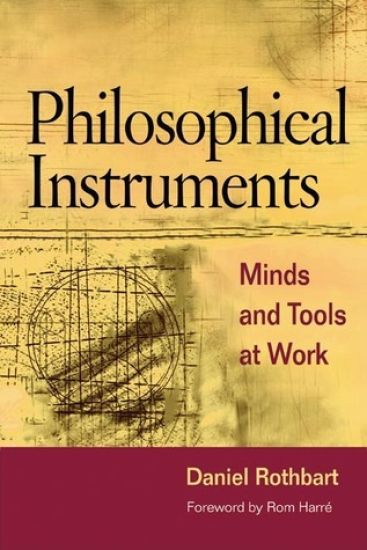
The surprising roles of instruments and experimentation in acquiring knowledge In Philosophical Instruments Daniel Rothbart argues that our tools are not just neutral intermediaries between humans and the natural world, but are devices that demand new ideas about reality. Just as a hunter's new spear can change their knowledge of the environment, so can the development of modern scientific equipment alter our view of the world. Working at the intersections of science, technology, and philosophy, Rothbart examines the revolution in knowledge brought on by recent advances in scientific instruments. Full of examples from historical and contemporary science, including electron scanning microscopes, sixteenth-century philosophical instruments, and diffraction devices used by biochemical researchers, Rothbart explores the ways in which instrumentation advances a philosophical stance about an instrument's power, an experimenter's skills, and a specimen's properties. Through a close reading of engineering of instruments, he introduces a philosophy from (rather than of) design, contending that philosophical ideas are channeled from design plans to models and from model into the use of the devices.
`For anyone that has spent years rowing off into convoluted estuaries, and would like an entertaining and useful chart to remind them of River Psychology as a whole, I thoroughly recommend this book' - The Psychologist `This is a highly enjoyable, erudite and beautifully written manuscript. It conveys a rare depth of understanding and ability to strike at the core debates. The lively style, concentration on the biopic, use of text features such as links between names, and formal division of each sub-section will all appeal.… I have taught History of Psychology for nearly 6 years. This text will prove for more palatable to students than any of the competitors' - Dr Steve Brown, Loughborough University `This book is well-written. It is clever, flowing and engaging. The balance between biography and contribution is excellent and makes it almost un-put-downable' - Professor Adrian Furnham, University College London The 20th Century was rich in attempts to characterize and explain psychological phenomena and so to understand the human mind. These projects were undertaken by a huge and diverse list of characters from B F Skinner to James Gibson, from Gordon Allport to Hans Eysenck. It is important for every student of psychology, wherever they might be in the world, to understand the classic scholars, the classic studies, and the subsequent generations of people and ideas that have come to define the broad discipline that is `psychology'. This book achieves this in the most accessible and engaging manner possible. Rom Harré presents a unique textbook orientation, combining the biopic with the significance of the major protagonists of the last century, organized by `schools of thought', yet with cross-references throughout the text.
This is the first major textbook to offer a truly comprehensive review of cognitive science in its fullest sense. Ranging from artificial intelligence models of neural processes and cognitive psychology to recent discursive and cultural theories, Rom Harré offers an original yet accessible integration of the field. At its core, this textbook addresses the question 'How can psychology become a science?'. The answer is based on a clear account of method and explanation in the natural sciences and how they can be adapted to psychological research. Rom Harré has used his experience of both the natural and the human sciences to create a text on which exciting and insightful courses can be built in many ways. The text is based on the idea that underlying the long history of attempts to create a scientific psychology there are many unexamined presuppositions that must be brought to light. Whether describing language, categorization, memory, the brain or connectionism the book always links our intuitions about how we think, feel and act in the contexts of everyday life to the latest accounts of the neural tools with which we accomplish the cognitive tasks demanded of us. Computational and biological models are used to link the discursive analysis of everyday cognition to the necessary activities of the brain and nervous system. Fluently written and well structured, this is an ideal text for students who want to gain a comprehensive view of the current state of the art with its seeming divergence into studies of meanings and studies of neurology. The book is divided into four basic modules, with suggestions for three lectures in each. The plan is related to the overall pattern of the semester programme. The reader is guided with helpful learning points, sections of study questions for review, and key readings for each chapter. Cognitive Science: A Philosophical Introduction, with its remarkable sweep of themes, past and present, truly introduces 'the science of the mind' for a new generation of psychology students. Cognitive Science should be indispensable reading for students at all levels taking courses in cognitive science and cognitive psychology, and useful additional course reading in other areas such as social psychology, artificial intelligence, philosophy of the mind and linguistics. Key Points · First major textbook to provide a link between computational, philosophical and biological models in an accessible format for students. Presents a new vision of psychology as a scientific discipline. · Breadth of coverage - ranging from artificial intelligence, to key themes & theories in cognitive science (past and present) - language, memory, the brain and behaviour - to recent discursive and cultural theories. · Plenty of student features to help the student and tutor including helpful learning points, study and essay questions and key readings at the end of every chapter.
Uniquely comparative and sweeping in scope, One Thousand Years of Philosophy covers the history of Western thought alongside the Vedic philosophies of India, Confucianism, Taoism, and Buddhism, as well as Islamic and Jewish contributions to philosophy.