Kirjojen hintavertailu. Mukana 12 550 373 kirjaa ja 12 kauppaa.
Kirjailija
Romain Rolland
Kirjat ja teokset yhdessä paikassa: 374 kirjaa, julkaisuja vuosilta 2004-2026, suosituimpien joukossa Jean Christophe L'aube. Vertaile teosten hintoja ja tarkista saatavuus suomalaisista kirjakaupoista.
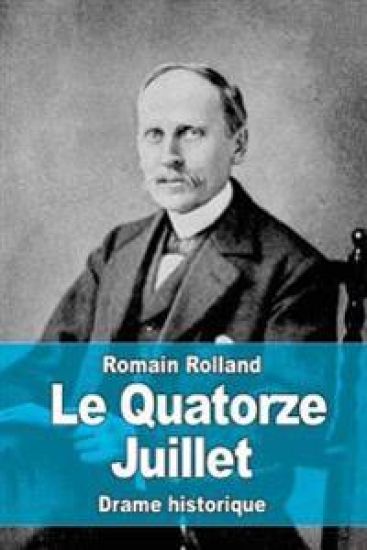
Ce drame historique de Romain Rolland est clairement politique, on n'y parle et d bat de lignes politiques divergentes, et la longue sc ne unique qui est le troisi me acte, la session du tribunal devant lequel comparaissent Danton et ses affid s r sume la ligne politique des dantonistes. Elle est clairement formul e par H rault: Il faut que la R volution s'arr te et que la R publique commence ...
L'auteur a cherch ici la v rit morale plus que la v rit anecdotique. Il a cru devoir user, dans cette action qu'enveloppe une po sie l gendaire, de plus de libert s avec l'histoire qu'il ne se l'est permis en crivant Danton. Dans cette derni re oeuvre, il s'est astreint serrer d'aussi pr s que possible la psychologie de quelques personnages: car le drame tout entier est concentr dans l' me de trois ou quatre grands hommes. - Ici, rien de pareil: les individus disparaissent dans l'oc an populaire. Pour repr senter une temp te, il ne s'agit pas de peindre chaque vague, il faut peindre la mer soulev e. L'exactitude minutieuse des d tails importe moins que la v rit passionn e de l'ensemble. Il y a quelque chose de faux et de blessant pour l'intelligence dans la place disproportionn e qu'ont prise aujourd'hui l'anecdote, le fait divers, la menue poussi re de l'histoire, aux d pens de l' me vivante. Ressusciter les forces du pass , ranimer ses puissances d'action, et non offrir la curiosit de quelques amateurs une froide miniature, plus soucieuse de la mode que de l' tre des h ros; rallumer l'h ro sme et la foi de la nation aux flammes de l' pop e r publicaine, afin que l'oeuvre interrompue en 1794 soit reprise et achev e par un peuple plus m r et plus conscient de ses destin es: tel est notre id al. Si nous ne sommes pas assez forts pour le r aliser, nous le sommes toujours assez pour y travailler de notre mieux. La fin de l'art n'est pas le r ve, mais la vie. L'action doit surgir du spectacle de l'action.
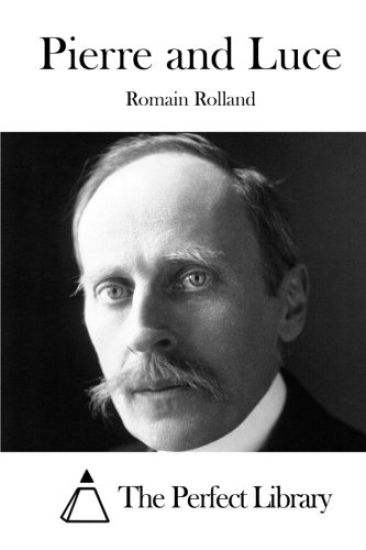
Romain Rolland was a French dramatist, novelist, essayist, art historian and mystic who was awarded the Nobel Prize for Literature in 1915 "as a tribute to the lofty idealism of his literary production and to the sympathy and love of truth with which he has described different types of human beings".
Rolland’s biography attempts to provide an overview of Handel’s life and works from his early lessons in music to the classical context in which he is commonly placed. Originally published in English in 1916, Hull’s translation gives an insight into biographical facts and the musical pieces composed by Handel including his operas, oratorios and chamber music. This title will be of interest to students of music and musical history.
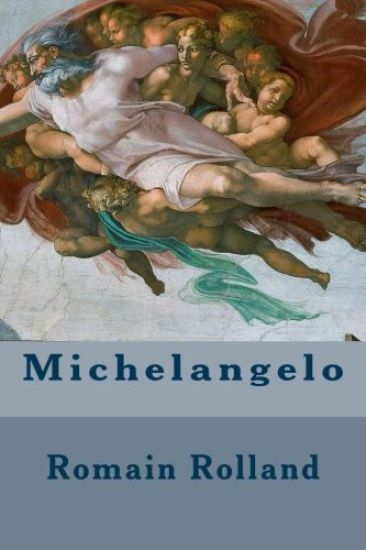
The life of Michelangelo offers one of the most striking examples of the influence that a great man can have on his time. At the moment of his birth in the second half of the fifteenth century the serenity of Ghirlandajo and of Bramante illuminated Italian art. Florentine sculpture seemed about to languish away from an excess of grace in the delicate and meticulous art of Rossellino, Disiderio, Mino da Fiesole, Agostino di Duccio, Benedetto da Maiano and Andrea Sansovino. Michelangelo burst like a thunder-storm into the heavy, overcharged sky of Florence. Michelangelo di Lodovico Buonarroti Simoni or more commonly known by his first name Michelangelo (6 March 1475 - 18 February 1564) was an Italian sculptor, painter, architect and poet of the High Renaissance born in the Republic of Florence, who exerted an unparalleled influence on the development of Western art. 1] Considered by some the greatest living artist during his lifetime, he has since been described as one of the greatest artists of all time. 1] Despite making few forays beyond the arts, his artistic versatility was of such a high order that he is often considered a contender for the title of the archetypal Renaissance man, along with his rival, the fellow Florentine and client of the Medici, Leonardo da Vinci. A number of Michelangelo's works of painting, sculpture and architecture rank among the most famous in existence. 1] His output in these fields was prodigious; given the sheer volume of surviving correspondence, sketches and reminiscences, he is the best-documented artist of the 16th century. He sculpted two of his best-known works, the Piet and David, before the age of thirty. Despite holding a low opinion of painting, he also created two of the most influential frescoes in the history of Western art: the scenes from Genesis on the ceiling of the Sistine Chapel in Rome, and The Last Judgment on its altar wall. His design of the Laurentian Library pioneered Mannerist architecture. 2] At the age of 74, he succeeded Antonio da Sangallo the Younger as the architect of St. Peter's Basilica. He transformed the plan so that the western end was finished to his design, as was the dome, with some modification, after his death. Michelangelo was the first Western artist whose biography was published while he was alive. 1] In fact, two biographies were published during his lifetime. One of them, by Giorgio Vasari, proposed that Michelangelo's work transcended that of any artist living or dead, and was "supreme in not one art alone but in all three". 3] In his lifetime, Michelangelo was often called Il Divino ("the divine one"). 4] His contemporaries often admired his terribilit -his ability to instil a sense of awe. Attempts by subsequent artists to imitate 5] Michelangelo's impassioned, highly personal style resulted in Mannerism, the next major movement in Western art after the High Renaissance. Michelangelo, with Leonardo da Vinci and Raphael, is one of the three giants of the Florentine High Renaissance. Although their names are often cited together, Michelangelo was younger than Leonardo by 23 years, and older than Raphael by eight. Because of his reclusive nature, he had little to do with either artist and outlived both of them by more than forty years. Michelangelo took few sculpture students. He employed Francesco Granacci, who was his fellow pupil at the Medici Academy, and became one of several assistants on the Sistine Chapel ceiling. 40] Michelangelo appears to have used assistants mainly for the more manual tasks of preparing surfaces and grinding colours. Despite this, his works were to have a great influence on painters, sculptors and architects for many generations to come. While Michelangelo's David is the most famous male nude of all time and destined to be reproduced in order to grace cities around the world, some of his other works have had perhaps even greater impact on the course of art.
Jean Christophe est un tableau du monde de la fin du XIX me si cle au d but du vingti me. Romain Rolland re ut le prix Nobel de litt rature en 1915 pour ce roman. Il nous conte l'histoire de Jean-Christophe Krafft, musicien allemand, dont la vie se transforme en qu te d'une sagesse: il doit passer par une s rie d' preuves, les cercles de l'Enfer, ma triser ses passions, avant de dominer sa vie et d'atteindre l'Harmonie, qui est co ncidence avec le rythme de la Vie universelle. Pour ce deuxi me tome Le Matin, la situation de la famille de Jean-Christophe se d grade significativement avec la mort de grand-p re. Melchior, qui n'est plus retenu par l'autorit paternelle, sombre dans la d bauche et l'alcool. Jean-Christophe, qui a quinze ans la fin de ce deuxi me tome, doit aider sa m re assurer la subsistance familiale. Les difficult s mat rielles le confinent dans une atmosph re routini re qui bride son inspiration. La m diocrit de son p re et l'ingratitude de ses deux fr res accroissent sa solitude. De plus, sa premi re amiti et son premier amour sont des checs cuisants.
Jean Christophe est un tableau du monde de la fin du XIX me si cle au d but du vingti me. Romain Rolland re ut le prix Nobel de litt rature en 1915 pour ce roman. Il nous conte l'histoire de Jean-Christophe Krafft, musicien allemand, dont la vie se transforme en qu te d'une sagesse: il doit passer par une s rie d' preuves, les cercles de l'Enfer, ma triser ses passions, avant de dominer sa vie et d'atteindre l'Harmonie, qui est co ncidence avec le rythme de la Vie universelle. Pour ce quatri me tome "La r volte" Jean-Christophe passe au crible de sa critique les oeuvres des gloires nationales. Il s'imagine r former l'art allemand. L'opinion publique le bl me et la critique reinte ses compositions. Son Iphig nie fait un four et un journal d'opposition exploite sa franchise irr fl chie...
Jean-Christophe est un tableau du monde de la fin du XIX me si cle au d but du vingti me. Romain Rolland re ut le prix Nobel de litt rature en 1915 pour ce roman. Il nous conte l'histoire de Jean-Christophe Krafft, musicien allemand, dont la vie se transforme en qu te d'une sagesse: il doit passer par une s rie d' preuves, les cercles de l'Enfer, ma triser ses passions, avant de dominer sa vie et d'atteindre l'Harmonie, qui est co ncidence avec le rythme de la Vie universelle. Pour ce dernier tome la nouvelle journ e, Jean Christophe est de retour Paris o il conna t le succ s. Il retrouve Grazia, veuve. Elle refuse encore le mariage et sacrifie leur bonheur son fils, malade. L'enfant meurt au terme d'une longue lutte et la m re, puis e, meurt son tour. Jean-Christophe marie Georges, le fils d'Olivier, la fille de Grazia. Ayant d pass toute contingence humaine, il s' teint dans la paix...
Jean-Christophe est un tableau du monde de la fin du XIX me si cle au d but du vingti me. Romain Rolland re ut le prix Nobel de litt rature en 1915 pour ce roman. Il nous conte l'histoire de Jean-Christophe Krafft, musicien allemand, dont la vie se transforme en qu te d'une sagesse: il doit passer par une s rie d' preuves, les cercles de l'Enfer, ma triser ses passions, avant de dominer sa vie et d'atteindre l'Harmonie, qui est co ncidence avec le rythme de la Vie universelle. Dans ce neuvi me tome La buisson ardent, Olivier et Jean-Christophe se penchent alors sur le probl me des injustices sociales. Mais l'activisme syndical et r volutionnaire les laisse sceptiques. Olivier, pris dans un mouvement de foule, meurt alors que Jean-Christophe se bat sur une barricade. Il s'exile en Suisse, o il se r fugie chez un certain Erich Braun. Accabl par la douleur, il rena t la vie et se prend d'une folle passion pour Anna Braun, la femme d'Erich...