Kirjojen hintavertailu. Mukana 12 595 353 kirjaa ja 12 kauppaa.

Kirjailija

Roman L. Sorochenko

Kirjat ja teokset yhdessä paikassa: 2 kirjaa, julkaisuja vuosilta 2002-2012, suosituimpien joukossa Radio Recombination Lines. Vertaile teosten hintoja ja tarkista saatavuus suomalaisista kirjakaupoista.

2 kirjaa

Kirjojen julkaisuhaarukka 2002-2012.

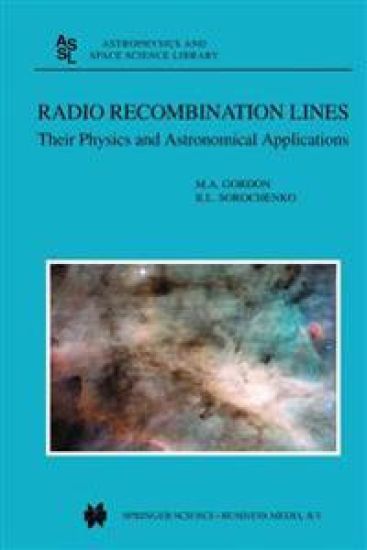
Radio Recombination Lines

Radio Recombination Lines

M.A. Gordon; Roman L. Sorochenko

Springer
2012
nidottu
Recombination lines at radio wavelengths have been - and still are - a pow­ erful tool for modern astronomy. For more than thirty years they have allowed astronomers to probe the gases from which stars form. They have even been detected in the Sun. In addition, observations of these spectral lines facilitate basic research into the atom, in forms and environments that can only exist in the huge dimensions and extreme conditions of cosmic laboratories. We intend this book to serve as a tourist's guide to the world of Radio Recombination Lines. It contains three divisions: a history of their discovery, the physics of how they form and how their voyage to us influences their spectral profiles, and a description of their many astronomical contributions to date. The appendix includes supplementary calculations that may be useful to some astronomers. This material also includes tables of line frequencies from 12 MHz to 30THz (AlOJLm) as well as FORTRAN computer code to calculate the fine structure components of the lines, to evaluate radial matrix integrals, and to calculate the departure coefficients of hydrogen in a cosmic environment. It also describes how to convert observational to astrophysical units. The text includes extensive references to the literature to assist readers who want more details.
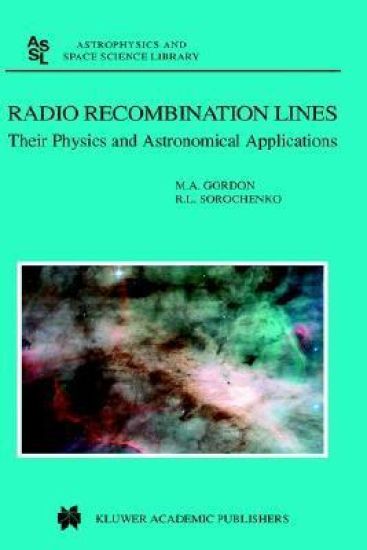
Radio Recombination Lines

Radio Recombination Lines

M.A. Gordon; Roman L. Sorochenko

Springer-Verlag New York Inc.
2002
sidottu
Recombination lines at radio wavelengths have been - and still are - a pow­ erful tool for modern astronomy. For more than thirty years they have allowed astronomers to probe the gases from which stars form. They have even been detected in the Sun. In addition, observations of these spectral lines facilitate basic research into the atom, in forms and environments that can only exist in the huge dimensions and extreme conditions of cosmic laboratories. We intend this book to serve as a tourist's guide to the world of Radio Recombination Lines. It contains three divisions: a history of their discovery, the physics of how they form and how their voyage to us influences their spectral profiles, and a description of their many astronomical contributions to date. The appendix includes supplementary calculations that may be useful to some astronomers. This material also includes tables of line frequencies from 12 MHz to 30THz (AlOJLm) as well as FORTRAN computer code to calculate the fine structure components of the lines, to evaluate radial matrix integrals, and to calculate the departure coefficients of hydrogen in a cosmic environment. It also describes how to convert observational to astrophysical units. The text includes extensive references to the literature to assist readers who want more details.