Kirjojen hintavertailu. Mukana 12 306 219 kirjaa ja 12 kauppaa.
Kirjailija
Romesh Gunesekera
Kirjat ja teokset yhdessä paikassa: 16 kirjaa, julkaisuja vuosilta 1993-2026, suosituimpien joukossa Reef. Vertaile teosten hintoja ja tarkista saatavuus suomalaisista kirjakaupoista.
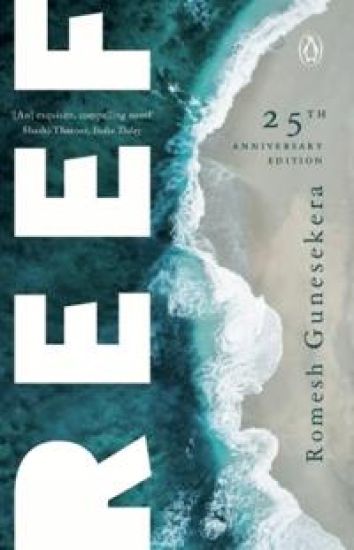
'A work of strange, slow-motion, underwater intensity. Put your ear to the page and you can almost hear the ocean whisper' Independent A single lighted match banishes Triton from his father's home to the employ of Mister Salgado, a marine biologist obsessed by swamps, sea movements and a Sri Lankan island's disappearing reef. Stranded in London years later, Triton plumbs the depths of his childhood memories - a period of brewing political, ethical and religious turmoil - and brings us to understand how he has navigated this brave new world, which once lost will haunt him forever.
SHORTLISTED FOR THE 2020 JHALAK PRIZE1964. Ceylon is on the brink of change. But Kairo is at a loose end. School is closed, the government is in disarray, the press is under threat and the religious right are flexing their muscles. Kairo’s hard-working mother blows off steam at her cha-cha-cha classes; his Trotskyite father grumbles over the state of the nation between his secret flutters on horseraces in faraway England. All Kairo wants to do is hide in his room and flick over second-hand westerns and superhero comics, or escape on his bicycle and daydream. Then he meets the magnetic teenage Jay, and his whole world is turned inside out. A budding naturalist and a born rebel, Jay keeps fish and traps birds for an aviary he is building in the garden of his grand home. The adults in Jay's life have no say in what he does or where he goes: he holds his beautiful, fragile mother in contempt, and his wealthy father seems fuelled by anger. But his Uncle Elvin, suave and worldly, is his encourager. As Jay guides him from the realm of make believe into one of hunting-guns and fast cars and introduces him to a girl — Niromi — Kairo begins to understand the price of privilege and embarks on a journey of devastating consequence. Taut and luminous, graceful and wild, Suncatcher is a poignant coming-of-age novel about difficult friendships and sudden awakenings. Mesmerizingly it charts the loss of innocence and our recurring search for love — or consolation — bringing these extraordinary lives into our own.
The internationally celebrated (and Booker Prize-shortlisted) author returns with a dazzling coming-of-age story set in post-independence Sri Lanka"A master storyteller."--The New York TimesCeylon is on the brink of change. But young Kairo is at loose ends. School is closed, the government is in disarray, the press is under threat, and the religious right are flexing their muscles. Kairo's hardworking mother blows off steam at her cha-cha-cha classes; his Trotskyist father grumbles over the state of the nation between his secret bets on horse races in faraway England. All Kairo wants to do is hide in his room and flick through secondhand westerns and superhero comics, or escape on his bicycle and daydream.Then he meets the magnetic teenage Jay, and his whole world is turned inside out.A budding naturalist and a born rebel, Jay keeps fish and traps birds for an aviary he is building in the garden of his grand home. As Jay guides Kairo from the realm of make-believe into one of hunting guns and fast cars and introduces him to a girl-- Niromi--Kairo begins to understand the price of privilege and embarks on a journey of devastating consequence.Taut and luminous, graceful and wild, Suncatcher is a poignant coming-of-age novel about difficult friendships and sudden awakenings set among the tumult of 1960s Sri Lanka, that confirms Gunesekera's status as one of today's most lyrical writers.
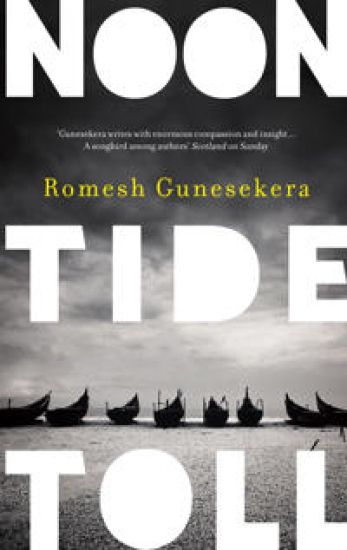
Vasantha is a van driver for hire, ferrying aid workers, returning exiles, and tentative entrepreneurs across the battle-scarred landscapes of Sri Lanka. The civil war is finally over, but the traumas of the past are still haunting. Behind the facade of peace we are made to remember the war: mysterious hoteliers conceal scars under their collars; genial old soldiers are secretly identified as perpetrators of brutal crimes; young Sinhalese men pine after Tamil girls whose brothers died by their hands. Vasantha keeps his own counsel, lingering on the periphery of his passengers' stories, but as time goes on he reveals a little of his own story too. Perceptive, sombre and finely-tuned, Noontide Toll paints an extraordinary portrait of a post-war Sri Lanka grappling with the ghosts of its troubled past.
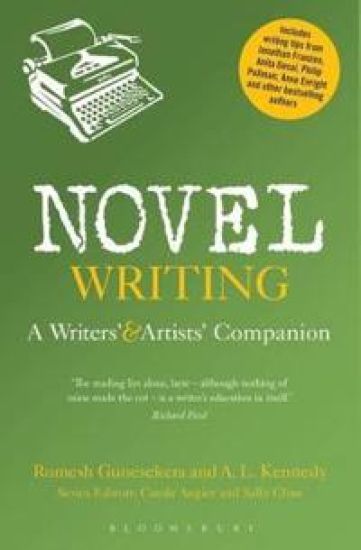
Packed with tips from bestselling and prize-winning authors, Novel Writing: A Writers' and Artists' Companion will give you all the practical advice you need to write and publish your novel. PART 1 provides an introduction to the forms and history of the novel and helps you plan and research your masterpiece, develop characters and compelling narratives and your own authorial voice. PART 2 contains guest contributions from Philip Pullman, Louise Doughty, Glenn Patterson, Jeanette Winterson, Jonathan Franzen, Stevie Davies, Doris Lessing, Tash Aw, Elif Shafak, Anne Enright, Tim Pears, Anita Desai, Tim Lott, Amit Chaudhuri, Andrea Levy, Alan Hollinghurst, Bernardo Atxaga, Hanan Al-Shaykh, Michèle Roberts, Joan Brady, Lynn Freed, Evelyn Toynton as well as a number of the 2013 list of the Best of Young British Novelists including Kamila Shamsie, Tamima Anam, Naomi Alderman, Ned Beauman, Jenni Fagan and Joanna Kavenna. PART 3 offers practical advice on collaborative writing, overcoming writer's block, editing and rewriting and finding an agent and a publisher for your work. Written by two multi-award winning authors, this is a comprehensive manual for established and aspiring novelists alike.
A single lighted match banishes Triton from his father's home to the employ of Mister Salgado, a marine biologist obsessed by swamps, sea movements and a Sri Lankan island's disappearing reef. Stranded in London years later, Triton plumbs the depths of his childhood memories - a period of brewing political, ethical and religious turmoil - and brings us to understand how he has navigated this brave new world, which once lost will haunt him forever.
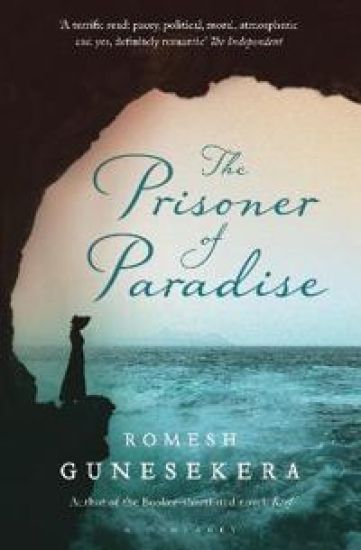
Lucy Gladwell arrives in Mauritius from England to live with her aunt and uncle at their grand plantation house. Under the surface of this beautiful island paradise, poised between India and Africa, there is unease, and Lucy cannot help but feel discomfited by the restrictions she sees around her, and by the strangely attractive Don Lambodar, a young translator from Ceylon. It is 1825: the age of slavery is coming to its messy end, and word is lapping against the shores of the island of a charismatic new Indian leader who will shine the light of liberty. For Lucy, for Don, for everyone on the island, a devastating storm is coming...
The Sandglass tells the story of two feuding families whose lives are interlinked by the changing fortunes of postcolonial Sri Lanka. Moving back and forth between London and Sri Lanka, the novel brings to life Prins Ducal and his search for answers about his family's past, including his father's rise to wealth, rivalry with the Vatunas family, and a suspicious death - a mystery that further unfolds upon Prins's arrival in London for his mother's funeral. Re-printed by Granta in a beautiful new edition.
As a teenager from Sri Lanka, Sunny liked to play cricket. But none of his new friends in Manila were remotely interested. That is until the gorgeous Tina arrived, all poise and perfection. Three decades on, Sunny is settled in London with a teenage son of his own. But despite the quiet comfort of his life, he feels unmoored. Trying to reconnect with his past, he goes to watch the visiting Sri Lankan cricket team play at the Oval. As the sun goes down at the end of the match he realises that love, like cricket, is more than just a game. He sees one last chance to get his life into focus, if only there is time.
I. NUBURN Marc arrives from London at the Palm Beach hotel, on an island that is never named but is presumably based on the author's native Sri Lanka. He is disappointed to see that poverty has made accommodations scarce and the starved attendants are surly and disdainful. He doesn't like to think of himself as a tourist, but rather a man on a spiritual mission: his grandfather Eldon, a flying instructor, was born on the island but left it when war broke out and challenged his pacifism. The grandfather expatriated to London, where he met a Caribbean ex-patriate and made a family with her, occupying himself with his love of gardening. Eventually Eldon took his son Lee back to the island to show off its natural splendors, and the home that had been destroyed. While Eldon remained happy to be gone from the culture of relentless violence and oppression that emerged there when rival colonialists withdrew and left the island to endlessly feuding warlords, his son Lee, Marc's father, was enchanted by his father's descriptions of their homeland, and to the shame of his father eventually returned there to fight as a helicopter pilot, intending to bring his son (Marc) and wife there once it was safe. He was killed in action. After discovering a videotape in which his late father showed off the island's beauty, Marc found himself drawn to it, and so it is that he ends up on an island he knows very little about. Marc tries to explore the island but is discouraged by numerous military cordons and rules preventing tourists from entering the war-torn villages. "The sense of subjugation was something I had not expected on an island infused with myth and mystery. This was a place, it seemed to me then, devoid of any joy past, present or future." Finally he wanders toward the outer ramparts of the village, and then into jungle bush, where he spots a woman who is releasing two doves. Immediately he is enchanted by her, but when he tries to converse with her, she is disdainful of the fact that he is a tourist. Eventually she disappears, leaving him to think about her all the next day, when he returns to the same spot and finds her there. He discovers that she is a "secret farmer," cultivating birds and vegetation in a secret location in order to restore the natural riches that war has stripped away. (Uva's mother "wanted these to return to a richer jungle rather than the leached scrubland that retreating global markets and distitute governments left in their wake.") In spite of having little in common-he is naive and optimistic, while she became practical and cynical after her parents were killed by soldiers-Marc and Uva fall in love, and when Marc tells her of the paradise his grandfather often talked about, she describes a place in the south "full of butterflies and flowers," Samandia. But no one ever goes there anymore-Marc will have to "find your own Eden." Marc's innocence ends when a hotel worker he has made friends with, Nirali, is executed. Uva observes: "The sand here never stains, you know, no matter how much blood is spilled... War here, like everywhere else, was once about land and identity. But after death cloud in the south everything changed. You see we were reshaped by gangsters into new collectives held together only by conscription. Not language, not religion, not any of those outmoded notions of nation. After so many years of fighting, violence became ingrained into our way of life. So now we have only thugs for politicians and tyranny in every tribe. Killers everywhere." Indeed, eventually one of these tribes discovers and burns down Uva's secret farm and goes after her. Mercenaries storm the hotel and Uva and Marc are separated when Marc is shot with a tranquilizer dart. II. MARAVIL Marc wakes up in a prison compound, tagged in the ear in case he escapes. The prisoners get a chance to go to Maravil, a shelled-out town where he remembers Uva mentioned having a friend named Jaz who works in an underground market. In the city Marc meets a coppersmith named Kris who has a carved knife just like the one Uva had, but when he tries to converse with the man he is unresponsive. Marc locates a trader named Zeng whom he remembers Uva mentioning, and Zeng tells him to meet him under a statue after nightfall. Zeng gives Marc a card that will allow him to get into the underground market where Uva's friend Jaz works. As it turns out, Jaz is an extroverted homosexual who works at a brothel/bar and serves as lover boy to the wardens who guard the market. Jaz helps Marc break into the warden's quarters, where he looks up Uva on the database and discovers that she is probably still alive. Just then Marc and Jaz are caught by some guards, and the two barely escape a gunbattle . Remembering the knife that looked like Uva's, Marc instinctively heads for Kris, the coppersmith, who kills another soldier and flees with Marc and Jaz in a stolen cruiser as the city burns. They race toward the hills, avoiding the corrrrrrdons outside of the towns, and hide out in a cave. III. MOON PLAINS In the cave, Marc remembers his grandfather's story of how he left the island when WWII broke out, dismissing the conflicts on the island as "a military brawl between European powers that had been systematically looting the rest of the world." Instead of becoming a fighter pilot, he joined the air medical services, ferrying supplies and wounded patients into hospitals around London. He remembers the endless debates between his father and grandfather about pacifism vs. war as a means of achieving peace and freedom. The men discover an armed boy who leads them to a ravaged village of women whose men have been lost to the cause and whose children are lost to marauders. They try to learn more, but the women eventually flee in the belief that Marc, Jaz, and Kris are devils. They drive on and eventually come upon an abandoned tea factory, where they hole up, only to leave again when they fear they have been spotted by a patrolling helicopter. Eventually they come upon a tea estate that Kris assures them is abandoned, however that night Marc discovers two fresh corpses in the garden and realizes that Kris obtained access to the house by killing the caretakers. Marc reprimands Kris for this, believing it is wrong to kill, upon which Kris becomes infuriated enough to nearly kill him. Exploring in the jungle around the house, Marc discovers a hangar containing a flying machine made in the shape of a giant peacock, similar (or possibly the same one?) to the mythical sky chariot that was invented by two islanders in 2525 BC. IV. FLIGHT Kris spends the next days fixing up the sky chariot. Jaz says he is content to stay where he is. All of the sudden one day the house is stormed by soldiers. They kill Kris and Jaz, but Kris kills most of them before he dies and Jaz runs to the sky chariot to escape the scene. V. THE GARDEN Marc lands the plane in the Eden-like place Uva told him about, Samandia, where he imagines the ghost of his father lives. He imagines the man saying: "I came here, son, because I love this place. The warm ocean breeze, the smell of the earth here, the closeness of the moon. When my father first brought me here, I realized this was what I had been looking for all my life." He came not for war, as a destroyer, but because "I came to save what I found here, before it was all squandered away. I came to do what I believed was right." Marc finds a house that he realizes is the former home of his father when he discovers a rifle with the engraving "Lee-Enfield." He sets out to explore the lush Samandia and turn the abandoned region into a garden of the type Uva was trying to build: "I wanted them all to come, drawn by a lodestone of passion and the heady, overpowering scent of a garden in the middle of a jungle; to bring Uva with them." VI. CHRYSALIS Sure enough, one day after the butterflies have come, Marc is swimming when Uva emerges from the water. She tells of having escaped by posing as a soldier, and leading a group of orphans who were eventually killed by an overhead helicopter. Uva is haunted by this just as Marc is haunted by the deaths of Jaz and Kris (the latter of whom, it turns out, was Uva's brother, and was responsible for the death of their parents when he betrayed them to the mercenaries), but they manage to start rebuilding as they live off the land. Eventually they discover that they have been found out, and when Marc stumbles on a sleeping soldier, he must finally make the moral decision he has been struggling with throughout the book: is it ever justifiable to kill in order to defend something that means everything to you? He finds himself forced to take his father's position and in the final scene he kills the soldiers who have come to take his land. "We do it because we must. For love as we know it."
Marc leaves London and sets out for the island where his grandfather was born and where his father's plane was shot down. There he meets Uva. But their affair is cut short when she disappears. Desperate to find her, Marc embarks on a final terrifying journey that will test all his beliefs.
The "incandescent" (New York Times Book Review) coming-of-age-story and debut novel by the acclaimed Booker Prize finalist Romesh Gunesekera Triton loved living in Mister Salgado's house. It was the biggest house he had ever seen--filled with floors to sweep and silver to polish and meals to cook and adults to impress and a brilliant master whose voice was poetry. And people from all over the world came to the house-- to sell their wares, to talk, to live, for this was where life took place. Even the sun would rise from the garage and sleep behind the del tree at night. And in the house, life was good.But beyond Mister Salgado's house and their Sri Lankan village there was a world. And all around them, it was falling apart...