Kirjojen hintavertailu. Mukana 12 105 061 kirjaa ja 12 kauppaa.

Kirjailija

Ron Eyerman

Kirjat ja teokset yhdessä paikassa: 16 kirjaa, julkaisuja vuosilta 1991-2025, suosituimpien joukossa Sociologins klassiker : upptäckter och återupptäckter. Vertaile teosten hintoja ja tarkista saatavuus suomalaisista kirjakaupoista.

16 kirjaa

Kirjojen julkaisuhaarukka 1991-2025.

Sociologins klassiker : upptäckter och återupptäckter

Sociologins klassiker : upptäckter och återupptäckter

Lisa Eklund; Bo Isenberg; Per Becker; Kalle Berggren; Micael Björk; Christofer Edling; Hedvig Ekerwald; Emma Engdahl; Johanna Esseveld; Ron Eyerman; Colm Flaherty; Johan Fornäs; Carl-Göran Heidegren; Antoinette Hetzler; Kerstin Jacobsson; Magnus Karlsson; Anna-Lisa Lindén; Henrik Lundberg; Sanja Magdalenic; Vessela Misheva; Marcus Persson; Anton Törnberg; Per Wisselgren

Studentlitteratur AB
2022
nidottu
Människan gör samhället – formar, utvecklar, bevarar. Men samhället gör också människan – människan formas och utvecklas i och genom samhället. Detta är den klassiska sociologins stora insikt. Sociologins klassiker presen­terar tjugotvå sociologiska tänkare som med stor spänn­­vidd varierar denna grundläggande sociologiska insikt som i dag äger större giltighet än någonsin.Sociologins klassiker presenterar grundfrågor och centrala begrepp hos klassiker, från Auguste Comte till Alva och Gunnar Myrdal. Unika särdrag behandlas liksom likheter med andra klassiker. Boken betonar den klassiska sociologins aktualitet för analysen av vårt eget samhälle. Ett syfte med antologin är att vidga förståelsen av klassisk sociologi och inkludera dem som tidigt skrev viktiga sociologiska verk men som av olika anledningar inte fått den uppmärksamhet de förtjänar. I många av bokens kapitel presenteras sociologiska tänkare för första gången på svenska.Sociologins klassiker vänder sig till studenter i sociologi och annan samhälls- och beteendevetenskap på grundnivå. Boken kan med fördel utgöra grunden för hur hela kurser organiseras. Den är också lämplig för studenter och forskare som söker introduktioner till enskilda sociologiska tänkare.
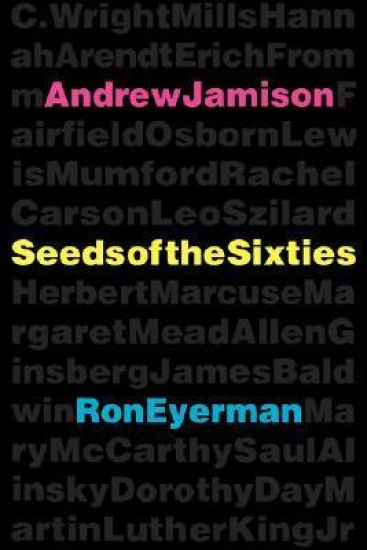
Seeds of the Sixties

Seeds of the Sixties

Andrew Jamison; Ron Eyerman

University of California Press
1995
pokkari
'The Sixties'. The powerful images conveyed by those two words have become an enduring part of American cultural and political history. But where did Sixties radicalism come from? Who planted the intellectual seeds that brought it into being? These questions are answered with striking clarity in Andrew Jamison and Ron Eyerman's book. The result is a combination of history and biography that vividly portrays an entire culture in transition. The authors focus on specific individuals, each of whom in his or her distinctive way carried the ideas of the 1930s into the decades after World War II, and each of whom shared in inventing a new kind of intellectual partisanship. They begin with C. Wright Mills, Hannah Arendt, and Erich Fromm and show how their work linked the 'old left' of the Thirties to the 'new left' of the Sixties. Lewis Mumford, Rachel Carson, and Fairfield Osborn laid the groundwork for environmental activism; Herbert Marcuse, Margaret Mead, and Leo Szilard articulated opposition to the postwar 'scientific-technological state'. Alternatives to mass culture were proposed by Allen Ginsberg, James Baldwin, and Mary McCarthy; and Saul Alinsky, Dorothy Day, and Martin Luther King, Jr., made politics personal. This is an unusual book, written with an intimacy that brings to life both intellect and emotion. The portraits featured here clearly demonstrate that the transforming radicalism of the Sixties grew from the legacy of an earlier generation of thinkers. With a deep awareness of the historical trends in American culture, the authors show us the continuing relevance these partisan intellectuals have for our own age. 'In a time colored by 'political correctness' and the ascendancy of market liberalism, it is well to remember the partisan intellectuals of the 1950s. They took sides and dissented without becoming dogmatic. May we be able to say the same about ourselves' - from Chapter 7.
Vietnam, A War, Not a Country

Vietnam, A War, Not a Country

Ron Eyerman; Todd Madigan; Magnus Ring

TAYLOR FRANCIS LTD
2025
nidottu
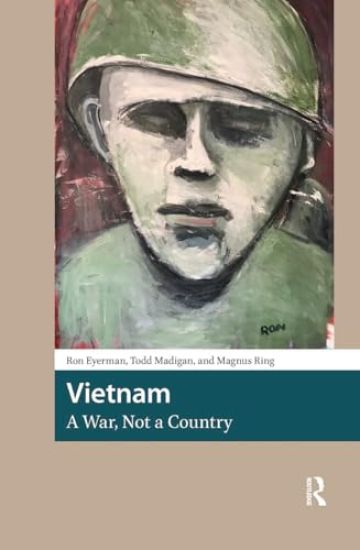
Vietnam: A War, Not a Country explores the conflicting ways in which the American-Vietnamese War has been collectively remembered and represented from the perspective of the war’s three primary belligerents: the Vietnamese communists, the South Vietnamese, and the Americans. The book examines how the three different collectives memorialize this traumatizing historical event. Within each of these three groups there exists a number of competing narratives, generating not only a sense of shared meaning and community, but also impassioned social conflict. In order to trace these narratives within each collectivity, the authors develop the concept of arenas of memory, distinct discourses that are tied to specific individuals, organizations, and institutions that advocate specific narratives through specific forms of media. Their analysis leads them to make the case as to whether each of these societies experienced a cultural trauma as a result of the way in which the war is remembered.
Vietnam, A War, Not a Country

Vietnam, A War, Not a Country

Ron Eyerman; Todd Madigan; Magnus Ring

AMSTERDAM UNIVERSITY PRESS
2023
sidottu
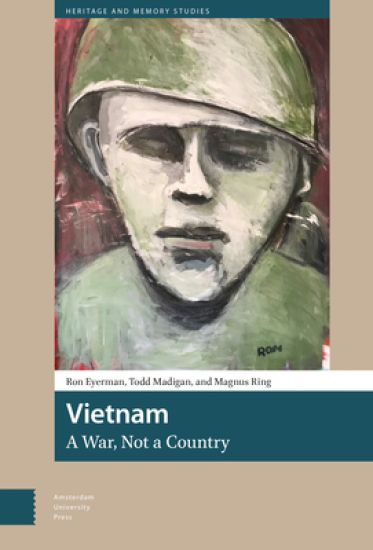
Vietnam: A War, Not a Country explores the conflicting ways in which the American-Vietnamese War has been collectively remembered and represented from the perspective of the war’s three primary belligerents: the Vietnamese communists, the South Vietnamese, and the Americans. The book examines how the three different collectives memorialize this traumatizing historical event. Within each of these three groups there exists a number of competing narratives, generating not only a sense of shared meaning and community, but also impassioned social conflict. In order to trace these narratives within each collectivity, the authors develop the concept of arenas of memory, distinct discourses that are tied to specific individuals, organizations, and institutions that advocate specific narratives through specific forms of media. Their analysis leads them to make the case as to whether each of these societies experienced a cultural trauma as a result of the way in which the war is remembered.
The Making of White American Identity

The Making of White American Identity

Ron Eyerman

OXFORD UNIVERSITY PRESS INC
2023
sidottu
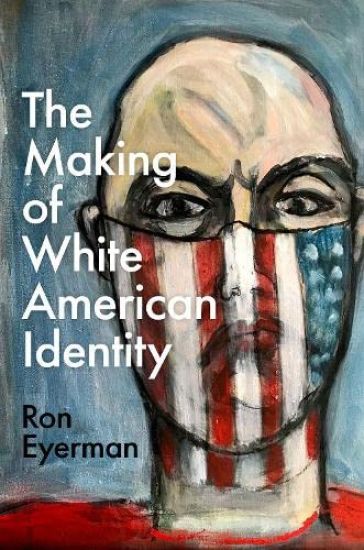
An account of the emergence and development of white consciousness throughout American history. In The Making of White American Identity, Ron Eyerman provides an explanation for how whiteness has become a basis for collective identification and collective action in the United States. Drawing upon his previous work on the formation of African American identity, as well as cultural trauma theory, collective memory, and social movements, he reveals how and under what conditions such a collective identification emerges, as well as how the mobilization of collective action around an ideology of whiteness and white superiority. Eyerman explores how the American identity was, and is still being established, through both historical and more recent events, including the Civil War, the Civil Rights movement, the election of a Black president, the Charlottesville confrontation, and the violent conflict at the Capitol on January 6, 2021. He further shows how each event revitalized the trauma narratives stemming from the nation's founding tensions, mobilizing social forces around the idea of white superiority and white consciousness. Tracing the historical contexts and social conditions under which individuals and groups move through this process, the author also looks forward at the prospects of the ideology of white supremacy as a political force in the United States.
The Making of White American Identity

The Making of White American Identity

Ron Eyerman

OXFORD UNIVERSITY PRESS INC
2022
nidottu
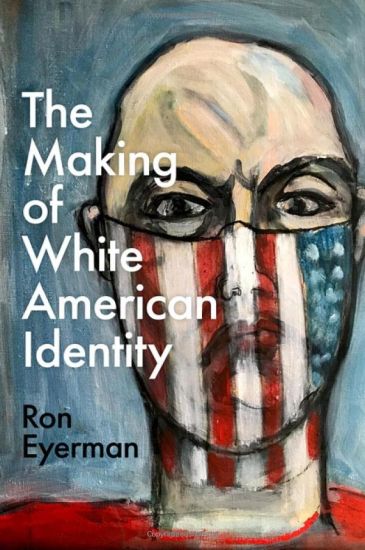
An account of the emergence and development of white consciousness throughout American history. In The Making of White American Identity, Ron Eyerman provides an explanation for how whiteness has become a basis for collective identification and collective action in the United States. Drawing upon his previous work on the formation of African American identity, as well as cultural trauma theory, collective memory, and social movements, he reveals how and under what conditions such a collective identification emerges, as well as how the mobilization of collective action around an ideology of whiteness and white superiority. Eyerman explores how the American identity was, and is still being established, through both historical and more recent events, including the Civil War, the Civil Rights movement, the election of a Black president, the Charlottesville confrontation, and the violent conflict at the Capitol on January 6, 2021. He further shows how each event revitalized the trauma narratives stemming from the nation's founding tensions, mobilizing social forces around the idea of white superiority and white consciousness. Tracing the historical contexts and social conditions under which individuals and groups move through this process, the author also looks forward at the prospects of the ideology of white supremacy as a political force in the United States.
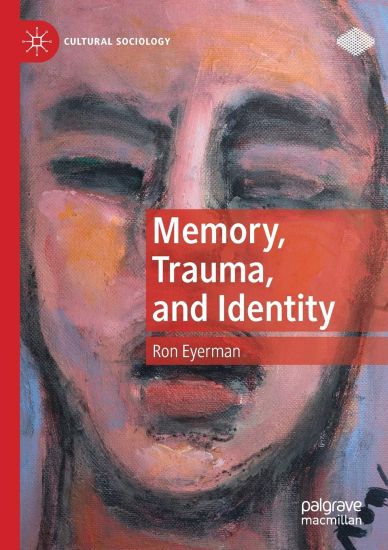
Memory, Trauma, and Identity

Memory, Trauma, and Identity

Ron Eyerman

Springer Nature Switzerland AG
2020
nidottu
This volume brings together Ron Eyerman’s most important interventions in the field of cultural trauma and offers an accessible entry point into the origins and development of this theory and a framework of an analysis that has now achieved the status of a research paradigm. This collection of disparate essays, published between 2004 and 2018, coheres around an original introduction that not only provides a historical overview of cultural trauma, but is also an important theoretical contribution to cultural trauma and collective identity in its own right. The Afterword from esteemed sociologist Eric Woods connects the essays and explores their significance for the broader fields of sociology, behavioral science, and trauma studies..
Memory, Trauma, and Identity

Memory, Trauma, and Identity

Ron Eyerman

Springer Nature Switzerland AG
2019
sidottu
This volume brings together Ron Eyerman’s most important interventions in the field of cultural trauma and offers an accessible entry point into the origins and development of this theory and a framework of an analysis that has now achieved the status of a research paradigm. This collection of disparate essays, published between 2004 and 2018, coheres around an original introduction that not only provides a historical overview of cultural trauma, but is also an important theoretical contribution to cultural trauma and collective identity in its own right. The Afterword from esteemed sociologist Eric Woods connects the essays and explores their significance for the broader fields of sociology, behavioral science, and trauma studies..
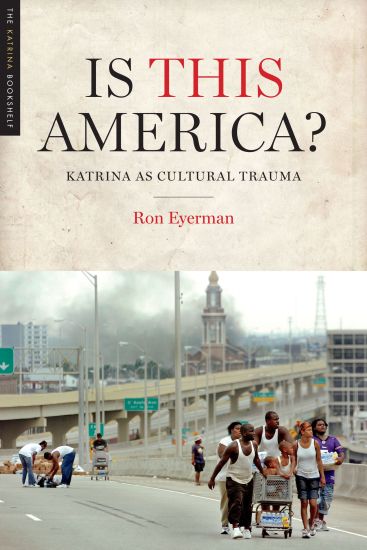
Is This America?

Is This America?

Ron Eyerman

University of Texas Press
2015
nidottu
From police on the street, to the mayor of New Orleans and FEMA administrators, government officials monumentally failed to protect the most vulnerable residents of New Orleans and the Gulf Coast during the Katrina disaster. This violation of the social contract undermined the foundational narratives and myths of the American nation and spawned a profound, often contentious public debate over the meaning of Katrina’s devastation. A wide range of voices and images attempted to clarify what happened, name those responsible, identify the victims, and decide what should be done. This debate took place in forums ranging from mass media and the political arena to the arts and popular culture, as various narratives emerged and competed to tell the story of Katrina.Is This America? explores how Katrina has been constructed as a cultural trauma in print media, the arts and popular culture, and television coverage. Using stories told by the New York Times, New Orleans Times-Picayune, Time, Newsweek, NBC, and CNN, as well as the works of artists, writers, musicians, filmmakers, and graphic designers, Ron Eyerman analyzes how these narratives publicly articulated collective pain and loss. He demonstrates that, by exposing a foundational racial cleavage in American society, these expressions of cultural trauma turned individual experiences of suffering during Katrina into a national debate about the failure of the white majority in the United States to care about the black minority.
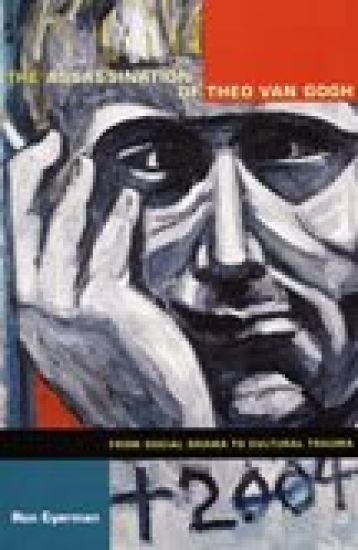
The Assassination of Theo Van Gogh

The Assassination of Theo Van Gogh

Ron Eyerman

Duke University Press
2008
sidottu
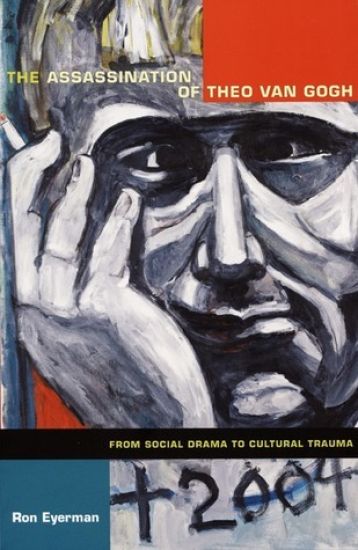
In November 2004, the controversial Dutch filmmaker Theo van Gogh was killed on a busy street in Amsterdam. A twenty-six-year-old Dutch citizen of Moroccan descent shot van Gogh, slit his throat, and pinned a five-page indictment of Western society to his body. The murder set off a series of reactions, including arson against Muslim schools and mosques. In The Assassination of Theo van Gogh, Ron Eyerman explores the multiple meanings of the murder and the different reactions it elicited: among the Amsterdam-based artistic and intellectual subculture, the wider Dutch public, the local and international Muslim communities, the radical Islamic movement, and the broader international community. After meticulously analyzing the actions and reputations of van Gogh and others in his milieu, the motives of the murderer, and the details of the assassination itself, Eyerman considers the various narrative frames the mass media used to characterize the killing.Eyerman utilizes theories of social drama and cultural trauma to evaluate the reactions to and effects of the murder. A social drama is triggered by a public transgression of taken-for-granted norms; one that threatens the collective identity of a society may develop into a cultural trauma. Eyerman contends that the assassination of Theo van Gogh quickly became a cultural trauma because it resonated powerfully with the postwar psyche of the Netherlands. As part of his analysis of the murder and reactions to it, he discusses significant aspects of twentieth-century Dutch history, including the country’s treatment of Jews during the German occupation, the loss of its colonies in the wake of World War II, its recruitment of immigrant workers, and the failure of Dutch troops to protect Muslims in Srebrenica in 1995.
The Assassination of Theo Van Gogh

The Assassination of Theo Van Gogh

Ron Eyerman

Duke University Press
2008
pokkari
In November 2004, the controversial Dutch filmmaker Theo van Gogh was killed on a busy street in Amsterdam. A twenty-six-year-old Dutch citizen of Moroccan descent shot van Gogh, slit his throat, and pinned a five-page indictment of Western society to his body. The murder set off a series of reactions, including arson against Muslim schools and mosques. In The Assassination of Theo van Gogh, Ron Eyerman explores the multiple meanings of the murder and the different reactions it elicited: among the Amsterdam-based artistic and intellectual subculture, the wider Dutch public, the local and international Muslim communities, the radical Islamic movement, and the broader international community. After meticulously analyzing the actions and reputations of van Gogh and others in his milieu, the motives of the murderer, and the details of the assassination itself, Eyerman considers the various narrative frames the mass media used to characterize the killing.Eyerman utilizes theories of social drama and cultural trauma to evaluate the reactions to and effects of the murder. A social drama is triggered by a public transgression of taken-for-granted norms; one that threatens the collective identity of a society may develop into a cultural trauma. Eyerman contends that the assassination of Theo van Gogh quickly became a cultural trauma because it resonated powerfully with the postwar psyche of the Netherlands. As part of his analysis of the murder and reactions to it, he discusses significant aspects of twentieth-century Dutch history, including the country’s treatment of Jews during the German occupation, the loss of its colonies in the wake of World War II, its recruitment of immigrant workers, and the failure of Dutch troops to protect Muslims in Srebrenica in 1995.
Cultural Trauma and Collective Identity

Cultural Trauma and Collective Identity

Jeffrey C. Alexander; Ron Eyerman; Bernard Giesen; Neil J. Smelser; Piotr Sztompka

University of California Press
2004
pokkari
In this collaboratively authored work, five distinguished sociologists develop an ambitious theoretical model of "cultural trauma"--and on this basis build a new understanding of how social groups interact with emotion to create new and binding understandings of social responsibility. Looking at the "meaning making process" as an open-ended social dialogue in which strikingly different social narratives vie for influence, they outline a strongly constructivist approach to trauma and apply this theoretical model in a series of extensive case studies, including the Nazi Holocaust, slavery in the United States, and September 11, 2001.
Cultural Trauma

Cultural Trauma

Ron Eyerman

Cambridge University Press
2001
sidottu
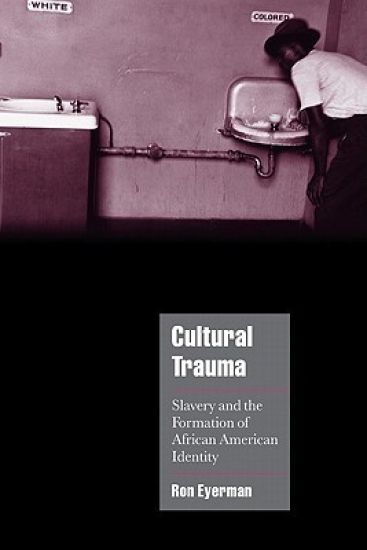
In this book, Ron Eyerman explores the formation of the African-American identity through the theory of cultural trauma. The trauma in question is slavery, not as an institution or as personal experience, but as collective memory: a pervasive remembrance that grounded a people's sense of itself. Combining a broad narrative sweep with more detailed studies of important events and individuals, Eyerman reaches from Emancipation through the Harlem Renaissance, the Depression, the New Deal and the Second World War to the Civil Rights movement and beyond. He offers insights into the intellectual and generational conflicts of identity-formation which have a truly universal significance, as well as providing a compelling account of the birth of African-American identity. Anyone interested in questions of assimilation, multiculturalism and postcolonialism will find this book indispensable.
Cultural Trauma

Cultural Trauma

Ron Eyerman

Cambridge University Press
2001
pokkari
In this book, Ron Eyerman explores the formation of the African-American identity through the theory of cultural trauma. The trauma in question is slavery, not as an institution or as personal experience, but as collective memory: a pervasive remembrance that grounded a people’s sense of itself. Combining a broad narrative sweep with more detailed studies of important events and individuals, Eyerman reaches from Emancipation through the Harlem Renaissance, the Depression, the New Deal and the Second World War to the Civil Rights movement and beyond. He offers insights into the intellectual and generational conflicts of identity-formation which have a truly universal significance, as well as providing a new and compelling account of the birth of African-American identity. Anyone interested in questions of assimilation, multiculturalism and postcolonialism will find this book indispensable.
Social Movements

Social Movements

Ron Eyerman; Andrew (University of Lund Jamison

Blackwell publishers
1991
pokkari
aeo With its integration of both American and European approaches, this book is a highly original study of social movements. aeo Eyerman and Jamison see social movements through a social theory of knowledge that is both politically and historically informed.