

Kirjailija
Ron Miller
Kirjat ja teokset yhdessä paikassa: 30 kirjaa, julkaisuja vuosilta 1991-2024, suosituimpien joukossa Callie Kinser of Brush Creek. Vertaile teosten hintoja ja tarkista saatavuus suomalaisista kirjakaupoista.
30 kirjaa
Kirjojen julkaisuhaarukka 1991-2024.

What kind of siding do you need to protect your house from werewolves?Would you kill someone to prevent them from committing suicide?What would you say to him if you met Dr. Frankenstein?Imagine building a clockwork god... that truly is God.How many times can you execute a mass murderer?What is a goddess to do when her worshippers abandon her for another?Could you carry out a death sentence yourself?If you were the last person on Earth, would you know it?Forget "raised by wolves." What about the boy raised by birds?It's a hard life for the man who is always second.Imagine a world where nothing dies. Nothing.What would a zombie have to do to prove his status as undead?In these Disturbing Stories, Ron Miller answers (or in some cases, asks) questions that will make you look at the world differently, and not necessarily from a position of comfort. "Ron Miller has the rare gift of being a visionary in two ways: a superb imaginative artist who is also a fine storyteller. I've been an admirer of his paintings for many years; what a pleasure it is to discover that his short stories are just as wonderful. Disturbing Stories is a terrific collection; read this book, by all means." -Allen Steele, three-time Hugo Award-winnerReviews of Ron Miller's novel The Iron Tempest: "Ron Miller is unfairly talented." -Sir Arthur C. Clarke, science fiction Grand Master"...hilarious, extraordinary writing... left me gasping for more " -Martin Olson, author of Encyclopaedia of Hell, writer for Phineas and Ferb
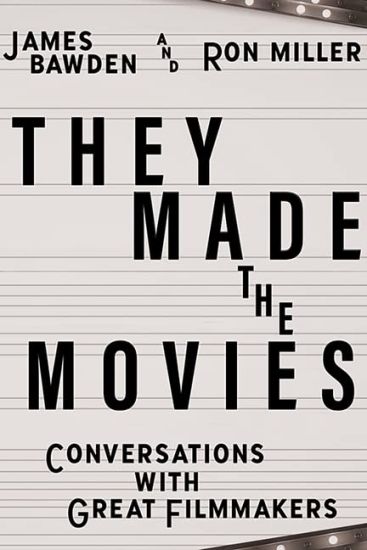
For decades, James Bawden and Ron Miller have established themselves as maestros of provocative interviews, giving fans unmatched insights into the lives of Hollywood A-listers. In their fourth collection, the authors pay tribute to film pioneers who lit up Tinseltown from the 1930s through the 1960s. They Made the Movies features conversations with legendary directors who created many of film's all-time classics, including Frank Capra (It's A Wonderful Life, 1946), Richard Fleischer (20,000 Leagues Under the Sea, 1954), Alfred Hitchcock (Psycho, 1960), Ralph Nelson (Lilies of the Field, 1963), Robert Wise (The Sound of Music, 1965), and Chuck Jones (How the Grinch Stole Christmas! 1966). Tantalizing firsthand details about many acclaimed films are revealed, such as the revelation of Mervyn LeRoy's first-choice of lead actress for The Wizard of Oz ("Shirley Temple… but Shirley couldn't sing like Judy [Garland]"), Billy Wilder's insights on directing ("You have to be a sycophant, a sadist, a nurse, a philosopher"), and how megaproducer Hal B. Wallis purchased an unproduced play titled Everyone Comes to Rick's and transformed it into Casablanca ("The part [of Sam] almost went to Lena Horne, but I thought she was too beautiful"). The authors also celebrate the contributions of marginalized filmmakers such as Ida Lupino, James Wong Howe, Oscar Micheaux, and Luis Valdez, who prevailed in Hollywood despite the discrimination they faced throughout their careers. They Made the Movies appeals to film and television enthusiasts of all ages.
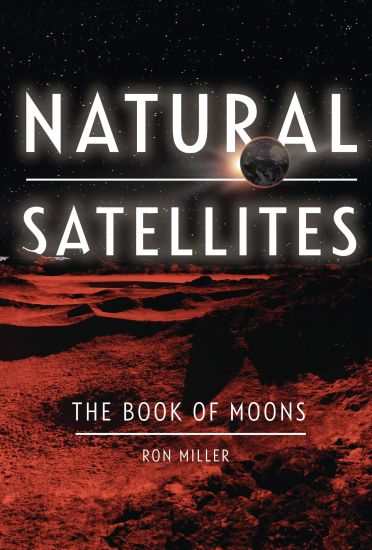
For centuries, astronomers have placed a special interest on the other planets of the solar system. But with the advent of spacecraft and the tremendous missions undertaken by the Voyager and Cassini probes, astronomers have discovered that the natural satellites of the planets--the solar system's moons--are some of the most extraordinary places imaginable. There are moons with towering geysers, erupting volcanoes, and subterranean oceans of warm, mineral-rich water. Some of the highest mountains and deepest canyons can be found on the moons. There are moons that have shattered into pieces and then reassembled. There is even a moon where it rains rocket fuel. Recently, scientists have turned to the moons for answers in their investigations of the origins of the solar system and the evolution of life on our own planet. Featuring full-color, scientifically accurate illustrations by NASA artist Ron Miller, Natural Satellites: The Book of Moons chronicles these investigations and the questions we have yet to answer in our exploration of the solar system's moons.

Inspired by the lurid comic book crime publications of the 1950s My name is Velda Bellinghausen. I'm a private investigator. I used to be a showgirl at Slotnik's Follies, but I got pretty sick and tired of shedding my clothes twice a day, four times on weekends for matinees. So I followed up on an ad I saw on a matchbook cover and sent in my twenty bucks for the Hawkshaw Course on Detection. It was the best twenty bucks I ever spent, too In no time at all, I had my license and was in business for myself Now I'm called upon to investigate murders, burglaries, and all sorts of crimes occurring in the big city. Velda: Girl Detective - Volume One is a multi-leveled representation of not only the more lurid of the 1950s crime comics but of comic collecting itself. This book is also more than a passing homage to the noir films and hard-boiled detective school of writing of the 1950s. Purporting to be an anthology of all the issues of a little-known golden age comic, Volume One includes a history of the creation of the Velda: Girl Detective comic, an interview with its creator and an episode list of the "Girl Detective" TV show as well as special features. Also included are the vintage ads as well as comic features such as "Hawkshaw Hawk, Bird Detective" and "Neolithica: Girl of the Pleistocene."

My name is Velda Bellinghausen. I'm a private investigator. I used to be a showgirl at Slotnik's Follies, but I got pretty sick and tired of shedding my clothes twice a day, four times on weekends for matinees. So I followed up on an ad I saw on a matchbook cover and sent in my twenty bucks for the Hawkshaw Course on Detection. It was the best twenty bucks I ever spent, too In no time at all, I had my license and was in business for myself Now I'm called upon to investigate murders, burglaries, and all sorts of crimes occurring in the big city. Velda: Girl Detective - VOLUME ONE is a multi-leveled representation of not only the more lurid of the 1950s crime comics but of comic collecting itself. The book is also more than a passing homage to the noir films and hard-boiled detective school of writing of the 1950s. Purporting to be an anthology of all the issues of a little-known golden age comic, it includes a history of the creation of the comic, an interview with its creator and an episode list of the "Girl Detective" TV show as well as special features. This volume also includes vintage ads as well as comic features such as "Hawkshaw Hawk, Bird Detective" and "Neolithica: Girl of the Pleistocene." "Velda is the kind of detective I like."- Richard S. Prather (writer, Shell Scott novels). "Hubba Hubba " - Kevin Burton Smith, thrillingdetective.com. "A pulp classic If you like your action gritty, yet full of surprises, then you'll love Velda..." - Rick Overton (writer, Dennis Miller Show, actor). "The Velda Comic is spectacular. I felt like I was a kid again as it had the real flavor of the old detective comics I used to read." - Bob Burns
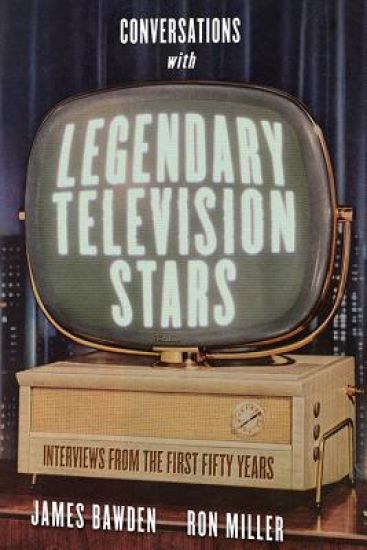
Conversations with Legendary Television Stars
James Bawden; Ron Miller
The University Press of Kentucky
2019
sidottu
During television's first fifty years -- long before cable networks, Hulu, Netflix, and the like -- families would gather around their television sets nightly to watch entertaining shows such as I Love Lucy, Gunsmoke, M*A*S*H, The Beverly Hillbillies, Fantasy Island, and The Rockford Files. Many of the stars of these beloved shows have passed away, but their presence remains intact -- not only through their television show performances, which are still viewed and appreciated today, but also through stories they told in interviews over the years.Seasoned journalists and authors James Bawden and Ron Miller have captured provocative and entertaining interviews with important figures from TV's first fifty years. These thirty-nine interviews, selected from conversations conducted from 1971--1998, present a fascinating glimpse of some of television's most influential performers. Featured are exclusive interviews with major stars (including Donna Reed, James Garner, and Ricardo Montalban), icons of comedy (including Lucille Ball, George Burns, and Milton Berle), TV hosts (including Dick Clark and Ed Sullivan), and notable musical entertainers (such as Glen Campbell, Mary Martin, and Lawrence Welk). Each chapter of this volume explores the subject's television work -- with detailed behind-the-scenes disclosures -- and includes additional information about the subject's performances in film and on stage.

..".In the middle of the chaos, a startled Mahler hears eerie loud groans, and feels a sudden strong burst of wind against the left side of his face. He turns and looks just in time to see an enormous brute lumbering toward him. Someone, or something, has warned him just in time .".".a breathtaking, exciting read..." ..".a haunting adventure...an epic tale..." Follow this fast-moving 15th Century tale through the ancient writings of Father Sylvanus, a Franciscan monk who witnesses the horrific battles and hears war drums of Valkyrie's godless armies as he helps the English Lords Raganald and Eduard Mahler struggle to mold a band of Danes, English, Irish, Germans and Greeks into a new nation called Cimbri on the shores of the Ost Sea, now known as the Baltic in modern times Europe.
The Book of Balance is an interesting book from the author of Walking in the Covenant of Salt, The Glory of God's Law, and The Book of David, Ron has written The Book of Balance which examines the most controversial issues in the body of Christ. The entire examination of these major points of division centers around a method of Bible study found in Isaiah 28. In the following pages, Ron will address six major points of controversy among sincere Bible-believing Christians. While there are many other points of controversy, he will deal specifically with these: The security of the believer; The Godhead; Water baptism, mode and application; Divorce and remarriage in the church; The return of Christ - pre, mid, or post tribulation; The evidence of the believer's fullness of the Holy Spirit.In Chapter one Ron gives the reader the pattern used for coming to the conclusions concerning the controversies we address. It is strongly urged that readers refrain from turning to the chapter of the book that deals with the controversy he or she finds most interesting. Chapter one is a must to read in order to understand the study pattern that is referenced in every chapter. Brother Ron does not pretend to believe that this humble effort will right the wrong or solve a problem of such magnitude. He does not believe that he has arrived at the status of theologian or prophet. He does not believe this book will decide or establish a central and general doctrine that the whole body will accept. However, Ron does firmly believe that out of a heart of grief for the division in the body of Christ over major themes, and a zeal for believers to be one, he has been inspired to address these points of controversy. He has also committed himself to address these controversies in the simplest possible way, in the use of everyday layman's terms.

Space Stations: The Art, Science, and Reality of Working in Space
Gary Kitmacher; Ron Miller; Robert Pearlman
Smithsonian Books
2018
sidottu
A rich visual history of real and fictional space stations, illustrating pop culture's influence on the development of actual space stations and vice versa Space stations represent both the summit of space technology and, possibly, the future of humanity beyond Earth. Space Stations: The Art, Science, and Reality of Working in Space takes the reader deep into the heart of past, present, and future space stations, both real ones and those dreamed up in popular culture. This lavishly illustrated book explains the development of space stations from the earliest fictional visions through historical and current programs--including Skylab, Mir, and the International Space Station--and on to the dawning possibilities of large-scale space colonization. Engrossing narrative and striking images explore not only the spacecraft themselves but also how humans experience life aboard them, addressing everything from the development of efficient meal preparation methods to experiments in space-based botany. The book examines cutting-edge developments in government and commercial space stations, including NASA's Deep Space Habitats, the Russian Orbital Technologies Commercial Space Station, and China's Tiangong program. Throughout, Space Stations also charts the fascinating depiction of space stations in popular culture, whether in the form of children's toys, comic-book spacecraft, settings in science-fiction novels, or the backdrop to TV series and Hollywood movies. Space Stations is a beautiful and captivating history of the idea and the reality of the space station from the nineteenth century to the present day.
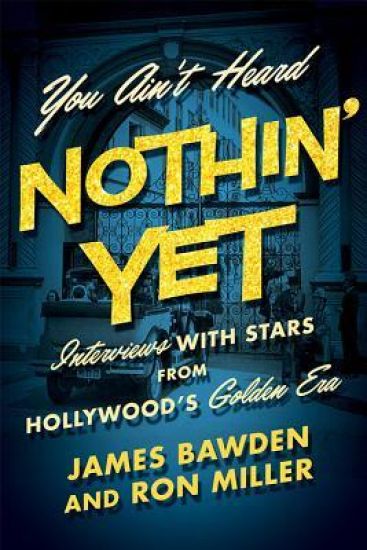
Journalists James Bawden and Ron Miller spent their careers interviewing the greatest stars of Hollywood's golden age. They visited Lee Marvin at home and politely admired his fishing trophies, chatted with Janet Leigh while a young Jamie Lee Curtis played, and even made Elizabeth Taylor laugh out loud. In You Ain't Heard Nothin' Yet, Bawden and Miller return with a new collection of rare interviews with iconic film stars including Henry Fonda, Esther Williams, Buster Keaton, Maureen O'Sullivan, Walter Pidgeon, and many more. The book is filled with humorous anecdotes and incredible behind-the-scenes stories. For instance, Bette Davis reflects that she and Katharine Hepburn were both considered for the role of Scarlett O'Hara but neither was "gorgeous enough" for the part; Janet Leigh analyzes the famous shower scene in Psycho (1960), which was shot in seven days and gave the actress nightmares for years; and Jimmy Stewart describes Alfred Hitchcock as a "strange, roly-poly man, interested only in blondes and murder." Popular horror film stars from Lon Chaney Jr. to Boris Karloff and Vincent Price are also featured in a special "movie monsters" section. With first-person accounts of Hollywood life from some of the most distinguished luminaries in the history of American cinema, this entertaining book will delight classic movie fans.
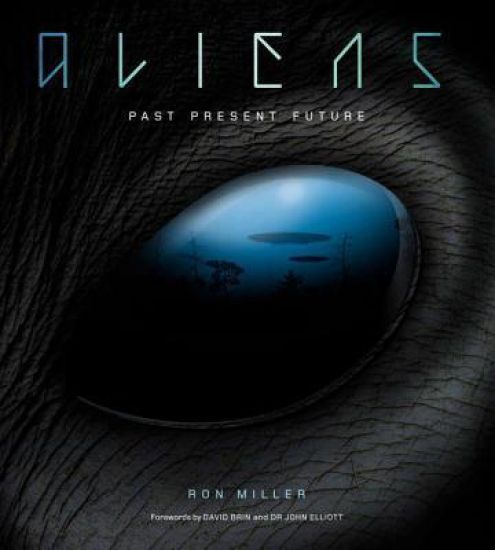
Aliens: Past, Present, Future covers the subject of extraterrestrial life from every angle, from the earliest speculations more than 400 years ago to today's ongoing search for Earth 2.0. In between are lessons learned about how life originated on our own planet, as well as the story behind the vast cult that has grown up around "flying saucers" and strange visitors from other planets, including popular culture renditions of them.The book is organised into three parts. Part 1 reviews humankind's changing thinking about possible worlds other than our own through history. Part 2 discusses the science of extraterrestrial life in a way that every reader - non-scientist and scientist alike - will understand. And Part 3 explores the deep impact the idea of extraterrestrial beings has had - not only on science and space exploration but on popular culture as well - and its potential impact on philosophy and religion. The very concept of extraterrestrial life has been a driving force behind our exploration of the universe and a pervasive presence in movies, books, comics and advertising throughout the past century. Written by bestselling author Ron Miller, the book features more than 200 illustrations - from centuries-old engravings, book, comic and magazine art, movie posters, purported UFO photographs, to colour illustrations showing what today's cutting-edge scientists think extraterrestrial life could be like. Could there even be aliens among us already?

Watching the screen version of a classic mystery novel can be disappointing. By necessity or artistic license (or possibly just ego) changes are often made by the filmmakers--many of them ineffective or even detrimental. This book focuses on the screen adaptations of 65 famous mysteries and examines how the filmmakers either succeeded or failed in the telling of the story. Interviews with several famous mystery writers are included, with their comments on how filmmakers treated their work.

The Glory of God's Law: A Biblical Punishment of Theological Antinomianism
T. J. Nichols; Ron Miller
Createspace Independent Publishing Platform
2016
nidottu

Velda is a series presented as if they actually existed as a classic Golden Age comic. In this collection, Velda is back on the stage shedding feathers as she finds herself up to her ears in counterfeiters when "Her Chips Come In" In another story, "Velda vs the DA" she gets a kick out of meeting her archenemy face to face Also in this issue: Velda takes on a double role to outwit kidnapers when she becomes "The Prisoner of Zendaville," and tracks a murderous art thief who can't resist "The Naked Milkmaid." Also, containing the infamous "suppressed" issue as the publisher folded under the weight of Dr. Frederic Werthham's expose of the comic industry in "Seduction of the Innocent". With the public outcry against this Velda storyline, the story has never seen print until now. Rounding out this volume are adventures of "Neolithica: Girl of the Pleistocene", the Velda Paper Doll Kit and the Velda Board Game in addition to more Velda adventures.


The Self-Organizing Revolution: Common Principles of the Educational Alternatives Movement
Ron Miller
Alternative Education Resource Organization
2014
nidottu

David is not mentioned in the scripture until the last part of the last chapter of Ruth. However, there are 968 verses in the entire Bible in which David is mentioned. This compared to the 784 verses that mention Moses, the 230 verses that mention Abraham, and the 159 verses that mention the Apostle Paul, tends to give us an idea of the significance of David's life. Even Jesus' name is mentioned in fewer verses (942), although God is mentioned in 3894 verses. There are also hundreds of verses that do not mention David by name but refer to him as king. From the sheer fact that David is mentioned and referred to so many times in the scripture, we can see that such a study that we hereby embark on is certainly legitimate. David was the king that excelled beyond all others in the three Kingdom dimensions God instituted before man was ever created -- worship, word, and warfare. The Lord had even set an angelic leader over these three dimensions. Michael was over warfare; Gabriel was over word, or messages; Lucifer was over worship. David was the passionate worshipper whose zeal for worship has never been matched by mortal man. There was no greater warrior than King David. He never lost a military conflict. David delivered the Word of the Lord with accuracy and messianic insight. His messianic prophecies number more than any of the Major Prophets. So in all three Kingdom dimensions, David excelled above all others. No wonder that David will be the vice king of all the earth during the millennium. As amazing as his life was, his failures were almost unfathomable. David's failures were indeed paramount and certainly were of a great cost to him and his family. Yet no one exemplifies true repentance and Godly sorrow more than David.Again, the study of David's life is worthy of a genuine effort to look intently at every verse that mentions his name. We believe in so doing we will clearly see the entire life and legacy of this one whom God said is "a man after mine own heart" (Acts 13:22).

William James' Revolution: A New Perspective on the Varieties of Religious Experience
Ron Miller
Ron Miller's World Publishing
2013
nidottu