Kirjojen hintavertailu. Mukana 12 155 711 kirjaa ja 12 kauppaa.

Kirjailija

Ronald Berman

Kirjat ja teokset yhdessä paikassa: 10 kirjaa, julkaisuja vuosilta 1983-2019, suosituimpien joukossa Fitzgerald's Mentors. Vertaile teosten hintoja ja tarkista saatavuus suomalaisista kirjakaupoista.

10 kirjaa

Kirjojen julkaisuhaarukka 1983-2019.

F. Scott Fitzgerald and the American Scene

F. Scott Fitzgerald and the American Scene

Ronald Berman

The University of Alabama Press
2019
nidottu
A study of the philosophical, intellectual, and political influences on the artistic creations of Fitzgerald and key early American modernist writers.F. Scott Fitzgerald and the American Scene continues Ronald Berman’s lifelong study of the philosophical, intellectual, and political influences on the artistic creations of key early American modernist writers. Each chapter in this volume elaborates on a crucial aspect of F. Scott Fitzgerald’s depiction of American society, specifically through the lens of the social sciences that most influenced his writing and thinking.Berman addresses, among other subjects, Fitzgerald’s use of philosophy, cultural analyses, and sociology—all enriched by the insights of his own experience living an American life. He was especially interested in how life had changed from 1910 to 1920. Many Americans were unable to navigate between the 1920s and their own memories of a very different world before the Great War; especially Daisy Buchanan who evolves from girlhood (as typified in sentimental novels of the time) to wifehood (as actually experienced in the new decade). There is a profound similarity between what happens to Fitzgerald’s characters and what happened to the nation.Berman revisits classics like The Great Gatsby but also looks carefully at Fitzgerald’s shorter fictions, analyzing a stimulating spectrum of scholars from more contemporary critics like Thomas Piketty to George Santayana, John Maynard Keynes, John Dewey, and Walter Lippmann. This fascinating addition to F. Scott Fitzgerald scholarship, although broad in its content, is accessible to a wide audience. Scholars and students of Fitzgerald and twentieth-century American literature, as well as dedicated Fitzgerald readers, will enjoy Berman’s take on a long-debated and celebrated author.
Fitzgerald-Wilson-Hemingway

Fitzgerald-Wilson-Hemingway

Ronald Berman

The University of Alabama Press
2016
nidottu
In this study, Ronald Berman examines the work of the critic/novelist Edmund Wilson and the art of F. Scott Fitzgerald and Ernest Hemingway as they wrestled with the problems of language, experience, perception and reality in the ""age of jazz."" By focusing specifically on aesthetics—the ways these writers translated everyday reality into language—Berman challenges and redefines many routinely accepted ideas concerning the legacy of these authors.Fitzgerald is generally thought of as a romantic, but Berman shows that we need to expand the idea of Romanticism to include its philosophy. Hemingway, widely viewed as a stylist who captured experience by simplifying language, is revealed as consciously demonstrating reality's resistance to language. Between these two renowned writers stands Wilson, who is critically influenced by Alfred North Whitehead, as well as Dewey, James, Santayana, and Freud.By patiently mapping the correctness of these philosophers, historians, literary critics and writers, Berman aims to open a gateway into the era. This work should be of interest to scholars of American literature, philosophy and aesthetics; to academic libraries; to students of intellectual history; and to general readers interested in Fitzgerald, Hemingway and Wilson.
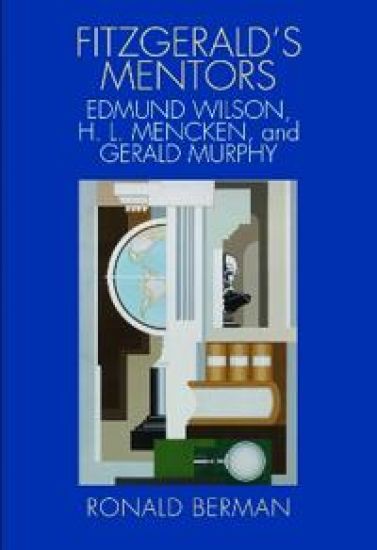
Fitzgerald's Mentors

Fitzgerald's Mentors

Ronald Berman

The University of Alabama Press
2012
sidottu
Fitzgerald's Mentors is a fresh and compelling study of F. Scott Fitzgerald's intellectual friendship with Edmund Wilson, H. L. Mencken, and Gerald Murphy. Fitzgerald was shaped through his engagements with key literary and artistic figures in the 1920s. This book is about their influence-- and also about the ways that Fitzgerald defended his own ideas about writing. Influence was always secondary to independence. Fitzgerald's education began at Princeton with Edmund Wilson. There Wilson imparted to Fitzgerald many ideas about education and literary values, among them respect for the classics and an acute awareness of literary tradition. In New York H. L. Mencken impressed upon Fitzgerald his belief in the stifling effect of public morality on writers. Furthermore, Mencken's The American Language changed Fitzgerald's thinking about the power of everyday language. After moving to France in 1924, Fitzgerald's intellectual life took a very different turn. Gerald Murphy exposed him to the visual arts-- including the work of Fernand Leger, Pablo Picasso, and Man Ray--and to people deeply interested in the perception of art in daily life. Equally important, Fitzgerald had many discussions about artistic values with both Gerald and Sara Murphy.
Translating Modernism

Translating Modernism

Ronald Berman

The University of Alabama Press
2010
nidottu
In Translating Modernism Ronald Berman continues his career-long study of the ways that intellectual and philosophical ideas informed and transformed the work of America's major modernist writers.Here Berman shows how Fitzgerald and Hemingway wrestled with very specific intellectual, artistic, and psychological influences, influences particular to each writer, particular to the time in which they wrote, and which left distinctive marks on their entire oeuvres. Specifically, Berman addresses the idea of "translating" or "translation"--for Fitzgerald the translation of ideas from Freud, Dewey, and James, among others; and for Hemingway the translation of visual modernism and composition, via Cezanne.Though each writer had distinct interests and different intellectual problems to wrestle with, as Berman demonstrates, both had to wrestle with transmuting some outside influence and making it their own.
Translating Modernism

Translating Modernism

Ronald Berman

The University of Alabama Press
2009
sidottu
In ""Translating Modernism"", Ronald Berman continues his career-long study of the ways that intellectual and philosophical ideas informed and transformed the work of America's major modernist writers. Here Berman shows how Fitzgerald and Hemingway wrestled with very specific intellectual, artistic, and psychological influences, influences particular to each writer, particular to the time in which they wrote, and that left distinctive marks on their entire oeuvres. Specifically, Berman addresses the idea of 'translating' or 'translation' - for Fitzgerald the translation of ideas from Freud, Dewey, and James, among others; and for Hemingway the translation of visual modernism and composition, via Cezanne. Though each writer had distinct interests and different intellectual problems to wrestle with, as Berman demonstrates, both wrestled with transmuting some outside influence and making it their own.
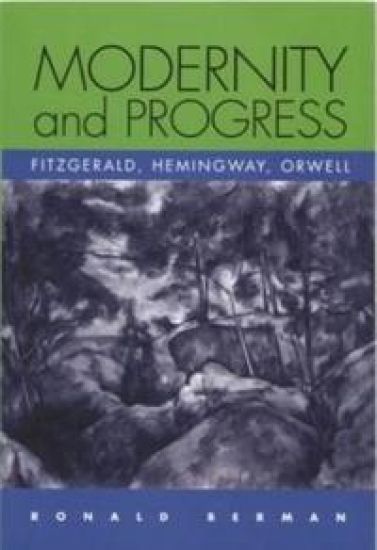
Modernity and Progress

Modernity and Progress

Ronald Berman

The University of Alabama Press
2005
sidottu
This book breaks new critical ground by exploring philosophical and aesthetic issues germane to the writings of three major modern literary figures. In the 1920s and '30s, understandings of time, place, and civilization were subjected to a barrage of new conceptions. Ronald Berman probes the work of three American writers who wrestled with one or more of these issues in ways of lasting significance. Hemingway, Fitzgerald, and Orwell all grappled with fluid notions of time: Hemingway's absolute present, Fitzgerald's obsession with what might be and what might have been, and Orwell's concerns with progress. For these authors, progress is also tied to competing senses of place - for Fitzgerald, the North versus the South; for Hemingway, America versus Europe. At stake for each is an understanding of what constitutes true civilization in a post-war world. Berman discusses Hemingway's deployment of language in tackling the problems of thinking and knowing. Berman follows this notion further in examining the indisputable impact upon Hemingway's prose of Paul Cezanne's painting and the nature of perception. Finally, Berman considers the influence on Orwell of Aristotle and Freud's ideas of civilization, translated by Orwell into the fabric of 1984 and other writings.
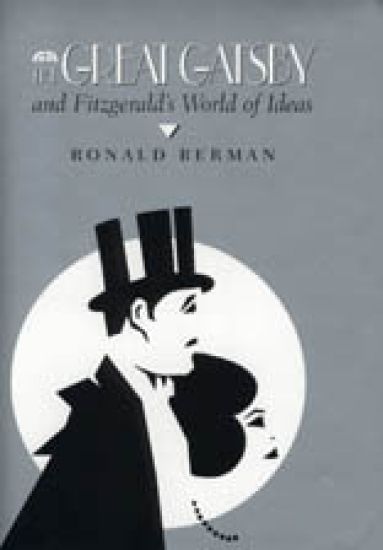
The Great Gatsby and Fitzgerald's World of Ideas

The Great Gatsby and Fitzgerald's World of Ideas

Ronald Berman

The University of Alabama Press
2000
nidottu
Berman examines the intellectual and cultural milieu in which The Great Gatsby was created--and challenges accepted interpretations of Fitzgerald's greatest novel."The Great Gatsby" and Fitzgerald's World of Ideasfocuses on F. Scott Fitzgerald and the prevailing ideas and values that permeated American society in the late teens and early twenties, providing a vivid portrait of the intellectual and cultural milieu in which The Great Gatsby was produced.This new and original reading of Gatsby discloses Fitzgerald's remarkable awareness of the issues of his time and his debt to such philosophers and critics as William James, Josiah Royce, George Santayana, John Dewey, Walter Lippman, H. L. Mencken, and Edmund Wilson. Ronald Berman's fresh approach considers the meaning of various ideas important to the novel: for example, those moral qualities governing both social and individual life. Berman's reading of the text reveals extraordinary emphases on matters that could productively be described as philosophical -- the nature of friendship, love, and the good life. But the text of the novel has many echoes, and the same concern with moral issues -- especially those issues affecting democratic life - can be found in a number of other texts of the first quarter of the century. Vigorously debated throughout Fitzgerald's own lifetime, these texts shed a completely new light on the idealism of The Great Gatsby and on the penetrating view it has of life in a new form of American democracy.A noted Fitzgerald scholar, Berman makes it clear that accepted interpretations of The Great Gatsby and of Fitzgerald's work in general must be changed. Berman demonstrates that Fitzgerald wrote within a vast dialectic, relating the ideas of the twenties to those of the "old America" described in so many of his works. Gatsby, Nick Carraway, and the other characters of Fitzgerald's greatest novel all have to consider not only their relationship to the present but also their distance from what was once a highly meaningful past.
Great Gatsby and Modern Times

Great Gatsby and Modern Times

Ronald Berman

University of Illinois Press
1996
nidottu
"A stunning piece of work. If Fitzgerald could have wished for one reader of The Great Gatsby, it would have been Ronald Berman. Berman's criticism creates an ideal companion piece to the novel--as brilliantly illuminating about America as it is about fiction, and composed with as much thought and style." -- Roger Rosenblatt "An impressive study that brilliantly highlights the oneness of Fitzgerald's art with the overall context of modernism." -- Milton R. Stern, author of The Golden Moment: The Novels of F. Scott Fitzgerald "Citing films, dates, places, schedules, Broadway newsstands, and the spoils of manufacture, the author, never lapsing into critical jargon, locates the characters in 'the moving present.' Gatsby, the first of the great novels to emerge from B movies, uses the language of commodities, advertisements, photography, cinematography, and Horatio Alger to present models of identity for characters absorbed in and by what is communicated. . . . Berman concludes that Gatsby 'reassembled' rather than 'invented' himself." -- A. Hirsh, Choice
Culture and Politics

Culture and Politics

Ronald Berman

University Press of America
1983
sidottu
Describes the meteoric rise of the National Endowment for the Humanities from a small, unnoticed federal agency in 1965 to one of the nation's largest grant-making institutions. Chairman of NEH from 1971 until 1977, Ronald Berman offers a unique 'insider's' view of the behind-the-scenes maneuvers that resulted in a five fold increase in Federal funding for NEH during his tenure as Chairman.