Kirjojen hintavertailu. Mukana 12 595 353 kirjaa ja 12 kauppaa.

Kirjailija

Ronald C. Arnett

Kirjat ja teokset yhdessä paikassa: 12 kirjaa, julkaisuja vuosilta 1994-2022, suosituimpien joukossa Dialogic Civility in a Cynical Age. Vertaile teosten hintoja ja tarkista saatavuus suomalaisista kirjakaupoista.

12 kirjaa

Kirjojen julkaisuhaarukka 1994-2022.

Communication Ethics and Tenacious Hope

Communication Ethics and Tenacious Hope

Ronald C. Arnett; Thomas M. Lessl

Southern Illinois University Press
2022
nidottu
Tenacious hope, the heart of a just and free society.During the Enlightenment, Scottish intellectuals and administrators met the demands of profit and progress while shepherding concerns for self and other, individual and community, and family and work. Communication Ethics and Tenacious Hope captures the “unity of contraries,” offering the Scottish Enlightenment as an exemplar of tenacious hope countering the excesses of individualism. Ronald C. Arnett reveals two stories: the struggle between optimism and tenacious hope, and optimism’s ultimate triumph in the exclusion of difference and the reification of progress as an ultimate good. In chapters that detail the legacies of Lord Provost George Drummond, Adam Smith, David Hume, Thomas Reid, George Campbell, Adam Ferguson, and Sir Walter Scott, Arnett highlights the problematic nature of optimism and the ethical agency of tenacious hope. Arnett illustrates the creative union of education and administration, the ability to accept doubt within systems of knowledge and imagination, and an abiding connection to local soil. As principles of progress, free will, and capitalism swept Europe, proponents of optimism envisioned a world of consumerism and absolutes. In contrast, practitioners of tenacious hope embraced uncertainty and compassion as pragmatic necessities. This work continues Arnett’s scholarship, articulating the vital importance of communication ethics. Those seeking to discern and support a temporal sense of the good in this historical moment will find in this timely work the means to pursue, hold, and nourish tenacious hope. This insightful theorization of the Scottish Enlightenment distills the substance of a just and free society for meeting dangerous and uncertain times.

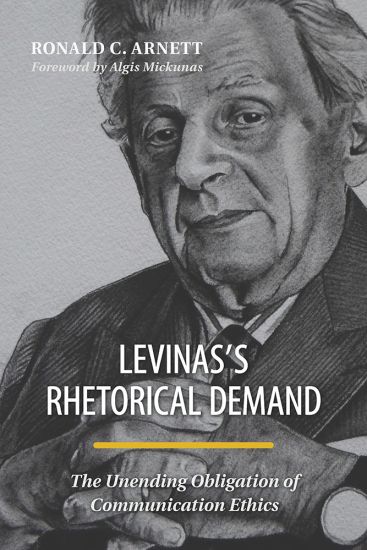
Levinas's Rhetorical Demand

Levinas's Rhetorical Demand

Ronald C. Arnett; Algis Mickunas

Southern Illinois University Press
2017
nidottu
Philosopher Emmanuel Levinas’s ethics as first philosophy explicates a human obligation and responsibility to and for the Other that is an unending and an imperfect commitment. In Levinas’s Rhetorical Demand: The Unending Obligation of Communication Ethics, Ronald C. Arnett underscores the profundity of Levinas’s insights for communication ethics.Arnett outlines communication ethics as a primordial call of responsibility central to Levinas’s writing and mission. Arnett analyzes communication ethics through a Levinasian lens with examination of social artifacts ranging from the Heidegger-Cassirer debate to Rupert Murdoch’s News of the World story concerning illicit possession of information.Levinas’s Rhetorical Demand offers an account of Levinas’s project and the pragmatic implications of attending to a call of responsibility to and for the Other. This book yields a rich and nuanced understanding of Levinas’s work, revealing the practical importance of his insights, and including a discussion of a constellation of related theorists and thinkers.
Communication and the Global Landscape of Faith

Communication and the Global Landscape of Faith

Adrienne E. Hacker Daniels; Ronald C. Arnett

Lexington Books
2016
sidottu
In light of more recent conversations about religion and its import as a factor in the global geopolitical and cultural spheres, augmented by the "contracting" of relationship among people and nations, Communication and the Global Landscape of Faith highlights geographical, architectural, and a partial issues as significant and edifying dimensions of the study of communication and religion. Insights are gleaned through the prism of the philosophical, built, performative, political, and intercultural landscapes.
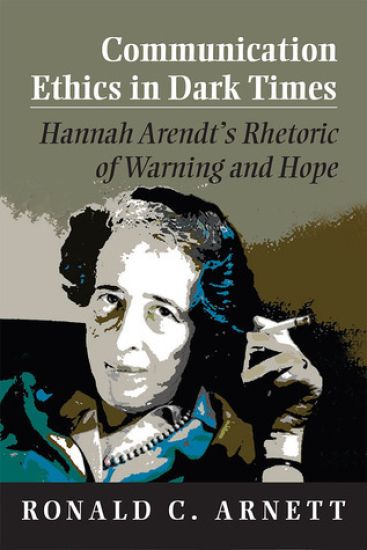
Communication Ethics in Dark Times

Communication Ethics in Dark Times

Ronald C. Arnett

Southern Illinois University Press
2012
nidottu
Renowned in the disciplines of political theory and philosophy, Hannah Arendt's searing critiques of modernity continue to resonate in other fields of thought decades after she wrote them. In Communication Ethics in Dark Times: Hannah Arendt's Rhetoric of Warning and Hope, author Ronald C. Arnett offers a groundbreaking examination of fifteen of Arendt's major scholarly works, considering the German writer's contributions to the areas of rhetoric and communication ethics for the first time. Arnett focuses on Arendt's use of the phrase 'dark times' to describe the mistakes of modernity, defined by Arendt as the post-Enlightenment social conditions, discourses, and processes ruled by principles of efficiency, progress, and individual autonomy. These principles, Arendt argues, have led humanity down a path of folly, banality, and hubris. Throughout his interpretive evaluation, Arnett illuminates the implications of Arendt's persistent metaphor of 'dark times' and engages the question, How might communication ethics counter the tenets of dark times and their consequences? A compelling study of Hannah Arendt's most noteworthy works and their connections to the fields of rhetoric and communication ethics, Communication Ethics in Dark Times provides an illuminating introduction for students and scholars of communication ethics and rhetoric, and a tool with which experts may discover new insights, connections, and applications to these fields.
An Overture to Philosophy of Communication

An Overture to Philosophy of Communication

Ronald C. Arnett; Annette M. Holba

Peter Lang Publishing Inc
2012
sidottu
Winner of the Everett Lee Hunt Award 2013. Winner of the National Communication Association (NCA) Philosophy of Communication Division’s award for Best Book. An Overture to Philosophy of Communication: The Carrier of Meaning explores a world beyond information accumulation, stressing meaningful engagement with existence. Meaning is composed between and among persons, ideas, and activities of communicative engagement. Meaning is central to the study and practice of philosophy of communication, providing story-laden guidance. The book examines philosophical differences between Boss and Zorba, following the development of their friendship in Zorba the Greek. Their story helps to exemplify the meaningful coordinates of philosophy of communication established in each chapter. The authors claim meaning as the pivotal conceptual terrain for philosophy of communication. This book offers a rationale for the pragmatic necessity of philosophy of communication in understanding the «how» and the «why» of orchestrating meaning from information and discourse throughout our communicative lives.
An Overture to Philosophy of Communication

An Overture to Philosophy of Communication

Ronald C. Arnett; Annette M. Holba

Peter Lang Publishing Inc
2012
nidottu
Winner of the Everett Lee Hunt Award 2013. Winner of the National Communication Association (NCA) Philosophy of Communication Division’s award for Best Book. An Overture to Philosophy of Communication: The Carrier of Meaning explores a world beyond information accumulation, stressing meaningful engagement with existence. Meaning is composed between and among persons, ideas, and activities of communicative engagement. Meaning is central to the study and practice of philosophy of communication, providing story-laden guidance. The book examines philosophical differences between Boss and Zorba, following the development of their friendship in Zorba the Greek. Their story helps to exemplify the meaningful coordinates of philosophy of communication established in each chapter. The authors claim meaning as the pivotal conceptual terrain for philosophy of communication. This book offers a rationale for the pragmatic necessity of philosophy of communication in understanding the «how» and the «why» of orchestrating meaning from information and discourse throughout our communicative lives.
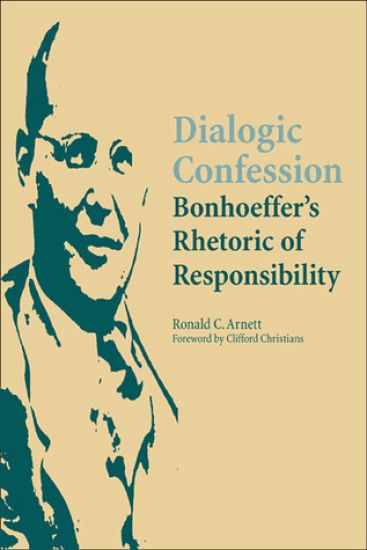
Dialogic Confession

Dialogic Confession

Ronald C. Arnett

Southern Illinois University Press
2005
nidottu
In this landmark volume of contemporary communication theory, Ronald C. Arnett applies the metaphor of dialogic confession - which enables historical moments to be addressed from a confessed standpoint and through a communicative lens - to the works of German theologian Dietrich Bonhoeffer, who pointed to an era of postmodern difference with his notion of ""a world come of age."" Arnett's interpretations of Bonhoeffer's life and scholarship in contention with Nazi dominance offer implications for a dialogic confession that engages the complexity of postmodern narrative contention. Rooted in classical theory, the field of communication ethics is abstract and arguably outmoded. In Dialogic Confession: Bonhoeffer's Rhetoric of Responsibility, Arnett locates cross-cultural and comparative anchors that not only bring legitimacy and relevance to the field but also develop a conceptual framework that will advance and inspire future scholarship.
Dialogic Confession

Dialogic Confession

Ronald C. Arnett

Southern Illinois University Press
2005
sidottu
In this landmark volume of contemporary communication theory, Ronald C. Arnett applies the metaphor of dialogic confession - which enables historical moments to be addressed from a confessed standpoint and through a communicative lens - to the works of German theologian Dietrich Bonhoeffer, who pointed to an era of postmodern difference with his notion of ""a world come of age."" Arnett's interpretations of Bonhoeffer's life and scholarship in contention with Nazi dominance offer implications for a dialogic confession that engages the complexity of postmodern narrative contention. Rooted in classical theory, the field of communication ethics is abstract and arguably outmoded. In Dialogic Confession: Bonhoeffer's Rhetoric of Responsibility, Arnett locates cross-cultural and comparative anchors that not only bring legitimacy and relevance to the field but also develop a conceptual framework that will advance and inspire future scholarship.
Dialogic Civility in a Cynical Age

Dialogic Civility in a Cynical Age

Ronald C. Arnett; Pat Arneson; Julia T. Wood

State University of New York Press
1999
pokkari
Offers insight and practical guidance for people interested in improving their interpersonal relationships in an age of rampant cynicism. Dialogic Civility in a Cynical Age offers a philosophical and pragmatic response to unreflective cynicism. Considering that each of us has faced inappropriate cynical communication in families, educational institutions, and the workplace, this book offers insight and practical guidance for people interested in improving their interpersonal relationships in an age of rampant cynicism.