Kirjojen hintavertailu. Mukana 12 595 353 kirjaa ja 12 kauppaa.

Kirjailija

Ronald E. Clements

Kirjat ja teokset yhdessä paikassa: 6 kirjaa, julkaisuja vuosilta 1991-2011, suosituimpien joukossa Jeremiah. Vertaile teosten hintoja ja tarkista saatavuus suomalaisista kirjakaupoista.

Mukana myös kirjoitusasut: Ronald E Clements

6 kirjaa

Kirjojen julkaisuhaarukka 1991-2011.

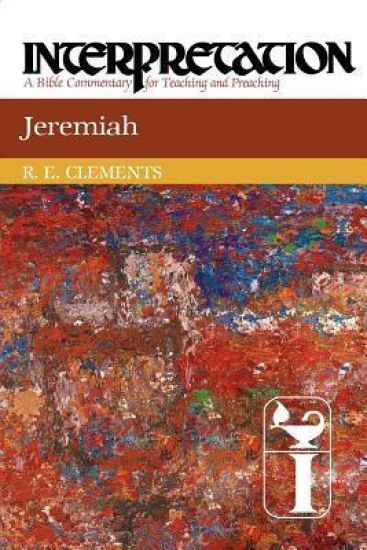
Jeremiah

Jeremiah

Ronald E. Clements

Westminster/John Knox Press,U.S.
2011
nidottu
This critical assessment of the book of Jeremiah enables the reader to rediscover many of the most profound and relevant features of Jeremiah's message and of the agonies and fears of those to whom it was first given. The picture that emerges of the prophet is an intensely moving one, often at variance with the conventional image of earlier popular reconstructions. Having witnessed the loss of most of the treasured and revered religious support of his day, Jeremiah discovered that the only secure foundation of hope is in God.Interpretation: A Bible Commentary for Teaching and Preaching is a distinctive resource for those who interpret the Bible in the church. Planned and written specifically for teaching and preaching needs, this critically acclaimed biblical commentary is a major contribution to scholarship and ministry.
Wisdom in Theology

Wisdom in Theology

Ronald E Clements

Paternoster Press
2006
nidottu
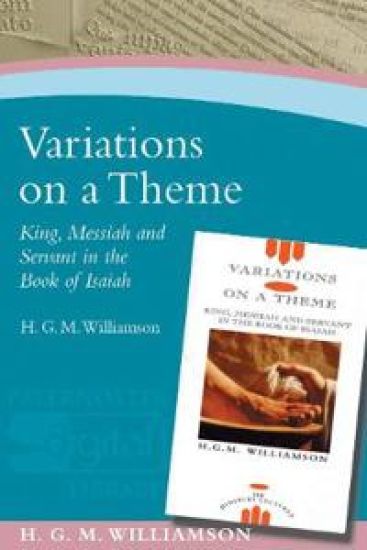
Rather than being content with atomistic approaches to a text, recent scholarship has increasingly seen the value of tracing motifs and their variations as they run through biblical books, and even across book boundaries. Williamson takes up the important but inadequately explored messianic theme, tracing its development and variations through the canonical Isaiah. He sets this unifying thematic study against a counterpoint of redactional analysis, which exploits and builds on his previous work in The Book Called Isaiah: Deutero-Isaiah's Role in Composition and Redaction (1994). The current work was composed to serve as the source material for the 1997 Didsbury Lectures at the ^Nazarene Theological College near Manchester, England. In his introductory chapter, Williamson sets the foundation of his theme against the broader backdrop of the king, which moves from the minor tones of the human, Davidic king in the earlier chapters of Isaiah to the major key of the divine king later in the book. He goes against much recent scholarship in holding that the former derive most probably from before the exile. The second variation concerns Immanuel, looking in detail at chapters 6-9. He presents and critiques Buddes' century-old hypothesis that Isaiah 6-8 were an Isaianic Memoir which originally opened the book. Rather than taking the call narratives of other prophets as a comparison, Williamson finds closer parallels between the calls of Isaiah and of Micaiah (1 Kgs 22) and the literary shape of Amos 7-8. He sees the chief interest in the Immanuel figure being in fulfilling the role of righteous rule within the Davidic dynasty, rather than in identifying any specific individual. The third variation, the "Servant" is drawn from Deutero-Isaiah. There the original Davidic relationship with God is transferred to the nation of Israel. She will be God's witness and mediator to the world. As a Christian, Williamson brings up the interpretation that Jesus is the servant according to the NT. He defends his view by stating that "Jesus fulfills, but does not thereby exhaust, the prophecy" (p. 53). The theme of justice and righteousness in association with the servant ties his role to that of the king in the first section.
Old Testament Prophecy

Old Testament Prophecy

Ronald E. Clements

Westminster/John Knox Press,U.S.
2005
nidottu
This volume by Old Testament scholar Ronald Clements covers many aspects of research on the forms, structure, and theological message of the prophetic writings of the Old Testament. An introductory essay by Clements assesses the changing perspectives of literary and theological approaches to the study of the prophets during this same period. This book is for all who are interested in reading some of the most compelling Old Testament scholarship from one of the most respected scholars in the field.
Ezekiel

Ezekiel

Ronald E. Clements

Westminster/John Knox Press,U.S.
1996
nidottu
The book of Ezekiel was written during a tumultuous time in Israel's history. It follows a period that began with Ezekiel's warning of Jerusalem's fall and his prediction of the destruction of the temple--a sanctuary regarded as so holy that its destruction was unimaginable. The period continues with Ezekiel's and others' exile to Babylon. Although much in the book of Ezekiel focuses on the consequences of Israel's rebellion against God that lead to the destruction of Jerusalem, even more deals with the hope of Israel's rebirth with divine assistance.Books in the Westminster Bible Companion series assist laity in their study of the Bible as a guide to Christian faith and practice. Each volume explains the biblical book in its original historical context and explores its significance for faithful living today. These books are ideal for individual study and for Bible study classes and groups.
The World of Ancient Israel

The World of Ancient Israel

Ronald E. Clements

Cambridge University Press
1991
pokkari
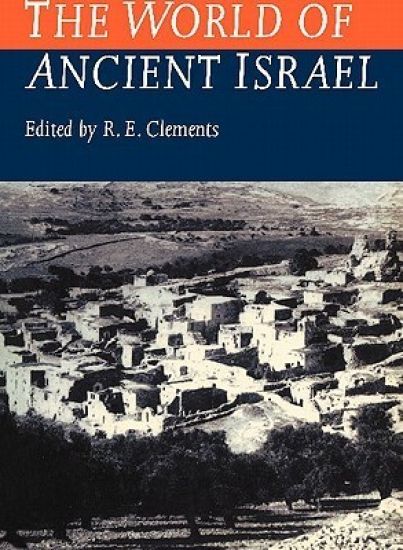
Encapsulating as it does research that has been undertaken on the sociological, anthropological and political aspects of the history of ancient Israel, this important book is designed to follow in the tradition of works in the series sponsored by The Society for Old Testament Study which began with the publication of The People and the Book in 1925. The World of Ancient Israel is especially concerned to explore in greater depth than comparable studies the areas and degrees of overlap between approaches to the subject of Old Testament research adopted by scholars and students of theology and the social sciences. Increasing numbers of scholars have recognised the valuable insights that can be gained from a cross-disciplinary approach, and it is becoming clear that the early biblical traditions about the formation of the Israelite state must be examined in the light of comparative anthropology if useful historical conclusions are to be drawn from them.