Kirjojen hintavertailu. Mukana 12 595 353 kirjaa ja 12 kauppaa.

Kirjailija

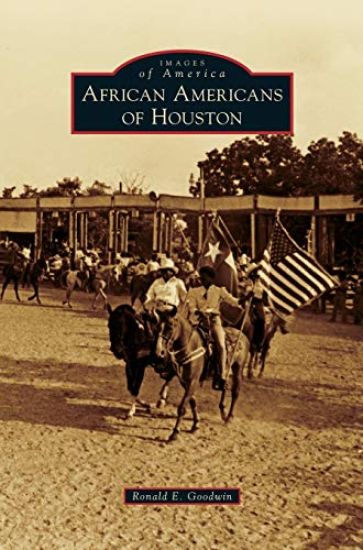
Ronald E. Goodwin

Kirjat ja teokset yhdessä paikassa: 8 kirjaa, julkaisuja vuosilta 2013-2026, suosituimpien joukossa Da Mayor of Fifth Ward. Vertaile teosten hintoja ja tarkista saatavuus suomalaisista kirjakaupoista.

Mukana myös kirjoitusasut: Ronald E Goodwin

8 kirjaa

Kirjojen julkaisuhaarukka 2013-2026.

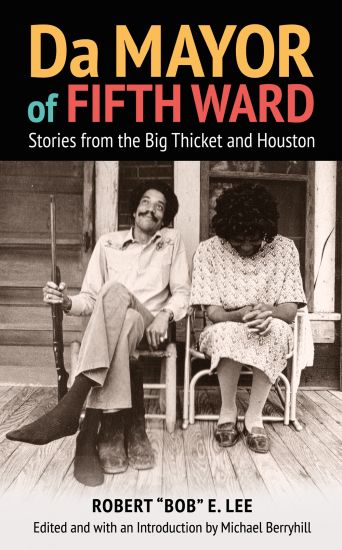
Da Mayor of Fifth Ward

Da Mayor of Fifth Ward

Robert "Bob" E. Lee; Michael Berryhill; Ronald E. Goodwin

TEXAS A M UNIVERSITY PRESS
2021
sidottu
In March 2017, Bob Lee—freelance writer, community organizer, social worker, social justice warrior, child of Houston’s Fifth Ward and its advocate, former Chicago Black Panther—died at the age of 74. Alongside his larger legacy, he left behind this collection of fourteen stories published in the Houston Chronicle’s Sunday Texas Magazine between 1989 and 2000.Framed by journalist and scholar Michael Berryhill, these youthful recollections and tales of his East Texas relatives reveal Lee’s shock at learning that his elderly aunt and uncle, who lived in Jasper, Texas, were lifelong Republicans; recount his discovery at the age of 19 that white people, too, could be poor; recall integrating a small-town restaurant with the help of the white rancher who hired him; explore the world of Black longshoremen and offer meditations on the mysteries of death. As he lay suffering from cancer, Lee told Berryhill that he wasn’t thinking about dying, but focusing on love. Berryhill, who was Lee’s first editor at the Houston Chronicle, has lovingly collected and edited Lee’s stories, which are complemented by an introduction and biographical essay. Treasured storyteller Bob Lee’s essays offer to readers the experience of Black history in both urban and rural settings by invoking the simple details and events of everyday life.

The Hill We Climbed

The Hill We Climbed

Tomikia P. LeGrande; Ronald E. Goodwin

TEXAS A M UNIVERSITY PRESS
2026
sidottu
Founded in 1876, Prairie View A&M University is the second-oldest public institution of higher learning in Texas, one of two Texas land-grant universities, and an "institution of the first class" within the Texas A&M University System. It is also the first public historically Black college or university (HBCU) in Texas. Prairie View A&M has played a pivotal role in the educational and economic experiences of African American Texans. As the university celebrates its sesquicentennial in 2026, editors Will Guzmán and William T. Hoston document and interpret the actions of important individuals, campus institutions, and cultural traditions that made Prairie View A&M what it is today. The Hill We Climbed: Prairie View A&M University complements former Prairie View professor George R. Woolfolk's classic 1962 work Prairie View: A Study in Public Conscience, 1878–1946 and Michael Nojeim's 2011 Down that Road: A Pictorial History of Prairie View A&M University to further contextualize Prairie View A&M's place among HBCUs, higher education in general, and Texas Black life in particular. Prairie View A&M University has a long and rich history, of which past literature provides only a small sampling. In celebrating the 150–year anniversary of the founding of this historically Black institution, The Hill We Climbed documents how the university continues to fulfill its historic mission, encapsulating PVAMU's motto: "Prairie View produces productive people."
Edward L. Blackshear at Prairie View

Edward L. Blackshear at Prairie View

John A. Adams; John Sharp; Ronald E. Goodwin

TEXAS A M UNIVERSITY PRESS
2026
sidottu
Many Texans will recognize schools and buildings across Texas bearing the name “Blackshear,” but few know the story of the man behind the name. Author John A. Adams Jr. seeks to rectify that in the first full-length biography of Edward L. Blackshear, bringing to light previously unexplored aspects of the life and work of a man Adams characterizes as “a pivotal leader, educator, strategist, essayist, poet, agriculturist, and advocate in the struggle to advance opportunities for Blacks across Texas in spite of a rigid, post-war white power structure.” Born to enslaved parents in 1862, Edward Lavoisier Blackshear seized every opportunity he had to learn, succeed, and raise others up with him as he became a leader and legislative activist for Black education in Texas. In a period deemed as the “New South” by historians, Blackshear distinguished himself as a foundational leader in Black education: teaching at historically Black schools and colleges in Dallas and Austin; serving as the supervisor of all African American schools in Austin; and appointed by Governor Charles Culberson as principal of what was then known as Prairie View Normal and Industrial College from 1896 to 1915. His tenure at Prairie View—now Prairie View A&M University—was characterized by leadership and wisdom during tumultuous times. He often worked quietly with Texas’s power brokers to ensure that the University received the necessary support. Adams’s research, focused on archival records and previously unpublished documents, reveals the lengths Blackshear went to help not just the students and faculty of Prairie View, but African Americans across Texas, succeed in a starkly segregated society. Students and scholars alike will be fascinated by this wealth of important material that expands our knowledge of this influential, yet heretofore scantly chronicled educational and social pioneer.
The New Deal and Texas History

The New Deal and Texas History

Ronald E. Goodwin

Lexington Books
2021
sidottu
This book examines the many ways in which the New Deal revived Texas’s economic structure after the 1929 collapse. Ronald Goodwin analyzes how Franklin Roosevelt’s initiative, and in particular, the Work Progress Administration, remedied rampant unemployment and homelessness in twentieth-century Texas.
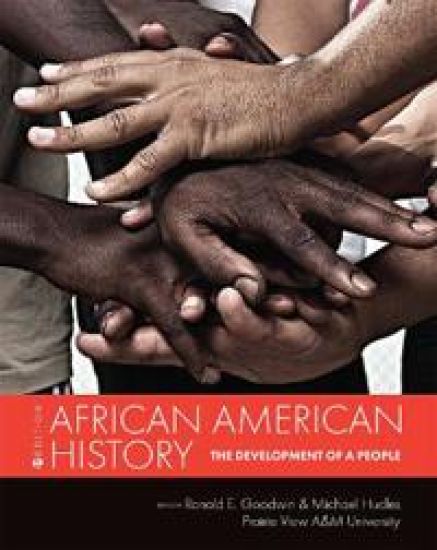
African American History

African American History

Ronald E. Goodwin; Michael Hucles

Cognella, Inc
2018
nidottu
African American History: The Development of a People provides students with diverse, concise essays that explore the experiences, traditions, and culture of African Americans in the United States from the nation’s early years to today. The readings center on the collective and individual experiences of African Americans and explore the cultural and historical contexts in which they live their lives.Part I of the anthology features readings that correspond to America’s Antebellum Era. The selections speak to slavery, politics, family life, survival, and indomitable will. Part II explores issues of the post-Civil War and Reconstruction eras, including reimagining life after slavery, Jim Crow, the Civil Rights Movement, boycotts, the emergence of black power, and more. The final part contains readings from influential figures and political bodies—including former presidents Abraham Lincoln and Barack Obama, civil rights leader Booker T. Washington, civil rights activist W.E.B. DuBois, and Supreme Court decisions—that demonstrate how African Americans have challenged and continue to challenge political and social systems through activism.A powerful and engaging anthology, African American History is well-suited for undergraduate and graduate courses in U.S. history, African American history, urban sociology, and black political thought.
African American History: The Development of a People

African American History: The Development of a People

Ronald E. Goodwin; Michael Hucles

Cognella Academic Publishing
2018
sidottu
African American History: The Development of a People provides students with diverse, concise essays that explore the experiences, traditions, and culture of African Americans in the United States from the nation's early years to today. The readings center on the collective and individual experiences of African Americans and explore the cultural and historical contexts in which they live their lives. Part I of the anthology features readings that corresp
Remembering the Days of Sorrow

Remembering the Days of Sorrow

Ronald E. Goodwin

State House Press
2014
nidottu
Buoyed by the Civil Rights movement of the 1950s and 1960s, historians began reevaluating previously held beliefs of American slavery. Under particular scrutiny was the belief in slavery’s paternalistic benevolence. Remembering the Days of Sorrow is not another attempt to revise this outdated perception justifying slavery. Others have already done that. As part of the New Deal’s national agenda of work relief programs, the Slave Narratives project provided employment while simultaneously preserving the memories of former slaves throughout the country. Remembering the Days of Sorrow allows the voices of Texas’s former slaves to resonate to a new generation as they remembered what it was like to suffer under the yoke of slavery as well as the yoke of old age and poverty in the Great Depression of the 1930s.