Kirjojen hintavertailu. Mukana 12 309 968 kirjaa ja 12 kauppaa.
Kirjailija
Ronald E. Heine
Kirjat ja teokset yhdessä paikassa: 10 kirjaa, julkaisuja vuosilta 2001-2023, suosituimpien joukossa The Commentaries of Origen and Jerome on St. Paul's Epistle to the Ephesians. Vertaile teosten hintoja ja tarkista saatavuus suomalaisista kirjakaupoista.
The cross and empty tomb form the center of the Christian faith. The church celebrates these two events in what is traditionally referred to as the Lord's Supper. It is the custom in some Christian traditions to have a brief meditation related to the Lord's Supper immediately prior to participation. These may be given by the pastor or by a layperson who presides over the ceremony. This book is a series of meditations delivered prior to the celebration of the Lord's Supper. It is our hope that they will be useful for laypeople who perform this service. They may also be helpful as private meditations on the central events of the Christian faith.
The late second and early third century was a turbulent time in the Roman Empire and in the relationship between the empire and the church. Origen was the son of a Christian martyr and was himself imprisoned and tortured in his late life in a persecution that targeted leaders of the church. Deeply pious and a gifted scholar, Origen stands as one of the most influential Christian teachers in church history, and also one of the most controversial. This introduction to Origen begins by looking at some of the circumstances that were formative influences on his life. It then turns to some key elements in his thought. The approach here differs from that taken by most earlier studies by working from the central position that Scripture had for Origen. Heine argues that Origen's thought, in his later life especially, reflects his continual interaction with the Bible.
The late second and early third century was a turbulent time in the Roman Empire and in the relationship between the empire and the church. Origen was the son of a Christian martyr and was himself imprisoned and tortured in his late life in a persecution that targeted leaders of the church. Deeply pious and a gifted scholar, Origen stands as one of the most influential Christian teachers in church history, and also one of the most controversial. This introduction to Origen begins by looking at some of the circumstances that were formative influences on his life. It then turns to some key elements in his thought. The approach here differs from that taken by most earlier studies by working from the central position that Scripture had for Origen. Heine argues that Origen's thought, in his later life especially, reflects his continual interaction with the Bible.
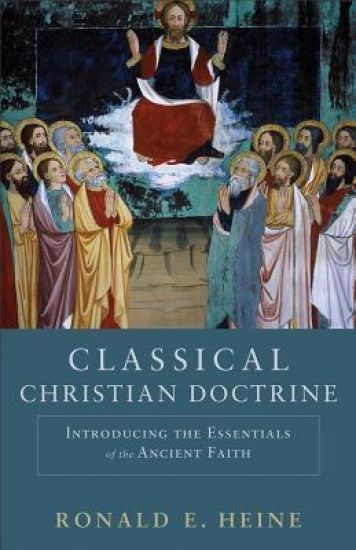
This clear and concise text helps readers grasp the doctrines of the Christian faith considered basic from the earliest days of Christianity. Ronald Heine, an internationally known expert on early Christian theology, developed this book from a course he teaches that has been refined through many years of classroom experience. Heine primarily uses the classical Christian doctrines of the Nicene Creed to guide students into the essentials of the faith.This broadly ecumenical work will interest students of church history or theology as well as adult Christian education classes in church settings. Sidebars identify major personalities and concepts, and each chapter concludes with discussion questions and suggestions for further reading.
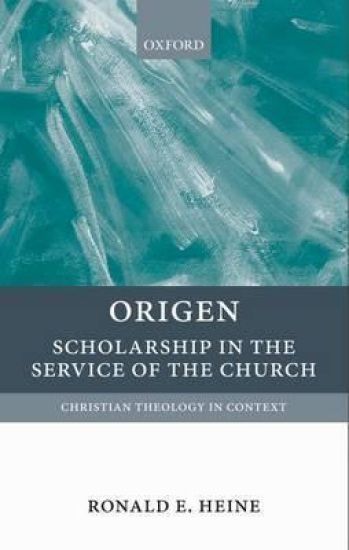
This book is about the life and thought of Origen (c.185-254 A.D.), the most important Greek-speaking Christian theologian and Biblical scholar in antiquity. His writings included works on the text of the Bible, commentaries and sermons on most of the books of the Bible, a major defense of the Christian faith against a philosophical skeptic, and the first attempt at writing systematic theology ever made. Ronald E. Heine presents Origen's work in the context of the two urban centers where he lived-Alexandria in Egypt, and Caesarea in Palestine. Heine argues that these urban contexts and their communities of faith had a discernable impact on Origen's intellectual work. The study begins with a description of Roman Alexandria where Origen spent the first forty-six years of his life. The thought of the Alexandrian Christian community in which Origen was born and in whose service he produced his first written works is examined from the limited resources that have survived. The remains of Origen's writings produced in Alexandria provide information about his early theological views as well as the circumstances of his life in Alexandria. Heine discusses the issues of the canon and text of the Bible used by Origen and the Alexandrian Christian community and the special work called the Hexapla which he produced on the text of the Septuagint. Origen's later life in Caesarea was shaped by pastoral as well as teaching duties. These responsibilities put him in contact with the city's large Jewish population. Heine argues that the focus of Origen's thought shifts in this period from his earlier Alexandrian occupation with Gnostic issues to the complex questions concerning the relationship between church and synagogue and the ultimate fate of the Jews. In his final years it appears that Origen was rethinking some of the views he had espoused in his earlier work.
This book is about the life and thought of Origen (c.185-254 A.D.), the most important Greek-speaking Christian theologian and Biblical scholar in antiquity. His writings included works on the text of the Bible, commentaries and sermons on most of the books of the Bible, a major defense of the Christian faith against a philosophical skeptic, and the first attempt at writing systematic theology ever made. Ronald E. Heine presents Origen's work in the context of the two urban centers where he lived-Alexandria in Egypt, and Caesarea in Palestine. Heine argues that these urban contexts and their communities of faith had a discernable impact on Origen's intellectual work. The study begins with a description of Roman Alexandria where Origen spent the first forty-six years of his life. The thought of the Alexandrian Christian community in which Origen was born and in whose service he produced his first written works is examined from the limited resources that have survived. The remains of Origen's writings produced in Alexandria provide information about his early theological views as well as the circumstances of his life in Alexandria. Heine discusses the issues of the canon and text of the Bible used by Origen and the Alexandrian Christian community and the special work called the Hexapla which he produced on the text of the Septuagint. Origen's later life in Caesarea was shaped by pastoral as well as teaching duties. These responsibilities put him in contact with the city's large Jewish population. Heine argues that the focus of Origen's thought shifts in this period from his earlier Alexandrian occupation with Gnostic issues to the complex questions concerning the relationship between church and synagogue and the ultimate fate of the Jews. In his final years it appears that Origen was rethinking some of the views he had espoused in his earlier work.
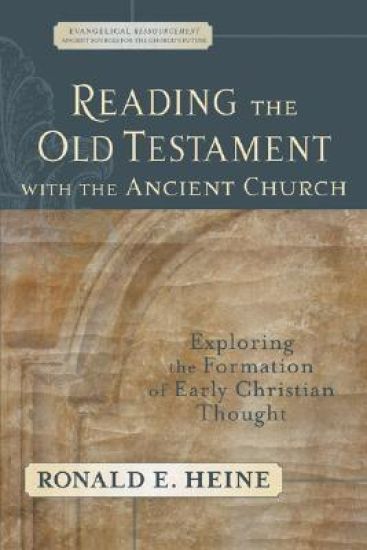
The contemporary church dismisses Christianity's foundational Scriptures at its own peril. However, the teachings of the Old Testament are less and less at the center of congregational preaching and conversation. The early church fathers--visionaries such as Augustine, Origen, and Tertullian--embraced the Hebrew Scriptures, allowing the Old Testament to play a central role in the formation of their beliefs. As today's Christians struggle to relate to concepts such as the Jewish law and the prophets, pastors and laypersons benefit from looking through the lenses of these thoughtful pioneers. This latest volume in the Evangelical Ressourcement series helps the Old Covenant to come alive.
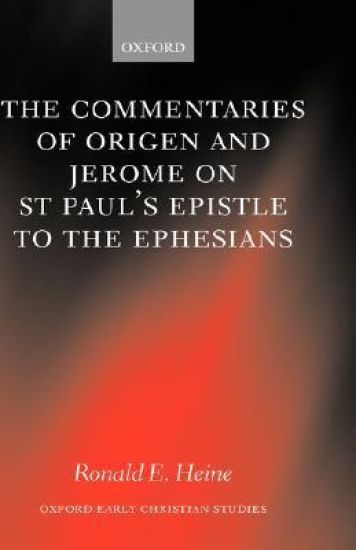
This important study provides the first English translation of both the surviving fragments of Origen's Commentary on Ephesians and of the complete text of Jerome's Commentary on Ephesians. The two translations are placed parallel to one another where they treat the same texts in Ephesians thus showing Jerome's extensive dependence on Origen's commentary. By using collateral texts from other works of Origen, Jerome, and Rufinus, the author is able to show Jerome's dependence on Origen in numerous passages in his commentary where the Greek text of Origen's commentary is lost. The translation is accompanied by Heine's illuminating commentary and a substantial introduction sets the works in their historical context. The book makes a significant contribution not only to scholarship on Origen and Jerome, but also to the wider question of the interpretation of scripture in the early Christian centuries.
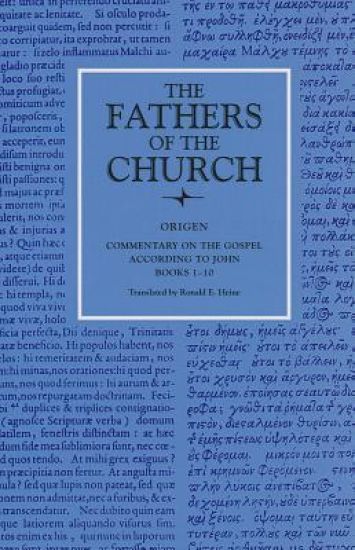
Origen composed at least thirty-two books of a commentary on the Gospel according to John, at the request of St. Ambrose of Milan. Of these, only nine books are extant in almost complete form, although we have selections of others persevered in other collections of the works of Origen. The commentary proceeds verse by verse, and is particularly notable for its emphasis on the spiritual meaning of the Gospel.This volume contains books 1,2,6, and 10, and fragments of books 4 and 5. Origen's main interest is the allegorical interpretation of the Gospel according to John, which makes this an important work in the study of Origen's mystical thought. A secondary interest is the refutation of Valentinian gnosticism. According to Eusebius, Ambrose had been a Valentinian before his conversion by Origen, and Origen refers to the Gnostic writer Heracleon regularly throughout the commentary in order to refute his views.Although the refutation of Heracleon may have been a stimulus for the composition of this work, Origen moved beyond this goal in order to present a commentary on the Gospel which would appeal to the growing number of educated Christians who wanted a scientific exegesis. The author's writing covers a wide range of historical, theological, philosophical and etymological topics, all focused on this Gospel of "spiritual food." "We might dare to say," Origen says as he begins his commentary, "that the Gospels are the first-fruits of all Scriptures, but that the first-fruits of the Gospels is that according to John. How great must be our understanding, that we may be able to understand in a worthy manner the word which is stored up in the earthen treasures of paltry language." The Spirit-led exegete can thus draw out of the words and symbols a higher level of insight. This "spiritual gospel" is the reality of which Christ's acts were symbols; it is the secrets hidden in the mysteries of Christ's words.