Kirjojen hintavertailu. Mukana 12 595 353 kirjaa ja 12 kauppaa.
Kirjailija
Ronald Garay
Kirjat ja teokset yhdessä paikassa: 5 kirjaa, julkaisuja vuosilta 1984-2011, suosituimpien joukossa Gordon McLendon. Vertaile teosten hintoja ja tarkista saatavuus suomalaisista kirjakaupoista.
Students and others interested in radio history will be intrigued by this fast-paced biography of Gordon McLendon's career in the radio industry, touching also on his work in motion pictures and involvement in Texas politics.Following a glimpse into his childhood, education, and military career, Ronald Garay describes McLendon's station ownership and management in Palestine, Texas; the development of a major network, the Liberty Broadcasting System; his live and recreated baseball and football programs; and his skirmishes with the major league baseball establishment. Much attention is given to how McLendon re-invented radio and competed with television and print media through his Top 40 music hits, disc jockey programming, and the use of local news. Important concerns regarding station trafficking, editorializing, and public interests are considered as well in this extraordinary book.
An excellent extended bibliographic essay, this volume also contains excellent prose introductions at the start of each chapter that provide background on the business of cable, the content of the programming, cable law and regulations, and videotex developments. . . . Current through 1987, this work will remain valuable as a snapshot of the cable industry even when future developments pass it by. . . . A fine scholarly treatment of the cable field, recommended for libraries at all levels. ChoiceThe practical and theoretical issues that cable television has posed for the public and the government, as well as for the industry itself have been the subject of intensive inquiry in the 1980s. Professor Garay's bibliographical guide is the first work to organize, classify, and provide access to this literature. It consists of bibliographical essays and references covering more than four hundred books, government-document, periodical, and periodical article titles that supply primary information on cable-related topics or lead the user to a helpful secondary source.
This book is well written and meticulously documented; it will add significantly to the available literature on West Virginia's industrial and community history. It should find a receptive audience among college and post- graduate scholars of industrial and labor history, West Virginia history, and Appalachian studies. - John Lilly, editor, Goldenseal The company owned the houses. It owned the stores. It provided medical and governmental services. It provided practically all the jobs. Gary, West Virginia, a coal mining town in the southern part of the state, was a creation of U.S. Steel. And while the workers were not formally bound to the company, their fortunes- like that of their community- were inextricably tied to the success of U.S. Steel. Gary developed in the early twentieth century as U.S. Steel sought a new supply of raw material for its industrial operations. The rich Pocahontas coal field in remote southern West Virginia provided the carbon-rich, low-sulfur coal the company required. To house the thousands of workers it would import to mine that coal bed, U.S. Steel carved a town out of the mountain wilderness. The company was the sole reason for its existence. In this fascinating book, Ronald Garay tells the story of how industry-altering decisions made by U.S. Steel executives reverberated in the hollows of Appalachia. From the area's industrial revolution in the early twentieth century to the peak of steel-making activity in the 1940s to the industry's decline in the 1970s, U.S. Steel and Gary, West Virginia offers an illuminating example of how coal and steel paternalism shaped the eastern mountain region and the limited ways communities and their economies evolve. In telling the story of Gary, this volume freshly illuminates the stories of other mining towns throughout Appalachia. At once a work of passionate journalism and a cogent analysis of economic development in Appalachia, this work is a significant contribution to the scholarship on U.S. business history, labor history, and Appalachian studies. Ronald Garay, a professor emeritus of mass communication at Louisiana State University, is the author of Gordon McLendon: The Maverick of Radio and The Manship School: A History of Journalism Education at LSU.
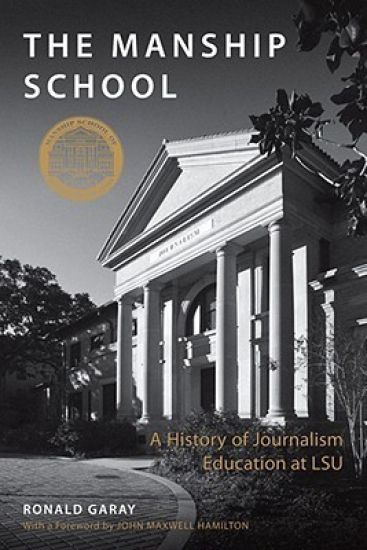
In September 2005, just days after Hurricane Katrina devastated New Orleans, journalists from the Times-Picayune and WWL-TV asked for and received assistance from LSU's Manship School of Mass Communication. The staff of the Times-Picayune used the School's computer labs to publish an online edition of the paper within hours of their arrival and a print edition just five days after the storm. WWL-TV reporters set up shop in the School's television facility and were on the air a few hours later, telling Katrina's story. What happened at the Manship School during that September week affirmed the ascendancy of this illustrious program. From a single journalism course offered during the 1912--1913 session, the LSU Manship School of Mass Communication has a long, rich tradition of excellence. In The Manship School, Ronald Garay, a longtime faculty member and former associate dean, traces not only the story of the Manship School but its role in the evolution of media education in general.Hugh Mercer Blain, a professor in the English department at LSU in the early 1900s, created the first LSU journalism courses and curriculum with the support of then LSU president Thomas Boyd, making LSU one of the first universities to offer journalism education. Garay describes Blain's efforts to structure a fledgling journalism department and his success in gaining national recognition for what soon would become the LSU School of Journalism and later the Manship School of Mass Communication. Garay chronicles the subsequent building of full-fledged journalism units in liberal arts colleges; the addition of new fields such as broadcasting, advertising, public relations, and political communication; the creation of doctoral programs; and the emergence of serious research on the impact of media on society. Throughout, Garay introduces the students, faculty, directors, and alumni who played important roles in the school's history -- including pioneer political consultant Raymond Strother, former Associated Press head Wes Gallagher, and Reader's Digest chairman and former CEO Thomas Ryder -- and details the evolution of LSU's student media, particularly The Reveille, KLSU-FM, and Tiger-TV. The book also describes the Manship School's emergence as an independent college at LSU and Dean John Maxwell Hamilton's role in re-orienting the School's intellectual and professional mission, raising the School's stature and visibility nationally, and incorporating state-of-the-art technology in classrooms and labs. The Manship School provides a valuable and comprehensive record of one of LSU's most distinguished units.
Using a format closely resembling a legislative history, Ronald Garay traces the progress of congressional television from its inception in 1922, when the first resolution seeking approval to broadcast House floor proceedings was introduced, to 1979, when legislation allowing that coverage was finally passed. Garay presents the major arguments that have been voiced, both inside and outside Congress, in support of or in opposition to televising congressional proceedings. He places the controversial congressional hearings of the 1950s, the Senate Watergate hearings, House Judiciary Committee debates on presidential impeachment, and other major events in the context of the overall legislative history of congressional television. Garay probes the motivations that prompted Congress, congressmen, and senators to pursue such legislation and also provides insights into the impact television has had on member conduct, legislative proceedings in the House and Senate, and on the congressional television audience.