Kirjojen hintavertailu. Mukana 12 390 323 kirjaa ja 12 kauppaa.

Kirjailija

Ronald Grigor Suny

Kirjat ja teokset yhdessä paikassa: 13 kirjaa, julkaisuja vuosilta 1988-2022, suosituimpien joukossa The Structure of Soviet History. Vertaile teosten hintoja ja tarkista saatavuus suomalaisista kirjakaupoista.

13 kirjaa

Kirjojen julkaisuhaarukka 1988-2022.

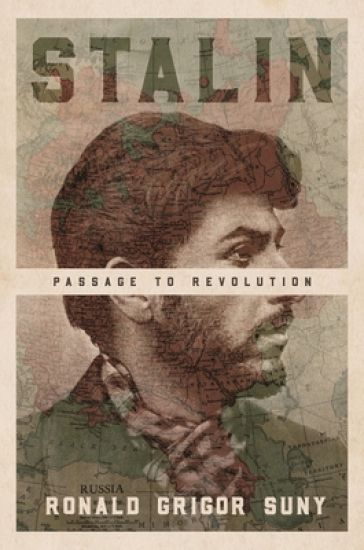
Stalin

Stalin

Ronald Grigor Suny

PRINCETON UNIVERSITY PRESS
2022
pokkari
A spellbinding new biography of Stalin in his formative yearsThis is the definitive biography of Joseph Stalin from his birth to the October Revolution of 1917, a panoramic and often chilling account of how an impoverished, idealistic youth from the provinces of tsarist Russia was transformed into a cunning and fearsome outlaw who would one day become one of the twentieth century's most ruthless dictators.In this monumental book, Ronald Grigor Suny sheds light on the least understood years of Stalin's career, bringing to life the turbulent world in which he lived and the extraordinary historical events that shaped him. Suny draws on a wealth of new archival evidence from Stalin's early years in the Caucasus to chart the psychological metamorphosis of the young Stalin, taking readers from his boyhood as a Georgian nationalist and romantic poet, through his harsh years of schooling, to his commitment to violent engagement in the underground movement to topple the tsarist autocracy. Stalin emerges as an ambitious climber within the Bolshevik ranks, a resourceful leader of a small terrorist band, and a writer and thinker who was deeply engaged with some of the most incendiary debates of his time.A landmark achievement, Stalin paints an unforgettable portrait of a driven young man who abandoned his religious faith to become a skilled political operative and a single-minded and ruthless rebel.
Stalin

Stalin

Ronald Grigor Suny

PRINCETON UNIVERSITY PRESS
2020
sidottu
A spellbinding new biography of Stalin in his formative yearsThis is the definitive biography of Joseph Stalin from his birth to the October Revolution of 1917, a panoramic and often chilling account of how an impoverished, idealistic youth from the provinces of tsarist Russia was transformed into a cunning and fearsome outlaw who would one day become one of the twentieth century's most ruthless dictators.In this monumental book, Ronald Grigor Suny sheds light on the least understood years of Stalin's career, bringing to life the turbulent world in which he lived and the extraordinary historical events that shaped him. Suny draws on a wealth of new archival evidence from Stalin's early years in the Caucasus to chart the psychological metamorphosis of the young Stalin, taking readers from his boyhood as a Georgian nationalist and romantic poet, through his harsh years of schooling, to his commitment to violent engagement in the underground movement to topple the tsarist autocracy. Stalin emerges as an ambitious climber within the Bolshevik ranks, a resourceful leader of a small terrorist band, and a writer and thinker who was deeply engaged with some of the most incendiary debates of his time.A landmark achievement, Stalin paints an unforgettable portrait of a driven young man who abandoned his religious faith to become a skilled political operative and a single-minded and ruthless rebel.
The Structure of Soviet History

The Structure of Soviet History

Ronald Grigor Suny

Oxford University Press Inc
2013
nidottu
Edited by eminent historian Ronald Grigor Suny, this unique collection of primary documents and important scholarly articles frames both the revolutionary changes and broad continuities in Soviet history. Organized chronologically and covering political, social, and cultural history from a variety of viewpoints, selections include official pronouncements and dissident manifestos, public speeches, private letters, and previously un-translated documents. An introductory essay provides the broad outlines of Soviet history, while chapter introductions summarize the main features and historical debates of each period. New to the Second Edition * Ten new essays and documents, including Jochen Hellbeck's "The Urge to Struggle On" (2006) and "Cars, Cars, and More Cars" by Lewis H. Siegelbaum (2008) * A new chapter (10) on Russia and the former Soviet states in the twenty-first century, as well as additional readings on women and gender * More sections on foreign policy and the Cold War
The Making of the Georgian Nation, Second Edition

The Making of the Georgian Nation, Second Edition

Ronald Grigor Suny

Indiana University Press
1994
pokkari
". . . the best study in English to date for an understanding of Georgian nationalism." —Religious Studies Review ". . . the standard account of Georgian history in English." —American Historical Review ". . . tour de force research . . . fascinating reading." —American Political Science Review Like the other republics floating free after the demise of the Soviet empire, the independent republic of Georgia is reinventing its past, recovering what had been forgotten or distorted during the long years of Russian and Soviet rule. Whether Georgia can successfully be transformed from a society rent by conflict into a pluralistic democratic nation will depend on Georgians rethinking their history. This is the first comprehensive treatment of Georgian history, from the ethnogenesis of the Georgians in the first millennium B.C., through the period of Russian and Soviet rule in the nineteenth and twentieth centuries, to the emergence of an independent republic in 1991, the ethnic and civil warfare that has ensued, and perspectives for Georgia's future.
The Baku Commune, 1917-1918

The Baku Commune, 1917-1918

Ronald Grigor Suny

Princeton University Press
2019
pokkari
Ronald Grigor Suny examines the Revolution in Baku, important provincial capital and oil center of the Russian empire. His study of Baku's national and class conflicts, Bolshevism as it developed in the city, and the failure of the Commune in 1918 amends our picture of the Revolution as the work of a highly conspiratorial party, seizing power by force and imposing its will on a reluctant population by terror.Originally published in 1972.The Princeton Legacy Library uses the latest print-on-demand technology to again make available previously out-of-print books from the distinguished backlist of Princeton University Press. These editions preserve the original texts of these important books while presenting them in durable paperback and hardcover editions. The goal of the Princeton Legacy Library is to vastly increase access to the rich scholarly heritage found in the thousands of books published by Princeton University Press since its founding in 1905.
The Baku Commune, 1917-1918

The Baku Commune, 1917-1918

Ronald Grigor Suny

PRINCETON UNIVERSITY PRESS
2019
sidottu
Ronald Grigor Suny examines the Revolution in Baku, important provincial capital and oil center of the Russian empire. His study of Baku's national and class conflicts, Bolshevism as it developed in the city, and the failure of the Commune in 1918 amends our picture of the Revolution as the work of a highly conspiratorial party, seizing power by force and imposing its will on a reluctant population by terror.Originally published in 1972.The Princeton Legacy Library uses the latest print-on-demand technology to again make available previously out-of-print books from the distinguished backlist of Princeton University Press. These editions preserve the original texts of these important books while presenting them in durable paperback and hardcover editions. The goal of the Princeton Legacy Library is to vastly increase access to the rich scholarly heritage found in the thousands of books published by Princeton University Press since its founding in 1905.
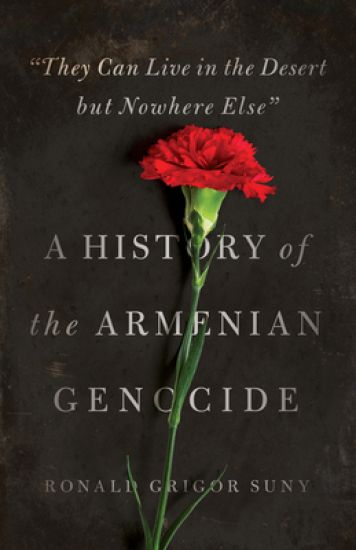
"They Can Live in the Desert but Nowhere Else"

"They Can Live in the Desert but Nowhere Else"

Ronald Grigor Suny

Princeton University Press
2017
pokkari
Starting in early 1915, the Ottoman Turks began deporting and killing hundreds of thousands of Armenians in the first major genocide of the twentieth century. By the end of the First World War, the number of Armenians in what would become Turkey had been reduced by 90 percent--more than a million people. A century later, the Armenian Genocide remains controversial but relatively unknown, overshadowed by later slaughters and the chasm separating Turkish and Armenian interpretations of events. In this definitive narrative history, Ronald Suny cuts through nationalist myths, propaganda, and denial to provide an unmatched account of when, how, and why the atrocities of 1915-16 were committed. Drawing on archival documents and eyewitness accounts, this is an unforgettable chronicle of a cataclysm that set a tragic pattern for a century of genocide and crimes against humanity.
The Gumilev Mystique

The Gumilev Mystique

Mark Bassin; Ronald Grigor Suny

Cornell University Press
2016
pokkari
Since the collapse of the Soviet Union, the legacy of the historian, ethnographer, and geographer Lev Nikolaevich Gumilev (1912–1992) has attracted extraordinary interest in Russia and beyond. The son of two of modern Russia's greatest poets, Nikolai Gumilev and Anna Akhmatova, Gumilev spent thirteen years in Stalinist prison camps, and after his release in 1956 remained officially outcast and professionally shunned. Out of the tumult of perestroika, however, his writings began to attract attention and he himself became a well-known and popular figure. Despite his highly controversial (and often contradictory) views about the meaning of Russian history, the nature of ethnicity, and the dynamics of interethnic relations, Gumilev now enjoys a degree of admiration and adulation matched by few if any other public intellectual figures in the former Soviet Union. He is freely compared to Albert Einstein and Karl Marx, and his works today sell millions of copies and have been adopted as official textbooks in Russian high schools. Universities and mountain peaks alike are named in his honor, and a statue of him adorns a prominent thoroughfare in a major city. Leading politicians, President Vladimir Putin very much included, are unstinting in their deep appreciation for his legacy, and one of the most important foreign-policy projects of the Russian government today is clearly inspired by his particular vision of how the Eurasian peoples formed a historical community. In The Gumilev Mystique, Mark Bassin presents an analysis of this remarkable phenomenon. He investigates the complex structure of Gumilev's theories, revealing how they reflected and helped shape a variety of academic as well as political and social discourses in the USSR, and he traces how his authority has grown yet greater across the former Soviet Union. The themes he highlights while untangling Gumilev's complicated web of influence are critical to understanding the political, intellectual, and ethno-national dynamics of Russian society from the age of Stalin to the present day.
The Gumilev Mystique

The Gumilev Mystique

Mark Bassin; Ronald Grigor Suny

Cornell University Press
2016
sidottu
Since the collapse of the Soviet Union, the legacy of the historian, ethnographer, and geographer Lev Nikolaevich Gumilev (1912–1992) has attracted extraordinary interest in Russia and beyond. The son of two of modern Russia's greatest poets, Nikolai Gumilev and Anna Akhmatova, Gumilev spent thirteen years in Stalinist prison camps, and after his release in 1956 remained officially outcast and professionally shunned. Out of the tumult of perestroika, however, his writings began to attract attention and he himself became a well-known and popular figure. Despite his highly controversial (and often contradictory) views about the meaning of Russian history, the nature of ethnicity, and the dynamics of interethnic relations, Gumilev now enjoys a degree of admiration and adulation matched by few if any other public intellectual figures in the former Soviet Union. He is freely compared to Albert Einstein and Karl Marx, and his works today sell millions of copies and have been adopted as official textbooks in Russian high schools. Universities and mountain peaks alike are named in his honor, and a statue of him adorns a prominent thoroughfare in a major city. Leading politicians, President Vladimir Putin very much included, are unstinting in their deep appreciation for his legacy, and one of the most important foreign-policy projects of the Russian government today is clearly inspired by his particular vision of how the Eurasian peoples formed a historical community. In The Gumilev Mystique, Mark Bassin presents an analysis of this remarkable phenomenon. He investigates the complex structure of Gumilev's theories, revealing how they reflected and helped shape a variety of academic as well as political and social discourses in the USSR, and he traces how his authority has grown yet greater across the former Soviet Union. The themes he highlights while untangling Gumilev's complicated web of influence are critical to understanding the political, intellectual, and ethno-national dynamics of Russian society from the age of Stalin to the present day.
"They Can Live in the Desert but Nowhere Else"

"They Can Live in the Desert but Nowhere Else"

Ronald Grigor Suny

Princeton University Press
2015
sidottu
Starting in early 1915, the Ottoman Turks began deporting and killing hundreds of thousands of Armenians in the first major genocide of the twentieth century. By the end of the First World War, the number of Armenians in what would become Turkey had been reduced by 90 percent--more than a million people. A century later, the Armenian Genocide remains controversial but relatively unknown, overshadowed by later slaughters and the chasm separating Turkish and Armenian interpretations of events. In this definitive narrative history, Ronald Suny cuts through nationalist myths, propaganda, and denial to provide an unmatched account of when, how, and why the atrocities of 1915-16 were committed. Drawing on archival documents and eyewitness accounts, this is an unforgettable chronicle of a cataclysm that set a tragic pattern for a century of genocide and crimes against humanity.
The Revenge of the Past

The Revenge of the Past

Ronald Grigor Suny

Stanford University Press
1993
sidottu
This timely work shows how and why the dramatic collapse of the Soviet Union was caused in large part by nationalism. Unified in their hostility to the Kremlin's authority, the fifteen constituent Union Republics, including the Russian Republic, declared their sovereignty and began to build state institutions of their own. The book has a dual purpose. The first is to explore the formation of nations within the Soviet Union, the policies of the Soviet Union toward non-Russian peoples, and the ultimate contradictions between those policies and the development of nations. The second, more general, purpose is to show how nations have grown in the twentieth century. The principle of nationality that buried the Soviet Union and destroyed its empire in Eastern Europe continues to shape and reshape the configuration of states and political movements among the new independent countries of the vast East European-Eurasian region.
Looking Toward Ararat

Looking Toward Ararat

Ronald Grigor Suny

Indiana University Press
1993
pokkari
As a new independent Republic of Armenia is established among the ruins of the Soviet Union, Armenians are rethinking their history—the processes by which they arrived at statehood in a small part of their historic homeland, and the definitions they might give to boundaries of their nation. Both a victim and a beneficiary of rival empires, Armenia experienced a complex evolution as a divided or an erased polity with a widespread diaspora. Ronald Grigor Suny traces the cultural and social transformations and interventions that created a new sense of Armenian nationality in the nineteenth and twentieth centuries. Perceptions of antiquity and uniqueness combined in the popular imagination with the experiences of dispersion, genocide, and regeneration to forge an Armenian nation in Transcaucasia. Suny shows that while the limits of Armenia at times excluded the diaspora, now, at a time of state renewal, the boundaries have been expanded to include Armenians who live beyond the borders of the republic.
Red Bread

Red Bread

Maurice Hindus; Ronald Grigor Suny

Indiana University Press
1988
pokkari
First published in 1931 and long out of print, Red Bread is Russian-born journalist Maurice Hindus's account of his return to his native village in 1929-30 to see for himself how Stalin's collectivization campaign was transforming the lives of the peasants among whom he had grown up in prerevolutionary times. This warm and human narrative conveys in personal and immediate terms his peasant neighbors' responses to being forced out of a centuries-old way of life and into the unfamiliar social setting and industrialized large-scale agriculture of the kolkhoz. Convinced that collectivized farming would bring Russian agriculture and the Russian peasant into the modern age, Hindus was nonetheless deeply troubled by the huge social cost and personal suffering inflicted by Stalin's ruthless campaign. Red Bread contributes an invaluable grassroots perspective on the era's dynamism and despair to the current discussion of the Soviet historical experience in the Soviet Union and the West.