Kirjojen hintavertailu. Mukana 12 657 676 kirjaa ja 12 kauppaa.
Kirjailija
Ronald K. L. Collins
Kirjat ja teokset yhdessä paikassa: 14 kirjaa, julkaisuja vuosilta 1995-2024, suosituimpien joukossa The People v. Ferlinghetti. Vertaile teosten hintoja ja tarkista saatavuus suomalaisista kirjakaupoista.
Mukana myös kirjoitusasut: Ronald K L Collins, Ronald K.L. Collins
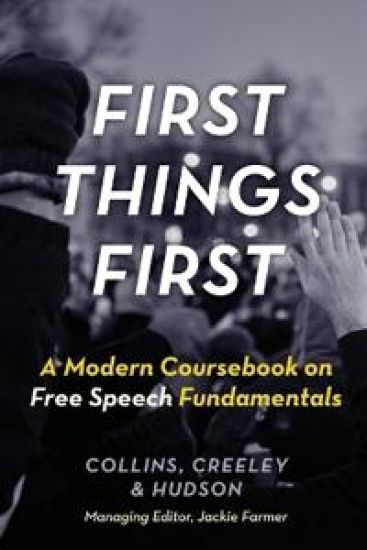
First Things First is a college coursebook like no other. Written by three First Amendment experts and professors, the book provides students with the fundamentals of modern American free speech law in a clear, concise, and accessible manner. First Things First also introduces readers to First Amendment issues related to topics such as student speech, freedom of the press, civil rights, LGBTQ rights, advertising, music censorship, and artificial intelligence. The text includes helpful study-aid summaries and questions. First Things First's vibrant and engaging tone ensures readers will leave this book with a dynamic understanding of their rights and the value of free speech.
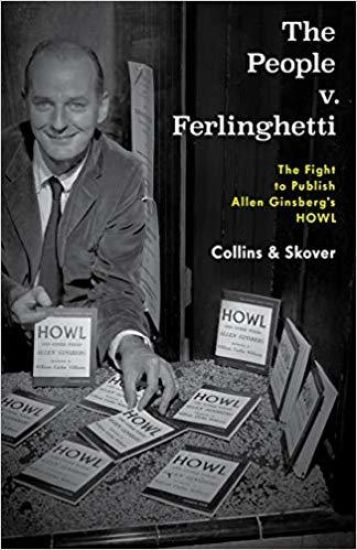
Lawrence Ferlinghetti’s name does not appear in any First Amendment treatise or casebook. And yet when the best-selling poet and proprietor of City Lights Books was indicted under California law for publishing and selling Allen Ginsberg’s poem, Howl, Ferglinghetti buttressed the tradition of dissident expression and ended an era when minds were still closed, candid literature still taboo, and when selling banned books was considered a crime. The People v. Ferlinghetti is the story of a rebellious poet, a revolutionary poem, an intrepid book publisher, and a bookseller unintimidated by federal or local officials. There is much color in that story: the bizarre twists of the trial, the swagger of the lead lawyer, the savvy of the young ACLU lawyer, and the surprise verdict of the Sunday school teacher who presided as judge. With a novelist’s flair, noted free speech authorities, Ronald K. L. Collins and David Skover tell the true story of an American maverick who refused to play it safe and who in the process gave staying power to freedom of the press in America. The People v. Ferlinghetti will be of interest to anyone interested the history of free speech in America and the history of the Beat poets.
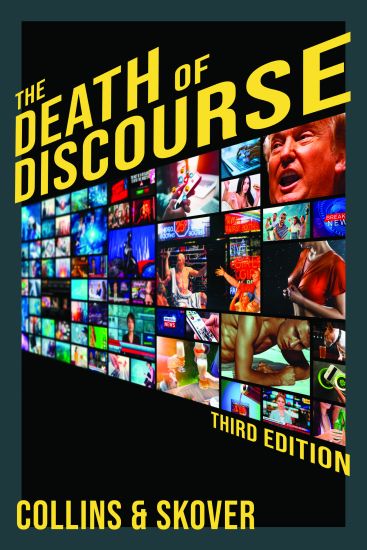
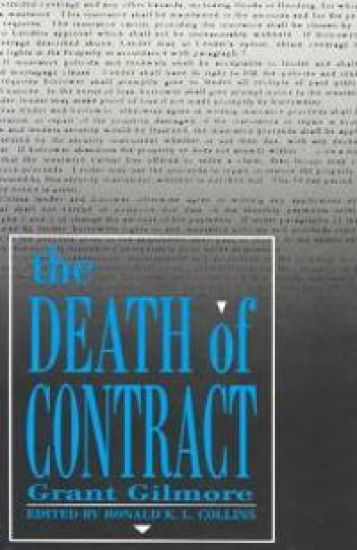
In this innovative book, the authors persuasively argue that the First Amendment to the Constitution has risen in the late twentieth century, like an ill guided individual with knife in hand, to murder a longstanding tradition of fine and meaningful discourse in the United States. We are bombarded with the cacophony of advertisement, the luridity of pornography, and the pointlessness of prime timepoor substitutes for intelligent consideration of ideas. }In this innovative book, the authors persuasively argue that the First Amendment to the Constitution has risen in the late twentieth century, like an ill-guided individual with knife in hand, to murder a long-standing tradition of fine and meaningful discourse in the United States. What has died is the essential kind of political discourse which promotes democracy; informs citizens; enlivens debate; and carries reason, method, and purpose. Instead, we are bombarded with the cacophony of advertisement, the luridity of pornography, and the pointlessness of prime time.With satirical spirit and wityet to a very serious purpose the narrative of this lively study calls upon many of the very tricks it criticizes. The text is augmented by amusing tales, poetry, tv zaps, eyebites, and boxes of aphorisms resonating between high and low culture, between Plato and Geraldo and Madonna and Mahler to make its points, the discussion reveals how discourse in contemporary America has lost its integrity and its soul.
In this innovative book, the authors persuasively argue that the First Amendment to the Constitution has risen in the late twentieth century, like an ill guided individual with knife in hand, to murder a longstanding tradition of fine and meaningful discourse in the United States. We are bombarded with the cacophony of advertisement, the luridity of pornography, and the pointlessness of prime timepoor substitutes for intelligent consideration of ideas. }In this innovative book, the authors persuasively argue that the First Amendment to the Constitution has risen in the late twentieth century, like an ill-guided individual with knife in hand, to murder a long-standing tradition of fine and meaningful discourse in the United States. What has died is the essential kind of political discourse which promotes democracy; informs citizens; enlivens debate; and carries reason, method, and purpose. Instead, we are bombarded with the cacophony of advertisement, the luridity of pornography, and the pointlessness of prime time.With satirical spirit and wityet to a very serious purpose the narrative of this lively study calls upon many of the very tricks it criticizes. The text is augmented by amusing tales, poetry, tv zaps, eyebites, and boxes of aphorisms resonating between high and low culture, between Plato and Geraldo and Madonna and Mahler to make its points, the discussion reveals how discourse in contemporary America has lost its integrity and its soul.
In every era of communications technology - whether print, radio, television, or Internet - some form of government censorship follows to regulate the medium and its messages. Today we are seeing the phenomenon of 'machine speech' enhanced by the development of sophisticated artificial intelligence. Ronald K. L. Collins and David M. Skover argue that the First Amendment must provide defenses and justifications for covering and protecting robotic expression. It is irrelevant that a robot is not human and cannot have intentions; what matters is that a human experiences robotic speech as meaningful. This is the constitutional recognition of 'intentionless free speech' at the interface of the robot and receiver. Robotica is the first book to develop the legal arguments for these purposes. Aimed at law and communication scholars, lawyers, and free speech activists, this work explores important new problems and solutions at the interface of law and technology.
In every era of communications technology - whether print, radio, television, or Internet - some form of government censorship follows to regulate the medium and its messages. Today we are seeing the phenomenon of 'machine speech' enhanced by the development of sophisticated artificial intelligence. Ronald K. L. Collins and David M. Skover argue that the First Amendment must provide defenses and justifications for covering and protecting robotic expression. It is irrelevant that a robot is not human and cannot have intentions; what matters is that a human experiences robotic speech as meaningful. This is the constitutional recognition of 'intentionless free speech' at the interface of the robot and receiver. Robotica is the first book to develop the legal arguments for these purposes. Aimed at law and communication scholars, lawyers, and free speech activists, this work explores important new problems and solutions at the interface of law and technology.
There is no book of political strategy more canonical than Niccolò Machiavelli's The Prince, but few ethicists would advise policymakers to treat it as a bible. The lofty ideals of the law, especially, seem distant from the values that the word "Machiavellian" connotes, and judges are supposed to work above the realm of politics. In The Judge, however, Ronald Collins and David Skover argue that Machiavelli can indeed speak to judges, and model their book after The Prince. As it turns out, the number of people who think that judges in the U.S. are apolitical has been shrinking for decades. Both liberals and conservatives routinely criticize their ideological opponents on the bench for acting politically. Some authorities even posit the impossibility of apolitical judges, and indeed, in many states, judicial elections are partisan. Others advocate appointing judges who are committed to being dispassionate referees adhering to the letter of the law. However, most legal experts, regardless of their leanings, seem to agree that despite widespread popular support for the ideal of the apolitical judge, this ideal is mere fantasy. This debate about judges and politics has been a perennial in American history, but it intensified in the 1980s, when the Reagan administration sought to place originalists in the Supreme Court. It has not let up since. Ronald Collins and David Skover argue that the debate has become both stale and circular, and instead tackle the issue in a boldly imaginative way. In The Judge, they ask us to assume that judges are political, and that they need advice on how to be effective political actors. Their twenty-six chapters track the structure of The Prince, and each provides pointers to judges on how to cleverly and subtly advance their political goals. In this Machiavellian vision, law is inseparable from realpolitik. However, the authors' point isn't to advocate for this coldly realistic vision of judging. There ultimate goal is identify both legal realists and originalists as what they are: explicitly political (though on opposite ends of the ideological spectrum). Taking its cues from Machiavelli, The Judge describes what judges actually do, not what they ought to do.
America values dissent. It tolerates, encourages and protects it. But what is this thing we value? That is a question never asked. 'Dissent' is treated as a known fact. For all that has been said about it - in books, articles, judicial opinions, and popular culture - it is remarkable that no one has devoted much, if any, ink to explaining what dissent is. No one has attempted to sketch its philosophical, linguistic, legal or cultural meanings or usages. There is a need to develop some clarity about this phenomenon, for not every difference of opinion, symbolic gesture, public activity in opposition to government policy, incitement to direct action, revolutionary effort or political assassination need be tagged dissent. In essence, we have no conceptual yardstick. It is just that measure of meaning that On Dissent offers.
In a stinging dissent to a 1961 Supreme Court decision that allowed the Illinois state bar to deny admission to prospective lawyers if they refused to answer political questions, Justice Hugo Black closed with the memorable line, "We must not be afraid to be free." Black saw the First Amendment as the foundation of American freedom--the guarantor of all other Constitutional rights. Yet since free speech is by nature unruly, people fear it. The impulse to curb or limit it has been a constant danger throughout American history. In We Must Not Be Afraid to Be Free, Ron Collins and Sam Chaltain, two noted free speech scholars and activists, provide authoritative and vivid portraits of free speech in modern America. The authors offer a series of engaging accounts of landmark First Amendment cases, including bitterly contested cases concerning loyalty oaths, hate speech, flag burning, student anti-war protests, and McCarthy-era prosecutions. The book also describes the colorful people involved in each case--the judges, attorneys, and defendants--and the issues at stake. Tracing the development of free speech rights from a more restrictive era--the early twentieth century--through the Warren Court revolution of the 1960s and beyond, Collins and Chaltain not only cover the history of a cherished ideal, but also explain in accessible language how the law surrounding this ideal has changed over time. Essential for anyone interested in this most fundamental of our rights, We Must Not Be Afraid to Be Free provides a definitive and lively account of our First Amendment and the price courageous Americans have paid to secure them.