Kirjojen hintavertailu. Mukana 12 390 323 kirjaa ja 12 kauppaa.

Kirjailija

Ronald L. Danielian

Kirjat ja teokset yhdessä paikassa: 2 kirjaa, julkaisuja vuosilta 2019-2020, suosituimpien joukossa The Forgotten Deficit. Vertaile teosten hintoja ja tarkista saatavuus suomalaisista kirjakaupoista.

2 kirjaa

Kirjojen julkaisuhaarukka 2019-2020.

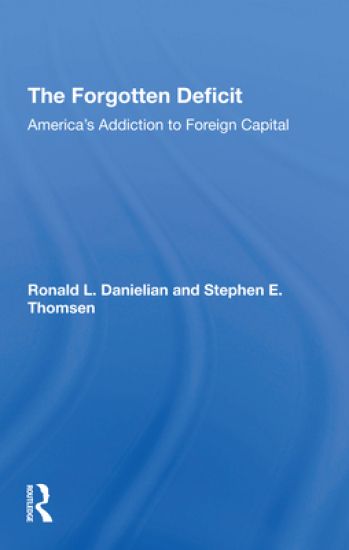
The Forgotten Deficit

The Forgotten Deficit

Ronald L. Danielian; Stephen E Thomsen

Routledge
2020
nidottu
"The United States is the world's largest debtor nation. An often-overlooked element of the deficit, U.S. capital accounts, is the focus of this critical analysis. The evidence shows that the inflow of foreign money to finance U.S. consumption is going into short- and medium-term, interest-rate-sensitive, liquid instruments. U.S. debt instruments, rather than equities, are the asset of choice. The authors argue that over the long term this trend will adversely affect the U.S. economy, as every citizen ultimately must constrain consumption to pay the financing charges on the enormous debt buildup. Capital costs in the United States must remain several points higher than in the markets of its major trading competitors. Constraints will be imposed on U.S. policymakers as they attempt to maintain the substantial U.S. economic, political, and military presence overseas. Divided into an analysis of direct investment and portfolio capital flows, this book contains specific policy recommendations after each section. The authors examine the effect of capital flows on the composition of the U.S. current account transactions with the rest of the world, the linkage of foreign investments to trade, and the effects of protectionism by the Japanese in direct investments. "

The Forgotten Deficit

The Forgotten Deficit

Ronald L. Danielian; Stephen E Thomsen

Routledge
2019
sidottu
"The United States is the world's largest debtor nation. An often-overlooked element of the deficit, U.S. capital accounts, is the focus of this critical analysis. The evidence shows that the inflow of foreign money to finance U.S. consumption is going into short- and medium-term, interest-rate-sensitive, liquid instruments. U.S. debt instruments, rather than equities, are the asset of choice. The authors argue that over the long term this trend will adversely affect the U.S. economy, as every citizen ultimately must constrain consumption to pay the financing charges on the enormous debt buildup. Capital costs in the United States must remain several points higher than in the markets of its major trading competitors. Constraints will be imposed on U.S. policymakers as they attempt to maintain the substantial U.S. economic, political, and military presence overseas. Divided into an analysis of direct investment and portfolio capital flows, this book contains specific policy recommendations after each section. The authors examine the effect of capital flows on the composition of the U.S. current account transactions with the rest of the world, the linkage of foreign investments to trade, and the effects of protectionism by the Japanese in direct investments. "