Kirjojen hintavertailu. Mukana 12 595 353 kirjaa ja 12 kauppaa.

Kirjailija

Ronald L. Eisenberg

Kirjat ja teokset yhdessä paikassa: 16 kirjaa, julkaisuja vuosilta 1993-2024, suosituimpien joukossa What Radiology Residents Need to Know: Chest Radiology. Vertaile teosten hintoja ja tarkista saatavuus suomalaisista kirjakaupoista.

Mukana myös kirjoitusasut: Ronald L Eisenberg

16 kirjaa

Kirjojen julkaisuhaarukka 1993-2024.

Comprehensive Radiographic Pathology

Comprehensive Radiographic Pathology

Ronald L. Eisenberg

Elsevier Health Sciences
2024
nidottu
Gain the pathology knowledge you need to produce quality radiographic images! A fully illustrated, easy-to-follow guide, Comprehensive Radiographic Pathology, 8th Edition describes the pathologies that can be diagnosed with medical imaging. The book provides an understanding of the principles of pathology and explains how to recognize the radiographic appearance of specific diseases and conditions. By mastering the suggested imaging techniques, you will produce the high-resolution images that lead to accurate diagnoses. Written by Ronald L. Eisenberg, an experienced radiologist and educator, this book will help you become a more competent professional and a valued contributor to the diagnostic team. Radiographer Notes provide helpful suggestions for producing optimal radiographs of each organ system, and include information on positioning and exposure factor adjustments for patients with specific conditions or handling requirements. Hundreds of high-quality illustrations cover all modalities, clearly demonstrating the clinical manifestations of different disease processes and providing a standard for the high-quality images needed in radiography practice. Discussion of widely used imaging modalities includes the advantages and limitations of ultrasound, computed tomography (CT), magnetic resonance imaging (MRI), nuclear medicine, single-photon emission computed tomography (SPECT), positron emission tomography (PET), and fusion imaging. Summary tables list the location and radiographic appearance of each disease as well as its treatment. Recommended imaging procedures are provided for each pathologic condition, along with the sequence for choosing and performing alternative imaging studies if necessary. Review questions help you assess your comprehension of the material in each chapter, with an answer key at the back of the book. Thorough explanations provide an understanding of the pathologies that can be diagnosed with medical imaging. Systems-based approach makes it easy to locate information and study one area at a time, helping you build an understanding of pathology. NEW! Updated Radiographer Notes are included at the beginning of each chapter. NEW! 30 new images are added, including CT scans pertaining to guidelines on detection of lung cancer. NEW! Coverage of A.I. (artificial intelligence) and personalized medicine is added to this edition. NEW! Coverage of COVID as pertaining to chest X-rays is added to this edition.
Workbook for Comprehensive Radiographic Pathology

Workbook for Comprehensive Radiographic Pathology

Ronald L. Eisenberg

Elsevier Health Sciences
2024
nidottu
Reinforce your understanding of radiographic pathology with this practical workbook! With chapters corresponding to those in Eisenberg's Comprehensive Radiographic Pathology, 8th Edition, this workbook provides activities and exercises that help you review disease processes, their radiographic appearance, and their likely treatment. Each chapter includes fill-in-the-blank, matching, and multiple-choice questions, as well anatomy labeling exercises, case studies, and a self-test to assess your comprehension. An answer key is provided at the back of the book. Thorough review reflects the content in the Comprehensive Radiographic Pathology textbook and helps you understand disease processes, their radiographic appearance, and how to produce optimal diagnostic images. Wide variety of exercises includes fill-in-the-blank, matching, labeling, and multiple-choice questions, all designed to help you learn anatomy, identify pathology, and make technique adjustments. Case studies with diagnostic images make it easier to notice relevant details on the image and become familiar with the appearance of pathologies in different imaging modalities. Anatomic images let you review A&P and gain practice with labeling and analysis. Self-tests in each chapter include 20-40 multiple-choice questions, allowing you to assess your understanding of the material. NEW! Exercises on A.I. (artificial intelligence) and personalized medicine are added to this edition. NEW! Content on COVID as pertaining to chest X-rays is added. NEW! Updated questions are included in each chapter, as well as updated illustrations.
613 Mitzvot

613 Mitzvot

Ronald L Eisenberg

Shengold Publishers Inc.,U.S.
2022
pokkari
The 613 commandments embodied in the Torah are presented in layman's language, easy to look up. Commentaries from the Mishnah and the Talmud to present day interpretations are included. A handy source for studying the mitzvot, and also an easy refrence tool for looking up a specific mitzvah.
What Radiology Residents Need to Know: Musculoskeletal Radiology

What Radiology Residents Need to Know: Musculoskeletal Radiology

Ronald L. Eisenberg

Springer Nature Switzerland AG
2022
nidottu
This book is an introduction to musculoskeletal radiology, specifically designed for the needs of first-year residents. On the first rotation in musculoskeletal imaging, radiology residents are asked to learn significant amounts of information at a fast and unrelenting pace. However, most current books are densely written and contain far more material than residents need to know. Moreover, the number, variety and quality of images is often limited.What Radiology Residents Need to Know: Musculoskeletal Radiology answers these needs by presenting the important information in bullet fashion, divided into convenient sub-units, such as “clinical information,” “imaging findings,” and “management.” In most cases, an individual pathological condition can be presented in one page or less. In addition, it contains tips on approaching and interpreting radiographs, MRI and CT based on decades of practical experience and teaching residents at the work station.With liberal use of illustrations in the text and an online bank of many more high-quality images, this book gives readers a comprehensive library of musculoskeletal imaging scans and serves as an ideal guide for radiology residents.
Workbook for Comprehensive Radiographic Pathology

Workbook for Comprehensive Radiographic Pathology

Ronald L. Eisenberg; Nancy M. Johnson

Elsevier - Health Sciences Division
2020
nidottu
Corresponding to the chapters in Eisenberg and Johnson's Comprehensive Radiographic Pathology, 7th Edition, this workbook includes practical activities that help you better understand disease processes, their radiographic appearance, and their likely treatment. Each chapter includes objectives; anatomy labeling exercises; multiple-choice, matching, and fill-in-the-blank questions; case studies with accompanying images and discussion questions; and self-tests. Anatomic images for labeling and analysis provides a refresher on content covered in anatomy and physiology courses. Wide variety of exercises that complement the textbook reinforce concepts and assesses learning. Case studies with diagnostic images familiarize you with how pathologies appear in different imaging modalities. Self-tests for each chapter include 20-40 multiple-choice questions to help you assess your own mastery. NEW! Updated images and exercises in all modalities help you firmly grasp difficult pathology basics. NEW! Revised content reflecting the latest ARRT Guidelines assists you in preparing for boards. NEW! Inclusion of certain pediatric pathologies expands comfort level with child and adolescent patients.
What Radiology Residents Need to Know: Chest Radiology

What Radiology Residents Need to Know: Chest Radiology

Ronald L. Eisenberg

Springer Nature Switzerland AG
2019
nidottu
This book is an introduction to chest radiology, specifically designed for the needs of first-year residents. On the first rotation in chest imaging, radiology residents are asked to learn significant amounts of information at a fast and unrelenting pace. However, most current books are densely written and contain far more material than residents need to know. Moreover, the number, variety, and quality of images is often limited. What Radiology Residents Need to Know: Chest Radiology answers these needs by presenting the important information in bullet fashion, divided into convenient sub-units, such as “clinical information,” “imaging findings,” and “management.” In most cases, an individual pathological condition can be presented in one page or less. This book covers such topics as volume loss, pneumonia, pulmonary edema, inhalation diseases, and pulmonary, mediastinal, and pleural tumor imaging. In addition, it contains tips on approaching andinterpreting chest radiographs and CT based on decades of practical experience and teaching residents at the work station. With liberal use of illustrations in the text and an online bank of many more high-quality images, this book gives readers a comprehensive library of chest imaging scans and serves as an ideal guide for radiology residents.
850 Intriguing Questions about Judaism

850 Intriguing Questions about Judaism

Ronald L. Eisenberg

Rowman Littlefield
2015
sidottu
Both Jews and non-Jews alike have many misconceptions of Jewish teachings and practices. Some seemingly unusual statements about Jewish teachings and practices are actually true, whereas some apparently reasonable and popularly believed statements are false. Many statements regarding Jewish teachings and practice are partly true and partly false, requiring a more nuanced explanation of the true situation. In 850 Intriguing Questions about Judaism: True, False, or In Between, Ronald L. Eisenberg explores a wide range of Jewish teachings and practices, discussing the degree to which they are true, false or a bit of both. Offered in question-and-answer format, readers are invited to explore with the author what they really know about Jewish life, history, holidays, and scripture. Eisenberg tackles all sorts of topics, from artificial insemination to organ donation and euthanasia, second day festivals in the Diaspora to the why really sound the shofar, from what the ner tamid signifies to Jewish “rules of war.” Throughout, Eisenberg takes a nuanced approach to his topics, laying the groundwork for a useful survey of what we ought to know better about Jews, Judaism, and Jewish teachings and practices. This is perfect reference work for anyone curious about Judaism, Jewish life, and Jewish history, and who has ever wondered what the real answer was to the many questions they might have had.
Tips for the Residency Match

Tips for the Residency Match

Justin W. Kung; Pauline M. Bishop; Priscilla J. Slanetz; Ronald L. Eisenberg

John Wiley Sons Inc
2015
nidottu
Tips for the Residency Match is a unique guide for medical students applying for residency positions. Packed with hints, tips, and recommendations from both program directors and current residents, Tips for the Residency Match chronologically covers the key information required to excel during the residency application process - from résumé advice and preparing for the interview and beyond. Both insightful and practical, Tips for the Residency Match features a wide spectrum of medical specialties and an extra section for foreign graduates.Tips for the Residency Match is: Uniquely tailored to the needs of those applying for US residency positionsWritten by leading Residency Directors and current residents in the major specialtiesOffers unprecedented access to how departmental decisions about the Match are made Boasting expert advice and a wide scope, Tips for the Residency Match is the ideal companion for those applying for residency positions throughout the United States.
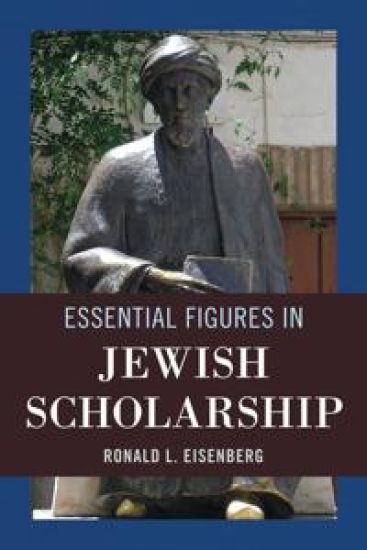
Essential Figures in Jewish Scholarship

Essential Figures in Jewish Scholarship

Ronald L. Eisenberg

Jason Aronson Inc. Publishers
2014
sidottu
Despite the fact that scholars of the post-Talmudic era have been of great importance to the continued interpretation of religious texts for more than a millennium, they are typically not given as much attention as their Talmudic-era predecessors. Essential Figures in Jewish Scholarship compiles thorough but manageable entries on the figures most vital to an understanding the scholarship of the post-Talmudic era. In this valuable reference, Dr. Ronald L. Eisenberg catalogs and explains the importance of more than two hundred figures who are most vital to an understanding of the teachings of the post-Talmudic rabbis. For these figures, who fall into the categories of Geonim (rabbis writing from 600–1100), Rishonim (1100—1500), and Acharonim (1500–present day), Eisenberg provides summaries of major teachings and scholarly contributions, as well as biographical information and illustrative quotations from relevant writings.
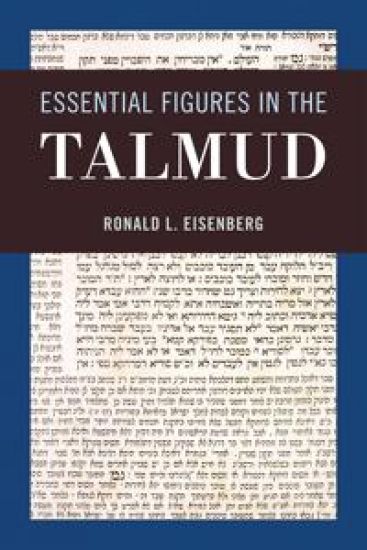
Essential Figures in the Talmud

Essential Figures in the Talmud

Ronald L. Eisenberg

Jason Aronson Inc. Publishers
2012
sidottu
The Talmud chronicles the early development of rabbinic Judaism through the writings and commentaries of the rabbis whose teachings form its foundation. However, this key religious text is expansive, consisting of 63 books containing extensive discussions and interpretations of the Mishnah accumulated over several centuries. Sifting through the huge number of names mentioned in the Talmud to find information about one figure can be tedious and time-consuming, and most reference guides either provide only brief, unhelpful entries on every rabbi, including minor figures, or are so extensive that they can be more intimidating than the original text. In Essential Figures in the Talmud, Dr. Ronald L. Eisenberg explains the importance of the more than 250 figures who are most vital to an understanding and appreciation of Talmudic texts. This valuable reference guide consists of short biographies illustrating the significance of these figures while explaining their points of view with numerous quotations from rabbinic literature. Taking material from the vast expanse of the Talmud and Midrash, this book demonstrates the broad interests of the rabbis whose writings are the foundation of rabbinic Judaism. Both religious studies and rabbinical students and casual readers of the Talmud will benefit from the comprehensive entries on the most-frequently discussed rabbis and will gain valuable insights from this reader-friendly text. Complete in a single volume, this guide strikes a satisfying balance between the sparse, uninformative books and comprehensive but overly complex references that are currently the only places for inquisitive Talmud readers to turn. For any reader who wishes to gain a better understanding of Talmudic literature, Eisenberg’s text is just as “essential” as the figures listed within.
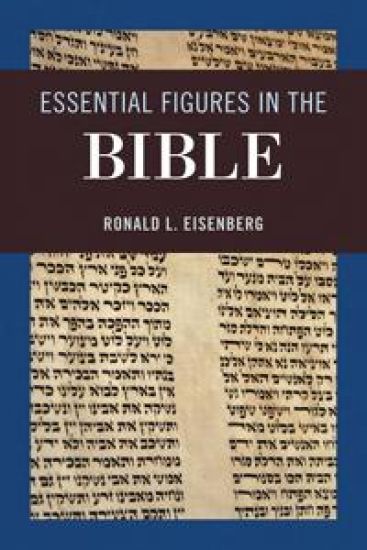
Essential Figures in the Bible

Essential Figures in the Bible

Ronald L. Eisenberg

Jason Aronson Inc. Publishers
2012
sidottu
For millions of people throughout the world, the Hebrew Bible functions as the foundation of their faith. For millions more, the same book functions as the subject of their studies. For both groups, the characters discussed in the Bible lend key insight to the lessons found there. However, sifting through the hundreds of names mentioned in this key religious text to find information about one figure can be tedious and time-consuming, and most reference guides either provide only brief, unhelpful entries on every character, including minor figures, or are so extensive that they can be more intimidating than the original text. Essential Figures in the Bible compiles thorough but manageable entries on the figures most vital to an understanding of the Bible and its teachings. In this valuable reference, Dr. Ronald L. Eisenberg catalogs and explains the importance of more than 250 figures who are most vital to an understanding of the Hebrew Bible and its teachings. For these figures selected from the more than 3,000 names found in the Hebrew Bible, Eisenberg provides summaries of the narratives relevant to each figure discussed along with illustrative quotations from the Bible and supplementary material from rabbinic literature when appropriate. Both religious studies and rabbinical students and casual readers of the Hebrew Bible will benefit from the comprehensive entries on the most-frequently discussed biblical figures and will gain valuable insights from this reader-friendly text. Complete in a single volume, this guide strikes a satisfying balance between the sparse, uninformative books and comprehensive but overly complex references that are currently the only places for inquisitive Bible readers to turn. For any reader who wishes to gain a better understanding of the Bible, Eisenberg’s text is just as “essential” as the figures listed within.
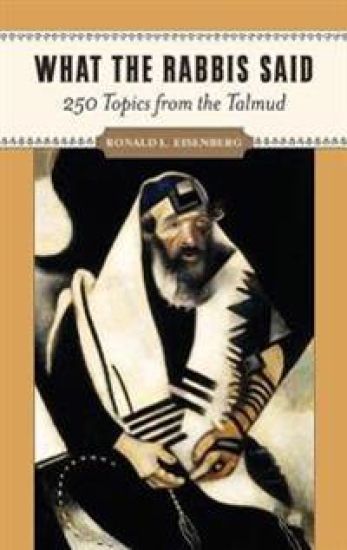
What the Rabbis Said

What the Rabbis Said

Ronald L. Eisenberg

Praeger Publishers Inc
2010
sidottu
This fascinating narrative illustrates and clarifies rabbinic views relating to more than 250 topics.The Talmud has been a source of study and debate for well over a millennia. What the Rabbis Said: 250 Topics from the Talmud brings that discussion out of the yeshiva to describe and clarify the views of the talmudic rabbis for modern readers. Much more than a compilation of isolated rabbinic quotations, the book intersperses talmudic statements within the narrative to provide a thoroughly engaging examination of the rabbinic point of view.Exploring the development of traditional Jewish thought during its formative period, the book summarizes the major rabbinic comments from the vast expanse of the Talmud and midrashic literature, demonstrating, among other things, that the rabbis often took divergent positions on a given issue rather than agreeing on a single "party line." As it delves into such broad topics as God, the Torah, mitzvot, law and punishment, synagogue and prayer, and life-cycle events, What the Rabbis Said will help readers understand and appreciate the views of those who developed the rabbinic Judaism that persists to the present day.Numerous endnotes provide a wealth of information for the scholarly reader without interrupting the flow of the textA glossary of lesser-known terms facilitates understanding
Jewish Traditions

Jewish Traditions

Ronald L. Eisenberg

Jewish Publication Society
2008
pokkari
Thanks to these generous donors for making the publication of this book possible: Miles z”l and Chris Lerman; David Lerman and Shelley WallockThe bestselling guide to understanding Jewish traditions, now in paperbackThis is a comprehensive and authoritative resource with ready answers to questions about almost all aspects of Jewish life and practice: life-cycle events, holidays, ritual and prayer, Jewish traditions and customs, and more. Ronald Eisenberg has distilled an immense amount of material from classic and contemporary sources into a single volume, which provides thousands of insights into the origins, history, and current interpretations of a wealth of Jewish traditions and customs.Divided into four sections-Synagogue and Prayers, Sabbaths and Festivals, Life-Cycle Events, and Miscellaneous (a large section that includes such diverse topics as Jewish literature, food, and plants and animals)-this is an encyclopedic reference for anyone who wants easily accessible, accurate information about all things Jewish. Eisenberg writes for a wide, diversified audience, and is respectful of the range of practices and beliefs within today's American Jewish community-from Orthodox to liberal.
Dictionary of Jewish Terms

Dictionary of Jewish Terms

Ronald L Eisenberg

SHENGOLD PUBLISHERS INC.,U.S.
2007
nidottu
First Time in Paperback. Judaism is comprised of religious terms and customs, Hebrew, Aramaic and Yiddish terms as well as terms related to American Jewish life and the State of Israel. All of these facets of Judaism are represented in this new guide, with easy to read explanation and cross-references.
Applied Radiographic Calculations

Applied Radiographic Calculations

Cynthia A. Dennis; Ronald L. Eisenberg

W B Saunders Co Ltd
1993
sidottu
A thorough review of general mathematics and its applications in radiography as well as a handy reference for basic formulas and calculations used by radiographers. This book starts with basic mathematic principles and moves on to present the reader withcalculations required to produce high quality radiographic images and practice problems which aid in the understanding of these calculations. Areas discussed include mAs conversions, inverse square law, radiographic density and contrast, screens and gridratios, grid conversians, geometric and magnification unsharpness, and graphs and conversions between conventional and systems international (SI) units of radiation dosimetry. No other book provides such clear instruction for radiographic calculations. A handy Instructor's Manual is also available.