Kirjojen hintavertailu. Mukana 12 459 402 kirjaa ja 12 kauppaa.
Kirjailija
Ronald L. Lewis
Kirjat ja teokset yhdessä paikassa: 7 kirjaa, julkaisuja vuosilta 2004-2024, suosituimpien joukossa Black Coal Miners in America. Vertaile teosten hintoja ja tarkista saatavuus suomalaisista kirjakaupoista.
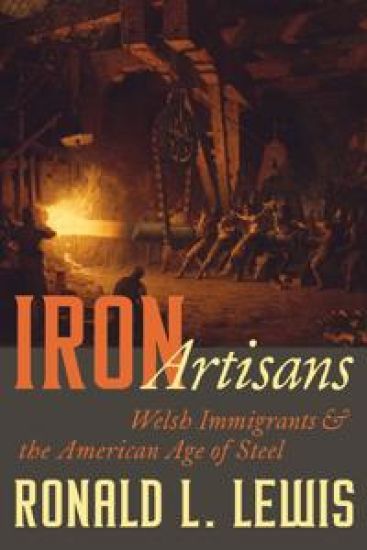
America’s emergence as a global industrial superpower was built on iron and steel, and despite their comparatively small numbers, no immigrant group played a more strategic role per capita in advancing basic industry than Welsh workers and managers. They immigrated in surges synchronized with the stage of America’s industrial development, concentrating in the coal and iron centers of Pennsylvania and Ohio. This book explores the formative influence of the Welsh on the American iron and steel industry and the transnational cultural spaces they created in mill communities in the tristate area - the greater upper Ohio Valley, eastern Ohio, northern West Virginia, and western Pennsylvania - including boroughs of Allegheny County, such as Homestead and Braddock. Focusing on the intersection of transnational immigration history, ethnic history, and labor history, Ronald Lewis analyzes continuity and change, and how Americanization worked within a small, relatively privileged, working-class ethnic group.
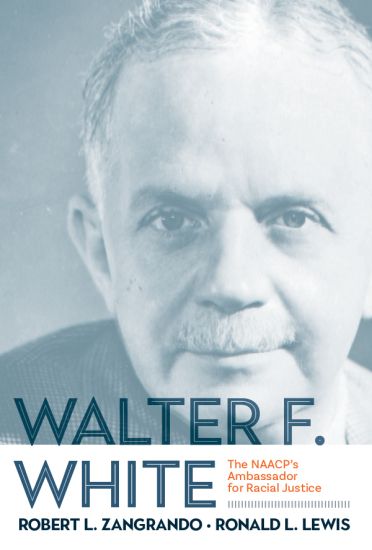
Walter F. White of Atlanta, Georgia, joined the National Association for the Advancement of Colored People (NAACP) in 1918 as an assistant to Executive Secretary James Weldon Johnson. When Johnson retired in 1929, White replaced him as head of the NAACP, a position he maintained until his death in 1955. During his long tenure, White was in the vanguard of the struggle for interracial justice. His reputation went into decline, however, in the era of grassroots activism that followed his death. White’s disagreements with the US Left, and his ambiguous racial background—he was of mixed heritage, could “pass” as white, and divorced a black woman to marry a white woman—fueled ambivalence about his legacy.In this comprehensive biography, Zangrando and Lewis seek to provide a reassessment of White within the context of his own time, revising critical interpretations of his career. White was a promoter of and a participant in the Harlem Renaissance, a daily fixture in the halls of Congress lobbying for civil rights legislation, and a powerful figure with access to the administrations of Roosevelt (via Eleanor) and Truman. As executive secretary of the NAACP, White fought incessantly to desegregate the American military and pushed to ensure equal employment opportunities. On the international stage, White advocated for people of color in a decolonized world, and for economic development aid to nations like India and Haiti, bridging the civil rights struggles at home and abroad.
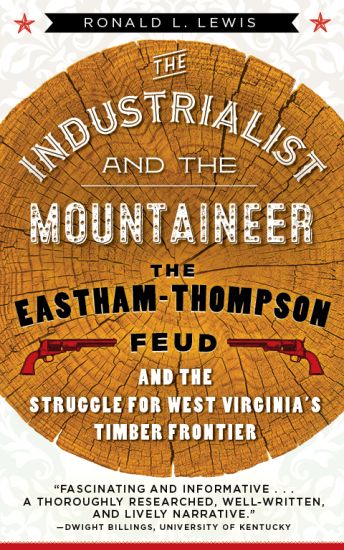
In 1897 a small landholder named Robert Eastham shot and killed timber magnate Frank Thompson in Tucker County, West Virginia, leading to a sensational trial that highlighted a clash between local traditions and modernizing forces. Ronald L. Lewis’s book uses this largely forgotten episode as a window into contests over political, environmental, and legal change in turn-of-the-century Appalachia.The Eastham-Thompson feud pitted a former Confederate against a member of the new business elite who was, as a northern Republican, his cultural and political opposite. For Lewis, their clash was one flashpoint in a larger phenomenon central to US history in the second half of the nineteenth century: the often violent imposition of new commercial and legal regimes over holdout areas stretching from Appalachia to the trans-Missouri West. Taking a ground-level view of these so-called “wars of incorporation,” Lewis’s powerful microhistory shows just how strongly local communities guarded traditional relationships to natural resources. Modernizers sought to convict Eastham of murder, but juries drawn from the traditionalist population refused to comply. Although the resisters won the courtroom battle, the modernizers eventually won the war for control of the state’s timber frontier.
In 1897 a small landholder named Robert Eastham shot and killed timber magnate Frank Thompson in Tucker County, West Virginia, leading to a sensational trial that highlighted a clash between local traditions and modernizing forces. Ronald L. Lewis’s book uses this largely forgotten episode as a window into contests over political, environmental, and legal change in turn-of-the-century Appalachia.The Eastham-Thompson feud pitted a former Confederate against a member of the new business elite who was, as a northern Republican, his cultural and political opposite. For Lewis, their clash was one flashpoint in a larger phenomenon central to US history in the second half of the nineteenth century: the often violent imposition of new commercial and legal regimes over holdout areas stretching from Appalachia to the trans-Missouri West. Taking a ground-level view of these so-called “wars of incorporation,” Lewis’s powerful microhistory shows just how strongly local communities guarded traditional relationships to natural resources. Modernizers sought to convict Eastham of murder, but juries drawn from the traditionalist population refused to comply. Although the resisters won the courtroom battle, the modernizers eventually won the war for control of the state’s timber frontier.
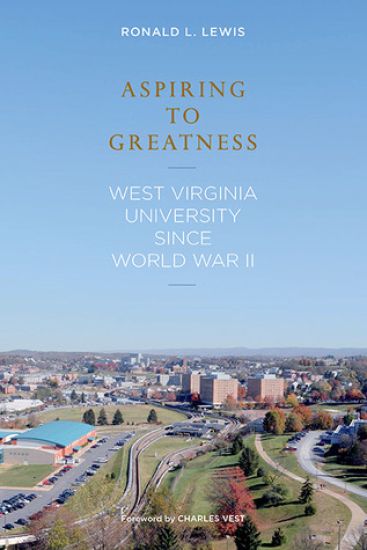
Aspiring to Greatness: West Virginia University since World War II chronicles the emergence of WVU as a major land-grant institution. As a continuation of the work of Doherty and Summers in West Virginia University: Symbol of Unity in a Sectionalized State, this book focuses on the modern historical developments that elevated WVU from a small regional institution to one of national prominence. West Virginia University's growth mirrors the developmental eras that have shaped American higher education since World War II. The University's history as an innovative, pioneering force within higher education is explored through its major postwar stages of expansion, diversification, and commercialization. Institutions of higher education nationwide experienced a dramatic increase in enrollments between 1945 and 1975 as millions of returning World War II and Korean War veterans took advantage of the GI Bill of Rights. Their children, the ""baby boom"" generation, continued to supply the growth in college enrollment and the corresponding increase in institutional complexity until the mid-1970s. During this period WVU followed the national trend by growing from a few thousand students to nearly fifteen thousand. From 1975 to the early 1990s, expansion gave way to diversification. The traditional student population stopped growing by 1975, and ""boomers"" were replaced by students from nontraditional backgrounds. An unprecedented gender, racial, and ethnic diversification took place on college campuses, a trend encouraged by federal civil rights legislation. To a lesser degree WVU was no exception, although its location in a rural state with a small minority population forced the University to work harder to attract minorities than institutions in proximity to urban areas. The commercialization of higher education became a full-fledged movement by the 1990s. Major changes, such as globalization, demographic shifts, a weak economy, and the triumph of the ""market society,"" all accelerated the penetration of business values and practices into university life. Like other public universities, WVU was called upon to generate more of its own revenues. The University's strategic responses to these pressures reconstructed the state's leading land grant into the large complex institution of today. As the only modern history of West Virginia University, this text reaches into the archives of the President's Office and makes exhaustive use of press accounts and interviews with key individuals to produce a detailed resource for alumni, friends, and supporters of WVU, as well as administrators and specialists in higher education.
From the early day of mining in colonial Virginia and Maryland up to the time of World War II, blacks were an important part of the labor force in the coal industry. Yet in this, as in other enterprises, their role has heretofore been largely ignored. Now Roland L. Lewis redresses the balance in this comprehensive history of black coal miners in America. The experience of blacks in the industry has varied widely over time and by region, and the approach of this study is therefore more comparative than chronological. Its aim is to define the patterns of race relations that prevailed among the miners. Using this approach, Lewis finds five distractive systems of race relations. There was in the South before and after the Civil War a system of slavery and convict labor -- an enforced servitude without legal compensation. This was succeeded by an exploitative system whereby the southern coal operators, using race as an excuse, paid lower wages to blacks and thus succeeded in depressing the entire wage scale. By contrast, in northern and midwestern mines, the pattern was to exclude blacks from the industry so that whites could control their jobs and their communities. In the central Appalachians, although blacks enjoyed greater social equality, the mine operators manipulated racial tensions to keep the work force divided and therefore weak. Finally, with the advent of mechanization, black laborers were displaced from the mines to such an extent that their presence in the coal fields in now nearly a thing of the past. By analyzing the ways race, class, and community shaped social relations in the coal fields, Black Coal Miners in America makes a major contribution to the understanding of regional, labor, social, and African-American history.
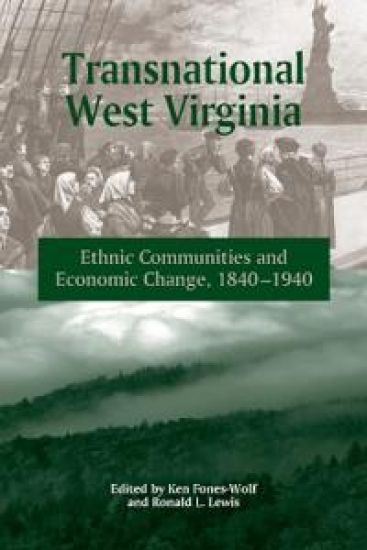
West Virginia is one of the most homogeneous states in the nation, with among the lowest ratios of foreign-born and minority populations among the states. But as this collection of historical studies demonstrates, this state was built by successive waves of immigrant labors, from the antebellum railroad builders to the twentieth-century coal miners. Transnational West Virginia offers a new understanding of how laborers and their communities shape a region's history. Transnational West Virginia includes essays and studies on immigrant networks, such as Irish workers along the B&O Railroad, Wheeling Germans in the Civil War era, Swiss immigration to West Virginia, and European Jews in Southern West Virginia. This work also covers Belgian glassworkers in West Virginia, black migration to Southern West Virginia, Italians in the Upper Kanawha Valley, Italian immigration to Marion County, Wheeling Iron and the Welsh, West Virginia and immigrant labor to 1920, Monongalia miners between the World Wars, and West Virginia rubber workers in Akron. Transnational West Virginia is the first volume in the West Virginia and Appalachia series, which is under the general editorship of West Virginia University Stuart and Joyce Robbins Chair of History Ronald L. Lewis, Kenneth Fones-Wolf, Associate Professor of History at WVU, also helped edit this collection of essays by ten distinguished scholars.